
Cal Poly’s CubeSat satellite to be inducted into Space Technology Hall of Fame
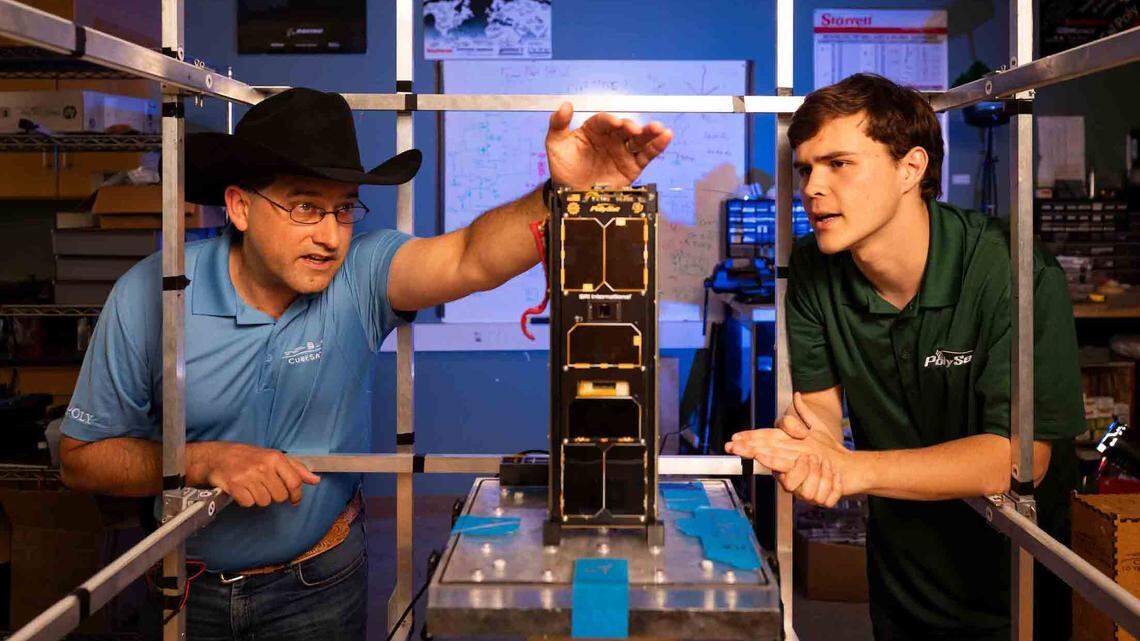
A satellite invented by former Cal Poly and Stanford University professors to help teach students is being inducted into the Space Technology Hall of Fame.
In 1999, now retired Cal Poly aerospace engineering professor Jordi Puig-Suari and Stanford’s Bob Twiggs invented CubeSat — a box-like satellite about 4 inches per side that can weigh less than 3 pounds — to help students understand how satellites operate.
Since then, CubeSats have been regularly launched from NASA’s International Space Station, and the invention has been a simple and affordable tool for companies and other schools to create their own satellites for space research, according to a Cal Poly news release.
Puig-Suari said inventing something faster and smaller than what already existed in the space industry meant “taking more risk.”
“Leveraging the technological developments of non-space industries, such as the commercial electronics sector — those new ways of doing business that were introduced by CubeSats form the basis of many of the new missions being developed by space companies,” Puig-Suari said in the news release.
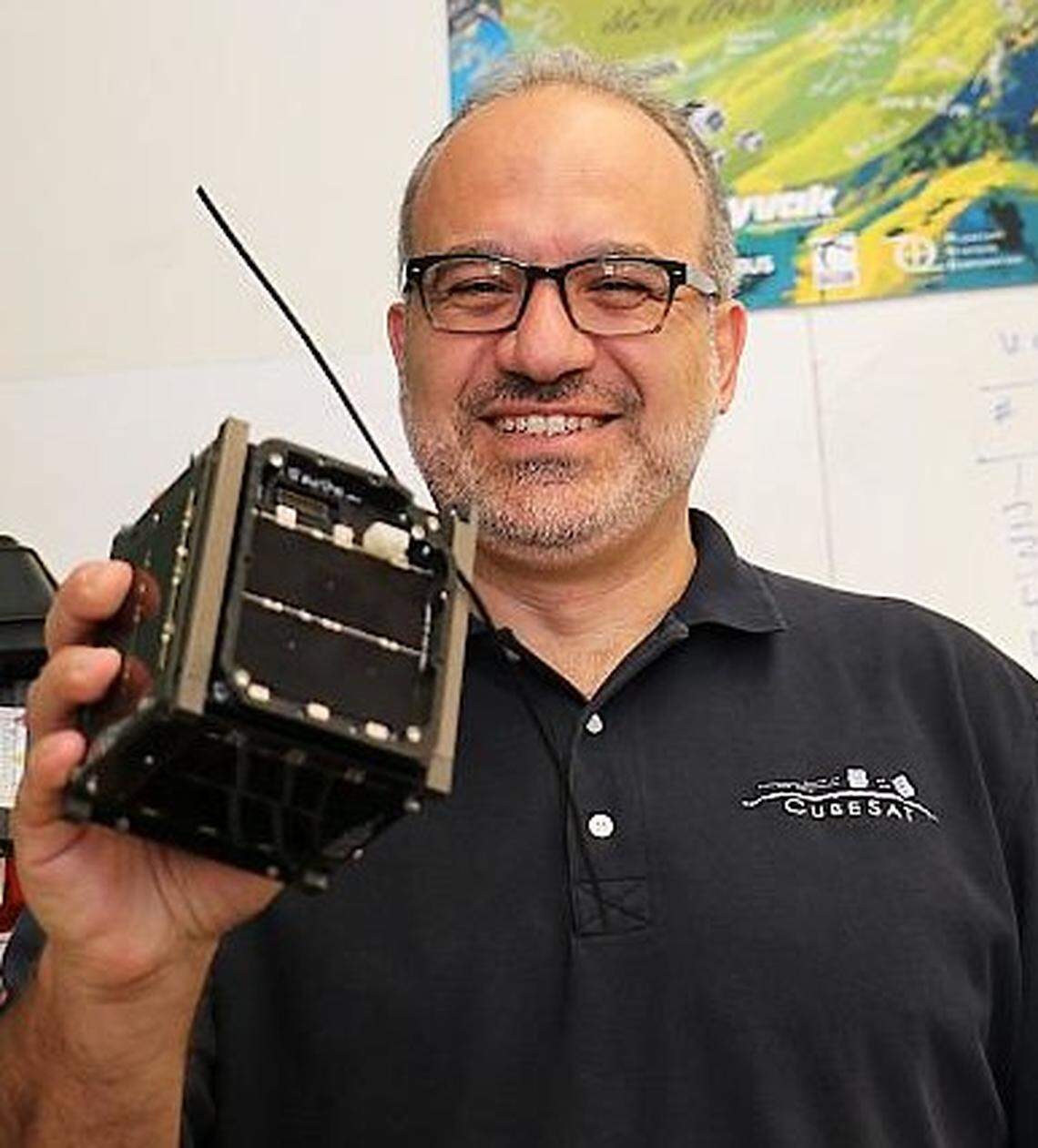
CubeSats have become a regular feature of important space missions and developments, including the twin 6U MarCO communications relay satellites that launched from Vandenberg Space Force Base in 2018 as part of the Mars Insight lander mission and the Planetary Society’s two 3U LightSail projects that demonstrated the feasibility of solar sailing propulsion. CubeSats are also regularly launched from the International Space Station.
CubeSats contributed to the Mars Insight lander mission in a launch from California’s Vandenberg Space Force Base in 2018. They’ve also been used to help solar sailing propulsion, technology that uses sunlight to propel spacecraft.
“Not only have thousands of students from all over the world been able to launch a satellite, it has turned into a billion-dollar industry and has played a major part in bringing about a renewed enthusiasm about space that hasn’t been there since the Moon landing,” Cal Poly CubeSat Lab Director Ryan Nugent said in the news release.
The nonprofit Space Foundation’s Space Technology Hall of Fame will induct CubeSats at its 37th Space Symposium, April 4-7 in Colorado Springs, Colorado.

What’s next for Cal Poly’s CubeSat?
More than 1,660 CubeSats were launched into space before 2022, according to the Nanosats Database. As CubeSat technology evolves, Cal Poly’s “prominent role” should continue to be discussed, the lab’s faculty adviser and computer science professor John Bellardo said in the release.
Currently, CubeSat is working on new radiator technology — a “critical component of spacecraft,” Bellardo said. The technology helps remove waste heat from the spacecraft, benefiting higher-powered missions and those operating in hotter environments for a long time, according to Bellardo.
“While we proudly claim a major role in the advent of the CubeSat, we want to remain relevant with this important technology,” Cal Poly Engineering Associate Dean and aerospace engineering professor Eric Mehiel said in the release.