
‘It’s happening to me every day’: How Cal Poly students of color cope with racism, isolation
Editor’s note: This is the second in The Tribune’s four-part series called “The People’s University,” examining the challenge of diversity at Cal Poly.
At times, Gracie Babatola said she felt resentment toward her parents and remembers wondering why they would let her attend Cal Poly in San Luis Obispo.
“Your job as a parent should have been to stop me from going to this school,” Babatola, a second-year political science major, recalls thinking.
From nearly the moment she stepped on campus, Babatola said she has endured racist microaggressions from other students because she is a Black woman.
Although she’s not alone in this experience — many students of color at Cal Poly can attest they’ve faced hateful, racist incidents while attending the university — the lack of student diversity on campus means she sometimes feels quite isolated.
“I’ve definitely thought about dropping out or switching schools,” Babatola said. “Sometimes I’ll look back at the schools I applied to and I’m like, dang, the extra $20,000 would have definitely been worth my mental health.”
Compared to every other public university in California, Cal Poly has by far the whitest, least diverse student population. It stands out in stark contrast to the state it serves, which is now a majority Hispanic or Latino.
It’s no secret, either, as Cal Poly’s lack of student diversity gets thrust into the limelight every time a racist incident is documented on campus.
The university’s administration has made progress in improving the diversity of its student body — the freshman class for the 2021-22 academic year is Cal Poly’s most diverse ever.
But the change is far from complete, and students of color say there’s still a culture on campus that tolerates racism.
The Tribune spoke to Cal Poly students of color to understand what the university’s lack of diversity means for the campus’ culture and how it has impacted their college experience.
Out of all the students interviewed, one common theme played out strongly: Racist incidents happen so often at Cal Poly, many of which are not widely publicized or known about on campus, that the hateful acts seem almost normal.
“I’ve become desensitized to racial incidents that come upon us on campus because it happens way too often,” said Chloe Wardrick, a fifth-year architecture student and president of Cal Poly’s Black Student Union (BSU).
“It’s just heartbreaking because now I’ve come to terms that these things are things that we read about in the horrible history books we have,” Wardrick said. “These are racist incidents that have occurred for hundreds of years that are still surfacing today because of some hateful joke that people are trying to make.”
How Cal Poly responds to incidents of racism
When a widely known incident of racism occurs, the university administration is typically quick to send out a campus-wide message informing the Cal Poly community of what happened and ensuring a swift response.
“We will seek to hold whoever is responsible for this act accountable through all available legal and administrative processes,” said a Cal Poly message sent in May following an incident where someone threw a rock containing a racist threat written on tape into a Black student’s on-campus apartment room.
“While hate, racism and prejudice exist at Cal Poly, they are counter to our values and mission and will not be accepted,” the message continued. “Those who engage in hateful harassment or violence are not welcome here and will be rooted out.”
Students The Tribune spoke to said they appreciate campus-wide notes such as the one sent in May. What’s missing, however, is a clear follow-up, they said.
“They (Cal Poly administration) just say they’re doing an investigation and that it’ll be figured out that way, and there’s nothing else that we hear at that point,” said Wardrick, who has worked with university officials on their response to racist incidents in her role as the BSU president.
After the initial campus-wide note, information gathering and promise of a thorough investigation — the line goes quiet, Wardrick said.
But the muted response isn’t necessarily one-sided, said Audre Smikle, a member of the Black Faculty and Staff Association at Cal Poly.
“A lot of Black students are exposed to microaggressions that cause harm over time,” she said. “And so when a really big racist incident happens, they’re like, ‘Yeah, but this happened yesterday, too, in this form.’ ... People are just kind of used to that type of racial violence every day.”
Wardrick agreed.
“A campus-wide racial incident happens and you’re almost like, ‘Oh, that makes sense because it’s happening to me every day,’” Wardrick said.
Some students said they haven’t had any racist microaggressions or incidents directed specifically toward them, but they’ve still felt uncomfortable in their skin on campus.
“You walk into class ... and all eyes are on you,” said Gideon Telahun, a first-year industrial engineering student who is Black. “And you have a different type of pressure on you to succeed because a lot of time, people, they won’t expect you to succeed.”
What it’s like transitioning to Cal Poly as a student of color
When considering where to go to college, students told The Tribune that they, for the most part, took into account the racist incidents and lack of diversity at Cal Poly. Typically, however, the university’s reputation as an excellent school with a knack for landing graduates good jobs is what convinced them to attend.
Selina, a Latina, undocumented student at Cal Poly who preferred to go by her first name, transferred to the university from a community college in Long Beach.
The community college was diverse, and Selina graduated at the top of her class before making the leap to Cal Poly. She said she knew Cal Poly didn’t have the same cultural or racial diversity and thought she’d mentally prepared herself for it.
“But once you’re there, it’s just totally different,” she said.
What shocked her the most was that Selina considers herself to be a “go-getter” and very driven to find out what would make her happier in an uncomfortable environment such as Cal Poly.
Before she enrolled, Selina was admitted into the Cal Poly Scholars program, which provides scholarships for low-income students, and she quickly began working at the university’s Dream Center, which serves undocumented students.
“People struggle because they don’t have a community; they don’t know where to go,” she said. “I knew where to go, and I still suffered with culture shock because it was like I felt safe in those in those places — being in the Cal Poly Scholar office and in the Dream Center — but then outside of that, that’s when I felt like I was one person and everywhere around there is no diversity.”
Kimberley Bhunu, a fourth-year accounting student from Zimbabwe, said she was shocked by Cal Poly’s lack of diversity as a Black woman coming from a predominantly Black country.
Her feelings of isolation hit her immediately as she walked around campus.
“I remember my first day here, I spent the whole day and I didn’t come across one Black person; I was kind of freaking out,” Bhunu said. “So that was kind of scary for me.”
“It kind of isolates you, just makes you feel so different from everyone else,” she continued. “I haven’t felt as Black as I feel here.”
Clubs and living communities help, but more is needed
To combat the overbearing feeling of being an “other” on campus, many students of color turn to the limited centers, clubs and programs available to them.
Cal Poly’s Student Diversity & Belonging Department has seven centers for students, three of which are focused on gender and sexuality. The remaining four focus on race and ethnicity: the Black Academic Excellence Center, the Dream Center, the MultiCultural Center and the newly established Native American & Indigenous Cultural Center, which opened in October.
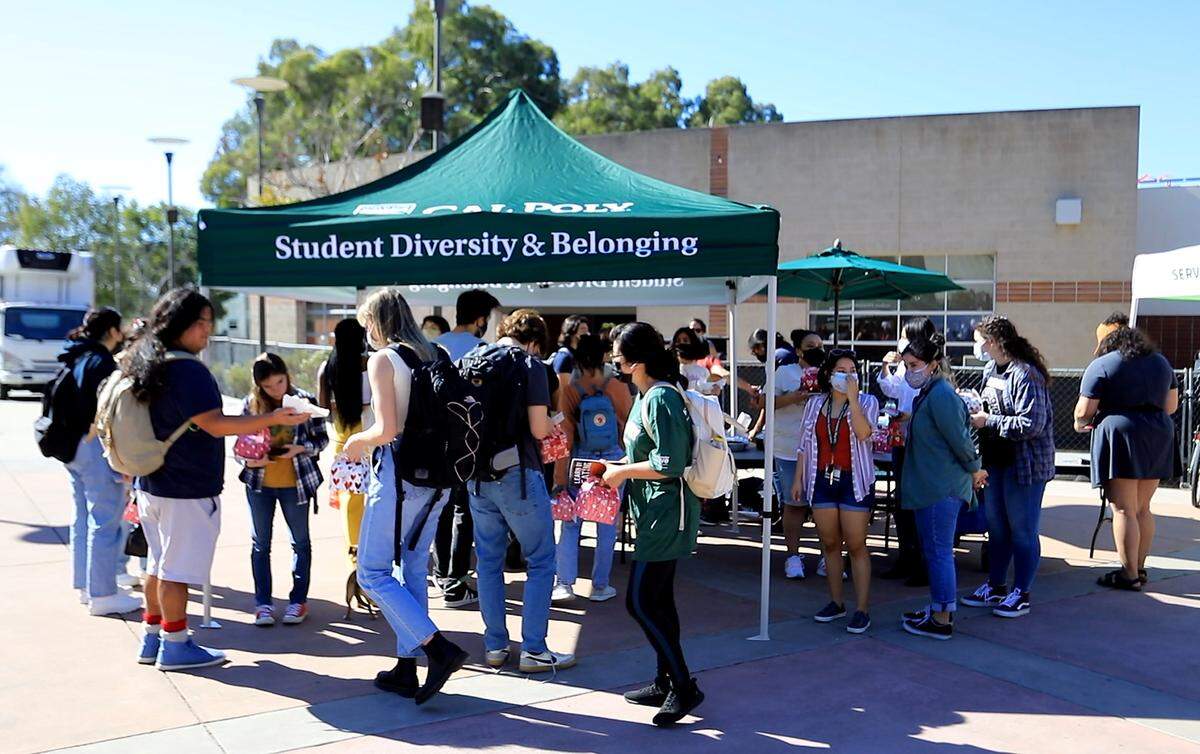
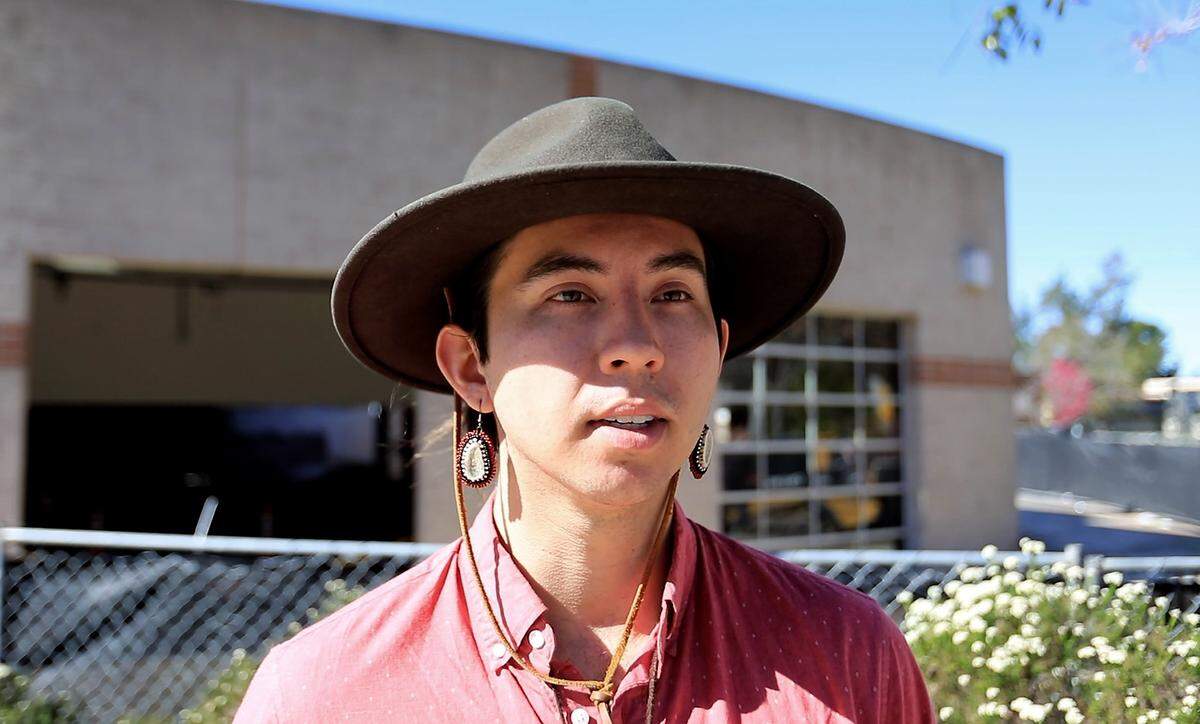
Wyatt Kohler, a Native American student who is vice president of Cal Poly’s American Indian Students Association, said the new center for Indigenous students provides a place for people like him to gather, learn and share their common background.
“I think it’s incredibly important for people who are trying to understand their identity and reconnect with their culture that they have places that they can go to with people who can understand the sort of specific issues,” he said. “It really empowers us to learn more about our culture.”
While the Native American & Indigenous Cultural Center is a step forward for that community, Cal Poly currently has no centers specifically for Latino, Hispanic or Asian students, to name a few other communities of color on campus, although there are reportedly plans to establish a Latinx Cultural Center.
So, some students work hard to establish and maintain cultural clubs of their own — a job they often feel lands squarely on their shoulders with little recognition or funding from the university administration.
Andru O’Hara, for example, said gaining university support and funding for PolyCultural Weekend, which he helps run, is difficult. PolyCultural Weekend is an organization that invites prospective students to the university for a weekend to experience college life and immerse themselves in the cultural community.
“A lot of the time, we’re kind of disregarded by the university. ... Our clubs don’t get the same recognition that maybe other clubs would get,” said O’Hara, a fourth-year animal science major. “It seems like there’s more of a drive from the students rather than the university itself to tend to the cultural community. It’s more left up to us, rather than the university giving us the same support that it would to other students.”
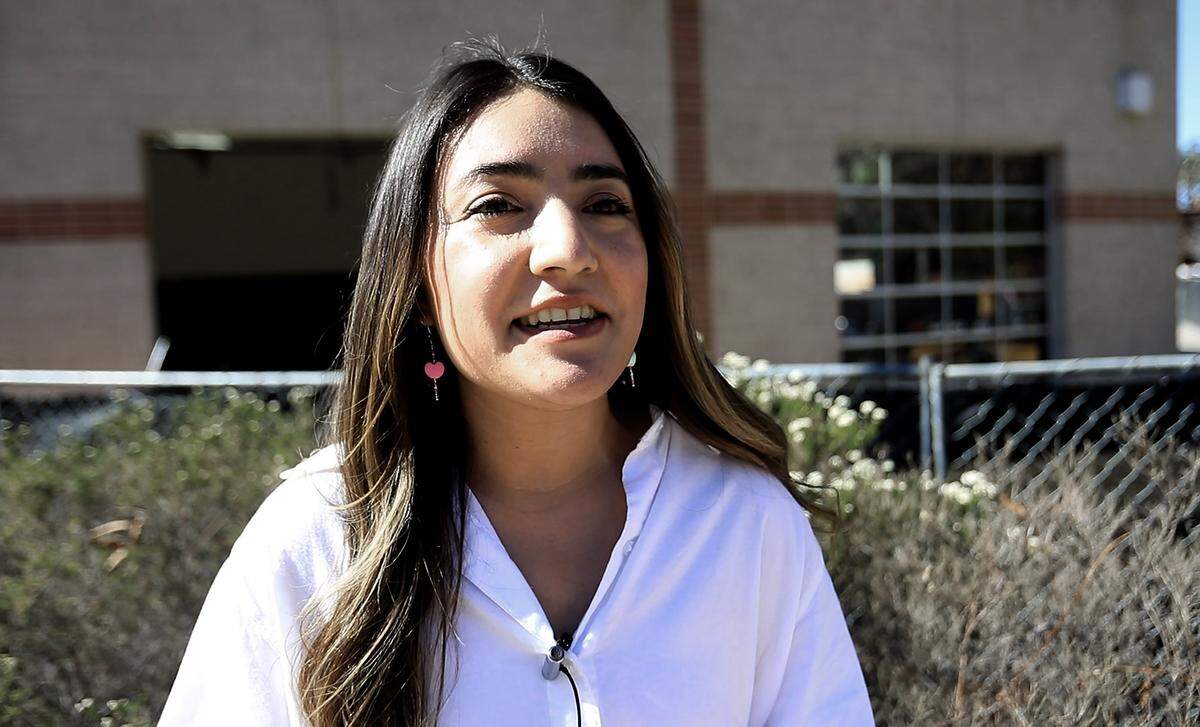
Daisy Paniagua-Uribe is a program coordinator for the newly-established LatinX Initiatives on campus.
“Our focus is to build comunidad — community — on campus for Latinx-identifying individuals while also providing a space to educate folks on the fact that the Latinx community is a very diverse community,” she said. “It’s really exciting to have such important programs and initiatives on campus and to let students know that there is a support system.”
Other students choose to apply to programs such as the federally funded TRIO programs and state-funded Educational Opportunity Program, which were established during the Civil Rights movement era and designed to help underrepresented or historically disadvantaged people attend and graduate from college.
Lizbeth Guzmán Villanueva, a fifth-year industrial engineering student, is in Cal Poly’s TRIO program and lived in the program-specific housing her first year on campus. There, many students of color, first-generation or low-income students, and those with disabilities were represented, she said.
“I would hear something just racist in class, or different things that would happen that I was not used to and was not good for my mental health,” she said. “I always knew that at the end of the day, I could come home to my community where I would be able to relate to people and I had that safe space. And I think without, honestly, that community, if I just had to live with the people I had in my classes, I probably would have dropped out of Cal Poly.”
Students say they want to see more of the state’s diverse population represented at Cal Poly.
And they want to see a change in how the university handles racist incidents and supports the cultural communities on campus so that Cal Poly can be more inclusive. Many said they’re frustrated at what they see as a lack of concrete action from the university.
“I don’t know exactly what they can do — but at the same time, that shouldn’t be the job of the students. It should be our administration and our school caring for us because that’s their job,” said Kaila Bishop, a fourth-year civil engineering student and president of the university’s chapter of the National Society of Black Engineers. “It kind of seems like they’re hiding how many issues we actually have. ... At some point, administration is going to have to do something about it.”
Coming tomorrow: What does Cal Poly do to attract students of color and improve diversity on campus?
Tribune reporter Stephanie Zappelli contributed to this report.
BEHIND THE STORY
MOREBehind our reporting
Tribune reporter Mackenzie Shuman spent about six months investigating why Cal Poly in San Luis Obispo remains the whitest, least ethnically or racially diverse public university in California. She was aided by Tribune reporting intern Stephanie Zappelli.
Click the arrow to see what went into our reporting.
How the series started
Mackenzie received a document from a now-retired Cal Poly admissions official that showed the university’s application, acceptance and enrollment data broken down by ethnicity, race and various other factors. She was initially interested in the simple fact that the data showed clearly that white applicants were more likely to be accepted into Cal Poly than minority students.
Mackenzie then asked a question: Why was that?
That led her down a much deeper path of reporting.
Who was interviewed for this series
Once it was realized that the reporting project would focus on solutions for improving the diversity of Cal Poly’s student body, Mackenzie enlisted the help of intern Stephanie.
The pair then reached out to diversity experts from around the country. They presented Cal Poly’s diversity data to each of the experts and asked what they would suggest the university do to change it.
The experts, from national nonprofit leader Maureen Hoyler to Cal Poly Pomona’s Director of Admissions Brandon Tuck, each had different ideas for the university.
Mackenzie and Stephanie also interviewed several Cal Poly faculty and staff, although many did not feel comfortable being named in the stories for fear of retribution.
Bringing the data to life
This series was largely guided by the data Mackenzie received from the beginning.
But stories filled only with data would not accurately portray the issues a lack of student diversity has caused at Cal Poly.
So, Mackenzie and Stephanie interviewed dozens of students of color attending the university and asked about their experiences. They attended several Cal Poly club meetings, spoke to students on campus and reached out to campus leaders.
Many students of color said they’d grown used to being the victim of racist microaggressions from other students on campus. Not all students were comfortable sharing their stories, but several did so in hopes that their voice would push the university’s administration to make changes so future Cal Poly Mustangs would have a better, more comfortable experience on campus than they did.
Student anecdotes are the heart of “The People’s University” series.
This story was originally published February 23, 2022 at 5:00 AM.