Cal Poly sees surge in student COVID cases as many classes start quarter online
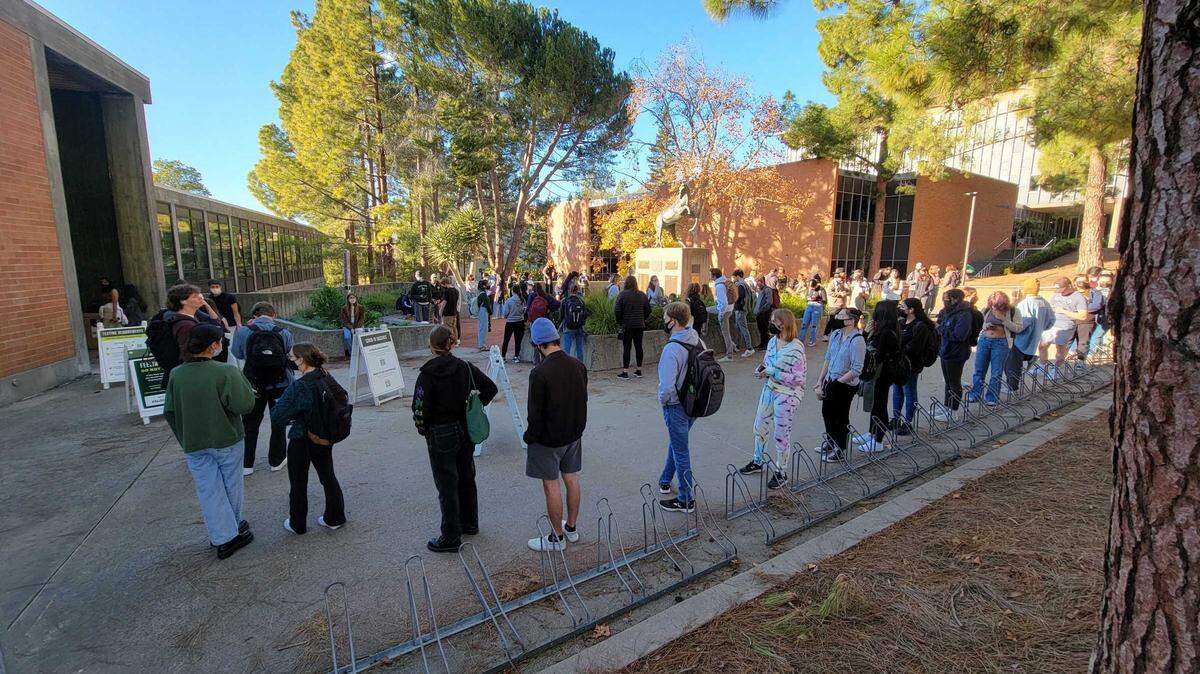
Cal Poly’s winter quarter plans to bring students back to fully in-person classes right after the New Year’s holiday have hit a stumbling block as hundreds of faculty chose to teach their classes online due to COVID-19 concerns and mandatory student testing returns positive cases at numbers not seen before.
On Sunday, 81 Cal Poly students tested positive for the virus. On Monday, 151 tested positive — the highest daily increases the university has experienced during the entirety of the pandemic, according to preliminary university data.
Although 89% of classes were scheduled to be fully in person at the start of the winter quarter on Jan. 3, many of those have now temporarily transitioned to online modalities.
A survey sent out last week by the California Faculty Association’s Cal Poly San Luis Obispo President Lewis Call shows that out of 454 respondents, about 61%, or 276 faculty members, planned to teach at least the first week of their classes virtually, while 33%, or 149, said they were going to start classes in person.
The survey was sent to 1,511 faculty members, including non-instructional faculty such as counselors and librarians, and faculty who are not teaching this quarter, according to Call. Those faculty members would not have responded to the survey, he added.
The move to online classes appears to be provoked by a local and global COVID-19 spike as the new omicron variant spreads rapidly.
“We’ve been watching the omicron variant very closely,” Call said. “And it’s been very concerning.”
The university had a seven-day average COVID-19 test positivity rate of about 6% as of Monday, university data, which was last updated on Jan. 4, show. That’s out of 4,060 tests performed over the past seven days, according to preliminary university data.
Despite the high number of students who appear to have tested positive for COVID-19, only 28 students are reportedly in isolation on campus, according to the university’s coronavirus dashboard.
Aside from the first-week testing requirement, Cal Poly students must wear face masks while indoors on campus and be fully vaccinated against the coronavirus — which includes receiving a booster shot when eligible.
“As our top priority is the health and safety of everyone in our community — getting everyone back on campus as soon as possible means getting everyone tested, isolating those who have tested positive and bringing the booster mandate to bear on the community,” Cal Poly President Jeffrey Armstrong wrote in a message to the campus community on Jan. 1. “Those are the steps that are most likely to slow the spread of the coronavirus and minimize the incidence of serious illness.”
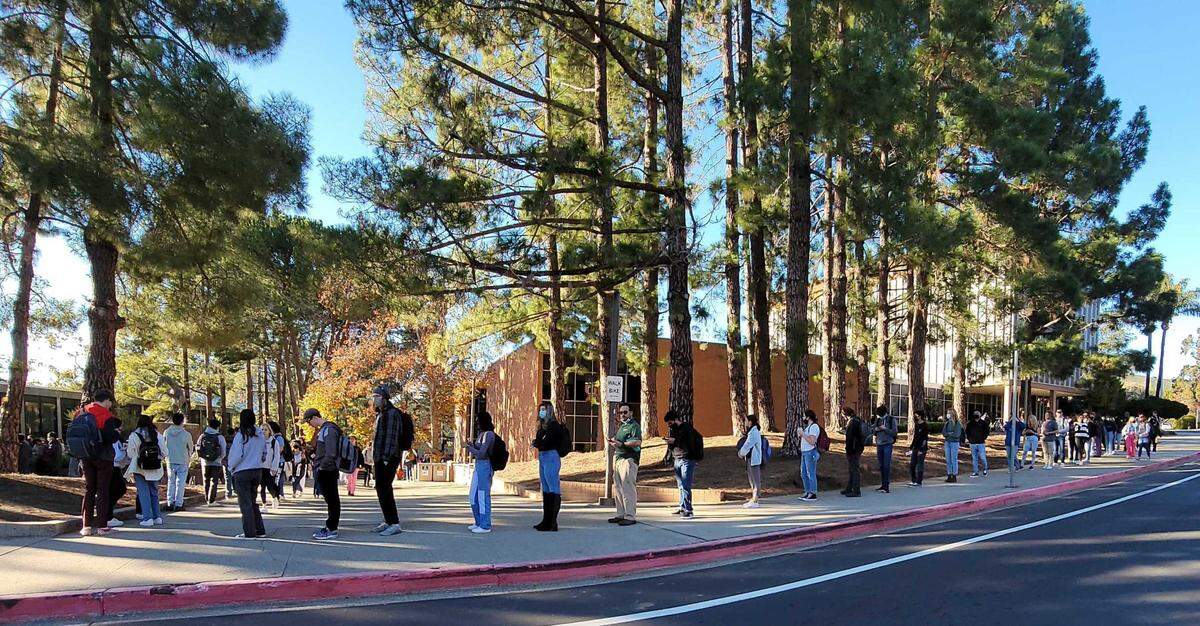
How Cal Poly is handling the return to campus amid COVID surge
Cal Poly’s approach to the start of its winter quarter is different from the other California State University and University of California campuses that begin classes in early January.
All of the UC campuses on the same quarter schedule as Cal Poly have chosen to start classes virtually for the first one to two weeks out of COVID-19 concerns. Those universities say the switch to virtual instruction allows them to take a week or two to test students and faculty before they’re allowed to sit in classrooms for instruction.
At Cal Poly, students could return to the classroom during the first week of instruction before they were tested for COVID-19. However, students must be tested by Jan. 9 before losing access to some campus facilities and services.
This caused unease among some faculty who were scheduled to teach in-person classes at the start of the quarter.
“We’ve been very concerned that Cal Poly decided to start in person,” Call, the faculty union leader, said. “We would have preferred to start virtually.”
Call noted that there is an approved Cal Poly Academic Senate resolution that allows faculty to teach up to 25% of their in-person class virtually. That gives faculty limited freedom to decide whether they feel comfortable teaching in the classroom again, he said.
Instructors decide whether to teach in person
Which classes have transitioned online this week depends solely on the teacher’s preference, and some may still be in the middle of making that decision, said Ken Hillers, chair of the university’s biological sciences department.
“Some have chosen the prudent course of having their classes meet virtually for week one with the state of things with the pandemic,” he said. “There’s no conflict here on campus about whether or not that should be done. The communication from the union was very clear that faculty are empowered to make that choice.”
Pat Fidopiastis, a professor of microbiology, said he’s chosen to keep his classes fully in person and feels comfortable doing so because of all the health and safety measures in place.
“Most of my students are able to come. I would say about 10% have emailed me telling me they either tested positive or were exposed in some form and so they can’t attend class,” he said. “At some point, we just got to say enough is enough. You have healthy 20-year-olds that have been triple-jabbed (with a COVID-19 vaccine) and are wearing masks indoors. What else are you gonna do?”
Cal Poly journalism lecturer Kim Bisheff said she found a majority of her students didn’t want to return to in-person classes after she sent out an anonymous survey last week.
So, she pivoted and switched her lesson plans around to conform with an online-only schedule for the first week of the winter quarter.
“What I’ve discovered since then is a lot of students are testing positive, or their roommate tested positive ... or they couldn’t get back to SLO (San Luis Obispo) on time because their flight was canceled because of COVID,” Bisheff said. “All these variables are leading students to not be able to show up to the first week in the numbers they normally would.”
Because of that, Bisheff said she’s glad she transitioned to the fully remote modality of teaching for the first week to ensure no students are left behind.
Teaching online this week “is fine,” Bisheff added. “Nobody loves it. But the silver lining right now is that it’s short term. We’re not going to be virtual all quarter.”
This story was originally published January 5, 2022 at 10:56 AM.