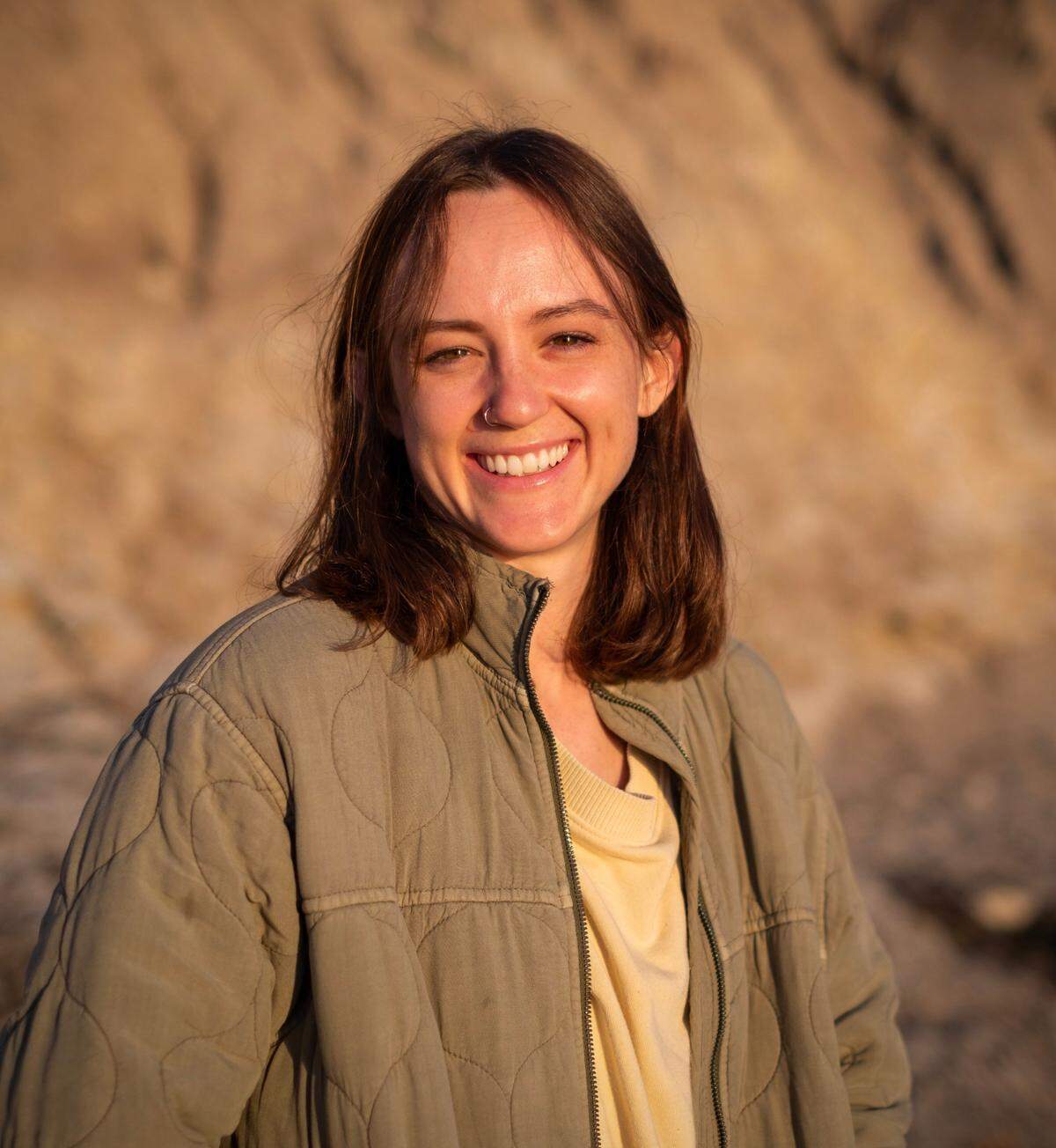
How a Morro Bay teacher explains 9/11 to students who weren’t alive when it happened
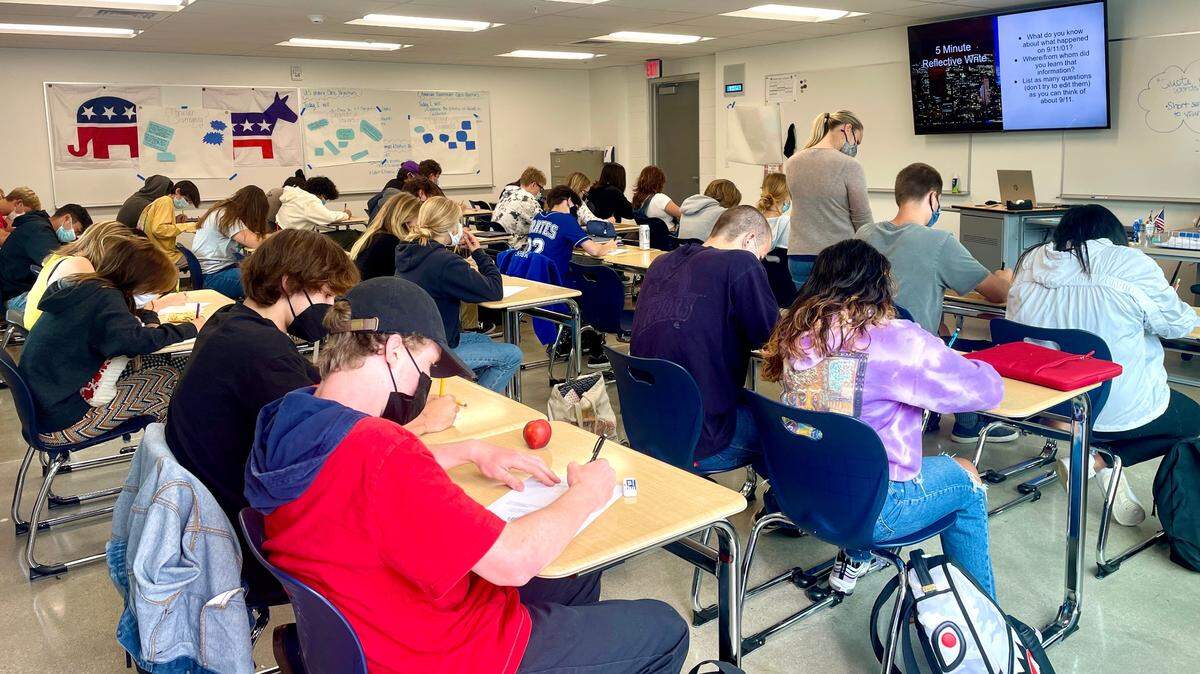
The day before the 20th anniversary of 9/11, Morro Bay High School teacher Laura Van Zee opened her U.S. history class by asking her students to take five minutes to write down what they know about the events of Sept. 11, 2001, and what questions they have about the tragedy that took place before any of the 16- and 17-year-olds were alive.
The class of nearly 30 high school juniors scribbled down what they could.
Once the five minutes were up, she asked them to turn to the student sitting next to them and discuss what they’d written down for another two minutes.
Then Van Zee spoke about her personal experience on 9/11.
She choked up when she talked about how she and her college friends were glued to the television that morning, and how her dorm roommate watched as the Twin Towers fell, not knowing whether her father, who worked at the World Trade Center, was alive.
They learned later that he was one of the nearly 3,000 people who died that day.
Listening to their teacher’s firsthand memories moved some students to tears, they said later.
Van Zee then addressed the questions students had written down about 9/11.
“How many of you knew there were four planes hijacked that day?” she asked the class.
Two students rose their hands.
Most thought it was just the two planes that crashed into the World Trade Centers that were hijacked. They didn’t know about the plane that crashed into the Pentagon or the plane that crashed in the field in Pennsylvania.
On their papers, students asked questions such as “Was it really so bad since not many people died that day?” “What was their motive?” “Does this have something to do with Afghanistan?” and “Were there bombs under the Twin Towers?”
Some students said they knew people jumped from the World Trade Center towers — they’d seen the photos — while others knew the buildings collapsed that day but didn’t know how it happened.
“This is so horrible that I didn’t know this, but I thought it happened in 2012,” 16-year-old Nathalie Fauchier said. “I didn’t know it happened so long ago.”
What’s like teaching about 9/11
Van Zee said teaching the events of 9/11 changes every year.
And every year, she said, students know less about it.
“It’s really sad to see how much we’ve forgotten,” Van Zee told The Tribune in an interview after class. “And, really, it is so personal for almost every teacher, every adult that lived through it. That day was not easy for anybody no matter where you were, what you were doing. And so I want them to see how personal it is to me, I want them to feel just a tiny piece of what I felt, and how a lot of us are feeling.”
Van Zee said it’s important to her to show vulnerability to the students — especially about 9/11 — because it teaches them that the events of that day went beyond big, scary explosions and some buildings falling.
She spent time sharing the story of Welles Crowther, otherwise known as the “Man in the Red Bandanna,” who heroically saved at least 10 people that day.
She shared a video of dozens of firefighter’s Personal Alert Safety Systems “chirping” beneath the rubble at Ground Zero to indicate they had stopped breathing.
“Each one of those chirps indicates a fallen firefighter,” she said during class.
Students said the message resonated with them.
“It’s really sad,” said 16-year-old junior Amy Busch. “And my heart, like, drops when I hear about it. And it’s actually really sad learning that all these people passed away during it.”
How the day fits into 20 years of history
But Van Zee also said it was important to her to go beyond just the events of that day and to teach students about what happened after.
“Does anyone know anything about Al Qaeda?” she asked.
A few students hesitantly raised their hands. One student responded by asking if they had turned into ISIS.
She walked them through the four groups — Al Qaeda, ISIS, ISIS K and the Taliban — and briefly explained how they were each different and what each wanted.
“After this (9/11), what did we do?” Van Zee asked.
“We went to Afghanistan, right?” a student asked back.
Van Zee then explained how the United States, with support from the British, ousted the Taliban. She eventually explained how this relates to current events — when the United States withdrew from Afghanistan at the end of August.
Students noted they knew the flags at school had been at half-mast because of the airport bombings in Kabul, Afghanistan, that killed 13 U.S. service members and nearly 170 Afghans.
Van Zee ended the class by asking students as homework to spend time looking through 9/11 virtual memorials and to come back to class on Monday with what they learned from those memorial websites.
Later in the year, she said they’ll come back to 9/11.
“In the last few years, to find out how little they actually know about it has become shocking,” Van Zee said.
“So it’s important to me to take a little time today to talk about it, but then also circle back when we’ve learned more about the buildup and the change in the world and what’s been happening in our country before 9/11,” she said. “That way they can start to see how it fits in our history a bit more. Then we’ll talk more about everything that happened after that day as well.”
This story was originally published September 10, 2021 at 2:22 PM.