Cal Poly SLO application numbers hit record level while many other CSUs struggle
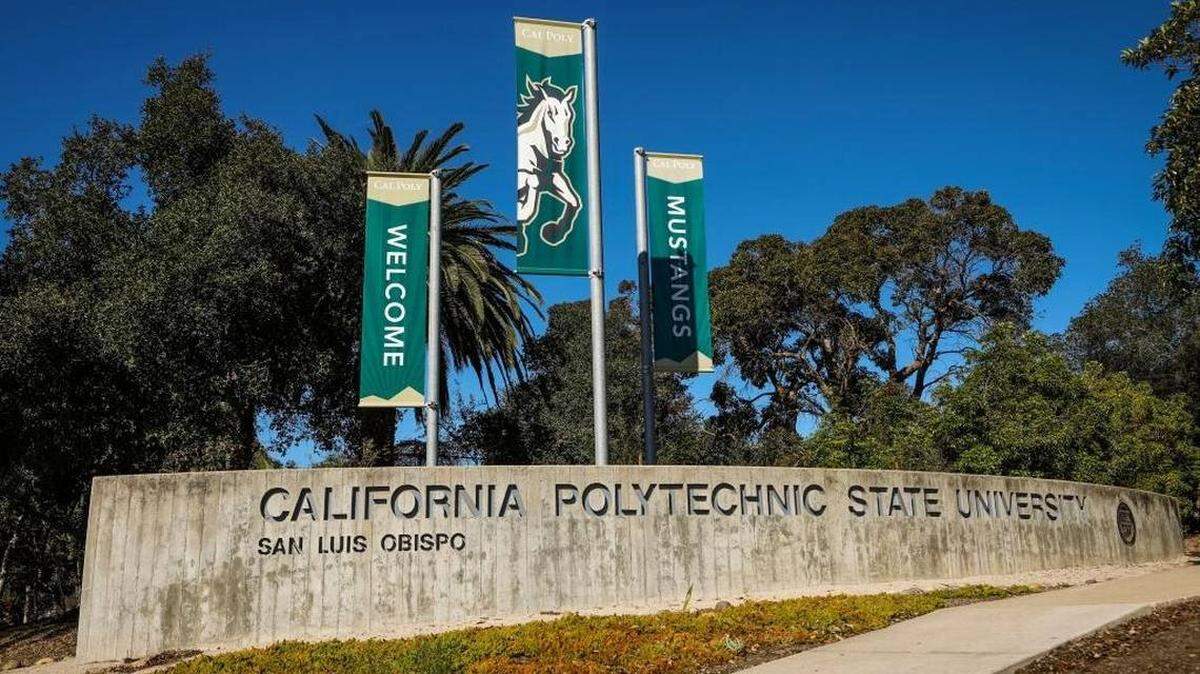
While most other California State University schools struggled to bring in more applicants, Cal Poly in San Luis Obispo saw another record year for the number of first-time freshman and transfer students vying to get into the university, a Cal Poly official said.
As of Dec. 15, a total of 65,535 students had applied to attend Cal Poly in the fall term 2021, including 54,624 first-time freshman and 10,911 transfer students, according to data provided to The Tribune by CSU spokesperson Toni Molle.
That tops the previous record of 65,507 in 2018. And it’s an increase of 2,366 applicants from the fall 2020 term, according to the data.
The record applicant pool comes after record-high enrollment for Cal Poly in fall 2020. A total 22,287 students enrolled in the university for the fall quarter, compared to 21,242 in fall 2019, according to university data.
The influx of applicants came as no surprise to Cal Poly, which typically outperforms the other schools in the CSU system.
“If you look at the CSUs many of them are commuter campuses, they serve a radius of about 25 miles, 30 miles,” said Jim Maraviglia, the school’s vice president for enrollment management. “Cal Poly is an anomaly in that situation. ... It has a history now for the last 20 to 25 years of not only having a statewide reach but a national reach.”
In recent years, that demand has propelled dramatic increases in the number of applications.
Twenty years ago, the number of applicants was about 30% higher than the total number of students enrolled at Cal Poly. Today, fall 2021 applicants are 300% higher than the total number of students enrolled in fall 2020.
Last year, that meant the university turned away 12,500 first-time freshman applicants with at least a 4.0 grade-point average. And two of every three of those first-time freshmen applicants were not offered admission.
Out of the 23 CSU campuses, only Cal Poly SLO, San Diego State, Cal Poly Pomona and Cal State Bakersfield had more first-time freshman applicants for fall 2021 than the previous year, according to CSU data.
Cal Poly Pomona saw the largest increase in first-time freshman applicants, up 9% from 2020, while Bakersfield saw a 6% increase, San Diego State saw a 5% increase and Cal Poly saw a 4% increase, as of Dec. 15.
Sonoma State and Stanislaus State both had the largest decreases in first-time freshman applicants, down 26% and 24%, respectively, for the first-time freshmen.
Across all the CSU campuses, about 41,000 fewer first-time freshman and transfer students applied for fall 2021 compared to the previous year, a 5% decrease overall, according to CSU data.
Maraviglia said this is about the third year of steady applicant decline for the CSU system.
This year, applications were handled a bit differently than in the past.
As of 2021, CSU schools did not require applicants to send in ACT or SAT scores — nor will those scores be required through the spring 2023 admission cycle, according to Molle.
The change was due to the impacts of the coronavirus pandemic, Molle said.
COVID-19 pandemic restrictions temporarily prevented students from taking the SAT or ACT because both of the tests must be taken at designated testing locations, often with dozens of other prospective college students present.
Maraviglia said he believes that the number of applicants to Cal Poly increased because SAT or ACT scores were not required.
Without the test scores in prospective university students’ applications, Maraviglia said the school is forced to take a more holistic approach to judge applicants.
Maraviglia said that Cal Poly has been using such an approach for the past three decades, whereas other CSU schools have not.
“If you’re doing a holistic evaluation, you’re looking at multiple data points,” he said. “We have all the cognitive factors, minus the test score now. We used to use the test score, but we also have the non-cognitive factors that are important to us.”
Those non-cognitive factors include someone’s zip code and veteran status Maraviglia said, as well as involvement in clubs.
All of those non-cognitive factors must be data points that can be validated, Maraviglia said, and not by anecdotal evidence.
“You can validate income, you can validate if a person is in the (FFA) or FIRST Robotics — those are data points. They’re all data points that can be validated,” he said. “Not to mention when you’re looking at an academic record, you could start looking at a student and what they’ve accomplished in the seventh and eighth grade, say in algebra or (a) foreign language.”
Removing the test requirement from the application does not mean that the school does not want to know what a student received on their SAT or ACT, however, he added.
For example, Maraviglia said, it’s a useful tool for figuring out what math class a student may belong in — calculus, statistics, pre-calculus or algebra.
The increase in applicantions to Cal Poly may make the college more selective. The record-high enrollment during the 2020-2021 academic year put the university at its capacity limit, Maraviglia said.
“We’re space-bound,” he said. “We can’t skyrocket over capacity. We don’t have the resources, we don’t have the faculty and we don’t have the staff.”
This story was originally published February 25, 2021 at 2:56 PM.
CORRECTION: An earlier version of this story mischaracterized the historical significance of Cal Poly’s 2021 applications. It is a record number for the university. Additionally, an earlier version said that Cal Poly considers ethnicity and gender during enrollment considerations. The university does not do so.