Cal Poly students return to campus — and priority No. 1 is COVID testing
Cal Poly’s campus came to life again after winter break as thousands of students returned to live in residence halls and receive a required test for COVID-19.
About 1,450 students moved into dorms and on-campus apartments over the weekend, with about 3,050 more expected to arrive on Jan. 8 and 9, according to Cal Poly spokesman Matt Lazier. And roughly 4,300 students will take in-person classes at the university, according to Lazier.
Additionally, all students were mandated to get tested for COVID-19 three days before arriving on campus, and then again upon arrival to campus. Hundreds of students lined up outside the university’s Performing Arts Center to receive their test on Sunday, a wait that took about 40 minutes early Sunday afternoon.
As of Dec. 22, the university reported 241 on-campus students and 515 off-campus students who tested positive for the coronavirus. Cal Poly has not updated its data since then due to the winter break.
Cal Poly’s winter quarter starts Monday and ends March 19. Many students said they were excited to be back on campus and hopeful for a successful and healthy winter quarter.
“It’s so cool Cal Poly is making this an option for us to come on campus. Everyone knows that you’re coming here based on your own risk, and you don’t have to come,” said first-year nutrition major Kaila Ennen from Huntington Beach. “We all worked hard for this, we really want to come here. So it’s a really nice experience.”
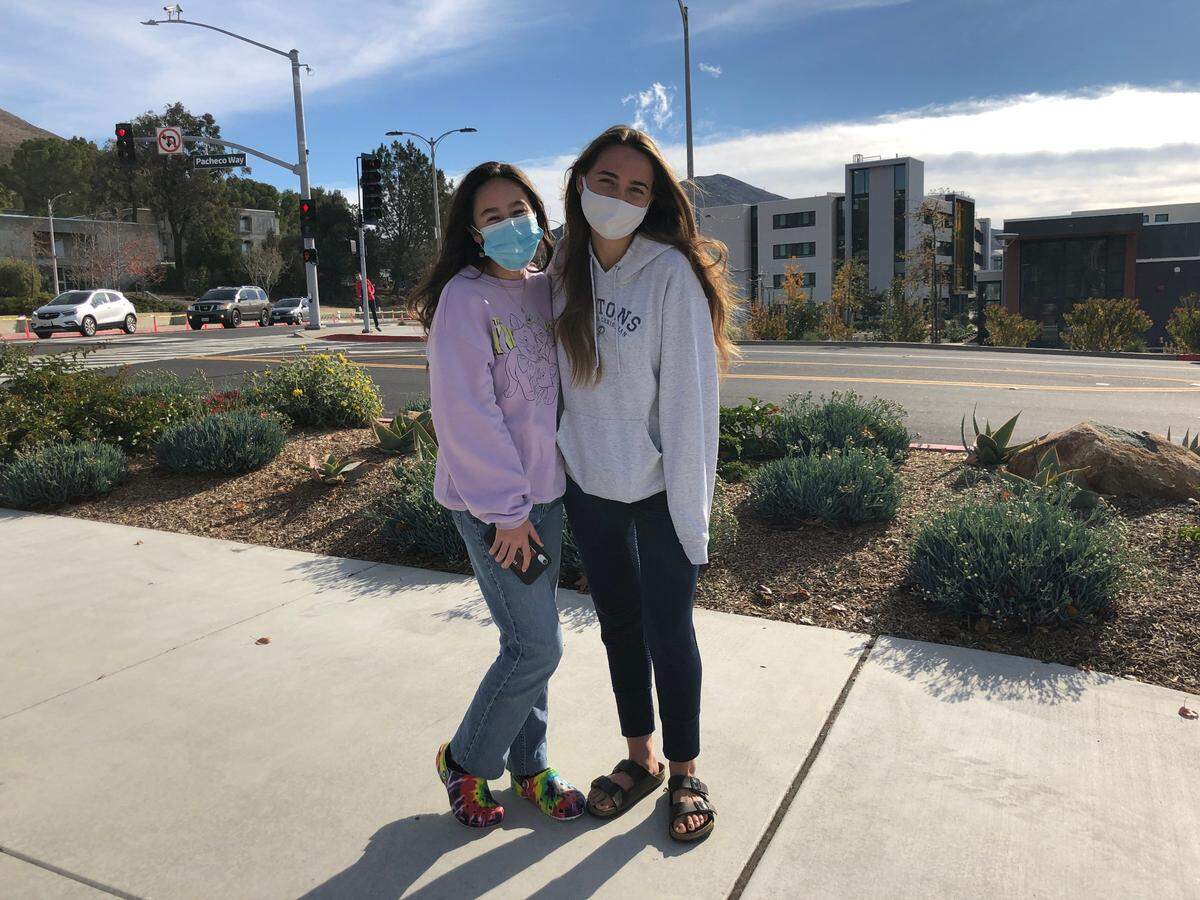
Ennen and her friend, Maggie O’Callaghan from Newport Beach, who is also a first-year student studying nutrition, said moving back on campus after living in dorms during the fall quarter is especially exciting now that they may have an in-person class this quarter.
“All of our classes last quarter were online; a lot of them were only asynchronous, so we didn’t meet as much” on Zoom, O’Callaghan said, “which was a little weird for a college that you’re paying full tuition for.”
Other freshman students were arriving on campus for the first time this quarter after living at home during the fall.
Architectural engineering freshman Tristan Aranda, 19, of Fresno said he stayed home in the fall because “it seemed like a safe bet.” But now, he said he’s happy to be living on campus in the dorms.
“I haven’t seen kids my age in, like, I don’t know how long,” he said. “I’m excited to, you know, socialize.”
COVID safety measures
Several health and safety measures are in place for students returning to the dorms, such as mask requirements, social distancing rules, increased sanitation and frequent testing for COVID-19.
Cal Poly’s President Jeffrey Armstrong told The Tribune in December that allowing students to live on campus is safer than forcing them to stay home because they can require more students to be tested. Even so, employees of Cal Poly wrote an open letter in early December protesting the university’s decision, saying that current COVID-19 conditions in San Luis Obispo County and in the Cal Poly community are “dangerous and disruptive” for “community health and student success.”
Students living on campus, coming to campus for any reason or in contact with someone who goes on campus for any reason are required to get tested twice a week through Cal Poly’s ongoing COVID-19 testing program.
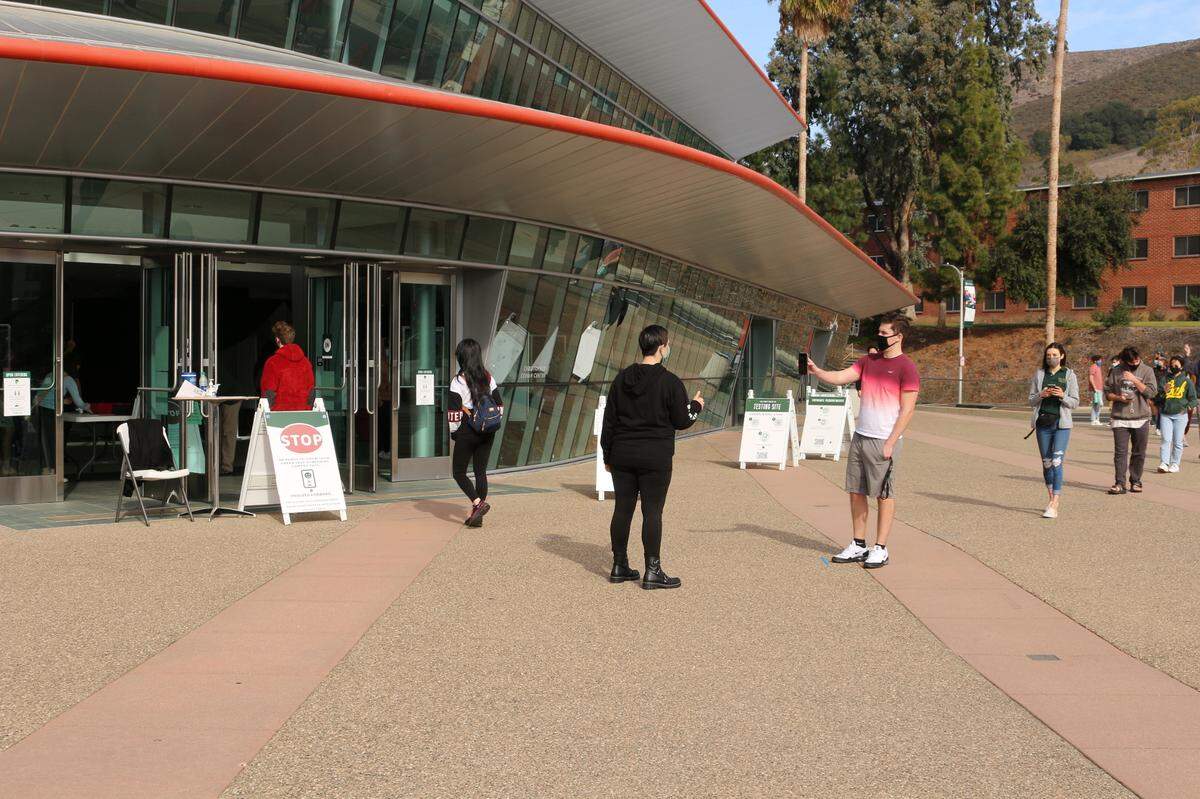
Students without symptoms of the coronavirus will receive the tests at the university’s Performing Arts Center. Those with symptoms are asked to get tested at Cal Poly’s Campus Health & Wellbeing Health Center.
In total, the university expects to have the capacity to test about 4,000 students a day, according to Armstrong.
The university will also begin monitoring wastewater coming from campus residence halls for early signs of a possible COVID-19 outbreak among residents. Should any traces of the virus be detected in the sewage coming from a certain residence hall, the university will quickly test all students living there — either on a floor of the building or in the entire building — for COVID-19.
New testing standards
Cal Poly’s new testing requirements are a big step up from the fall, when students were only required to get tested three times over the 10-week quarter, and the university averaged about 3,700 tests a week — often far below its testing goal.
Students who do not meet the testing requirements will lose access to their email, online classes, Zoom, the Health Center portal, library services, student pay, timesheet services and more, according to a COVID-19 Presidential Order released by Armstrong on Dec. 17.
Some students, like third-year economics major Colin McGlinchey, were upset that they would have to wait in line twice a week to get tested for COVID-19. It will take time away from his studies, he said, and it was inconvenient for him to get to campus twice a week.
Other students, however, were grateful that the university was stepping up its testing efforts.
“I need to get tested because I have an in-person class,” said freshman animal sciences major Hannah Nomura from San Jose. “I’m happy we’re all getting tested two times a week because it’s comforting knowing that everyone around me is being safe at least because they have to be.”
This story was originally published January 3, 2021 at 2:10 PM.