
The next mass shooting could be anywhere — Cal Poly and Cuesta are getting ready
Though a high school in Parkland, Florida, was the site of the latest mass shooting in America, a Washington Post analysis finding that 1,077 people have died in mass shootings since 1966 shows that the next one could happen anywhere: a clinic, concert, church or college campus.
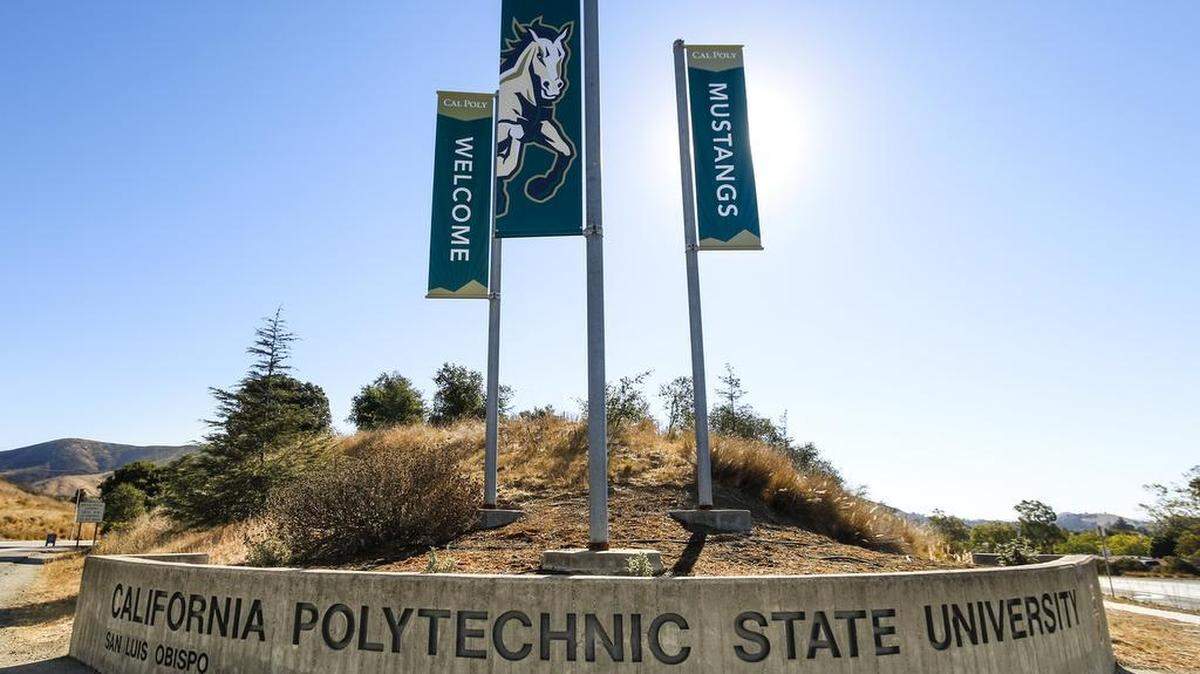
It’s the possibility of the latter that has led Cal Poly and Cuesta College to prepare for a day everybody hopes will never come. The Tribune spoke with officials from the two colleges to find out how they are preparing.
Cal Poly
“Safety of our campus community is a key focus for Cal Poly. That includes thoroughly and frequently training our campus safety professionals on procedures for active shooter incidents, as well as working to raise awareness and provide information and training opportunities to the campus as a whole,” Cal Poly spokesman Matt Lazier wrote in an email statement.
Lazier said that the University Police Department keeps “maintained up-to-date, industry-standard equipment” and trains once a year on how to respond to an active shooter situation.
“This includes training in actual campus buildings with role-players as both suspects and injured, to increase realism,” he wrote.
In addition, UPD trains with the San Luis Obispo Police Department, which would serve as backup in the event on an on-campus incident, along with law enforcement from throughout San Luis Obispo County as part of a mutual aid agreement.
“Law enforcement throughout the county takes the possibility of these types of incidents very seriously and works together to properly address them,” Lazier wrote.
The county provides standardized, digital maps of every school in the county, including the Cal Poly and Cuesta campuses, allowing law enforcement to coordinate their response in real time.
Lazier wrote that the project to update and digitize the school maps was completed in February 2017.
UPD also uses social media and holds forums throughout the year, open to all campus community members, to promote the “Run Hide Fight” protocol, a response system that calls on students to attack an active shooter if they are unable to escape or hide from them.
“Two such forums were scheduled in the coming weeks before (Wednesday’s) incident in Florida,” Lazier wrote. “The department also has adjusted its trainings to respond to broader trends nationwide — for example, discussing automobiles and other potential weapons in addition to firearms.”
Lazier wrote that there are many ways parents can get information from the university in the event of an active shooter situation.
“Communications staff would reach out directly to The Tribune and other local media to provide emergency information, via press releases, informal updates, or interviews,” he wrote, adding that Cal Poly also would post updates on Facebook and Twitter.
“The university also has the capability to broadcast on an emergency AM radio station (AM 1610) and can develop an informational call center as needed.
Cuesta College
Much like UPD, the Cuesta College Police Department active shooter response is in line with other San Luis Obispo County law enforcement, Cuesta College Police Chief Bryan Millard wrote in an email statement.
“Our department maintains heightened readiness at all times through the strategic placement of equipment, vehicles, and resources for a quick response to any location on campus for an active shooter situation,” he wrote.
That readiness includes multiple active shooter trainings throughout the year. This spring, Cuesta College will host a live-scenario drill at both campuses. Both drills have been weeks in the planning, Millard wrote.
“The 2018 drills at Cuesta College will incorporate a ‘rescue task force’ concept, which incorporates greater training with fire departments into active shooter responses, so that victims can receive treatment sooner,” Millard wrote.
To account for the possibility of an explosion, such as that which rocked the Boston Marathon in 2013, killing three and injuring hundreds, Millard wrote the college “is researching the purchase of updated trauma response equipment within this year, such as bleeding control kits.”
In addition, the main campus instructional building “has upgraded ‘lockdown’ technology which will allow instructors to lock all exterior building doors with the touch of a single button in the event of an armed intruder,” Millard wrote. “This technology will be incorporated into new building projects, and the goal is to retrofit existing buildings with electronic lock technology and ‘remote lockdown’ features within the next few years as part of bond upgrades.”
Most offices and classrooms on campus also have “Lok Bloks” installed, which allow for a door to be securely closed by staff “without exposing themselves to outside threats,” he wrote.
Both campuses also are equipped with emergency blue-light telephones wired to contact police dispatch at the touch of a button.
As for parents and family of students, Millard wrote that Cuesta maintains a free mass messaging system called “My Alert,” which is available to everyone.
“This system is used for all major emergency notifications at Cuesta College and sends messaging to both cellular telephones and email,” Millard wrote. “In the event of an active shooter, students and parents/loved ones will be reconnected as part of a ‘reunification process’ that will occur only once the campus is deemed safe.”
Andrew Sheeler: 805-781-7934, @andrewsheeler
This story was originally published February 16, 2018 at 5:31 PM with the headline "The next mass shooting could be anywhere — Cal Poly and Cuesta are getting ready."