Is Kristin Smart buried at SLO County home? Soil tests may have answers
As the San Luis Obispo County Sheriff’s Office spent Wednesday executing a search warrant at the Arroyo Grande home of Susan Flores, the mother of Kristin Smart’s convicted killer Paul Flores, scientists were busy conducting soil tests around the property and a neighboring yard.
The same soil testing method was previously used to identify inconclusive evidence of human remains at the fence between Susan Flores’ property and her neighbors’ yard — but the science behind the findings has since improved, researchers told The Tribune on Wednesday.
Paul Flores was convicted in 2022 of killing Smart when she was a first-year student at Cal Poly. Smart went missing nearly 30 years ago to the day on Memorial Day weekend of 1996.
Her body has never been recovered, though the leading theory — and the theory Paul Flores was convicted on — was that at some point Smart was buried beneath the deck at the home of Paul Flores’ father, Ruben Flores, before she was moved in February 2020. Ruben Flores faced trial at the same time as his son for allegedly helping hide the body, but a separate jury found him not guilty.
Susan Flores has never been charged with a crime associated with Kristin Smart’s disappearance.
On Wednesday, community members crowded around Susan Flores’ home during the search, hopeful that Smart’s body may finally be found.

Soil vapor probes were seen in several locations in the neighboring home’s yard collecting samples for a process known as “vapor intrusion testing” — and the same scientists who ran soil tests there three years ago were on scene, too.
The method tests for gas molecules in soil known as volatile organic compounds, certain types of which can be emitted from the natural decomposition process of living organisms — including human bodies.
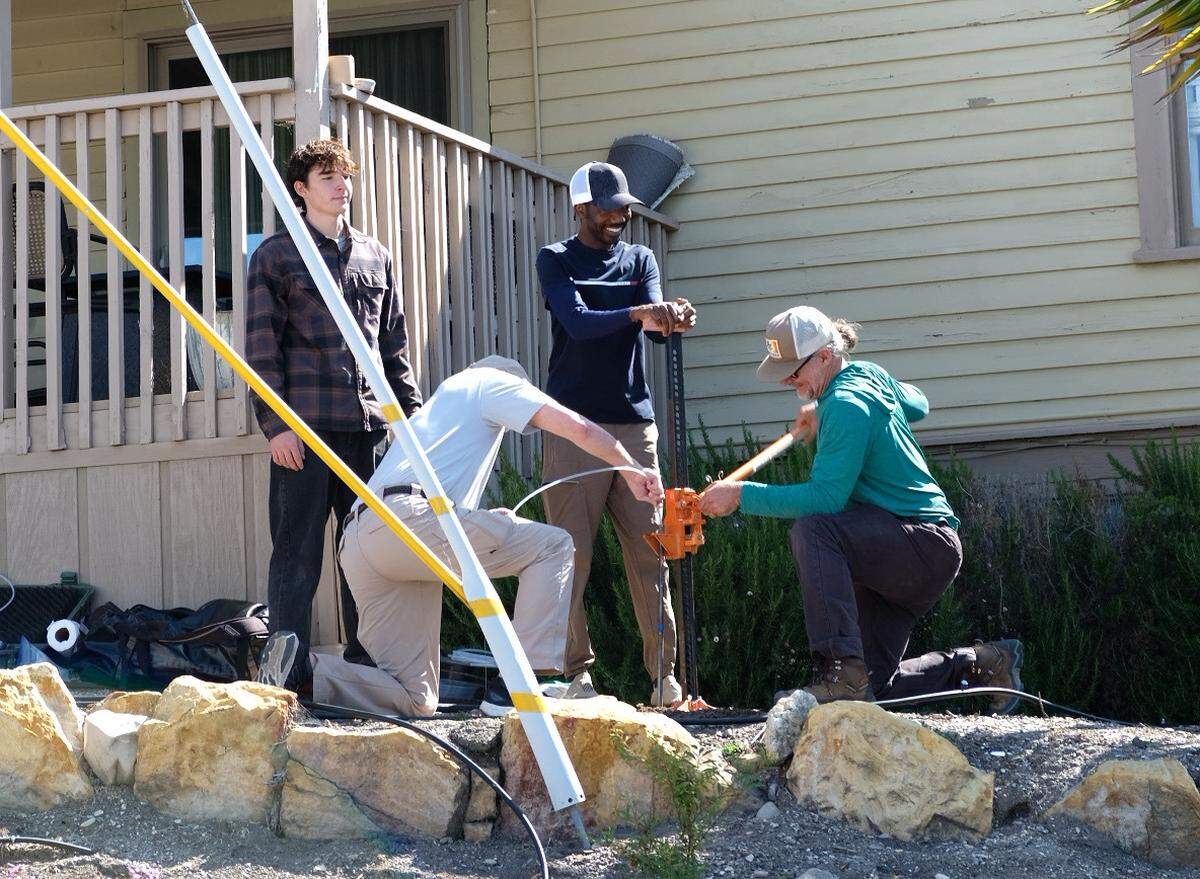
The same process was used to help identify the location of two bodies in a murder case in Washington, where the scientists found elevated levels of the same decomposing human body compounds as they did near Susan Flores’ Arroyo Grande yard.
Environmental engineer Timothy Nelligan has worked on the technology for many years. He went to Cal Poly at the same time as Smart and was inspired to use his expertise to help with the case later in his career alongside environmental chemist Steve Hoyt, former FBI chemist Brian Eckenrode and former federal prosecutor Tim Perry.
The team previously tested Flores’ neighbors soil in December 2020, August 2021 and March 2023.
All tests yielded the same result: Molecules only present when a human body decomposes were present next to Susan Flores’ back fence, they said.
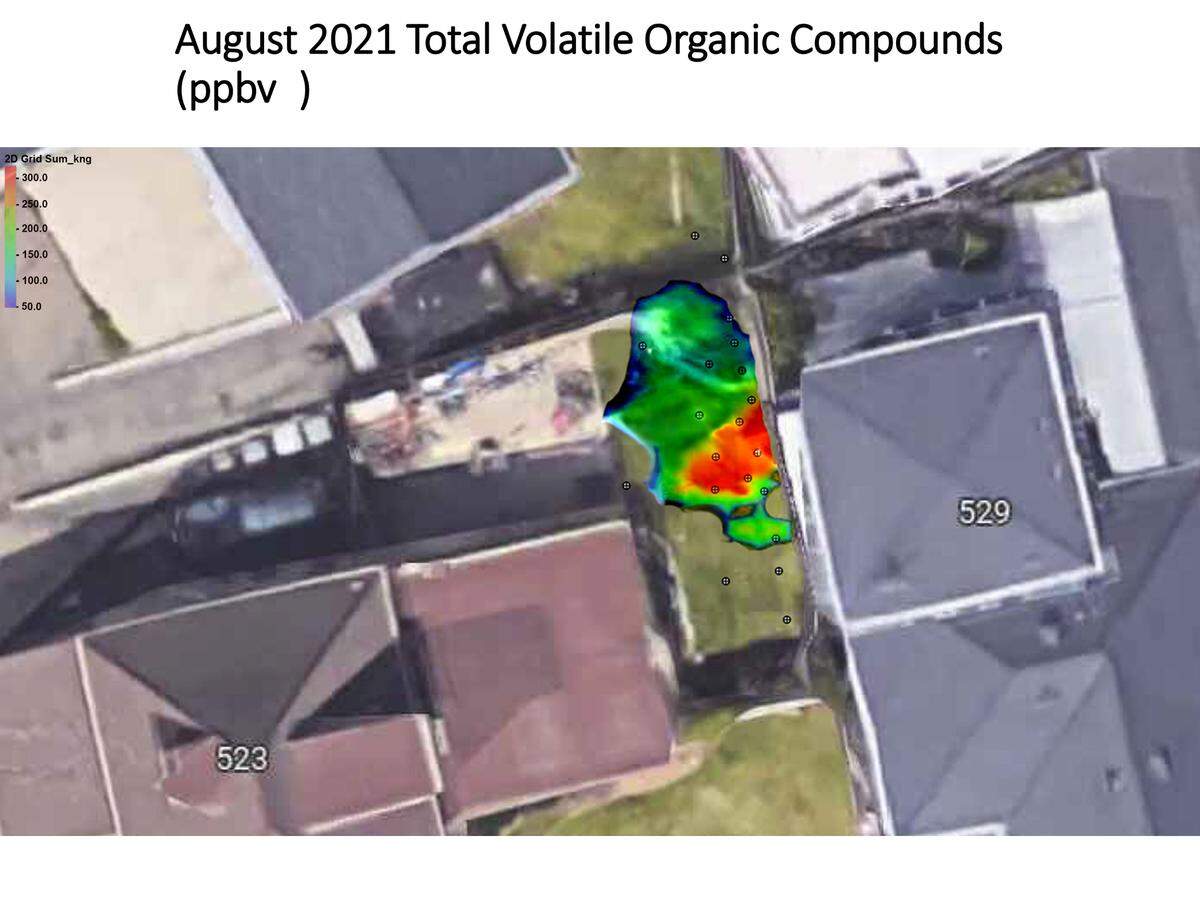
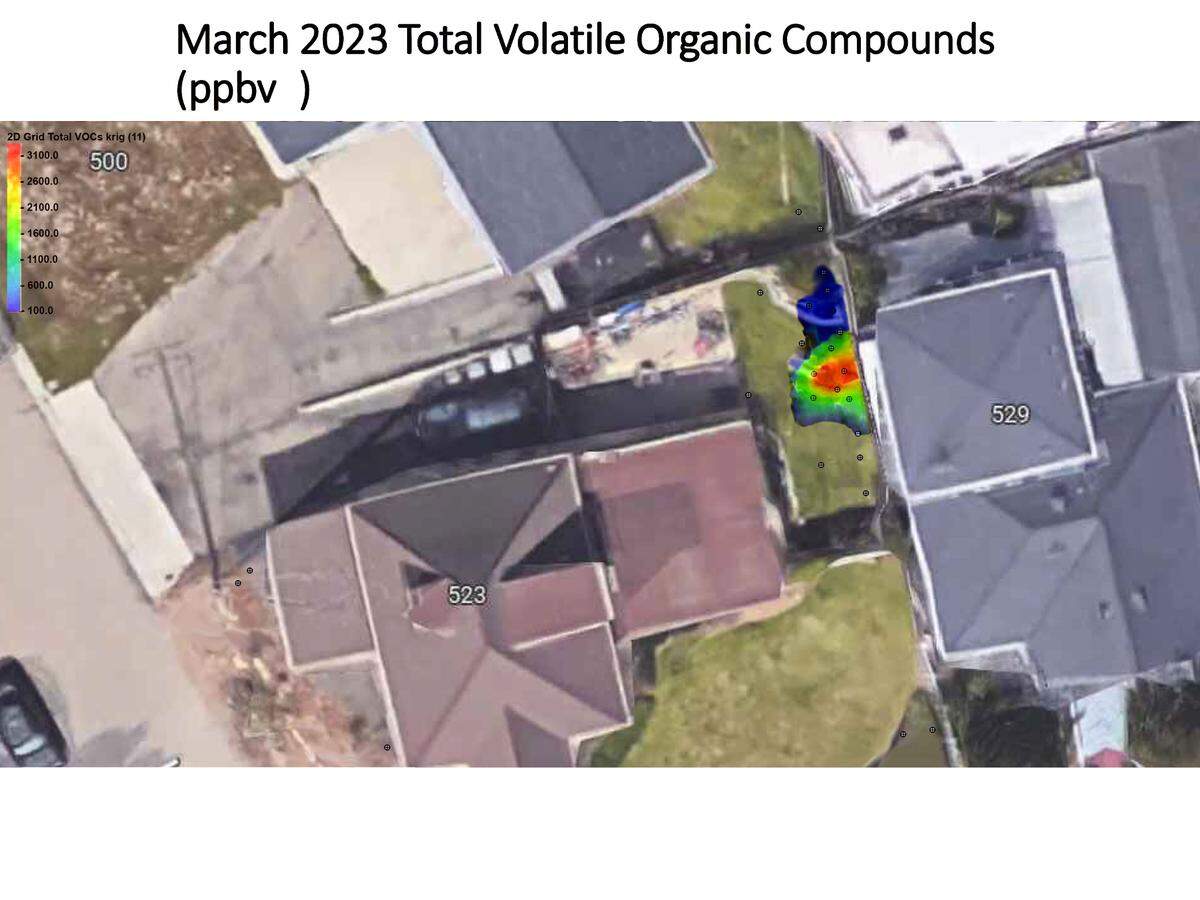
According to their data, more than 90% of the volatile organic compounds found when a human body decomposes were detected near the fence. The only compounds that were not detected were those associated with decomposing flesh, which would not be expected this long after Smart’s disappearance, Nelligan previously told The Tribune in 2023.
However, the science at the time was new, theoretical and ultimately found to be inconclusive evidence by law enforcement.
While the compounds the team tested for and found are present in decomposing human bodies, those compounds can also appear in other substances or decomposition processes — for example, in dead pigs.
But Hoyt told The Tribune on Wednesday that he, Nelligan and Eckenrode have a forthcoming study currently under peer-review that differentiates the volatile organic compound profiles of different decomposition processes — showing the difference between human remains and other remains.
“Different sources have different compounds of interest. So, you know, obviously an underground storage tank is different than a human body,” he told The Tribune. “ ... It’s like a fingerprint.”
Hoyt said the study increases the probability of their past soil tests near Flores’ yard “not being something else.”
“We know that what we were looking at before was not a pig,” he told The Tribune.
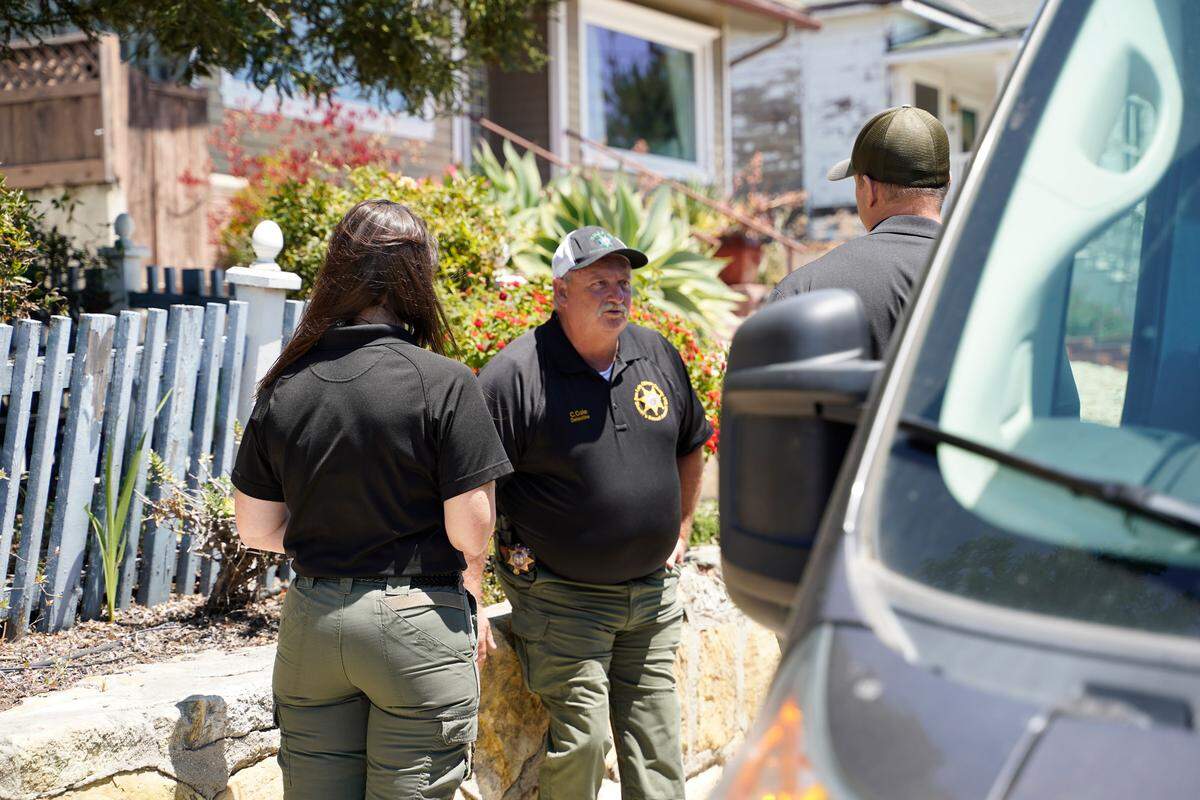
Now, the scientists have returned to Flores’ property, this time alongside Sheriff’s Office investigators.
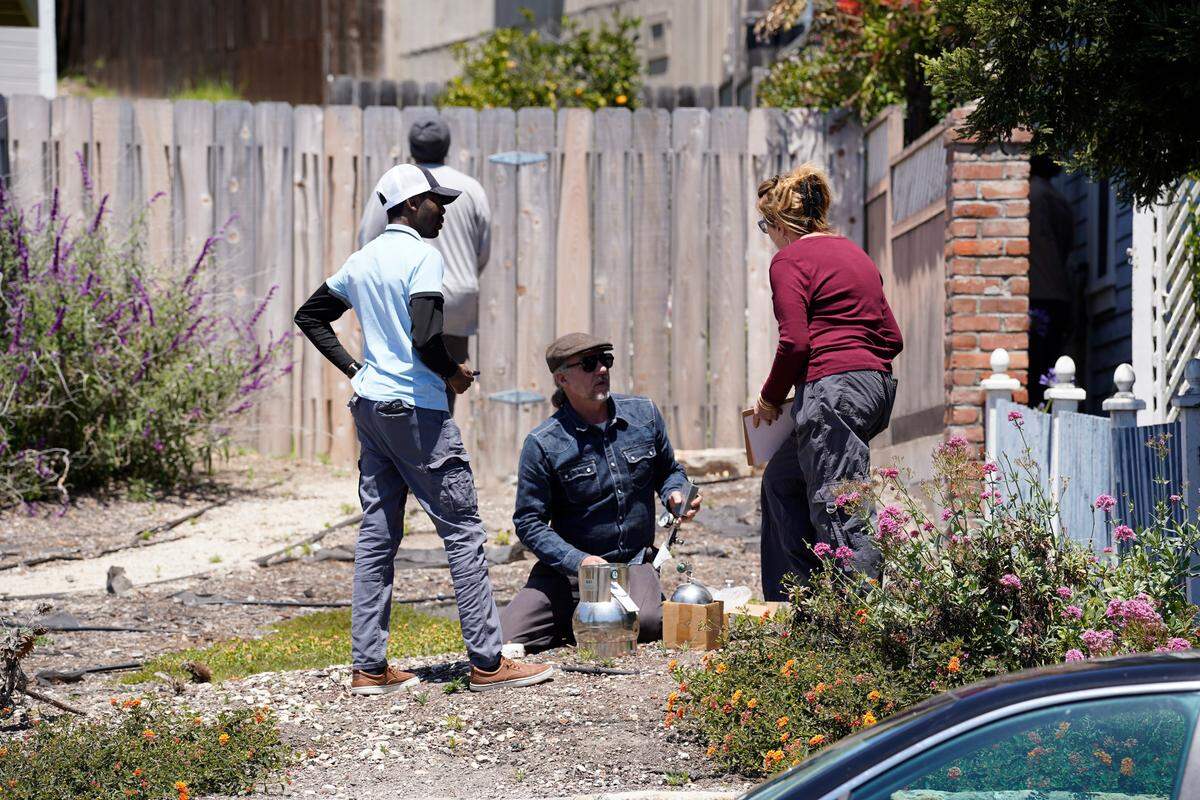
Though the Sheriff’s Office has not explicitly said what its search consists of, Hoyt on Thursday confirmed from the scene that the group, which also includes Nelligan, his son Jacob Nelligan, Eckenrode and Edward Bentil, are looking for human-specific volatile organic compounds.
The team was seen setting up probes and taking soil samples on Wednesday and Thursday in Flores’ and the neighbor’s front yard. Hoyt told The Tribune there were around 20 probes in total set up Thursday, including in both backyards.
The placement is consistent with previous rounds of soil testing, when samples were collected from all over the neighbors’ yard, with samples from areas farther from Flores’ property acting as controls for comparison. The soil in Flores’ backyard has never been tested before Wednesday.
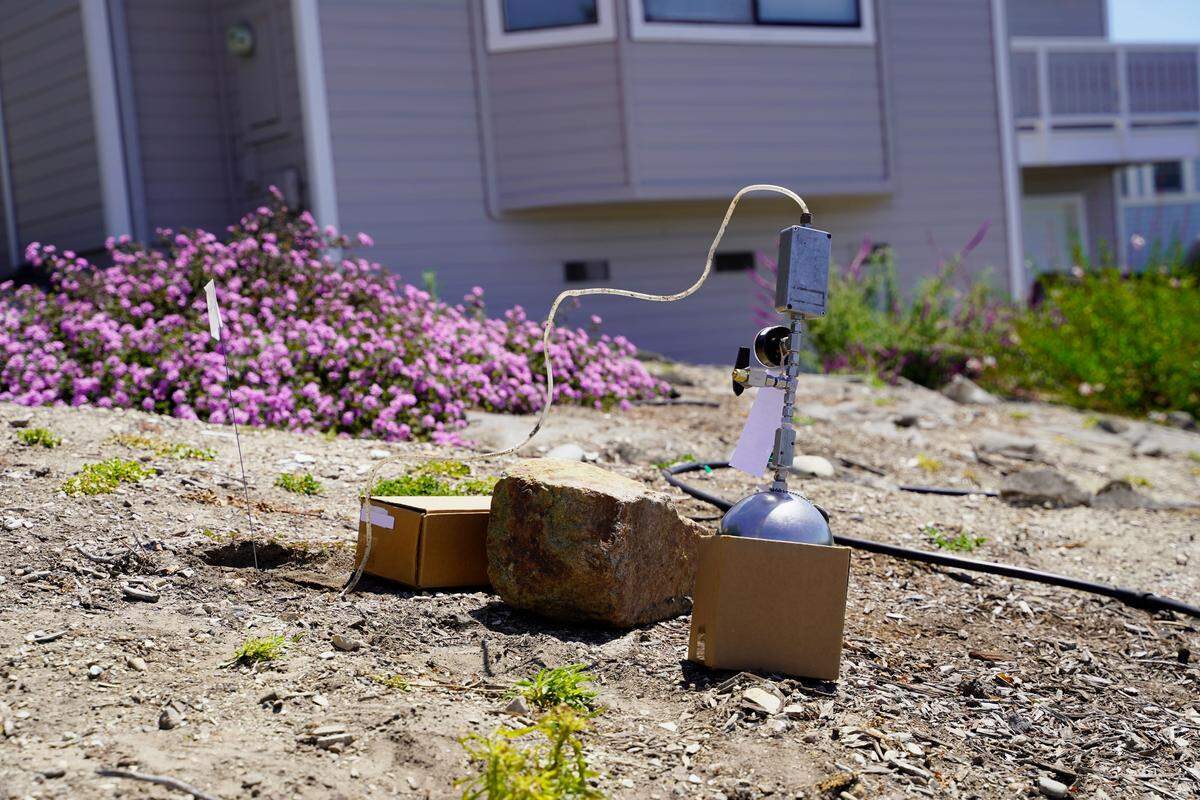
The probes are set up by drilling holes in the ground, inserting sampling tubes of 5 to 15 feet into the holes and connecting the tubes to a collection canister. The canister is then sealed, excess air is expelled, and soil vapor is pumped in. Onlookers said they heard sounds of drilling coming from the backyard Wednesday, consistent with that process. Hoyt said the current probes are 5 to 6 feet deep.
The sampling takes about half an hour, Hoyt said.
After the samples are collected, “it doesn’t take that long to run them,” he said. “It can be anywhere between 24 hours and two weeks,” depending on how urgently the results are required from the lab, he said.
For a high-profile case like Smart’s, he thinks lab results would probably be rush ordered.
“I would think they would want that,” Hoyt said.
Will cadaver dogs be brought to Susan Flores’ house?
Wednesday was only the second time ever the Sheriff’s Office has searched Susan Flores’ yard, the first time being in 2000. The property was searched two other times in 1997 and 2007 in relation to a civil lawsuit.
Experts say there is one other method that can be cross-compared with the soil sampling to determine if a body is or was ever in Susan Flores’ yard: cadaver dogs.
Forensic chemist Kenneth Furton, who was called as a witness by the defense in another high-profile case using soil science, previously told The Tribune that cadaver dogs can confirm the soil science with 90% accuracy.
A cadaver dog searched the property in a March 1997 investigation of Susan Flores’ backyard organized by Smart family attorney James Murphy with the permission of Susan Flores’ tenant at the time. Though the dog showed strong interest in the corner of the yard, dog handler Adela Morris’ notes were inconclusive as to a specific location or alert.
In 2021, she said that after reviewing her notes with decades more experience working with human remains detection dogs under her belt since, she would have classified her dog’s behavior in Flores’ backyard as a change in behavior that signified an attempt to alert, without being able to locate the primary scent source.
As of Thursday afternoon, no information had been released about the potential use of cadaver dogs in the current search and none have been spotted on scene.
The Sheriff’s Office announced Thursday it would hold a press conference at 9 a.m. Friday morning.
This story was originally published May 7, 2026 at 9:00 AM.
CORRECTION: This story has been updated to reflect previous work by forensic chemist Kenneth Furton. He was called as a witness by the defense in another high profile case using soil science, not the Flores case.