‘We can’t find anything about this’: How do SLO County police release news about deaths?
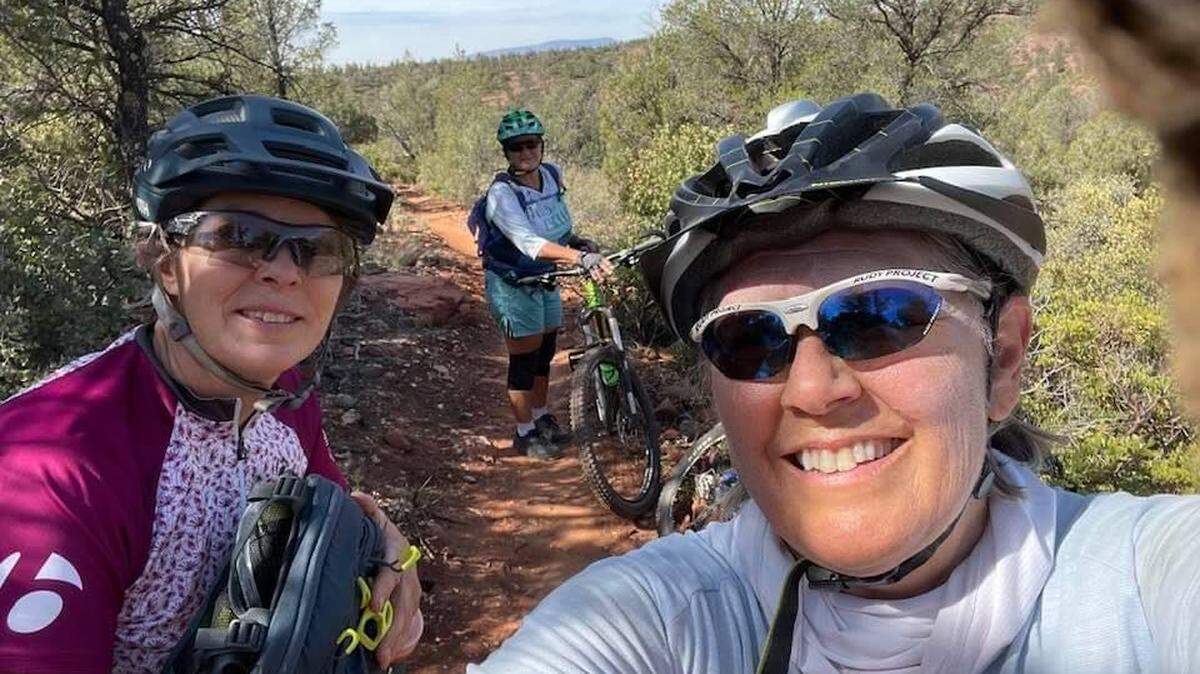
On New Year’s Day, Grover Beach resident Michelle Seybert said goodbye to her partner Ann Maliszewski and headed out for her daily bike ride while Malisewski drove her visiting mother home to San Luis Obispo.
Returning home along 12th Street at around 4:23 p.m, Maliszewski saw a cluster of emergency vehicles and, assuming a multi-vehicle crash had occurred, took a short detour around the incident.
“I turned down the side street and I looked back because I thought it must have been a multi-vehicle accident, and all I saw was her bike,” Maliszewski said.
Seybert, 57, an avid cyclist and nurse at Arroyo Grande Community Hospital, was already being rushed to the hospital by ambulance by the time Maliszewski arrived at the scene of the crash. She later was transported to Adventist Health Sierra Vista in San Luis Obispo.
“I had friends take me to Sierra Vista, and the nurse came up and told me that it was the worst kind of brain injury one can have, and she repeated, ‘It’s really bad. It’s really, really bad,’” Maliszewski said. “Right then, I knew.”
Seybert died in the hospital 12 days later of the diffuse axonal injury that damaged her brain and brain stem and put her in a coma, leaving behind Maliszewski and a community of heartbroken friends, coworkers and family members.
What followed, however, was nearly as difficult for Maliszewski.
Because the Grover Beach Police Department — the first law enforcement agency to respond to the crash — did not notify the public through a news release or announcement on social media, Maliszewski said she had to recount the details of Seybert’s death to concerned friends and family, who had no other means of learning of her passing.
The public in general wouldn’t learn about Seybert’s death for another four months.
It took Maliszewski’s appeal to the Grover Beach City Council during public comment at a May 13 meeting for the Police Department to issue a release to media about the death, as a manslaughter trial related to the collision got underway.
The tragedy is just one an example of a transparency question that happens repeatedly across San Luis Obispo County: When, if at all, should law enforcement agencies inform the public about fatalities in their jurisdiction?
The Tribune looked into the question as part of its Reality Check series.
Fatality reporting policy varies across SLO County
In San Luis Obispo County, law enforcement agencies have a wide range of criteria for reporting fatalities.
For example, the San Luis Obispo Police Department does not have a formalized policy for releasing information on deaths that do not occur at the scene of an accident, but will generally update the public in the event of a development such as a death or criminal charges associated with the death being announced, public affairs manager Christine Wallace said in an email to The Tribune.
The department’s policy is to provide information when an incident is “not routine,” which includes major injury or death, significant arrests, SWAT call-outs, high-risk warrant service or arrests and other critical incidents, Wallace said.
Wallace said the best practice is to provide as much information as possible unless doing so would be illegal, would jeopardize an investigation or if the incident is particularly sensitive in nature, such as a suicide.
Further south, Pismo Beach’s policy is less formalized, assistant city manager Mike James said.
Generally, information is released in the event of vehicle collision, dwelling fire, use of illegal drugs, or an assault with a weapon, but in the event of a death, the city defers to the county coroner to determine how and when to release information, James said in an email.
To the north, the Paso Robles Police Department releases information on a case-by-case basis, but doesn’t have a specific policy on deaths that do not occur at the scene of an incident.
The Grover Beach Police Department’s policy is to release information on a case-by-case basis depending on the circumstances of critical incidents, asking the public for assistance, incidents where the public needs to be notified of planned or prolonged events such as road closures, or providing updates to prior incidents, Chief John Peters told The Tribune in an email.
Why is it important?
In the case of Seybert’s death, information wasn’t released because Seybert did not die at the scene of the collision, and all parties involved cooperated with investigators, making public assistance unnecessary, Peters said.
“Once a case is being reviewed by the (District Attorney), our practice has been to not do press releases so that we do not jeopardize the prosecution’s case,” Peters said. “In this instance, the family of Ms. Seybert asked for a press release, and we were able to get the concurrence from the DA’s Office that a press release could be issued in conjunction with the arraignment of the driver.”
Peters said he reviewed the department policy on media releases and found it sufficient, but later told his staff to keep an eye out for situations similar to Seybert’s death that “could still have an important community interest.”
Maliszewski said she asked the Grover Beach Police Department to release information on the death on multiple occasions so that she wouldn’t have to recount the details of her partner’s passing.
“In February, I was looking to see if I could find anything about it — my brain was just not thinking about, ‘Oh, I wonder if it’s in the press,’ but I had people say to me, ‘We can’t find anything about this,’ so I was like, well, The Tribune must have something,” Maliszewski said.
Once the information was made available to media through a May 21 news release and articles were accessible, spreading the word and providing closure became easier, she said.
“I can’t tell you how many people contacted me after they finally published the press release,” Maliszewski told The Tribune. “They had just found out about Michelle’s death at that time.”
This story was originally published June 19, 2024 at 5:00 AM.