Man convicted in SLO County beach shooting did not know right from wrong, psychologists say
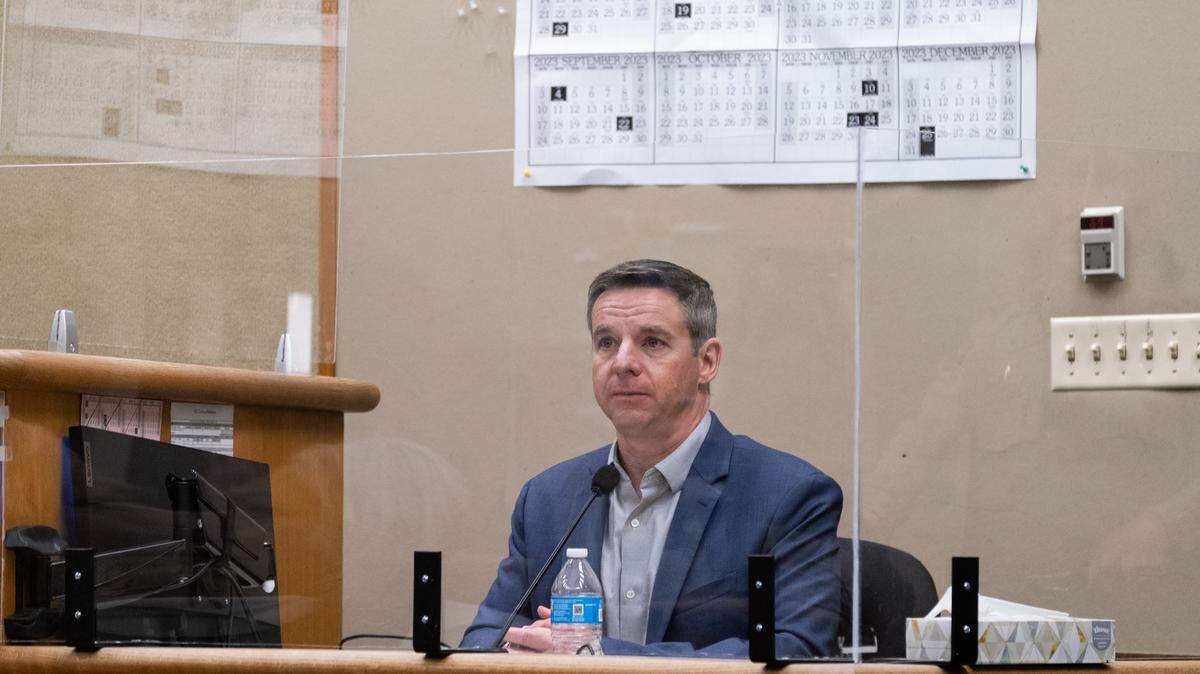
The man convicted of killing two people at a San Luis Obispo County beach in 2001 could not distinguish right from wrong at the time of the fatal shooting, two forensic psychologists said on the stand Thursday.
A jury on Wednesday convicted 63-year-old Stephen Deflaun of two counts of first-degree murder for the killings of Stephen Wells, 37, and Wells’ 11-year-old nephew, Jerry Rios Jr, during a confrontation over a Morro Strand State Beach campsite on July 8, 2001.
The jurors, who deliberated for approximately three hours of deliberation, also found Deflaun guilty of assault with a firearm on a peace officer, in this case a California State Parks Ranger.
Deflaun entered not guilty and not guilty by reason of insanity pleas in June to his charges. Now that he has been convicted, the so-called “sanity phase” of his trial has begun.
The defendant only became competent to stand trial in April 2022 after being confined the the California Department of State Hospitals System.
According to a 2004 court hearing, he was never expected to be competent enough to stand trial.
Deflaun waived his right to a jury trial for the second portion of his trial Wednesday afternoon, so San Luis Obispo Superior Court Judge Jacquelyn Duffy will decide whether Deflaun is legally insane and therefore, not guilty by reason of insanity.
If found not guilty by reason of insanity, Deflaun will be in the custody of the California Department of State Hospitals for care and treatment unless or until his sanity is “recovered fully,” according to the state penal code.
Deflaun will be sentenced according to California sentencing laws if the judge rules he was in his right mind when he killed Wells and Rios Jr.
Psychologist: Shooter does not believe what he did was wrong
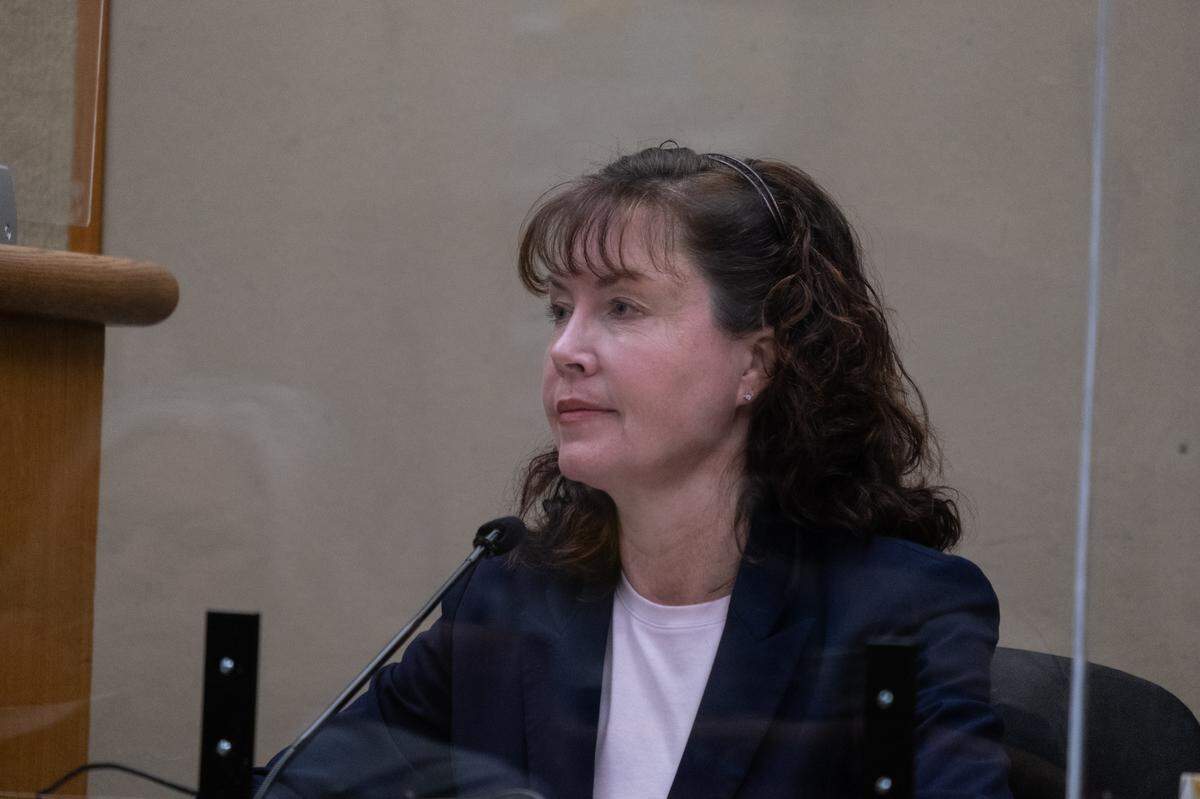
Forensic psychologist Dr. Carolyn Murphy, who previously testified during the “guilt phase” of the trial, came back to court Wednesday to share more details about her evaluation of Deflaun.
Murphy, who evaluated Deflaun in November 2022, said she diagnosed him with schizophrenia spectrum disorder, adding Deflaun is on the paranoid end of the spectrum.
She said understanding Deflaun’s history of mental illness before and after the 2001 shooting was imperative to understanding his state of mind during it.
In total, she reviewed about 43 years of documents pertaining to Deflaun’s mental illness history.
According to Murphy, Deflaun’s hallucinations of voices telling him he is being targeted — a delusion he calls “the program” — have remained consistent since 1979, when Deflaun was around 20 years old.
The shooting was one of three “outbursts” in Deflaun’s recorded history, Murphy testified, and based off her review of records she said she believes a “perfect storm” of factors are what put Deflaun over the edge that day.
For starters, Deflaun was unmedicated for a long period of time before the shooting, she said.
At that time, Deflaun said the voices were escalating, telling him he was being targeted as he isolated himself in his vehicle.
He drank 12 Keystone beers, which Murphy said lowered his inhibitions.
Two children sent by Wells — Rios Jr. and his 11-year-old cousin Brian Wells — knocked on Deflaun’s door to ask if he was staying at the campsite overnight.
Deflaun allegedly yelled at the kids, which led to a shouting match between him and Wells.
Around 15 minutes after Wells threatened to report Deflaun to the park rangers, Deflaun returned to the park entrance and shot Wells and Rios Jr.
“This may be upsetting for people to hear that (Deflaun) does not fully believe that what he did was wrong,” Murphy said.
Murphy said Deflaun told her he had been hearing voices referring to Wells as a “federal agent a--hole,” and believed Wells was part of a larger conspiracy to follow, harass and harm him.
“He did not believe the victim was an actual victim because of who they were,” Murphy said.
Deflaun saw killing Rios Jr. as an “accident,” Murphy testified, explaining that the only connection the child had to Deflaun’s delusion was that the child was sent to Deflaun’s van by Wells.
She said Deflaun’s condition creates delusions that are not considered “bizarre” — meaning that they are possible but extremely unlikely.
For example, a bizarre delusion would be believing certain people are aliens, while a not bizarre delusion is believing certain people are FBI agents, Murphy said.
Deflaun’s delusion of “the program” remains even when medicated, Murphy said, noting that medication only helps him with his impulse control.
On the day of the shooting, Deflaun allegedly told first defenders “I’m sorry,” and “I’m in so much trouble.”
Murphy said those statements could show legal culpability out of context, but noted that, within the context of Deflaun’s mental illness history, delusion and hallucinations that day, he could have also been referring to “the program.”
The difficulty with mental illness is that there is not a way to fact-check what is going on in someone’s head, so there is a possibility the person being evaluated could be lying, Murphy said.
However, she added, people lying about mental illness usually want to make it known to people that they have a mental illness.
Deflaun tries to hide his mental illness, and does not believe he is mentally ill, Murphy said.
She said the statements he made, along with the amount of documentation of Deflaun’s illness, records from the time of the shooting and his current testimony, suggest Deflaun is telling the truth of his reality.
Convicted killer has ‘pattern of acting out,’ witness testifies
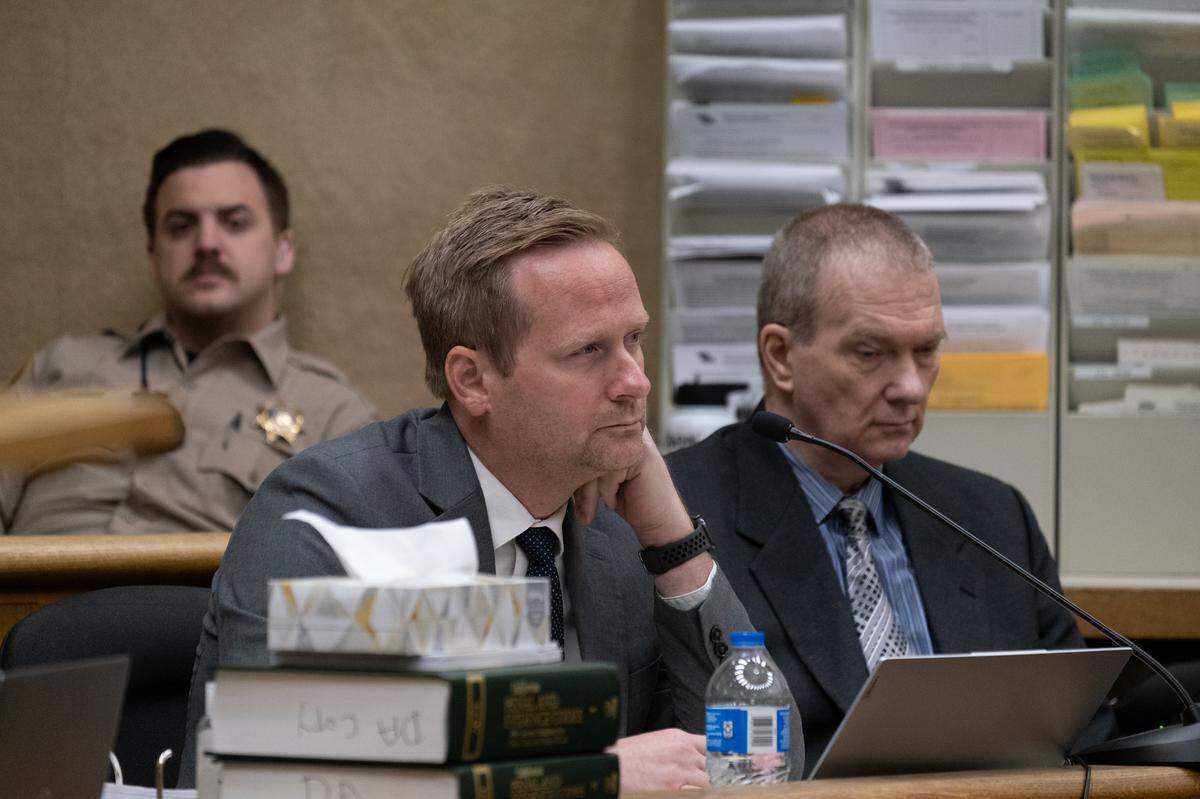
Kevin Perry, a forensic psychologist with a practice in San Luis Obispo County and who works at Atascadero State Hospital, did not review Murphy’s report, but had similar opinions.
Perry has met with Deflaun three times — twice for a previous Murphy conservatorship, which is when a person is not competent to stand trial but cannot be released because they are a danger to society, and once for the current criminal case against Deflaun. The most recent meeting took place in July 2022.
Perry said he believes Deflaun knew firing a gun would cause Wells’ death, but that Deflaun could not tell right from wrong when he killed Wells.
Perry said Deflaun has “longstanding severe psychiatric illness,” noting Deflaun has been hospitalized involuntarily multiple times in the past.
The psychologist said Deflaun isolated himself in his van in the mid-1980s in order to “withdraw from society” and did not interact with people for the most part until the day of the shooting.
Deflaun has two previous violent outbursts against his mother in Massachusetts, one of which resulted in a verdict of not guilty by reason of insanity.
“There’s a pattern of acting out in a way that either doesn’t make sense or the person isn’t able to distinguish moral wrongfulness,” Perry said. “The best predictor of future behavior is past behavior.”
Deflaun’s incompetency to stand trial for more than two decades also bears weight in his overall mental diagnosis, Perry said.
In order to be mentally competent to stand trial, a person has to be able to understand what they are being charged with and be able to help their lawyer with their defense.
On cross-examination, Perry said it was possible for someone with schizophrenia to be able to understand right from wrong when they are doing something wrong and that they may lie in order to help themselves.
In his July 2022 interview, Deflaun did not mention he “verbally assaulted” two children, but Perry said it wasn’t an immediate cause for concern given the passage of time.
Murphy was also aware of the verbal assault allegation before he interviewed Deflaun because it was included in the reports he reviewed.
Perry said he believes Deflaun was telling the truth of his reality, because when people lie about mental illness they do so for personal gain.
Deflaun wanted to get out of mental institutions, but he continued to show psychotic symptoms that kept him in them.
Deflaun’s “delusional system” has also remained the same throughout his 40-year history of mental illness, Perry said.
What’s next
The defense rested its case for the sanity portion of the trial at the end of the court day Thursday. The prosecution will begin its arguments on Monday at 11 a.m.