The Tribune is joining ABC News, AP and LA Times to unseal Kristin Smart records. This is why
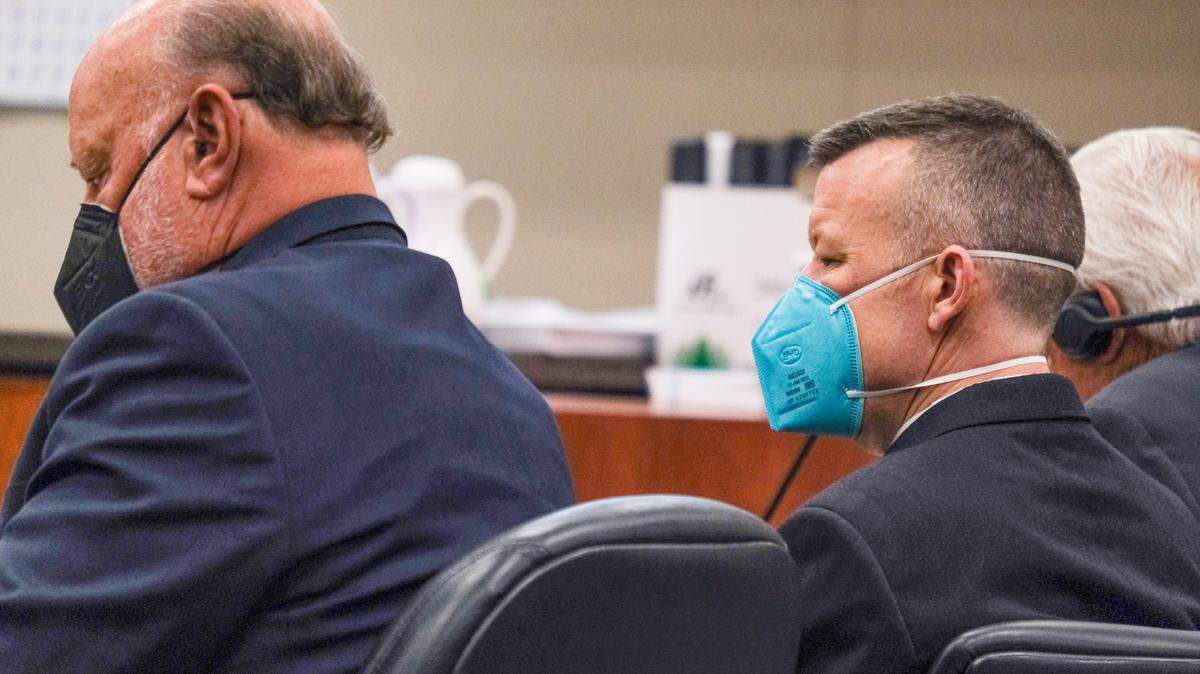
The San Luis Obispo Tribune has teamed up with ABC News, the Associated Press and the Los Angeles Times in an effort to unseal records in the Kristin Smart murder case.
The news media coalition, formed by the Tribune, filed a motion Thursday to both unseal records and allow remote online access to them.
Paul Flores has been charged with killing Smart, a Cal Poly student who disappeared after an on-campus party in May 1996. His father, Ruben Flores, is accused of helping hide Smart’s body after the fact. The two men were arrested in April 2021.
San Luis Obispo Superior Court Judge Craig van Rooyen moved their trial to Monterey County Superior Court, citing pretrial publicity.
Between April 20, when the Smart case moved to Salinas, and July 5, the last day the Tribune was physically in the Salinas courthouse, only about 12% of court filings that do not pertain to media access are public.
This lack of access is inconsistent with other criminal murder trials, and also inconsistent with U.S. and California law, the coalition argues.
“Openness in and press coverage of criminal court records and proceedings empowers the public to debate, evaluate, and politically supervise the work of law enforcement and the judicial branch in an informed manner,” Aaron Field, counsel for the coalition, wrote in the motion. “No party has demonstrated that any sealing is justified in this case ...”
The coalition is asking the court to unseal all records filed in the case on or after April 20, to provide required context to their online register of actions and to find the case “extraordinary,” which would make records available online.
Opening statements in the trial are expected to begin Monday.
When should court documents be sealed?
The U.S. Supreme Court has long held that First Amendment under the U.S. Constitution protects the right to access criminal trials, and the California Supreme Court in particular has upheld the right to access court proceedings and records.
“In this country it is a first principle that the people have the right to know what is done in their courts,” the California Supreme Court ruled in 1893, setting a long-standing precedent that protects the public’s right to access court proceedings and records.
This precedent was upheld in 1999, when the California Supreme Court ruled judicial records and proceedings could only be sealed or closed from the public “in the rarest of circumstances.”
In order for a judicial document to be sealed, a 2002 California Supreme court ruling found, a court must find the following:
- There is an overriding interest that overcomes the public’s right of access
- There is a substantial probability that sealing will promote that interest
- The sealing order is narrowly tailored to serve the overriding interest
- There are no less restrictive alternatives to sealing
The California Supreme Court also ruled jury contamination is not a sufficient justification to seal records, especially if jurors are given instructions under oath to avoid outside information or jury sequestering can address fair trial concerns.
Additionally, sealing requests and orders in the Smart case have been sealed, so there is no way to know what documents exist — something that seems to be out of line with California Rules of Court, the coalition argues.
According to the rules, the court must publicly docket a notice to seal a written filing accompanied with reasons to justify the sealing.
Sealing these records means the public “cannot identify with confidence what records are being withheld or the extent of the sealing, and they cannot assess the parties’ and the court’s reasons for secrecy or meaningfully evaluate whether secrecy is appropriate,” Field wrote in the motion.
The gag order placed on the case in April 2021 by van Rooyen does not justify sealing or closure in the case, Field said in the motion. If it does, the coalition asks the court to modify it to be in line with the law or vacate it completely.
Which Kristin Smart case records are public?
According to a Tribune analysis of court records between April 20 and July 5, there have been 243 document filings between both Paul and Ruben Flores’ cases in the trial.
Of those 243 filings, 166 are sealed and 77 are public.
Of the public filings, 54 pertain to media requests, the Tribune analysis found. The remaining 23 pertain to more administrative procedures, such as judge selection, trial dates and jury questioning procedures.
None of the public filings provide substantive information about the trial.
Not counting filings pertaining to media access, 189 documents were filed between the two cases. And only 23 of those are public.
This means only about 12% of court filings that deal directly with the case are public.
None of the publicly available filings offer information beyond administrative means, such as who the judge is, jury questioning procedures or trial dates.
Remote access and register of actions
A register of actions, also known as a docket, lists filings by name and actions in the case that provides basic information about court proceedings, such as whether a motion was granted or denied.
Under California Rules of Court, this docket is supposed to be accessible online in criminal cases. The Tribune has been working privately with the San Luis Obispo Superior Court to unlock that online access.
The docket for Monterey County Superior Court gives little information on court proceedings, instead just listing filings by document types such as “motion,” “affidavit” or “document: other.” As it stands now, it is impossible to gain any informational context about court proceedings from the online docket.
The internal docket, however, seems to have more information about the case but clerks have refused to relay any information citing the gag order.
Criminal court documents are usually only accessible via the court’s computer or via a public records request. The only way records can be available online is if the case is deemed “extraordinary.”
A criminal case is deemed extraordinary if the number of records requests is extraordinarily high and if responding to those requests burdens operations of the court.
Monterey County Superior Court has refused to respond to public records requests electronically, instead requiring the public to either send a request by mail and wait up to a month for a response or drive to the courthouse in Salinas.
The Smart case has strong regional, statewide and national interest. But these rules make it difficult for many reporters — and interested members of the public — to access documents.
A criminal case is deemed extraordinary if the number of records requests is extraordinarily high and if responding to those requests burdens operations of the court.
Given the significant interest of the media and the public in this case, especially if records are unsealed, the coalition argues this is “a textbook case” to be found extraordinary so remote access to documents can be granted.
What’s next for news media coalition?
The news media coalition has requested that a hearing for its motion to be heard as soon as possible. It is unclear if parties in the case will file responses to the motion, or if the judge will actually hold a hearing.
This story was originally published July 15, 2022 at 9:23 AM.