The Kristin Smart murder trial is moving out of SLO County. What happens now?
A San Luis Obispo Superior Court judge’s ruling that Paul and Ruben Flores cannot receive a fair trial in San Luis Obispo County means the Kristin Smart murder case will be moved to a new venue, postponing the trial a month before it was set to begin.
The decision sets in motion a new sequence of steps to determine what might be a suitable location for the trial and when it can be scheduled.
Paul Flores is alleged to have killed Kristin Smart after an off-campus Cal Poly party in May 1996. Ruben Flores, Paul Flores’ father, is alleged to have helped hide the body, which has still not been found. The two were arrested in April 2021 — 25 years after Smart’s disappearance.
The decision makes this case the fourth criminal trial in the past five decades to move outside SLO County — the most recent being the case of Rex Krebs in 2001.
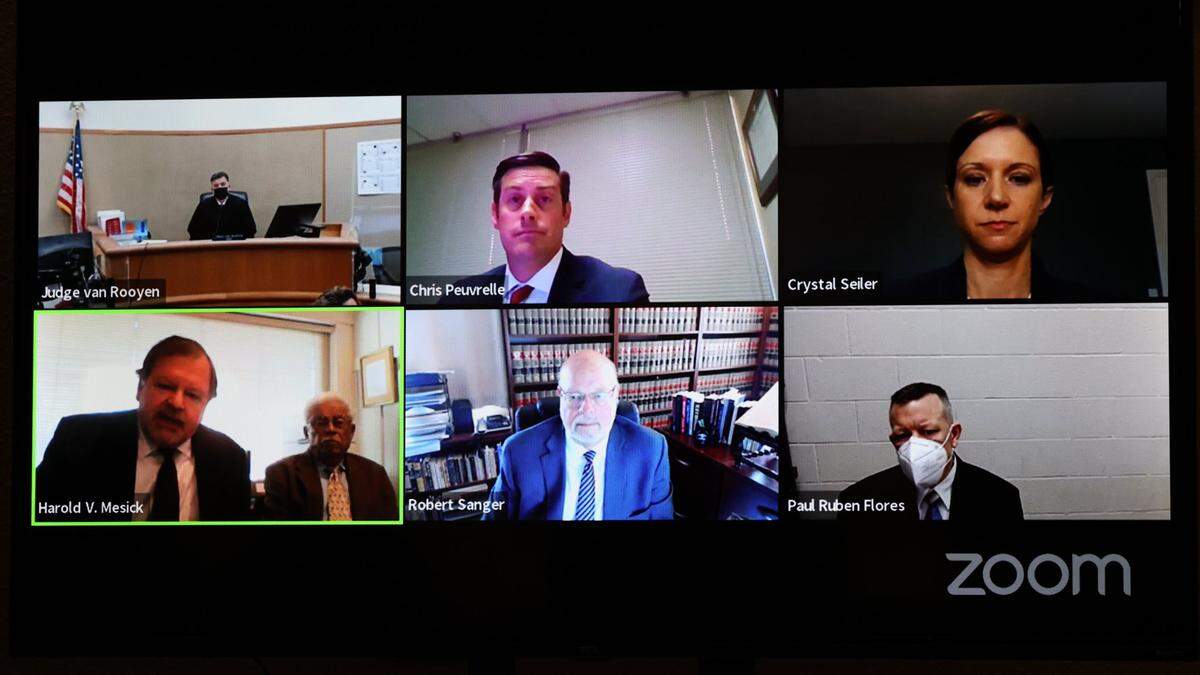
Judge Craig van Rooyen justified his decision by saying the publicity and saturation of the case in SLO County was overwhelming, and a change of venue was necessary to ensure Paul and Ruben Flores receive a fair trial.
So, what happens next?
How does a change of venue work?
First, van Rooyen has to notify the Judicial Council of California, the rule-making arm of California Courts, about the decision and request help in finding potential courts outside the county that could host the trial. He will have to describe the case, why he made the decision, and suggest potential sites for the trial, a fact sheet by the council says.
The council will then contact presiding judges and executive officers of potential courts to identify whether the court will have space and will not be “unduly burdened” by the trial.
The council will discuss the circumstances of the case with the potential courts, including the estimated length of the trial, security problems, workload that would be required of the new court, and costs. The presiding judge’s assessment of the potential court’s ability to conduct the trial and demographic characteristics of the new location are also considered.
A suitable court site should be able to handle news media, staffing needs and security for defendants and victims, the council said.
The council will attempt to identify within two weeks at least three options for potential courts that can handle the case, but the number of options and the time it takes to find them depend on the circumstances of the case and which courts say they can take it.
Once options are identified, a hearing will be held where the defense and prosecution argue their opinions on which court the trial should move to. Van Rooyen will have to decide at the end of the hearing after both sides’ arguments.
This hearing is supposed to happen at the earliest convenience the judge and parties are available. The new date of the trial is also usually discussed at this hearing.
Van Rooyen will have to tell the council of his decision, and the council will notify the potential courts on whether they will be holding the trial.
Once the trial is scheduled, both parties will have to figure out accommodations to attend the trial in the new location. The District Attorney’s Office will still prosecute the case, but the jury will be from the new location.
When will the trial take place?
The new date of the Flores trial will likely be months after April 25, the date it would have begun if it stayed in SLO County.
It will take at least a month, if not longer, for the process of finding a new location to be complete. Courts have their own trials already scheduled, so another county’s trial will take time to make it on the schedule.
For example, the 2001 trial of Rex Krebs was pushed back about nine months after it moved to Monterey County.
Expect several months, potentially up to a year, before the trial is ready to begin in the new location.
A status hearing to discuss a plan moving forward is scheduled for April 4.
This story was originally published March 30, 2022 at 12:48 PM.