‘What if it were your son?’ Trevon Perry’s family says justice wasn’t served with plea deal
March 15 was a difficult day for Trevon Perry’s family.
It was the second-year anniversary of Perry’s brutal murder. The 27-year-old was was shot in the back of the neck at point-blank range while inside a car in Paso Robles, then was missing for three months before his body was found buried underneath a chicken coop in Riverside.
It was also the day his killer pleaded guilty to the crime, agreeing to a deal that sentenced him to 28 years to life in state prison — 25 years to life for the murder plus three years for the use of a firearm.
The Perry family had previously asked the San Luis Obispo County District Attorney’s Office and the court to avoid scheduling hearings on the anniversary of Trevon’s death — the court even recently rescheduled a hearing from that date for a different defendant in the case because of this.
Mike Frye, the deputy district attorney prosecuting the case, told the Tribune the hearing had been inadvertently set on that date, and it came down to the fact that Trevon’s killer, Nicholas Ron, was ready to plead guilty that day so there was an urgency to go through with it.
It wasn’t the first time Perry’s parents, who live in Chandler, Texas, said they were hurt by the District Attorney’s Office and the court. They say their experience with the office has retraumatized them over and over again and has prevented them from healing from the tragedy.
They disagree with the decision to plea bargain and not take the case to trial.
The family wanted a longer sentence for Ron and are unhappy with the leniency given to the nine accessories in the case, most of all Ron’s mother Marie Holquin, who played the lead role in disposing of Perry’s body.
“Just nothing we’ve said has been heard,” Geary Perry, Trevon Perry’s father, told The Tribune.

Killer sentenced to 28 years to life
A first-degree murder conviction can be punished three ways in California: the death penalty, life in prison without parole, or 25 years to life in prison. If a firearm was used, it can add another 25-years-to-life sentence — so 50 years to life would be the maximum for the third option. While the death penalty is still in the penal code, Gov. Gavin Newsom put a moratorium on death penalty sentences and halted awaiting death sentences in 2019.
Taking a case to trial always comes with risks, and the outcome can be unpredictable. A jury may find the defendant not guilty, or it may find the defendant guilty of a lesser offense.
But this was a gamble the Perry family was willing to take.
Even if the jury found Ron, 25, guilty of second-degree murder, he still could have faced up to 40 years to life in prison because he used a firearm — 15 years to life for second-degree murder and 25 years to life for the firearm. Voluntary manslaughter, which is when someone kills another in a heat of passion, would have carried a maximum 21-year sentence, 11 years maximum for the manslaughter and 10 years maximum for the firearm.
“If we went to court and they said not guilty, that honestly would have been better for us,” Geary Perry said.
Because if Ron went to court, “I could take that as at least you (the District Attorney’s Office) tried. At least you’re trying to hold people accountable,” Kelli Perry, Trevon Perry’s mother, added.

Because Ron was 23 when he murdered Trevon Perry, he qualifies for the youthful offender provision under California Penal Code 3051.
That limits how long he’ll effectively stay in prison before being eligible for parole.
According to the law, someone who commits a crime while under the age of 26 is eligible for parole after 25 years regardless of what they’re sentenced to. The only exceptions are if they receive the death penalty, if they have a previous strike offense on their record, or if they are over 18 and receive life without possibility of parole.
So even if Ron was sentenced to 50 years to life in prison, he would still be eligible for parole after 25 years (potentially about 16 and a half years with good behavior).
“At the very least, it would tell the parole board that he received a 50-year sentence,” Kelli Perry said. “If there was no difference at all, then why would the law even allow for anything above 25 to life on somebody under 26 years old?”
When it came down to it, Frye told the Tribune the DA’s Office went with the 25-to-life sentence because it ensured a guilty plea to premeditated murder, which most accurately reflected Ron’s conduct while committing the crime, while functioning the same as a 50-to-life sentence.
The District Attorney’s Office offered a fixed-term sentencing enhancement that applied to the use of a firearm and could add three, four or 10 years. The office went with three years in its plea deal.
So in total, Ron received 28 years to life in prison. His sentencing is scheduled for April 12 but is expected to be delayed until June.
He is expected to be eligible for parole in about 18 and a half years with good behavior.
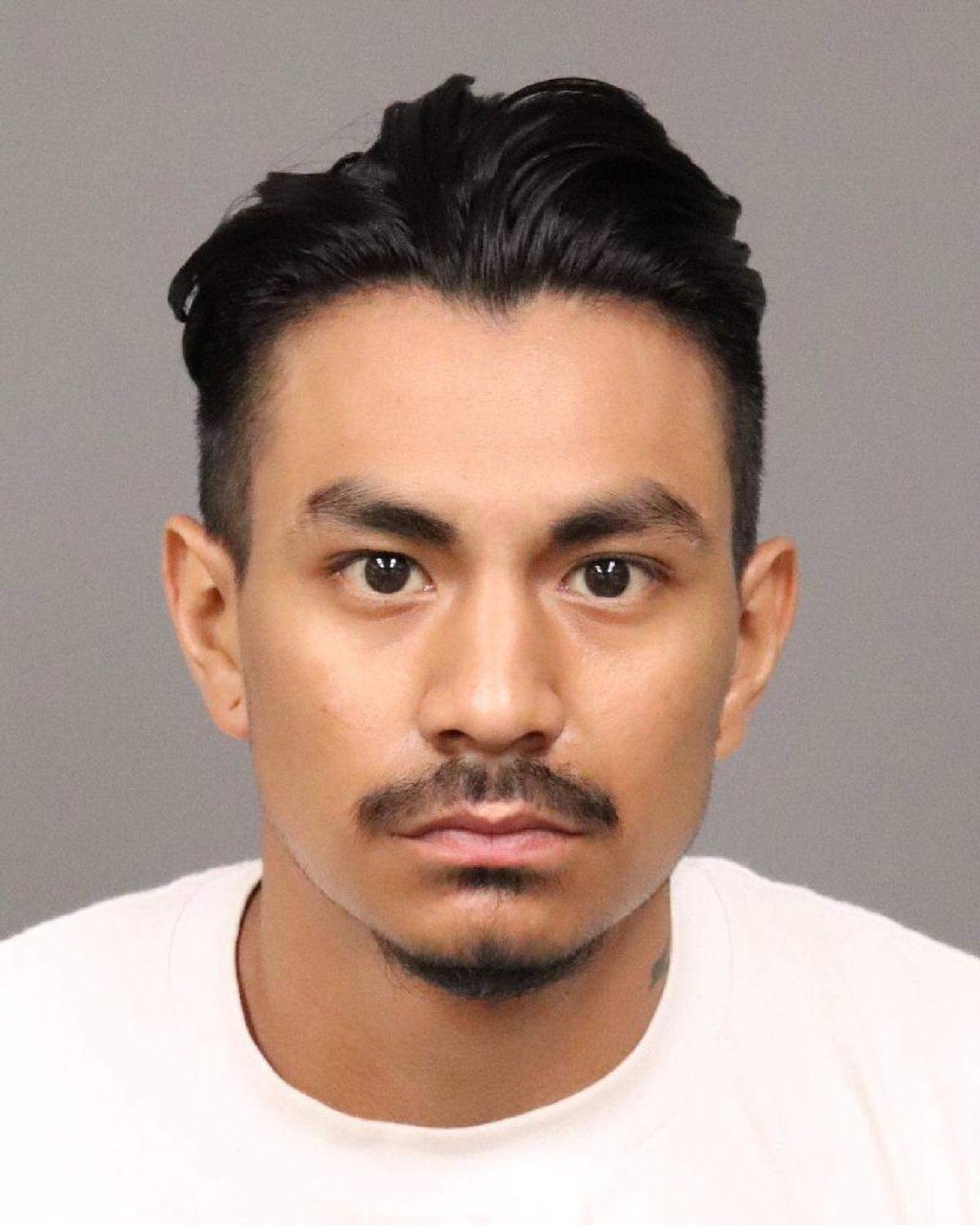
Family of killer offered leniency in plea deal
For Kelli Perry, one of the most troubling parts of Ron’s plea deal was leniency toward the family members who helped conceal her son’s murder, especially Ron’s mother, Marie Holquin.
“I told them (the District Attorney’s Office) from the very beginning that I feel as strongly about his mother as I do about him serving time,” she told the Tribune.
Holquin is accused of helping Ron come up with a plan to move Trevon Perry’s body, burning the car that contained evidence, and threatening a witness with killing their family members after they overheard her and Ron talking about hiding the body.
She is charged with one count of witness intimidation and two counts of accessory after the fact and has pleaded no contest to the crimes, which functions the same as a guilty plea without admitting direct fault.
Witness intimidation carries sentences of two, three or four years, and each accessory charge carries a 16-month, two-year or three-year sentence.
When someone is charged with multiple felonies, however, the felony with the longest maximum sentence serves as the “principle term,” and the sentencing for the other charges are automatically one third of the middle term, according to California sentencing guidelines under Penal Code 1170.1.
So Holquin faced a maximum of four years for witness intimidation, plus eight months for each accessory charge (one third of the middle accessory sentence of two years), totaling a maximum sentence of five years and four months for the three charges.
But as it ended up, Holquin served one year and four months in jail.
She was granted supervised release at a March 29 hearing and is expected to be freed on June 14 following Ron’s sentencing.
She has already served the entirety of the sentence she is expected to receive — two years and eight months — because she had good behavior while incarcerated. Nonviolent crimes, including accessory and witness intimidation, get half credit with good behavior under California law.
At that March 29 court hearing, Kelli Perry tried to convince the judge to order Holquin to remain in jail.
“I could never have left another mother wondering where her child was, and if it were up to her, we would never have found him,” Perry said.
What happened to the other accessory cases?
Accessory after the fact, known as Penal Code 32, applies to anyone who helped someone hide or conceal any felony after the crime was committed. It’s the crime nine people were charged with for their various roles in concealing Ron’s murder — including moving the body, burying the body, destroying evidence and lying to law enforcement.
Sentencing guidelines for the charge are the same no matter the felony the person charged is alleged to have helped conceal.
That means someone who is charged with accessory after the fact for felony shoplifting could theoretically receive the same sentence as someone charged with accessory after the fact for murder or rape.
“Should accessory after the fact carry a heavier sentence? Well, yeah, it should. And it should be based on the crime,” Frye told the Tribune. “But that’s not the way our laws are set up.”
Mario Rostro, who was driving the car Trevon Perry was shot in, was the only person to receive the maximum sentence of three years, but it was a split sentence — two years in jail and one year of supervised release.
All nine people who helped Ron conceal his crime are expected to be on supervised released or free altogether after Ron is sentenced in June. The leniency was a factor requested by Ron to secure his guilty plea, Frye told the Tribune.
If California law is already lenient on the accessory charges, Kelli Perry said she doesn’t understand why the nine people who helped conceal the crime are receiving even more leniency.
But the District Attorney’s Office said it received the best outcome it could get, balancing the limitations of California’s sentencing laws and the importance of Ron’s guilty plea.
Navigating victim’s rights
Plea bargain documents are not required to be in the public record in SLO County, so the details behind them are rarely revealed.
But victims of a crime do have the right to be notified of a potential plea deal and its details and to have their thoughts heard under California’s Victims’ Bill of Rights, also known as Marsy’s Law.
The Perry family has attended just about every meeting and court hearing that had to do with their son’s case.
Kelli Perry said she remembers being told that the District Attorney’s Office would go for maximum sentences for Ron, Rostro and Holquin, but that ultimately did not happen.
She said she feels lied to and robbed of justice, and doesn’t understand why Judge Jesse Marino or the District Attorney’s Office has been agreeing to the sentences.
Victims have a right to be heard in any proceeding, but Marino on multiple occasions has told Kelli Perry and other family members to postpone their statements until the next hearing, including an earlier hearing where Marino gave Holquin an indicated sentence of three years and eight months, Kelli Perry said.
Perry feels the family should have been heard before the indicated sentence was decided.
”You all say that it’s one of the worst cases you all have ever seen. The sentences do not reflect that at all,” Kelli Perry said at the March 29 court hearing where Holquin was granted supervised release. “To even hear you say that it is within reason — is it? Would it be if it was your son in the trunk? Would it be if the car was burned and you couldn’t get your son any justice? Would it be when your son comes back to you and he’s in a box? Would those sentences be adequate to you all?”
Victim’s statements inform decisions, but they do not steer them, Assistant District Attorney Eric Dobroth told the Tribune. The District Attorney’s Office represents the people of the county, so the office ultimately makes decisions based on that, not victims alone, he said.
And navigating working with victim’s and the legal process isn’t straightforward, Dobroth said. It varies case by case depending on the crime, the suspect and the victim’s reaction to the crime.
“While recognizing the incredible impact this brutal crime has had on the family and the level of the emotion involved, our office is charged with looking at the evidence, discerning the facts, applying the law and then coming to a just verdict,” Dobroth said.
Chief Deputy District Attorney Jerret Gran told The Tribune the office experiences a wide range of reactions from victims — some want to seek the harshest punishment possible while others sometimes want to seek no punishment at all.
“I think that’s where a prosecutor hopefully can be a little bit more impartial than a victim or victim’s family. And because we handle a lot of these cases, we should have a spectrum of what is the appropriate punishment in our community given the circumstances,” Gran said.
A family broken
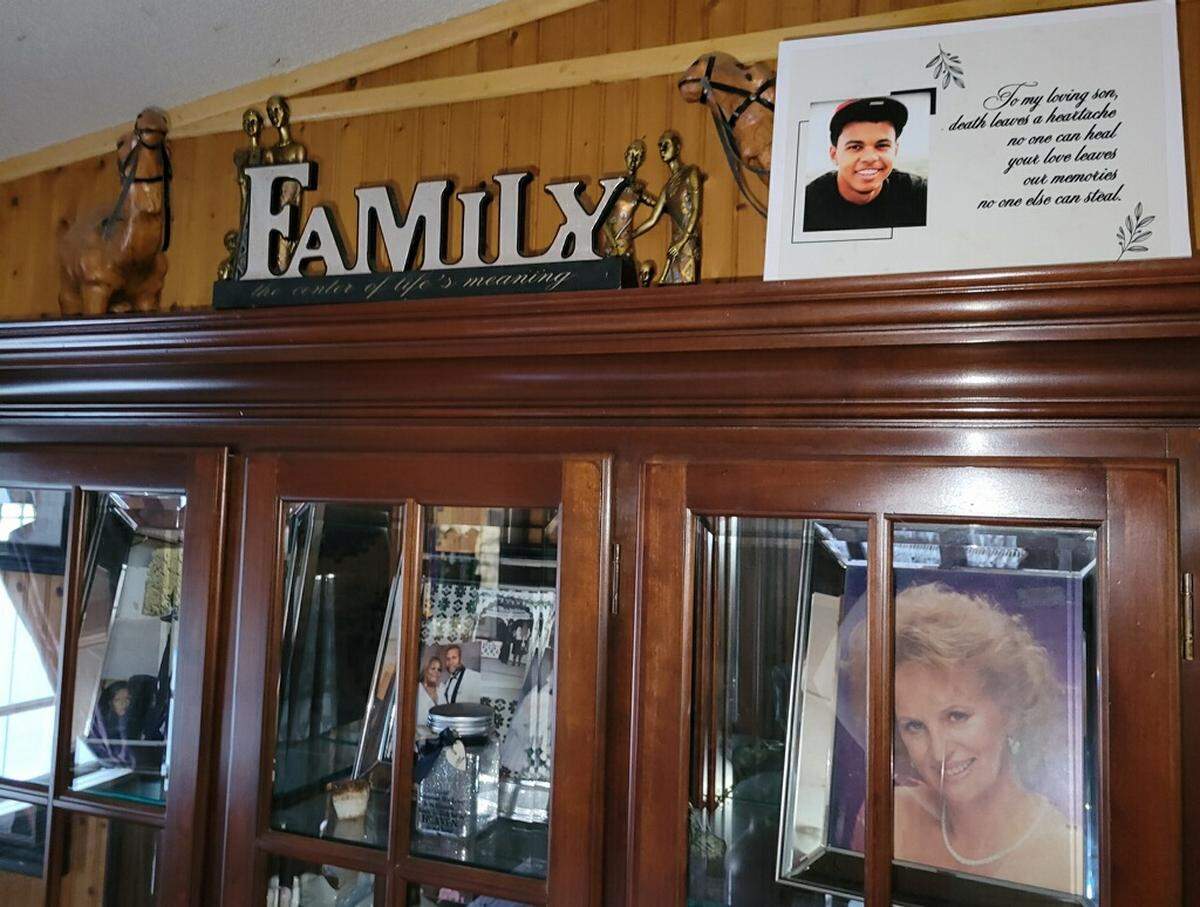
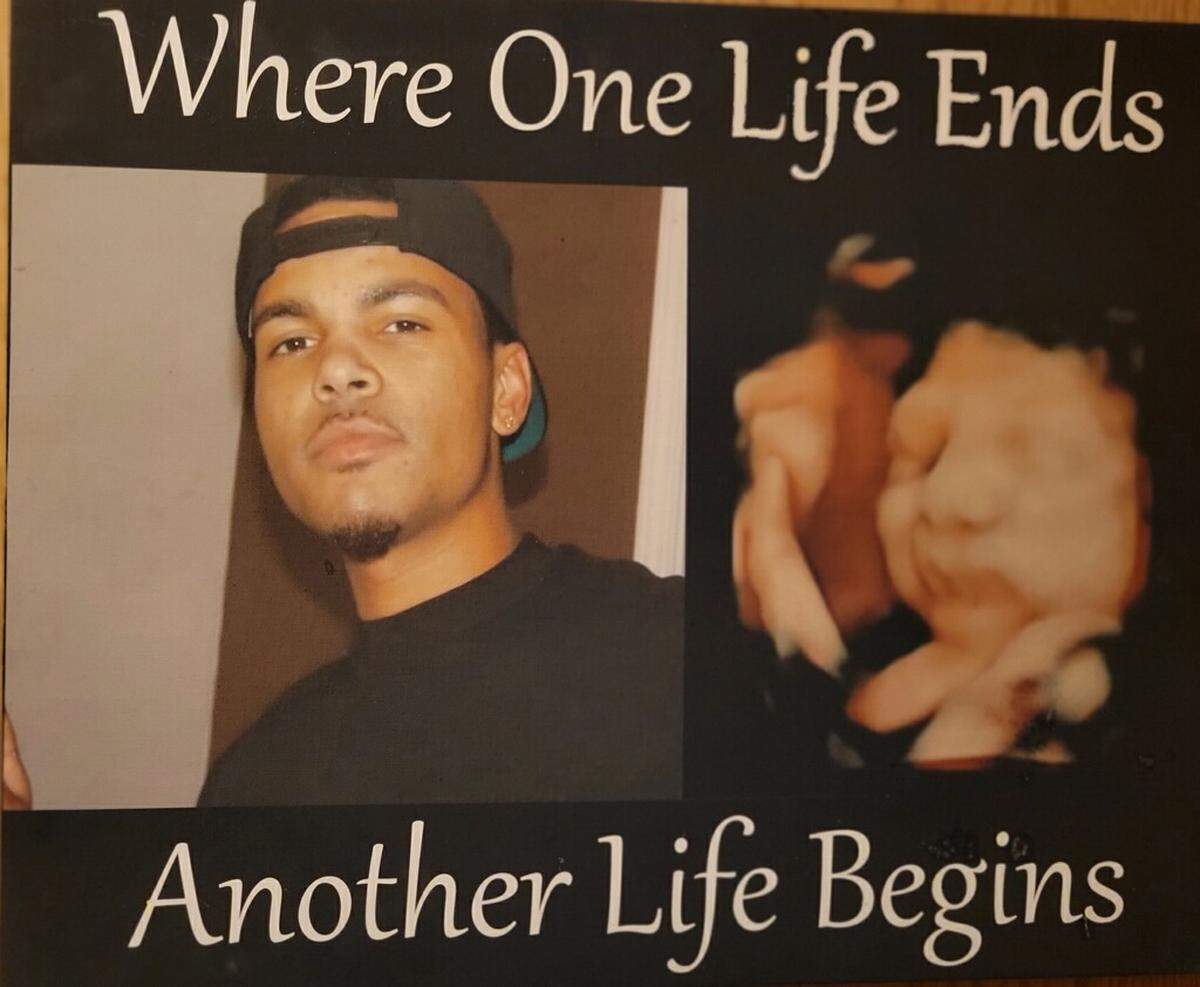
In the wake of Trevon Perry’s death and with the legal proceedings winding down, the family is left clinging to memories and mementos.
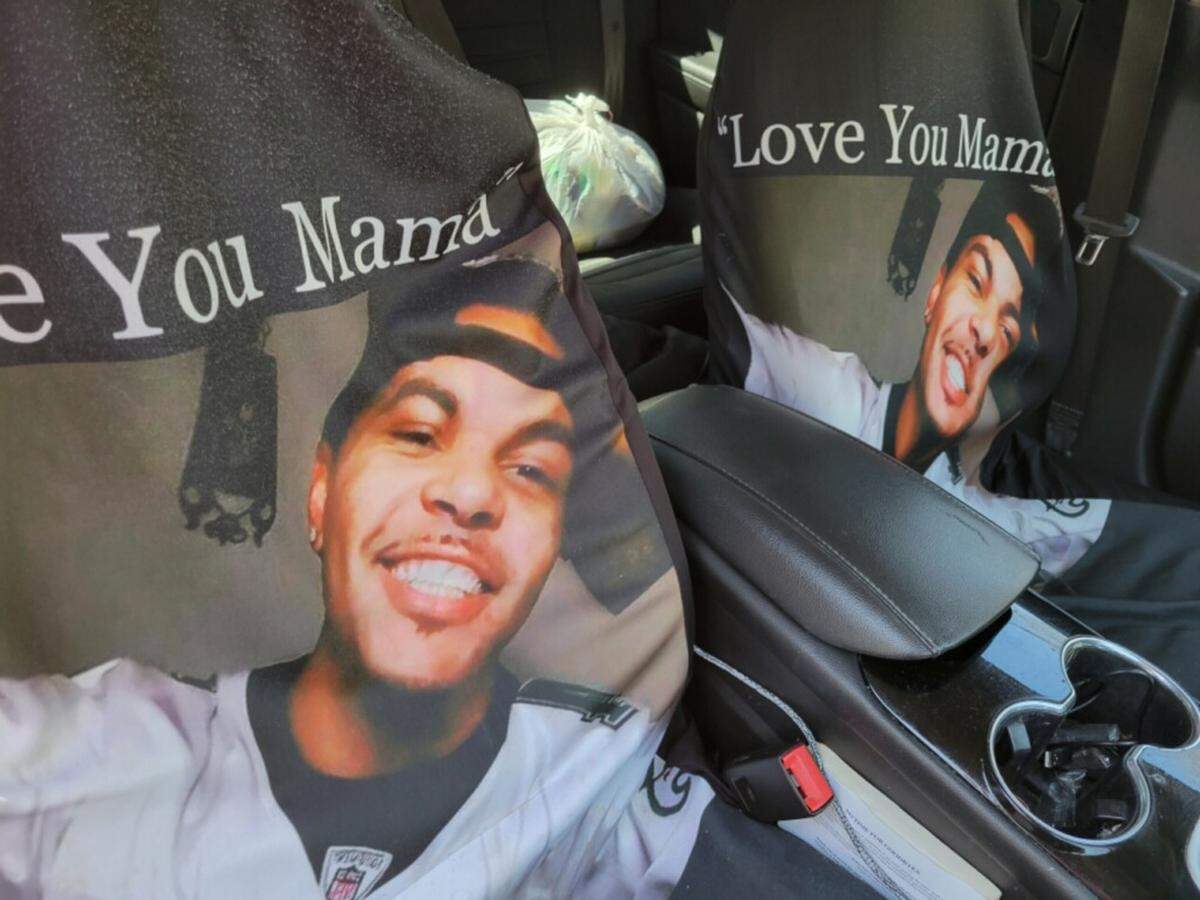
The word “family” sits above a memory-filled case in the Perry family’s Texas living room. Photos and keepsakes fill the house, and Trevon’s photos adorn the seat covers and back window of his mother’s car.
His family remembers him as one of the best souls they’ve known, a great father, uncle, son, sibling and friend. He was the oldest of six children and often led by example, Kelli Perry said of her son, who had lived in Paso Robles for three years after moving there from Texas.
“Any time we argued, he’d come in and bear hug me just to let me know that we were OK, that we were good and that what we argued about 30 minutes ago was done,” Tierra Perry, Trevon Perry’s younger sister, told the Tribune. “That was just his heart. He never stayed angry at anyone.”
The family thanked the detectives who worked on the case for their dedication to arresting all 10 people who stole their son’s life, but they remain devastated by the outcomes those 10 people have received.

“You can’t feel any better unless you finally receive the justice that they’ve been promising all this time,” Kelli Perry told the Tribune. “There’s no beginning for healing for us because of the sentencings.”
After all of the court proceedings regarding her son’s death conclude, Kelli Perry told the Tribune she plans to connect with California lawmakers to try to change sentencing guidelines for accessory after the fact to better reflect the gravity of the offense someone helped cover up.
Coping with the loss has been unimaginable, Tierra Perry said.
“He was ripped away from us, and that’s the hardest thing to accept. He was everything to us,” Tierra Perry said.
“He was everything to everybody,” Geary Perry added.
Have you or your family been the victim of a crime? You have rights. View them at oag.ca.gov/victimservices/content/bill_of_rights.
This story was originally published April 7, 2022 at 5:00 AM.