Should the Kristin Smart trial be moved out of SLO County? Here’s what experts say
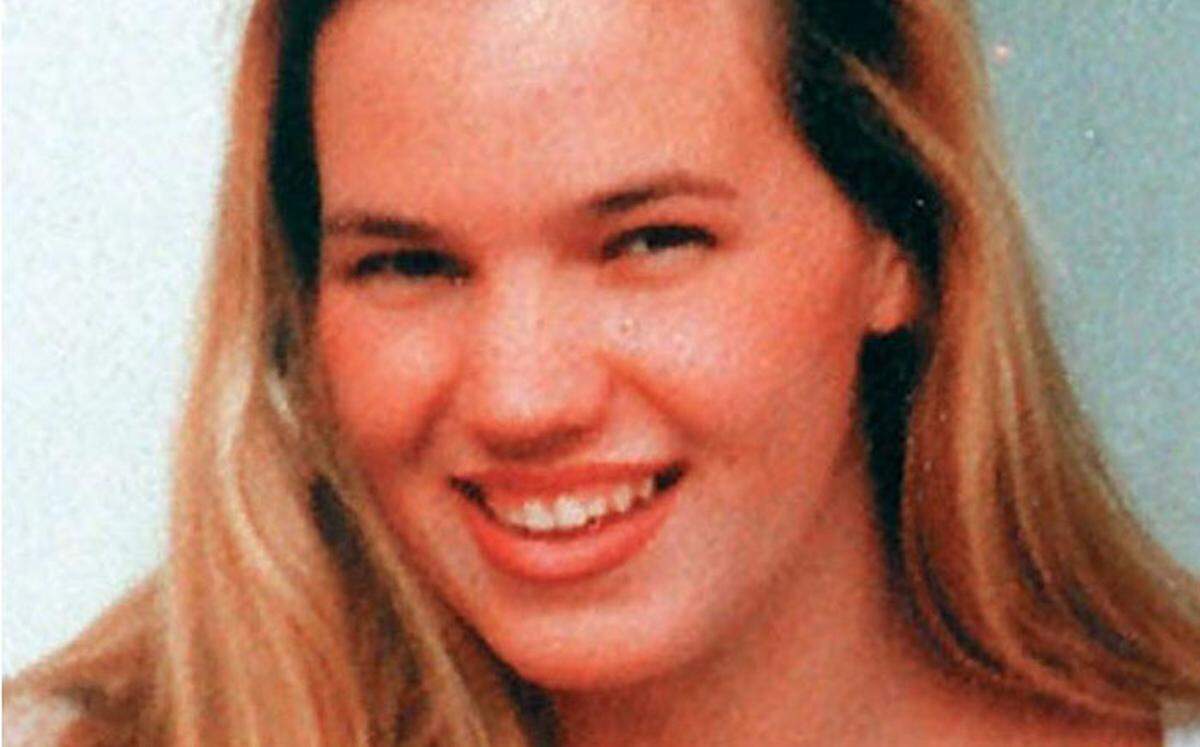
Lawyers for Paul and Ruben Flores filed a 500-page motion asking the judge to move Kristin Smart’s murder trial outside the county — a move that has only been granted three times in the past five decades in San Luis Obispo County, the most recent in 2001.
The motion claims the two cannot receive a fair trial in San Luis Obispo because of the pretrial publicity the case has seen for nearly 26 years. Paul Flores is alleged to have killed Kristin Smart after an off-campus Cal Poly party in May 1996, and Ruben Flores, Paul Flores’ father, is charged with accessory after the fact. The two were arrested in April 2021 — 25 years after Smart’s disappearance. Smart’s body has never been found.
What is the likelihood of its success?
Five factors must be evaluated when considering a change of venue: the nature and gravity of the offense, the nature and extent of the news coverage, the size of the community, the status of the defendant in the community, and the popularity and prominence of the victim.
The Tribune spoke with two experts to break down the motion and assess its chances.
Jeff Stein has been a local criminal defense attorney for more than 40 years and was president of the SLO Bar Association. Dr. Christine Ruva is a psychology professor at the University of Florida whose research focuses on pretrial publicity and jury bias. Ruva has also consulted on several cases nationwide regarding pretrial publicity and jury bias.
What makes this case different from other change-of-venue requests?
Based on its long history and high profile, the Smart case has established a unique notoriety in SLO County.
That has affected how the defense is making its case for relocation.
For example, the other successful change-of-venue motions in San Luis Obispo County included a poll that surveyed community members about their knowledge and opinions of the case.
But the Flores motion didn’t include such a survey, and it may not need it, Stein said.
The defense laid out all the news coverage, social media and blog posts, true crime media and claims of harassment the Flores family says it has faced ever since Smart disappeared.
“What’s different between all those other cases (that changed trial locations) and this one is that social media came into existence in the gap between all those other cases and this one,” Stein said.
Smart’s disappearance had already been covered extensively before social media, but details of the case have spread even more among social media users, especially those interested in true crime stories. Stein also said the billboards publicizing Smart’s disappearance made the case unique in terms of the kinds of publicity it received.
The news conferences held by San Luis Obispo Sheriff Ian Parkinson and San Luis Obispo District Attorney Dan Dow also stood out, Stein said.
“I have never seen anything like those two highly respected officials delivering what appeared to be definitive conclusions of responsibility in a public setting for a pending case,” he said.
The evidence the defense presented in its motion showing potential jury bias was so overwhelming, a poll may have been redundant, Stein said.
For Ruva, simply the length of time of the publicity surrounding the case stands out compared to other cases. The case has not left the news in SLO County for nearly 26 years, and this repetition can create strong preconceived notions among potential jurors.
“There might be counties that, again, would know of the case, but they wouldn’t have been saturated to the degree that the county where the case occurred was,” Ruva said.
Why is jury selection not enough?
The best way to combat pretrial publicity is through careful and vigorous jury selection, using the process of voir dire to question potential jurors and determine whether they can give fair consideration to the case.
Flores’ lawyers argue potential jurors in SLO County would be biased no matter what, and Ruva agrees.
“People are really bad at identifying their own bias or the extent of their own bias,” Ruva said, adding that the legal definition of bias and scientific definition of bias are different.
If a potential juror says they can disregard information they’ve learned or listened to as a result of pretrial publicity and withstands questions about it, that is usually enough for someone to be legally unbiased.
But this process works best in identifying explicit bias, Ruva said. People can have implicit biases regarding several factors, including race, gender and information they’ve previously learned about the case.
So if the information a potential juror learned lends itself toward a guilty verdict, then that juror may give greater value to evidence that supports that implicit bias. And people often give information they learned first more credibility, Ruva said.
In one of Ruva’s studies, researchers looked at whether education about unconscious bias could remedy pretrial publicity bias in potential jurors. It didn’t work. “It’s something that’s really difficult,” she said.
Potential jurors are also prone to “source memory errors,” Ruva said, explaining that jurors may have a difficult time sorting out what information they learned before the trial and what information they learned during the trial.
Stein said the jury selection process is usually reliable, and judges are skilled at pulling biases out of potential jurors. But in high-profile cases like this one, a potential juror may be motivated to lie or claim to be unbiased in order to bring justice to a beloved victim or defendant who they believe is a criminal.
For example, take Scott Peterson’s trial, Stein said. Peterson, who had lived in SLO County for several years, was found guilty for the murder of his pregnant wife in Modesto. Peterson’s team accused juror Richelle Nice of being biased against him and lying during the jury selection process. Peterson’s death sentence has since been overturned because of it and a judge is deciding whether Peterson should have a new trial.
“It is kind of symbolic and indicative of the fact that people oftentimes will be willing to say inaccurate things purposefully in order to get to what they want,” Stein said.
How do you balance informing the public with undue pretrial publicity?
The public’s right to know and a defendant’s right to a fair trial are competing interests that have only been exacerbated by increasingly easy access to news, conversation and speculation.
The higher profile the case, the bigger the challenge.
“It’s getting more difficult in this media-saturated age that we’re living in, right?” Ruva said. “People have information in the palm of their hands now with their phone, so they’re constantly bombarded.”
The news media is subject to ethical rules, Ruva said. Reporting is fact-checked, journalists are transparent about who their sources are, and the goal is to minimize harm to community members they are covering.
“But then you have people in true crime or on Facebook where you can get really sensationalized and emotional, and all kinds of stuff come out that the courts have no control over.”
Much of what is said in true crime media — and social media — is not admissible in court, Ruva said. But the First Amendment protects true crime media and social media posts, so misinformation, disinformation and conspiracies can spread easier than ever before. Ruva said she thinks it will only get more difficult for criminal cases to find impartial juries because of this.
Stein agrees that social media has made limiting pretrial publicity more difficult. One remedy, he said, would be to close preliminary hearings to limit what the pubic knows about a case before it goes to trial. California Penal Code Section 868 specifically allows a judge to order a court proceeding closed in the interest of protecting a defendant’s right to a fair trial.
But at the same time, the premise behind court proceedings being public is to hold the courts accountable and maintain integrity of judicial processes.
Should the Flores case move locations?
In short, both Ruva and Stein agreed that the Kristin Smart cleared the bar for a case that should be relocated.
“People will align their change-of-venue views with their guilt-or-innocence views, and the law is really not interested in alignment of that sort,” Stein said. “The law is really interested in alignment of fairness of the trial above and beyond anything else.”
Ruva said because of the case’s long history and the pervasiveness of publicity, it will be “very difficult” to find jurors who haven’t heard about it and already formed opinions in SLO County.
“Even if they want to be really, really good jurors and set aside bias, we know that that doesn’t happen,” Ruva said. “And a lot of this bias is just unknowable because we don’t understand — most people don’t understand — how (previous) information biases the taking in of new information.”
And Stein agrees.
“It has the worst profile of pretrial publicity of any case in the 42 years I’ve been in San Luis Obispo County,” Stein said, “which would support either making the determination that it’s absolutely meriting transfer or change of venue or that it’s prophylactically meriting change the venue to protect against the reversal on appeal.”
The prosecution has yet to file a response to the change-of-venue motion. A hearing regarding whether the trial should be moved will be held on March 30.
Do you think the case should be moved? Let us know below.
Can’t see the survey? You may need to turn off your ad blocker.
This story was originally published March 15, 2022 at 1:31 PM.