Should someone accused of child abuse be freed with zero bail? SLO County DA says no
Amid sweeping emergency reforms to California’s criminal justice system to prevent the spread of coronavirus, the state court’s regulatory arm on Monday voted to slash cash bail amounts to zero dollars for most nonviolent felonies and misdemeanors awaiting trial.
Though supportive of COVID-19 prevention efforts, San Luis Obispo County District Attorney Dan Dow is pushing back against some of the crimes that qualify for so-called “zero bail,” saying victims of crimes — particularly victims of child abuse — could be put in danger.
“While inmates who are in custody for violent, serious, or sex registration required offenses do not qualify for this ‘zero bail,’ some other inmates who may technically qualify for zero bail may be very dangerous,” Dow wrote in a statement to The Tribune. “My office is working hard to advocate that those who are very dangerous are not released from custody.”
The recommended action by the California Judicial Council — which still requires California Chief Justice Tani Cantil-Sakauye’s signature — would only apply to inmates who are in custody pending trial, not to inmates already serving sentences.
Dow said his office is currently assessing how many San Luis Obispo County Jail inmates could be eligible and screening all jail inmates’ pending cases “to ensure that no one gets released inadvertently that is not on this list.”
But the local public defender’s office in San Luis Obispo agrees with other defense attorneys statewide who support the emergency measures as written, which include mandates related to videoconferencing non-contested hearings and other measures to keep jail and courthouses safe.
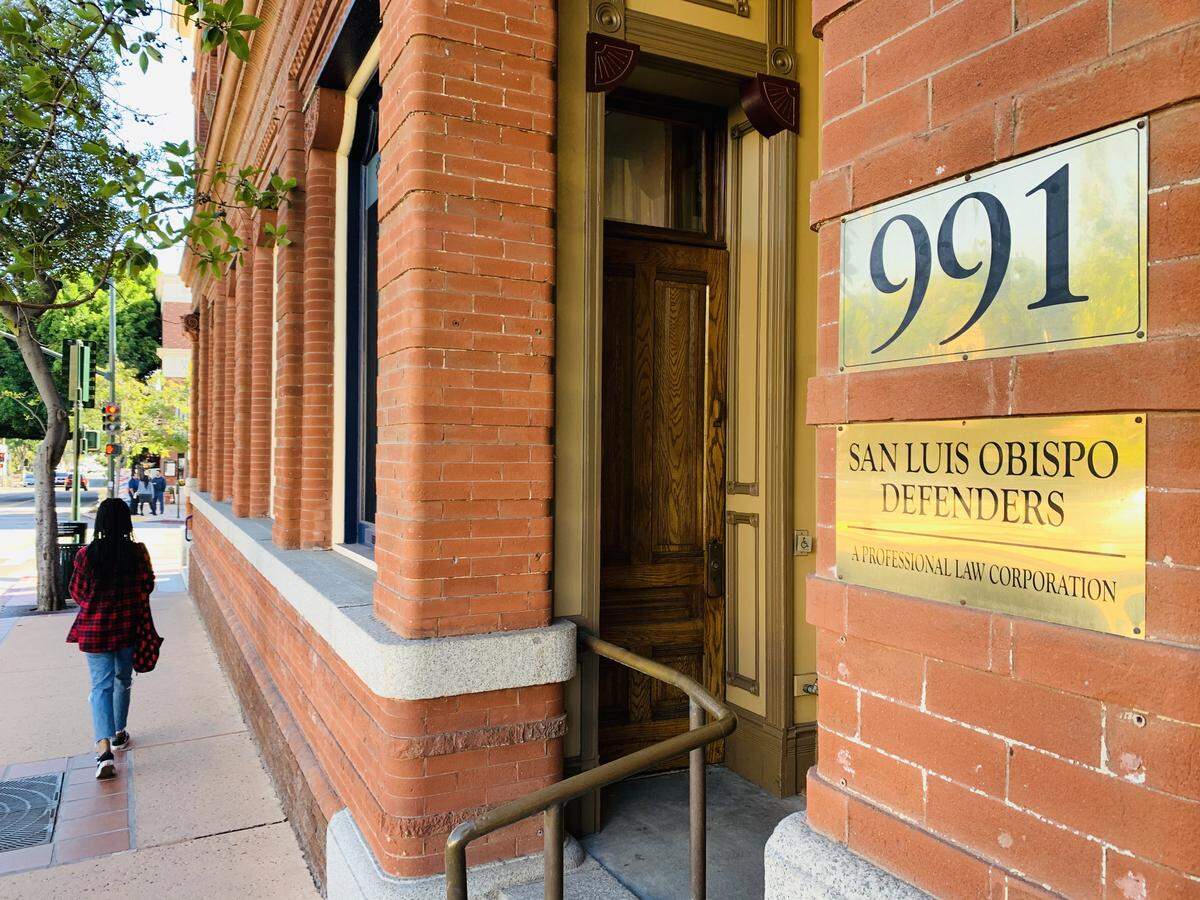
Steve Rice, assisting managing attorney with SLO Defenders, the law firm contracted to provide public defender services in San Luis Obispo County, said via email Tuesday morning that the zero bail decision was “very well thought out and discussed at length” by the Judicial Council.
Rice says that bail is not the sole safeguard at prosecutors’ disposal to keep vulnerable people involved in criminal cases safe, and that a COVID-19 outbreak among an inmate population will be felt beyond jail walls.
“I believe most people see the overcrowded conditions in most county jails as a ticking time bomb,” Rice wrote in an email Tuesday. “Inmates will suffer the most if COVID-19 spreads within the jail, of which will then impact the local hospitals required to treat the inmates.”
Prosecutors have already been working with the county Sheriff’s Office to determine whether any nonviolent, convicted County Jail inmates could be released early from their sentences amid concerns over the spread of coronavirus as well as an influenza outbreak at the jail.
It was not immediately clear Tuesday whether any of those County Jail inmates have yet been released.
As of Tuesday, the San Luis Obispo County Public Health Department has not reported that any staff, inmates, or patients at the County Jail, California Men’s Colony state prison in San Luis Obispo or Atascadero State Hospital have tested positive for COVID-19, the illness caused by new coronavirus.
However, several members of San Luis Obispo County’s legal community self-quarantined last month after an attorney who represented defendants at the San Luis Obispo Superior Courthouse tested positive for COVID-19.
If signed by the state chief justice, the emergency order would sunset 90 days after the state of emergency ordered by Gov. Gavin Newsom is lifted.
SLO Couny DA seeks to protect ‘particularly vulnerable’ victims
At the Judicial Council of California’s second emergency teleconference session in as many weeks on Monday, the council approved nearly a dozen measures, including:
- Suspending the entry of defaults in eviction cases
- Suspending judicial foreclosures
- Allowing courts to require judicial proceedings and court operations be conducted remotely, with the defendant’s consent, in criminal proceedings
- Allowing attorneys to appear for defendants in pretrial criminal hearings or using remote technologies
- Prioritizing juvenile justice proceedings
- Extending the timeframes for certain temporary restraining orders
- Extending the statutes of limitations in civil cases
- Allowing electronic depositions in civil cases
The list also includes the controversial “zero bail” measure, which sets bail at $0 for most misdemeanor and lower-level felonies beginning at 5 p.m. April 13. Bail would remain for people held for violent crimes, including those suspected of sex or gun crimes, domestic violence defendants, and people who have violated court-issued restraining orders.
Bail would remain as usual for serious offenses such as murder, rape, robbery, assault, and making violent threats.
In a news release on Monday, Cantil-Sakauye said that the emergency measures, while temporary, are necessary to stem the spread of the coronavirus in cell blocks and in courtrooms as the courts navigate an unprecedented public health crisis.
“We are at this point truly with no guidance in history, law, or precedent. And to say that there is no playbook is a gross understatement of the situation,” Cantil-Sakauye, who also serves as chair of the council, wrote in the release. “Working with our court stakeholders, I’m confident we can preserve the rule of law and protect the rights of victims, the accused, litigants, families and children, and all who seek justice.”
The state’s chief justice has the authority to amend judicial rules under an emergency order signed by California Gov. Gavin Newsom March 27.
But prosecutors across the state are concerned.
In a letter to the California Judicial Council on Sunday, Alameda County District Attorney Nancy O’Malley, who also serves as president of the California District Attorneys Association, wrote that the zero-bail rule has several loopholes and judges do not have the authority to override zero bail for non-exempted crimes.
O’Malley states that under the proposed order, an inmate who is released from jail for a non-exempted offense and is re-arrested for a similar or separate non-exempted offense within a short period of time would again be released with $0 bail.
In his letter to the council, also cited in O’Malley’s letter, Dow wrote that zero bail should not apply to people accused of four specific crimes not on the exempted list: human labor trafficking, elder abuse, child abuse and child endangerment.
Labor trafficking victims, Dow wrote, may be undocumented immigrants and are likely to be subject to further intimidation or dissuasion, as are child victims, who “must be of paramount importance.” Elderly victims, especially in times of public emergency, are “particularly vulnerable and may be subject to further victimization, intimidation, or dissuasion,” Dow wrote.
Dow said his office is working with to assess the total number of jail inmates who they believe qualify for the new bail schedule, and are “screening all inmates’ pending cases to ensure that no one gets released inadvertently that is not on this list.”
“My office is working hard to advocate that those who are very dangerous are not released from custody,” Dow wrote to The Tribune.
Public defender cites other ‘safeguards’ than bail
SLO Defenders’ Rice said Tuesday that the emergency measures are being put in place to protect a vulnerable inmate population in the jail, during transport, and in court hearings.
He said it’s imperative that in-custody cases be prioritized at the courthouse to ensure that defendants’ rights to a speedy trial are not violated, especially during a public health crisis.
“Everyone has been mandated to practice ’social distancing,’ however, overcrowded conditions in several county jails do not accommodate this practice,” Rice wrote in an email.
Asked about Dow’s letter, Rice said the Judicial Council’s list of crimes exempted from zero-bail were “very well thought-out and discussed at length,” and included more than 100 public comments and input from prosecutors and public defenders across the state.
Rice said bail is not the sole safeguard that law enforcement and the district attorney can request from the court to protect people they believe are vulnerable.
He cited criminal protective orders prohibiting contact and often prohibiting the restrained person from possessing firearms and ammunition. Those can last up to three years and can be extended upon request and good cause.
Law enforcement also has the ability, at the protected party’s request, to issue temporary restraining orders, Rice said, and in cases involving child abuse or neglect, the same orders can be made and Child Welfare Services can also get referrals to remove children from homes pending criminal charges.
In cases that involve mental illness where people are a danger to themselves or others, Rice said, vulnerable people can also be admitted into a locked facility for 5150 evaluations.
“These new rules are intended to reduce jail populations and will reduce the amount of people being booked into County Jail that may be COVID-19 positive, but asymptomatic,” Rice wrote. “This will in turn reduce the chances of bringing COVID-19 into close contact with other inmates in the County Jail and the criminal justice system.
This story was originally published April 7, 2020 at 2:53 PM.