This longtime SLO County reporter doesn’t cover fires anymore. Here’s why
Please don’t ask me to update you on the horrific wildfires that have devoured major parts of Los Angeles County.
Yes, I’m a reporter, saddled with unquenchable curiosity and a lifelong need to know what’s new as it’s happening.
But not about fires. Not anymore.
Several years ago, I had to stop covering those kinds of conflagrations and any other blazes that consume homes, vehicles, businesses and more.
Why? I’ve had to turn my back on fire coverage to preserve my mental and emotional health.
I’m a fire survivor.
These days, I believe the flashback reaction that still happens to me is called PTSD, much easier to say than what the acronym represents: post-traumatic stress disorder.
Seeing someone else’s home, livelihood or area ablaze inevitably flings my mind back into our fire.
I’d be so shaken after the assignments, it would take me days to ditch the nightmares, to remind myself each blaze wasn’t coming after me to blindside my life again.
I kept thinking it would get easier to be at fire scenes, write about them and the people impacted by them.
But I guess those traumatic memories never disappear completely and can still rise from the depths to cause emotional tailspins, never leaving you fully in peace.
Even decades after our single-house fire, thinking about this month’s massive Los Angeles infernos still can bring me to my emotional knees because of the scope, size and the importance of the losses.
If you’ve ever tangled with a big fire, you know what I mean. You’re probably right there beside me.
It’s the people that matter
Today’s blazes — and the wrenching aftereffects from all the huge wildfires that have preceded them in other places — also remind me of something crucial that can get lost in all those horribly, ever-larger Cal Fire statistics.
No matter how many acres of land have burned, the true impacts of such massive firestorms hit hardest one house, one business, one family, one person at a time — and they will hit over and over and over again.
All that pain, grief and anguish. It may soften, but it never really goes away.
Even for people whose homes survived, but who now find themselves surrounded by blackened remnants of their neighbors’ lost dreams. Or people who were evacuated, and spent days wondering what they’d face when they went home.
That’s what’s haunting me now, as it has in the past for Lahaina, Texas and Paradise. And all the other areas of Northern California, our own county and other places that were consumed by fires and forever changed by them.
The people. I hurt for the people.
What’s it like to have your house destroyed by fire?
It was such an all-enveloping, helpless feeling, driving up over the crest of the Cambria hill on that April day in 1994, seeing 30-foot flames coming out of what used to be the roof of our Marine Terrace house.
I can’t even imagine what it must feel like these days for people who learn of their losses by watching news coverage of their homes being consumed by fire.
Back then, I knew if I fell apart, so would everybody else who loved me and the house that had been filled with so many memories.
Everybody was safe, I’d been told, even our 16-year-old, deaf and blind poodle.
Within the next mile down to what had been our home, I managed to talk myself down, stiffen my backbone and convince myself that we’d be OK, at least on the surface.
It would take time, but life would go on.
And, so it did. We seemed to be healing.
Then in August, the Highway 41 Fire hit the Tassajara Canyon area of San Luis Obispo County with terrible ferocity, eventually stretching from Atascadero to Morro Bay.
As the fire blazed, it destroyed 42 homes, 61 other structures and 91 vehicles and burned 50,000 acres of land.
Oh, those nightmares! They were back. As they were during and after the Highway 58 Fire, the Las Pilitas Fire and the Chimney Fire that roared ever closer to Hearst Castle and my North Coast home turf. And way too many others.
I wanted to reach out and hug every person who’d been affected by the San Luis Obispo County fires, tell them it would be OK — and have both of us believe it.
I kept thinking time would heal the fire wounds, soften the jagged edges of the memories that ripped through my brain and heart, and I’d be OK going out on fire calls again.
But every time I was sent out to cover a fire, that emotional gash reopened, plaguing me anew.
One recollection is particularly, hauntingly awful. It was way up a rural ranch road. The body of our beloved friend was found in the ashes.
That’s one of the hardest stories I’ve ever had to write.
For fire survivors, it can still be tough going forward, but life’s beauty helps
So, not only am I declining assignments about fires now, I’m not reading much about them, not even the massive L.A. infernos. I’m also not watching news coverage about them, and on my own time, I avoid discussions about the blazes.
Take a deep breath and walk away, Kathe.
Instead, I’m trying to focus on the positive, even including memories of my years in Southern California.
There’s so much that’s good and beautiful surrounding us, ranging from having a wonderful family and the necessities of life to the gift of fleeting glimpses of a sunset, a hummingbird, or the two big magnolia trees in a San Luis Obispo neighborhood, so full of blooms they’re already shedding petals like a fragrant snowstorm.
The loveliness of people, like our friends Geoff and Susie West, now sharing their home with relatives for who knows how long. Or the Kniffens, who not only offer meals at their Cambria restaurant, but free stays in their own homes.
There’s even strange beauty in some of our remaining remnants of the fire.
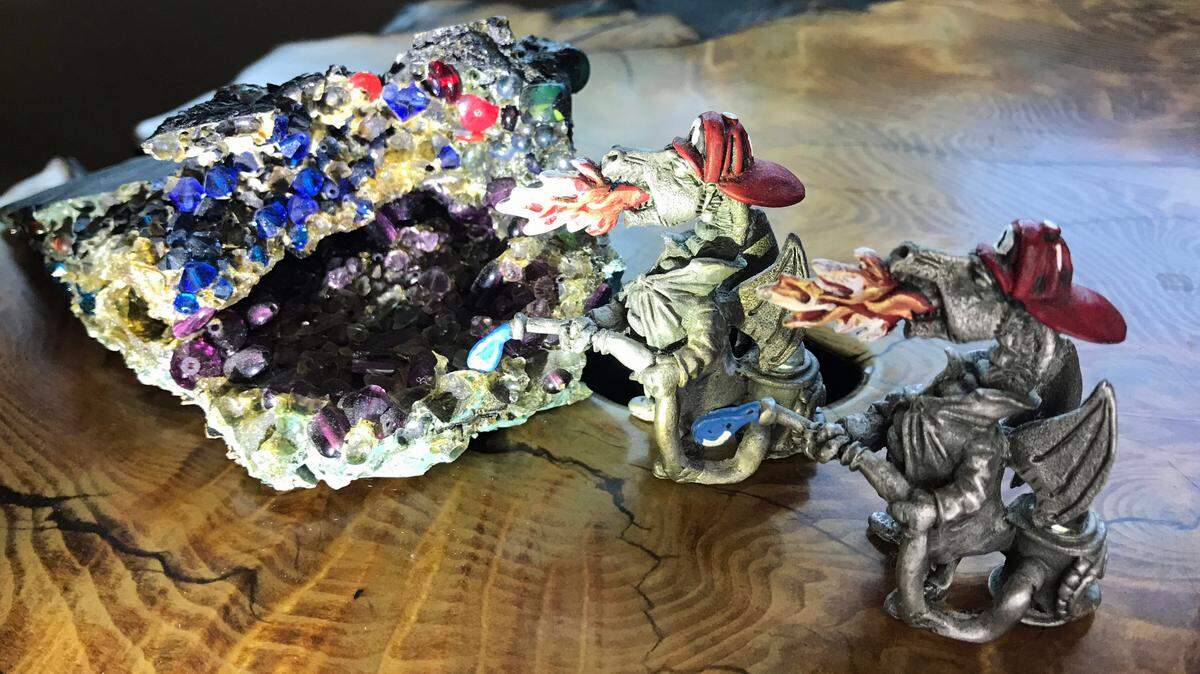
We kept a few chunks of roof and flooring that welded together when the former collapsed. Nestled in the not-quite-melted asphalt and carpet backing are some crystals and findings. They’d been stored in the tiny drawers of a series of plastic storage cabinets on my jewelry-making desk.
We call them our “fire geodes,” and display them next to a couple of tiny pewter statues of firefighter dragons.
I can share all kinds of wildfire-recovery suggestions, how to clean those treasures you find and what to include in the enormous amount of documentation your insurance company will demand. If that would help you, just email me at ktanner@thetribunenews.com.
But the best advice I can share is, whether your firestorm is literal or figurative, just keep looking for life’s magnolia blossoms. They can help, really they can.
This story was originally published January 14, 2025 at 5:00 AM.