When does an angry reaction become child abuse? SLO County experts advise what to do
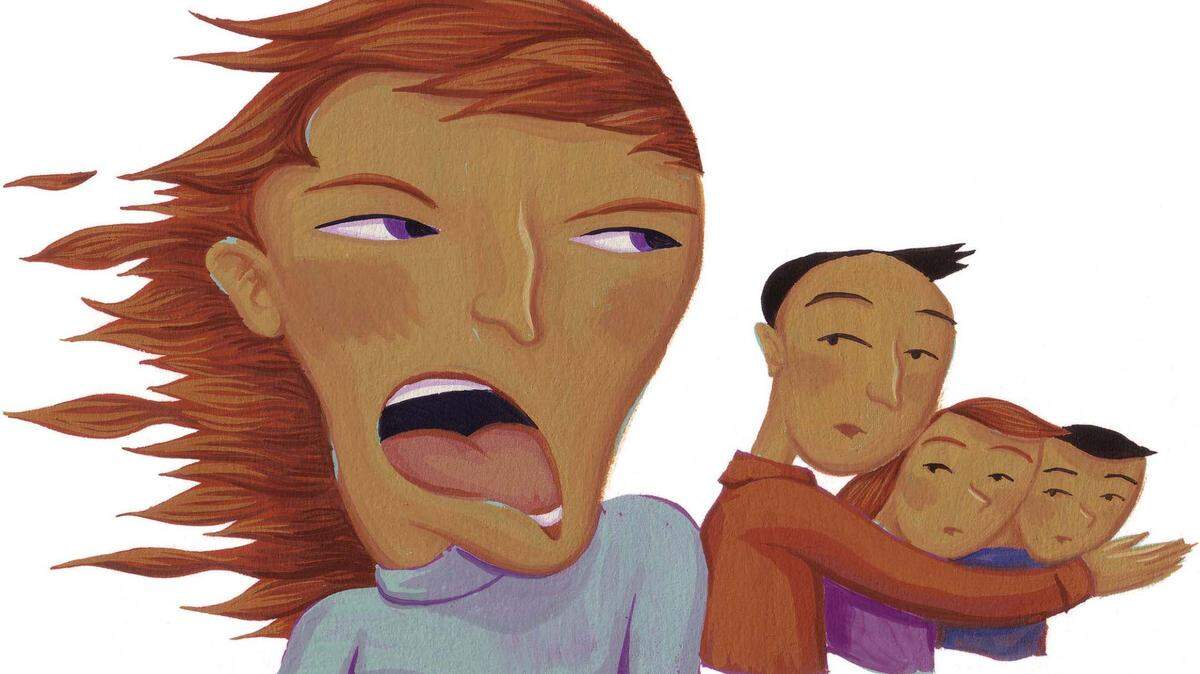
What should you do when you see a child (or anyone) being publicly excoriated?
How can you tell if it’s full-on emotional abuse?
If you see something like that, should you say something, and if so, to whom?
If you intervene, could you endanger yourself and others? Could doing what’s right make things worse?
All of that was racing through my mind on that sunny day as we and about a dozen other hungry people were enjoying the view outside a packed, popular restaurant while we waited to be seated for brunch.
A father’s explosion of fury
The father’s sudden confrontation with his young daughter was volcanic, volatile … and painfully familiar. I suspected his reaction to any interference could have been, probably would have been, ugly and maybe even violent.
The child’s apparent crime, the one he kept yelling at her about? How much she’d embarrassed him by tapping her crayons on the table, instead of drawing with them.
As his repetitive tirade continued, my son and I wanted nothing more than to step in and defend the girl. I could see similar emotions playing on the faces of the other people who were waiting. But none of us wanted to put other people at risk, and we didn’t know how to properly do what was needed without adding fuel to the fire.
Eventually, we talked each other down, stayed where we were and fumed.
After about 10 minutes of lashing out, the man stalked down the sidewalk, obviously expecting the child to follow him. When she looked up hopefully and reached up for his hand, he yanked it away. Her head fell, and she walked slowly behind him, dragging her feet.
They returned a few minutes later and went inside the restaurant. Almost immediately, the child came back out with her mother, who was hugging and comforting the badly shaken little girl.
They didn’t go back in until they were told their meal was being served.
Soon thereafter, we were told our table was ready.
As we passed by where the family was sitting, the tension there was palpable, painful to see. The little girl was just staring at her food, as if she was afraid to eat or look up.
I again wanted so much to say something, make a positive difference somehow. We kept walking, but the incident still haunts me.
Should I have gotten involved? What could I have done except make things worse for the little girl, then and later, and possibly put others at risk from the man’s uncontrolled anger?
Advice from experts
What’s the right thing to do? I asked some knowledgeable friends, including a retired nurse who’d dealt with many mentally ill patients. I asked a family psychologist, a clinical social worker and others, among them a representative of the county’s Child Protective Services.
The consensus from those experts was that the man probably was a chronic abuser with no impulse control who handles stress when dealing with the weak by berating them, or worse.
They and others told me there are very few options for a stranger to insert herself in a volatile family conflict. Especially in public.
They said the furious stranger wouldn’t have heard anything I said, and my intervention would only have made it worse for the little girl and the rest of the family.
I asked Linda Belch, the county’s deputy director for adult and children’s services and a representative of the county’s Child Protective Services Department.
“It’s a tricky one,” she said in a phone interview. “Does he seem very angry or erratic, an immediate threat to the child? If there’s an immediate health or safety threat, you should call law enforcement.”
If the situation is in a gray zone, “our social workers are on call 24/7 at 805-781-5437,” Belch continued. “If you have any concerns about anyone, give that hotline a call so we can get all the information possible, give advice and provide intervention if possible.
“But it depends on the situation.”
Cathy Brody, a licensed marriage and family therapist for decades in San Luis Obispo County, wrote in a series of emails that while her first reaction, personally, would have been to leap in immediately, “intervening might have made it worse for the child later. He would blame her for his public humiliation.”
“It’s a sad and frustrating situation for sure,” her husband, longtime psychologist Steve Brody, wrote.
His immediate thoughts included to “‘listen’ the man down, saying, for example, “you must be terribly frustrated. Is there anything I can do to help?’ Or you could call 911 and ask if a mental-health crisis team would come out for such a call.”
And, by being another flashpoint for him, I’d have been putting myself and others in line for his fury.
Saying something to the restaurant’s host about the situation wouldn’t have helped. I didn’t know what had happened inside to trigger the incident, and this was happening outside, on a public sidewalk.
We’re told that “if you see something, say something,” So, what can we say or do when we see something like this?
There’s no one-size-fits-all answer
Maybe this time, I really should have tried to stop the excruciating public humiliation of a little girl. But I wasn’t sure how to do it correctly, and my childhood experiences had taught me that inserting myself into situations like that could make things much worse for the very person I was trying to defend.
The confrontation hurt my heart, and brought back memories of being publicly and privately castigated by a chameleonic, alcoholic relative who could be sweet as pie one minute and then lash out at a moment’s notice.
Would I have wanted someone to intervene?
Those different responses from psychologically knowledgeable experts all came to the same sad conclusion.
The final answer to my question about the right thing to do in a situation like that is there isn’t one. Frustratingly, it depends. There is no one-size-fits-all conclusion, and you have to rely on your own instincts.
I get it, but I hate it.
This story was originally published September 27, 2023 at 2:03 PM.