Central Coast wildlife centers flooded with sick pelicans. Here’s how to help the birds
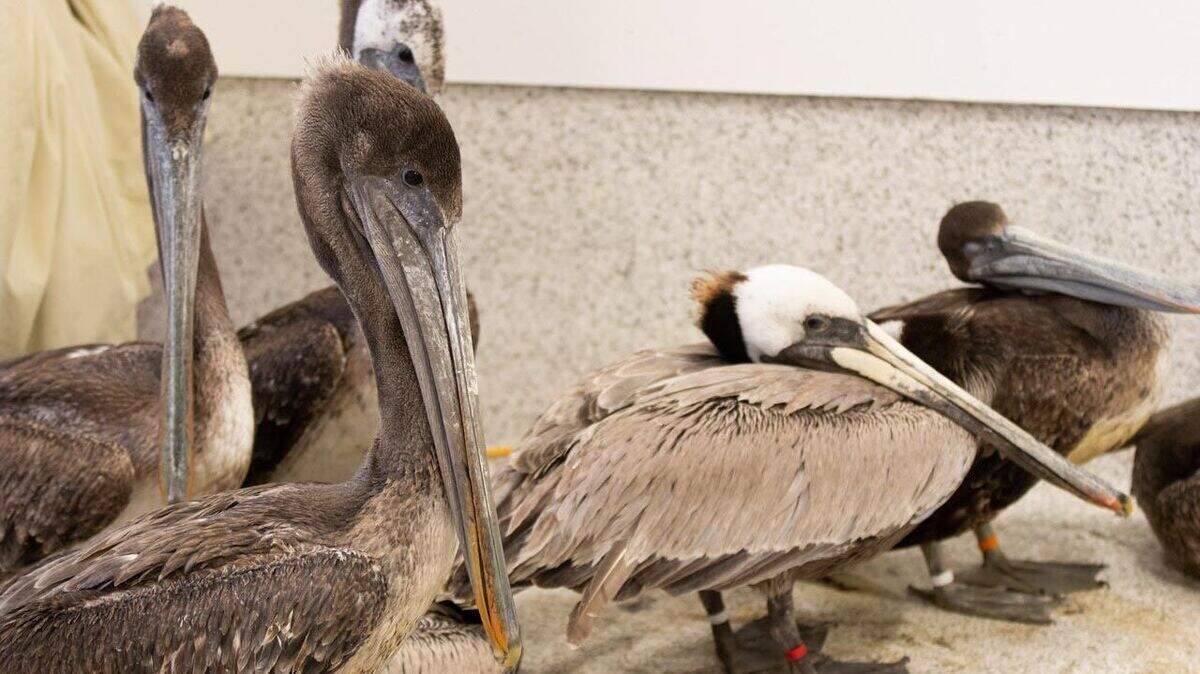
Scores of sick California brown pelicans are being found on Central Coast shores.
Many were rescued by trained members of nonprofit organizations that specialize in helping wild birds and mammals.
Local groups reporting an influx of ill pelicans include Pacific Wildlife Care in Morro Bay, which covers San Luis Obispo County and bits of the southern Big Sur coast; Santa Barbara Wildlife Care Network, which covers Santa Barbara and Ventura counties, and wildlife centers in Monterey County and other areas.
The rescued birds were severely emaciated, weak and unable to fly, according to the Wildlife Care Network which had gotten 30 birds in two days as of May 16, with more reports piling up in subsequent days.
According to Noozhawk, a Santa Barbara resident saw about a dozen dead pelicans during her morning walk May 16, and by that afternoon, the CHP was getting reports of sick pelicans on Highway 101 in that city.
Pacific Wildlife Care’s SLO County facility had taken in more than 40 pelicans by May 21, according to longtime PWC volunteers Kathy Duncan and Marcelle Bakula.
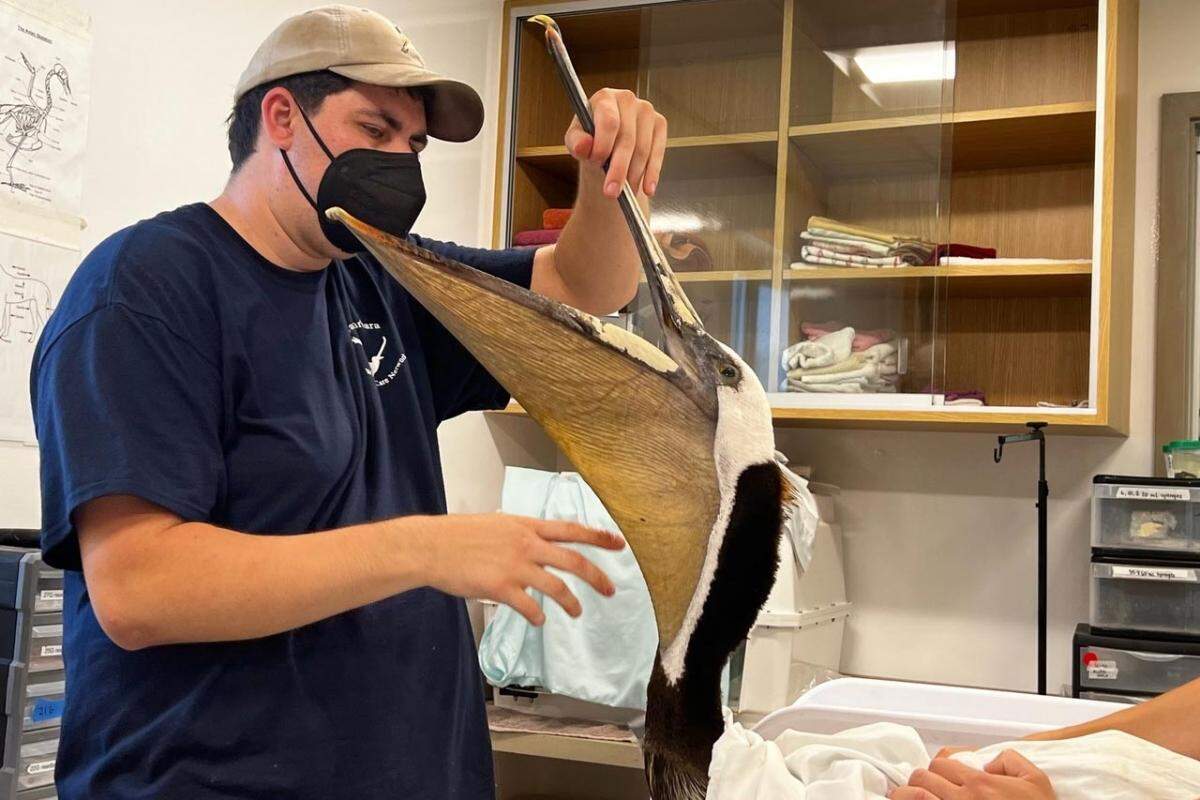
The two women not only spend time at the Morro Bay facility but also foster tiny, orphaned mammals and birds in their homes. Duncan is also a part-time staffer, and Bakula serves on the board of directors.
“When they (the pelicans) arrive, they’re all pretty debilitated, really emaciated and very, very cold, unable to keep their body temperature up,” Duncan said. “We do the intake exam, do blood sampling, warm them up, give them fluids and determine where they’ll be housed.”
Once the birds are able to eat, each pelican can probably eat about 8 pounds of fish a day, Duncan said. That’s a lot of fish, and volunteers get the specialized food from up north.
What is causing the sudden flood of ill pelicans?
Scientists didn’t know yet. Duncan said the state Department of Fish and Wildlife is doing studies, but those could takes weeks or months to complete.
Birds are part of nature’s beauty in Cambria
It always hurts when I hear about birds and other animals dying before their time — whether it’s the result of a widespread illness, or a random incident, like the time one tiny hummingbird flew too hard into the glass of our sliding glass door.
We care deeply about the birds, wildlife and the habitat that surround us. We know how blessed we are to live here in Cambria, snuggled up against a meadow and the forest.
We appreciate the beauty and activity around us, and try to be good stewards.
This morning, as I watched the sunlight began to hit the treetops, I saw birds. So many birds. So many kinds of birds.
I heard them, too: the strident caws from crows, the warbling of various songbirds and the electrical-buzz hum and cheep of hummingbirds. I even heard a whooo or two from an owl that had stayed awake past its bedtime.
We don’t see pelicans at home now, the way we did when we lived on Marine Terrace. But it’s always thrilling to see them soaring over the waves or perched on a pier or signpost.
Protecting birds is especially important during spring and summer, when birds are mating, building nests, laying eggs and raising their broods. That season that can last through September.
For that reason, our bush and tree trimming tools are tucked away, probably until fall.
No matter that our Zen garden’s oak tree needs a good haircut; now’s not the time.
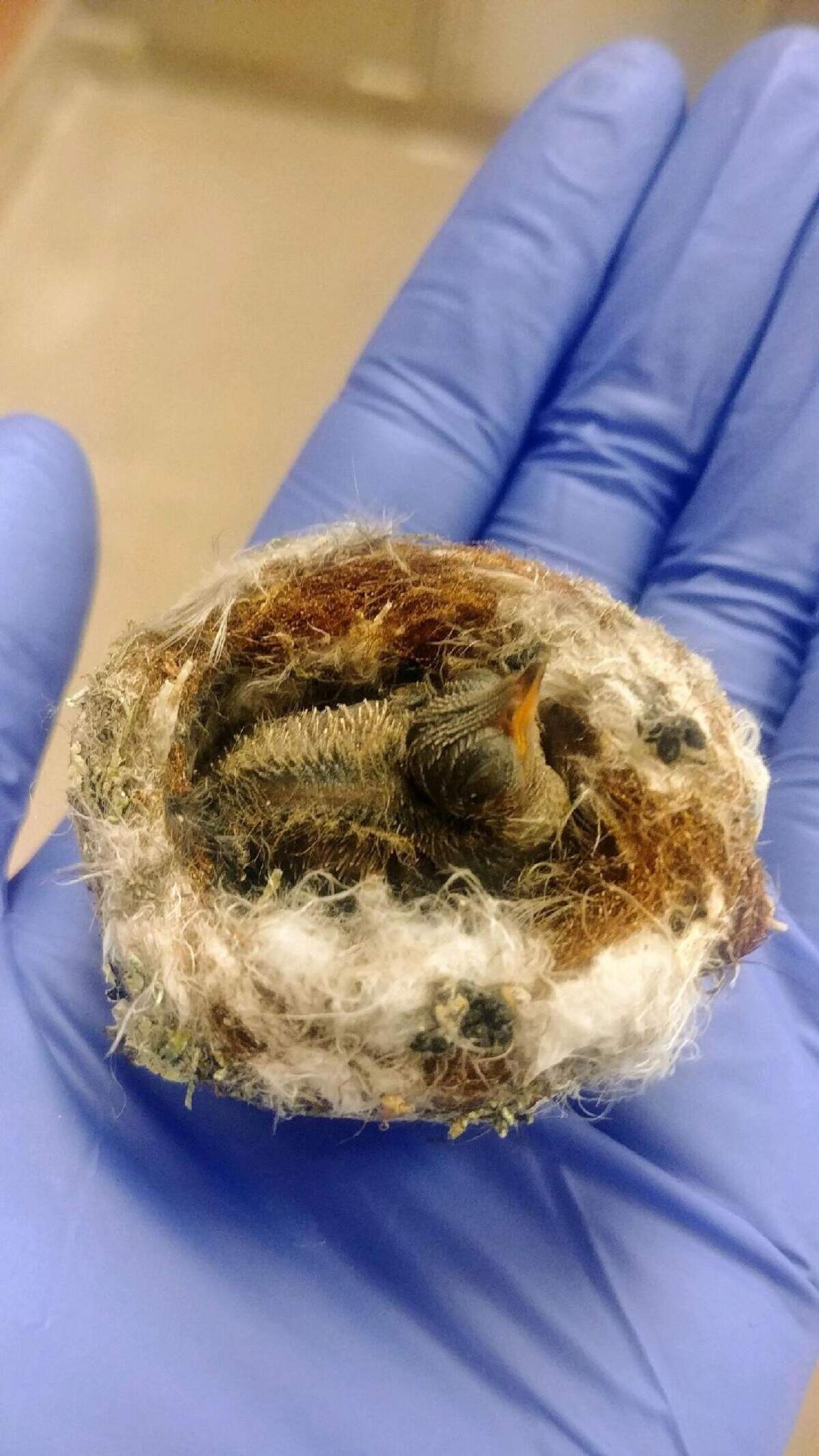
I know of at least one nest that’s hiding on a low-hanging branch there, and I wouldn’t want to do anything to disturb the fingernail-sized babes tucked within it.
We don’t let PG&E trim trees on our property during this season, either. The wildlife care networks are overwhelmed with patients during this season because nests have been damaged or destroyed.
Bakula spends shifts in the Baby Bird Room, feeding orphaned hummers.
“As soon as you open the incubator, there are tiny little mouths, all wide open, bright red with a yellow rim,” she said. “After I feed them, they quiet down …. for 15 to 30 minutes, until the next feeding is due.”
By a week later, she said, that time span between feedings has stretched to 45 minutes, and the babies “are fully feathered and on a perch. They don’t look like little babies any more, just tiny birds. It’s miraculous how fast songbirds grow up.”
How to help birds in SLO County
So how can you help California brown pelicans and other birds?
You can start by not feeding the birds, reducing pesticide and toxic runoff that affects their food chain and picking up discarded fishing gear and trash at the shore.
You can also volunteer or donate to the nonprofit groups that care for pelicans. For instance, Pacific Wildlife Care is raising funds for a the pricey new facility it will need when its lease expires; the nonprofit apparently doesn’t get regular public funding from San Luis Obispo County.
To report an injured bird or small mammal in San Luis Obispo County, call the Pacific Wildlife Care hotline at 805-543-WILD (9453).
“If you find a brown pelican behaving oddly (walking down Main Street, letting people approach it), call Pacific Wildlife Center,” a PWC volunteer from Cambria posted on social media on May 19. “We are in town, so can often respond quickly. We just need a good location … so we don’t go on a wild pelican chase.”
If possible, the volunteer said, stay with the bird and let PWC know if the location changes or the bird flies off.
For more information about Pacific Wildlife Care, including how to volunteer or donate, go to pacificwildlifecare.org.