
Morro Bay artist Paula Radke finds harmony in glass
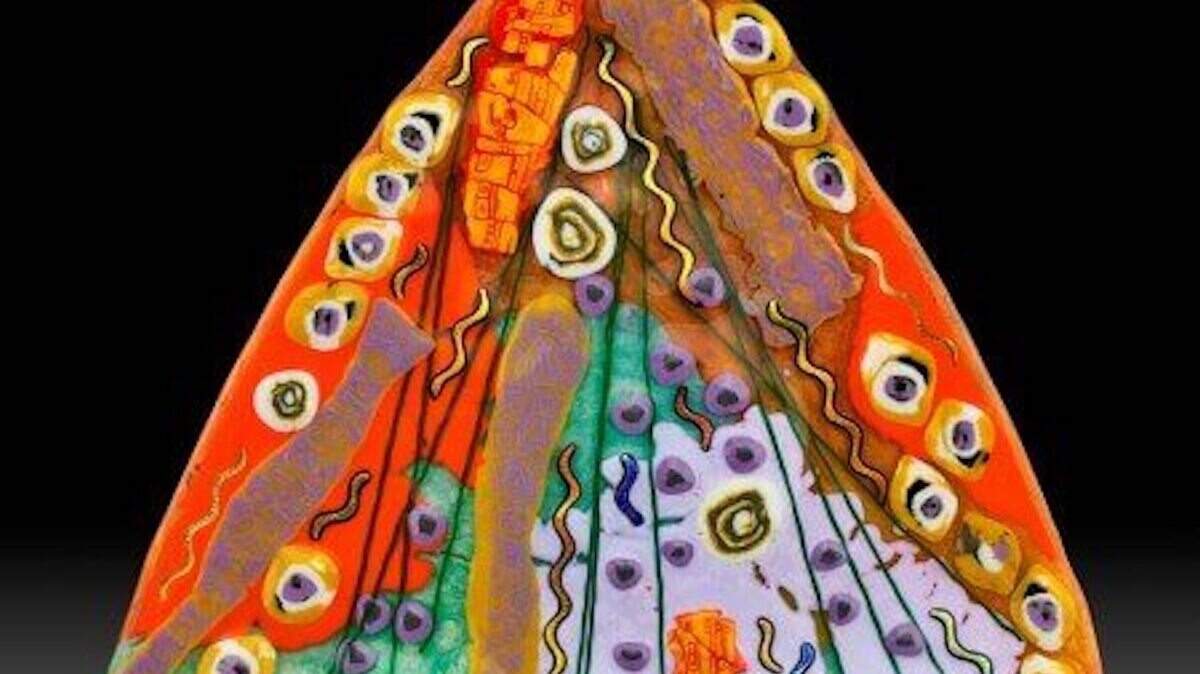
I am an artist and I’ve been working…
We take glass for granted as if it’s always existed. In fact, the “common” use of glass dates from the early Roman Empire when molded glass was used to illuminate bathhouses. One of the earliest Venetian glass furnaces was excavated and dated from the 8th century.
But it was in the 15th and 16th centuries that the processes for all types of glass making innovation flourished in Murano, Italy, where a factory remains to this day. Another glass-making milestone is associated with a familiar name: Louis Comfort Tiffany. Tiffany opened his glass studio and foundry in 1878 because he couldn’t source the material he wanted. Tiffany achieved his vision of transmitting texture and rich color into panels pieced together with lead that remains a globally celebrated artisan standard.
In modern times, factory production may have sublimated artistry somewhat, but it also gave birth to great innovation including the molded works of Dale Chihuly introduced in late 1960s. One very talented artisan with a very local connection is still enthralled by glass making and continues to push the limits of technique and application.
As part of my monthly quest to find intriguing and talented artists, please meet Paula Radke.
.jpg "Paula-Radke-ArtGlass-Clay-photo (1).jpg")
Radke was destined to make her living and find satisfaction using her own hands. Even as a young girl, she sketched, made ceramics and learned silver-smithing. But in the early 1980s, Radke discovered her love for glass making: blowing, fusing, slumping, casting and lampwork. (Lampworking is a type of glass work where a torch or lamp is primarily used to melt the glass. Once in a molten state, the glass is formed by blowing and shaping with tools and hand movements. It is also known as flameworking or torchworking.)
While finding early success with stained glass, Radke decided to quit the soldering and turn her attention exclusively to the kiln, eventually doing bead making and production.
Radke co-founded the glass studio in Harmony in 1986 that is still in operation. This tiny town (population: 18) is home to the original Harmony Creamery (cheese making “factory”), founded in 1907 by M.G. Salmina and his brother. The factory continued in operation until 1958. New owners began promoting the town as an artists colony and renovating buildings in the 1970s.
“It was a lovely place to raise a couple kids and do the art you love. Harmony had a great restaurant and we had concerts every Sunday during the summer," Radke said. "It was a fun community of working artists. The whole town was sent to Hollywood to film a pilot for a TV game show. The panel was asked to identify the relationship of the 18 people on stage (Harmony’s entire population). The show never aired but we had a wild time!”
Radke was an early contributor to the Glass Bead Makers Movement in the early 1990s. She handcrafts beads using the ancient techniques of the Italian masters but often uses Dichroic Glass. She designed a line of beads and pendants for Michaels’ Arts and Craft stores, Hobby Lobby and Joanne’s Craft Stores nationwide.
About 10 years ago, she created glass clay. Glass is crushed to a very fine powder, and special binding agents are added with water and a “play doh” like substance is created. It is molded or shaped by hand, dried and fired back to a solid glass. This process has allowed her to create embellishments, functional vessels and even jewelry.
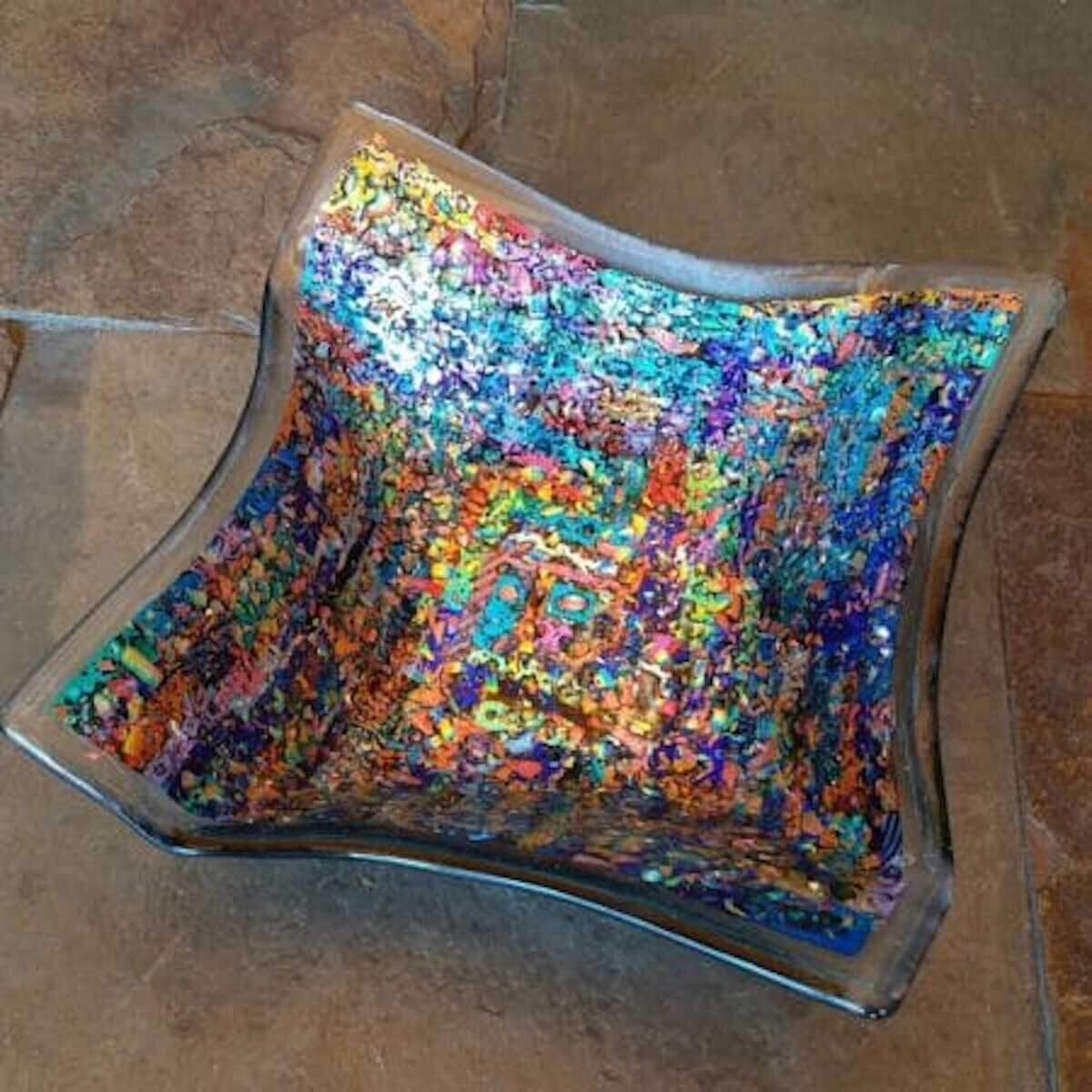
I asked Radke how she gets people to understand the value of artisan glass. Her answer surprised me. “Go small. Making intricate 6-20 plates allows people to look closer as opposed to being impressed by the larger flashy pieces. Clay glass shows an intimate view of the details in the plates. When used in jewelry, it becomes personal, part of a person rather than part of the environment.”
She lives and maintains a studio in Morro Bay, but her vision extends much farther. As I spoke with her about using her well-honed skills, she mentioned that her goal is to collaborate within the architectural process to introduce and incorporate her artistic elements and embellishments such as glass tiles into the construction to provide a luxury feature and add a bespoke stamp. I have no doubt she will succeed.
Paula Radke Art Glass studio is located at 1129 Market Ave. in Morro Bay. For more information, call 805-459-3329, email paula@paularadke.com or visit paularadke.com.
Upcoming Events
Through June 24
Allied Arts Association
1350 Main St., Cambria, CA 93428
805-927-8190
www.cambriacenterforthearts.org
Photos by Terry Ogden
Friday – Aug. 19
San Luis Obispo Museum of Art
1010 Broad St., San Luis Obispo, CA 93401
805-543-8562
“Selections: Bay Area” featuring paintings by Anne Subercaseaux and metal sculpture by Flora Davis.
Through June 30
Studios on the Park
1130 Pine St., Paso Robles, CA 93446
805-238-9800
“Black and White” featuring digital artists Deb Hofstetter and Dean Crawford, Jr.
This story was originally published June 12, 2018 at 11:08 AM with the headline "Morro Bay artist Paula Radke finds harmony in glass."