SLO County: Structure housing 150-year-old lighthouse lens is in danger of collapse
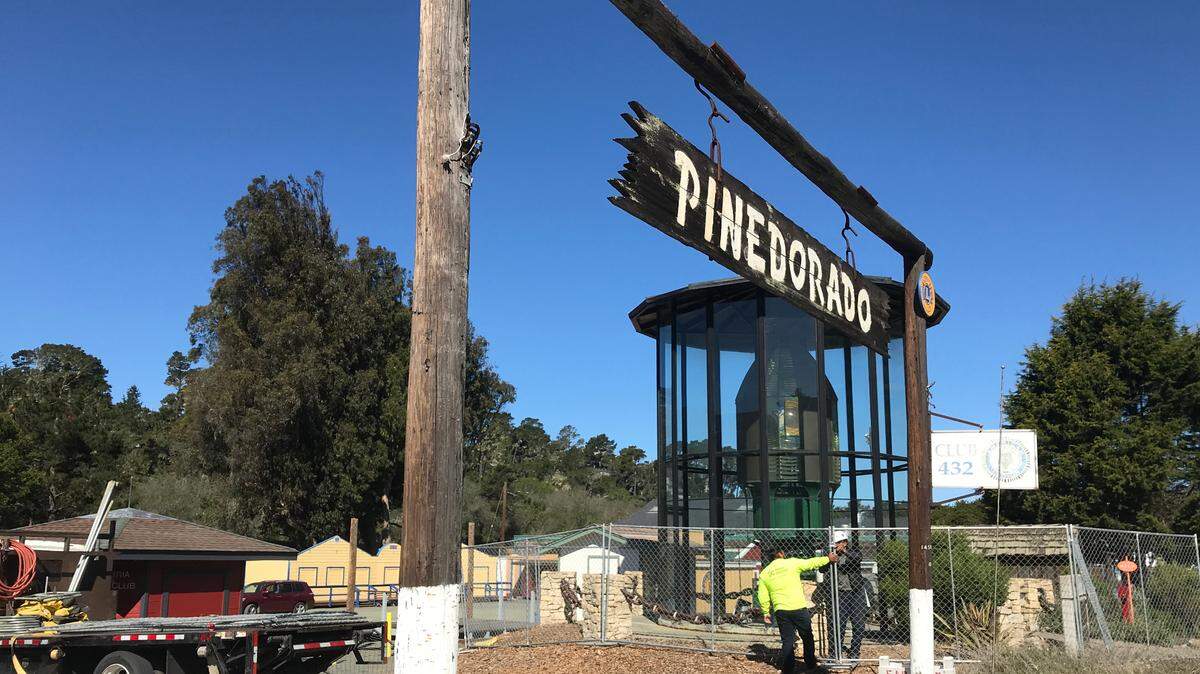
The structure housing a roughly 150-year-old lighthouse lens in Cambria could be in danger of damage or collapse — potentially threatening public safety, San Luis Obispo County officials warn.
The circa-1875 First Order Fresnel lens once sat at the top of the Piedras Blancas Light Station near San Simeon, where it warned mariners about dangerous rocks and shoals.
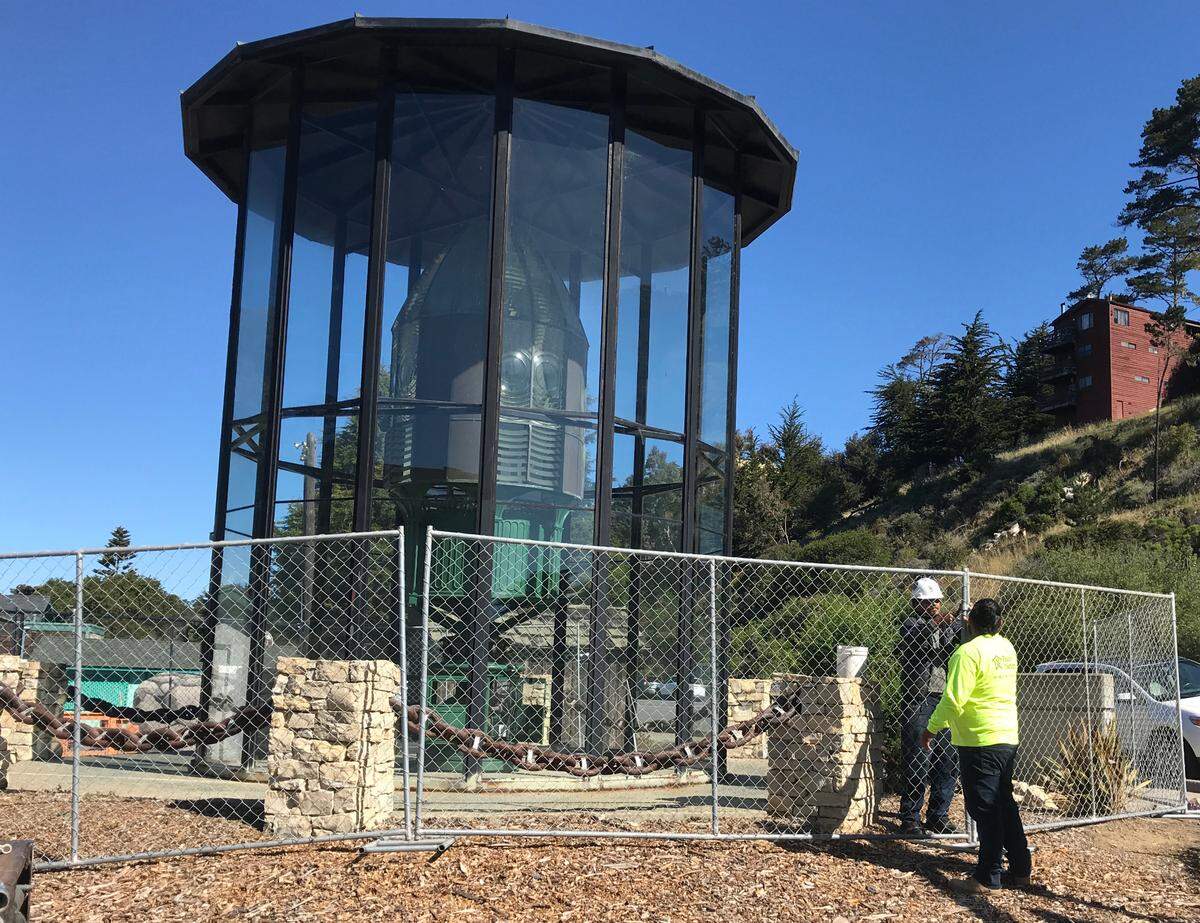
The lens has been on display on Cambria’s Main Street since 1994 in a glass building designed to replicate a lighthouse lantern room.
On May 6, county property manager Phil D’Acri sent an email to the Cambria Lions Club warning that the condition of the glass enclosure has deteriorated so badly, it could threaten public safety.
“It is very important that sufficient measures be taken by the Lions Club ASAP to protect the public,” he wrote.
According to some engineering assessments, there’s a risk that anybody standing near the display could be hurt, and any structural failures could damage or destroy the French-made lens.
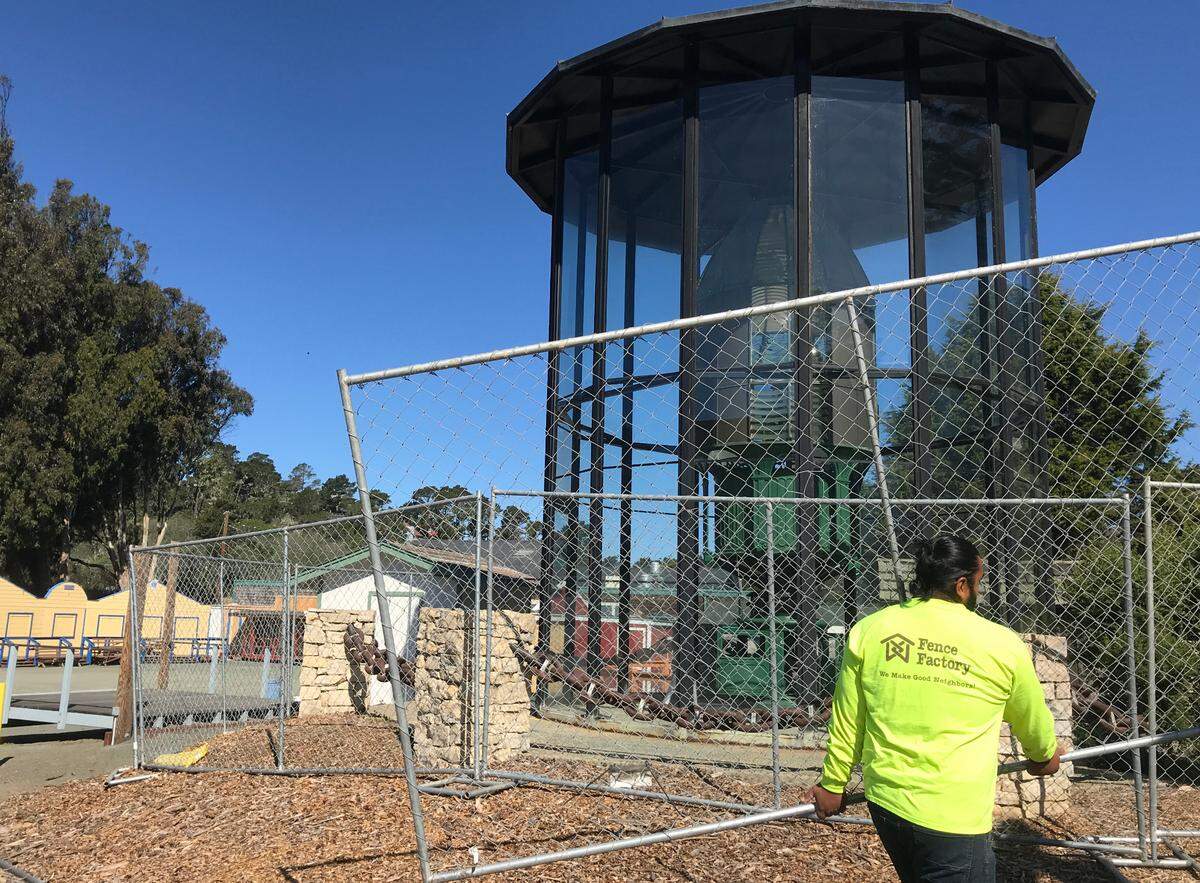
A recent photo circulated on social media showed some of the metal bracing straps on the roof of the structure were disconnected at the outer edge of the frame.
In his email, D’Arci demanded that the Cambria Lions Club do something immediately to prevent people from getting too close.
The next day, club board members gathered at the site for an emergency meeting and decided to order fencing to maintain safe distance from the structure, which sits on county property adjacent to Cambria’s Veterans Memorial Building.
Early on May 11, workers assembled a tall chain-link fence around the lighthouse lens building.
The club will pay about $300 a month to rent the fencing, according to members, although those costs might ultimately be shared by some other stakeholders.
While maintaining the lens really isn’t part of the Lions Club’s basic mission, “if we knew a bunch of community groups would ‘belly up to the bar’ and contribute to the ultimate solution,” club president Greg Aitkens said, the club might be willing to continue.
But the fence may not be enough to alleviate the county’s concerns or meet the safety requirements to protect the public and the priceless lens.
D’Acri wrote that he’s “not qualified to offer an opinion” on whether the fence will be sufficient, even just in the short term.
“In order to evaluate the sufficiency of the Lion’s Club measures,” including barricades and fencing, he said, “we would advise that the Lions Club consult with a structural engineer, and we would request that your team them follow up with the county’s planning and building department.”
According to Aitken, estimates for repairing or replacing the Main Street structure — or relocating the lens and creating a museum-quality protective structure for it at another spot — range from $45,000 to hundreds of thousands of dollars.
Stakeholders are planning a public brainstorming session to determine the level of community concern and commitment by everybody involved, probably in mid-June.
“With the assessment of the enclosure showing it’s in worse shape than we thought, we have to do things more urgently, explicitly,” San Luis Obispo County Supervisor Bruce Gibson said. “We’ve known this was coming, and now we need to act.”
Report: Lighthouse lens in ‘downward spiral of self destruction’
The future of the Piedras Blancas Light Station First Order Fresnel lens has been at risk for some time, according to engineers who have studied and reported on it.
In 2018, lighthouse lens specialist James Woodward reported evidence of roof leakage, rust on structural framing members and water marks on the floor.
He also reported that were no seals or weather stripping on the door, a deficient roof ventilator, lack of sunlight protection and deterioration of the substance that holds the lens.
That all added up to “obvious evidence that water exposure is having a destructive effect on the building,” he wrote in his report, done for the Piedras Blancas Light Station Association.
“Based on the findings of this assessment, it is recommended that the present building is not an adequate place for the continued safe display of the lens,” Woodward wrote. “The deterioration of the lens assembly will require restoration work to preserve it whether it remains in the building or is subsequently moved to a new location. As it is presently the lens is in a downward spiral of self destruction that it will not recover from without outside intervention.”
On May 12, Woodward said that those assessments are still accurate. He suspects conditions have worsened since then.
Who owns, maintains Piedras Blancas Light Station lens?
Decisions about how to protect the lighthouse lens and what to do about the glass enclosure surrounding it will require input from government agencies, nonprofit organizations and the public.
The U.S. Coast Guard owns the lens, the Piedras Blancas Lighthouse and the light station.
The U.S. Coast Guard removed the lens and its lantern room from the tower in 1949 and loaned it to the Lions Club.
The club’s agreement expired in March 2021, and negotiations about what’s next have been delayed — in part by the coronavirus pandemic and indecision about the future of the lens.
The Lions also was the designated successor when the Friends of the Piedras Blancas Lighthouse Lens group disbanded soon after that group finished the Cambria enclosure.
Other entities involved include the federal Bureau of Land Management, which manages the light station and the nationally designated Outstanding Natural Area that surrounds it, and San Luis Obispo County, which owns the land on which the lens and its glass housing currently sit.
Another group with a stake in the lens’ future is the nonprofit Piedras Blancas Light Station Association, which raises money to support the lighthouse and the tours that provide community members with their only access to the site. Tours are usually offered once a day, five days a week during the summer, less often in other seasons.
“It’s a remarkable piece of history,” Gibson said of the lens, “and I’m optimistic this will be available for the public to see in this county for a long time. Now we have to figure out how to make that happen.”
What can be done to save historical artifact?
What can be done to save the lens? Several possible solutions already are on the table.
Some feel the current enclosure should be upgraded so the lens can stay in downtown Cambria. Others say that would cost way too much for what the building is worth, and the repairing process would endanger the huge but fragile lens.
Others are in favor of putting the BLM in charge and moving the lens back to the light station, perhaps creating a museum-quality housing in one of the buildings there, such as the Fog Signal Building.
That could, however, limit public access to the lens and reduce people’s potential interest in it.
Other suggestions for the future home of the lens include the Hearst Castle Visitor Center in San Simeon, a site in Old San Simeon Village, Hearst Ranch or someplace owned by the Cambria Historical Society.
Stakeholders must also determine who will be responsible for the safety, maintenance and upkeep of the lens, all of which can be quite costly.
“For a long time, we’ve wanted to see that lens moved out of that enclosure,” U.S. Coast Guard curator Arlyn Danielson said. “The money doesn’t have to be the huge issue it could be if you don’t take care of (the lens and the structure housing it.”
“We’re excited to participate in this public meeting, and will be there full force,” current Piedras Blancas Light Station manager Ryan Cooper said. “We’re also in full support of the will of the community … We need direction.”