
Morro Bay Power Plant property is for sale
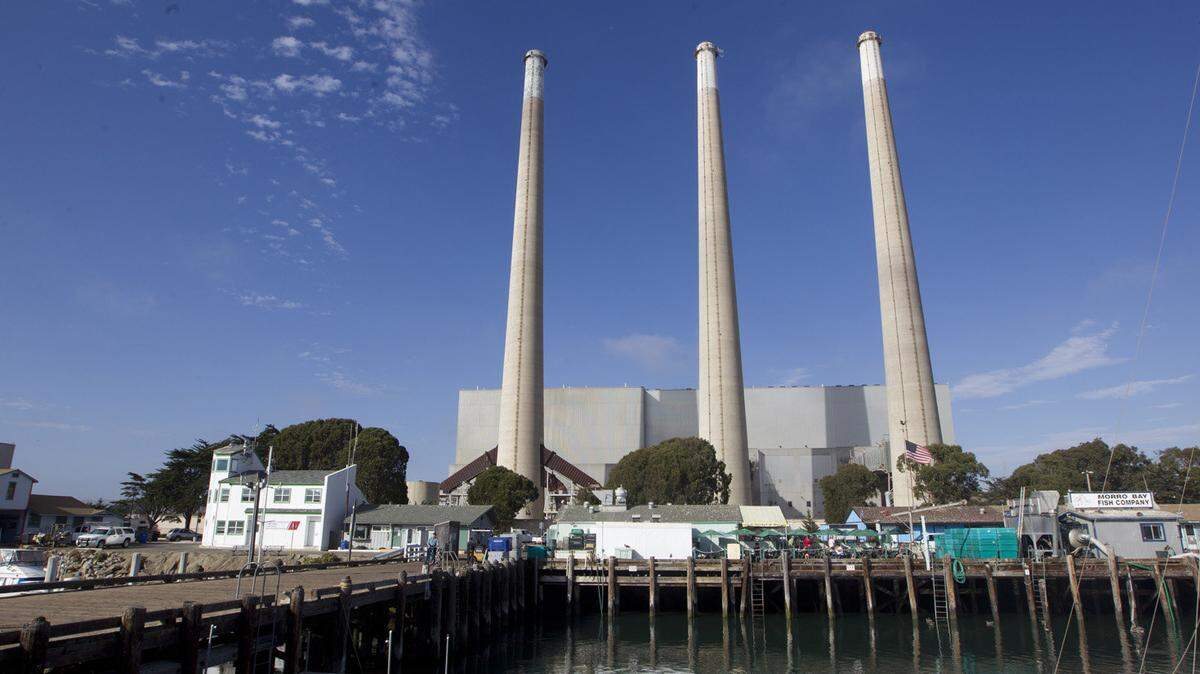
The Houston-based company that owns a large portion of the retired Morro Bay Power Plant property has put the site up for sale, according to Morro Bay city officials.
The decommissioned natural-gas-burning plant site, which was shut down last year and consists of about 100 oceanfront acres, is on the market along with two other California properties owned by Dynegy — the Moss Landing and Oakland power plant parcels, according to the city.
The potential impacts of a sale are set to be discussed at Tuesday night’s Morro Bay City Council meeting, which begins at 6 at 209 Surf St.
Because the plant is private property owned by a private corporation, however, “the city maintains a certain level of influence over the eventual use of the property … but not control,” according to a staff report written by Morro Bay City Manager David Buckingham and City Attorney Joseph Pannone.
A Dynegy spokesman wouldn’t confirm specifically whether the Morro Bay property was up for sale, saying only that the company will be making an announcement shortly.
“Dynegy has an ongoing strategic review process, and we’ll have something to say on that any day now,” Dynegy spokesman Micah Hirschfield said Monday.
A new owner would inherit the property’s three 450-foot smokestacks, turbines, generators and electronic monitoring rooms.
The news of a possible sale hasn’t dissuaded a consulting firm from continuing to explore a wave energy facility there.
After gaining permit approval from the Federal Energy Regulatory Commission to test a wave energy facility, Dynegy and consulting firm GWave have been exploring a possible wave park that would channel energy from ocean waters off the Morro Bay coast through transmission lines to the existing plant facilities.
Robert Stoddard, executive vice president of GWave, said his company is still engaged with its research and it’s constructing a full-scale vessel to test the viability of a wave park off Morro Bay’s coast.
“We’re still working to continue with the wave project in general, and Dynegy has been facilitating that process moving forward, whoever ends up owning the site,” Stoddard said. “Building a wave park will require reaching agreements with the town and fishermen. If this is something the town sees as part of its future, we want to find a way to make it happen.”
Depending on a buyer’s intended use of the Dynegy site, a zoning change could be necessary.
The property is currently zoned as coastal dependent industrial; an outlet mall, for example, would not be permitted unless the City Council was to rezone the property commercial.
The state Coastal Commission also would have to approve any rezoning.
Under California law, the property owner must retain the property’s economically viable use, according to the staff report. Thus, it couldn’t be rezoned as a public open space.
In anticipation of a possible sale, the city has reached out to potential buyers and developers in hopes of having a say in any future use. But none has been interested in buying the land because they haven’t identified a viable business model, Buckingham and Pannone wrote.
Dynegy doesn’t own all of the land surrounding the plant. PG&E owns a significant amount of acreage, according to the staff report. The Tribune could not learn how much.
The PG&E parcel includes the switchyard facility located behind the plant. This property isn’t for sale, and the city expects it to remain in PG&E’s possession, the city said.
“That switchyard property is essential to PG&E’s electricity distribution operations throughout central California,” Buckingham wrote in the staff report. “Power generated in the Central Valley is transmitted to the PG&E switchyard, where it is further distributed to consumers around the Central Coast.”
Potential hurdles to the sale of Dynegy’s property, if redeveloped, include environmental cleanup and a PG&E stipulation in place stating the property won’t be used for certain purposes, including health care facilities, hotels, day care centers, parks or recreation because of liability concerns.
The covenant was recorded when PG&E sold the property to Duke Energy, which later sold the property to Dynegy. The new owner could indemnify PG&E, however.
The city also owns and leases property at the site, including the 2.5-acre triangle parking lot on Embarcadero that was deeded by Dynegy to Morro Bay.
The city said it intends to remove the top part of an existing wall between the triangle lot and Embarcadero to improve visibility and safety, and to install signage related to the free parking lot.
The city has an existing 10-year lease with Dynegy to use Lila Kaiser Park just north of the plant site, but the lease can be terminated by Dynegy if that property is necessary for the redevelopment of the main property.
Dynegy had been making annual payments of $525,000 to the city while operating the plant, but those payments recently ended.
Councilwoman Christine Johnson said that an immediate step for Morro Bay should be to reach out to PG&E to find out what the company thinks about existing deed restrictions and the relationship of its switchyard with a potential new neighbor.
Johnson also said that while the power plant site is important to Morro Bay’s future, the city has existing properties within its control, including an aging wastewater facility — also oceanfront property — that will be shuttered when a new inland sewage treatment plant is built.
“While the power plant land is there, and that relationship is important to whoever has it, we have to get busy on things we truly have control over and diversify our economy,” Johnson said.
Johnson added that few available, undeveloped oceanfront properties exist along California’s coastline, and she’s confident the property will attract significant interest.
This story was originally published February 23, 2015 at 1:13 PM with the headline "Morro Bay Power Plant property is for sale."