
Q&A with David Pomeroy, longtime SLO County deputy district attorney
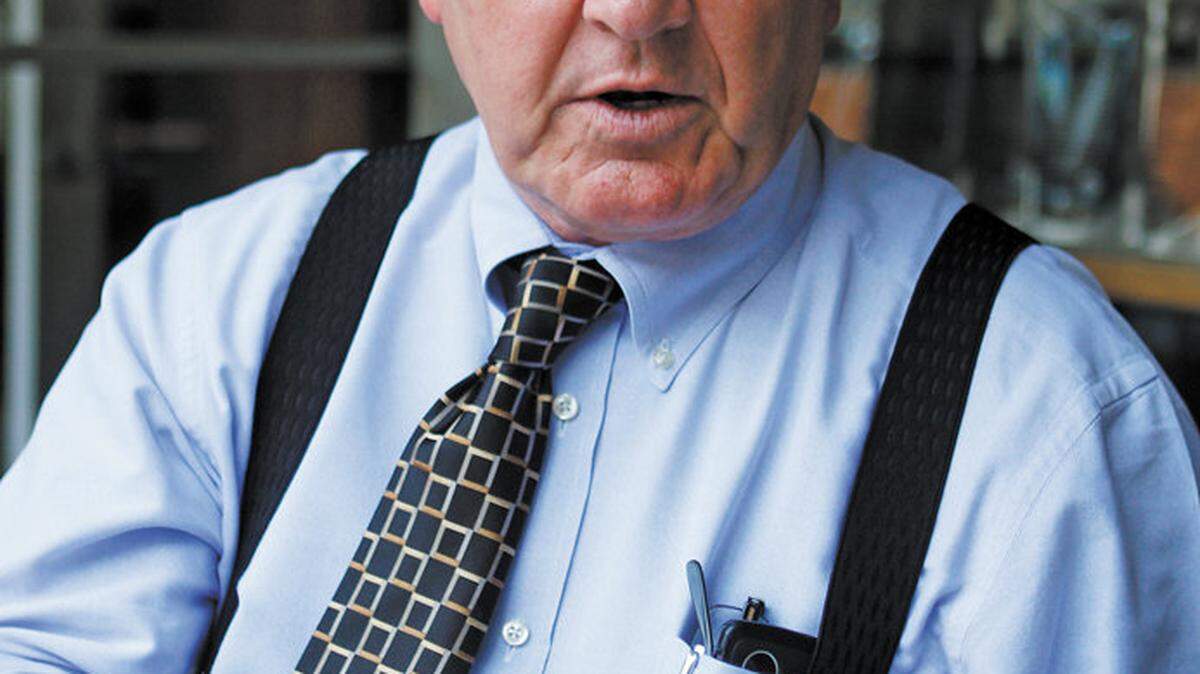
In late August, about 30 San Luis Obispo County District Attorney’s Office prosecutors, supervisors and staff packed into the county Board of Supervisors chambers to see
a longtime colleague — and for many, a mentor — receive an official shoutout for a
career spanning more than three decades.
True to form, David Pomeroy’s speech to the board was soft-spoken, humble and infused with his offbeat and self-deprecating humor.
For about 33 years, Pomeroy has served as a deputy district attorney prosecuting criminal cases ranging from petty misdemeanors to heinous felonies.
Known in legal circles as one of the office’s most seasoned lawyers, Pomeroy was the first San Luis Obispo County prosecutor to file a murder charge in a DUI case.
He helped put the county in the national spotlight for successfully prosecuting three people
involved in a 2011 hate crime, in which a wooden cross was burned on the front lawn of an African-American woman’s home in Arroyo Grande.
On Sept. 14, Pomeroy, 62, hung up his prosecutorial spurs and said he is looking forward to spending more time with his wife and family.
Pomeroy recently sat down with The Tribune to talk about his career, his fascination with why people commit crime and the importance of humor in overcoming tragedy.
Q: What led you to a career in criminal justice?
A: When I was a kid I used to watch a show called “The Defenders.” It was on in the very early ’60s with E.G. Marshall and Robert Reed, a father-son firm of defense attorneys. It was a really intelligent courtroom drama, and they tried to deal with current issues. And I just really enjoyed watching it, and thought that would be a fun job — or at least interesting.
Q: So you had an interest in defense. How did you become a prosecutor?
A: I was actually hired by the Orange County DA’s Office two weeks before I got an offer from the Los Angeles Public Defenders’ Office, which is what I really wanted to do, but I
ended up enjoying my work in Orange County so much I decided to stay in prosecution. … In law school, the classes I found interesting were the criminal law classes. I found it more interesting trying to understand why people did the things they did and how people could be capable of doing the almost unbelievable things that they do to each other.
Q: Before you studied law, you graduated college with a degree in philosophy. What was your philosophy as a prosecutor?
A: I tried to do really quality work and be aggressive when appropriate. I’ve tried to go straight at my opponents, as opposed to hiding the ball or being sneaky. I would like to think that when I’m in trial with somebody, that they know where I’m coming from and what I’ve got and what my arguments are. And that I think my arguments are stronger than their arguments. I don’t like to surprise people.
Q: Attorneys and staff at the DA’s Office are known as a tight-knit group. As the most senior prosecutor, how did you see your role within the office?
A: I have some institutional knowledge and I think that especially some of the younger people treat me with a degree of respect I’m not sure I deserve. I do not think that I’m brilliant or that I know what I’m doing necessarily more than other people. But with my gray hair, I’m afforded more respect, which isn’t necessarily logical or legitimate. … More often
lately people have asked me what I think about their cases and if I have any suggestions. And I love that. To me, that is the most fun that I’ve ever had in my job.
Q: How has the San Luis Obispo County DA’s Office changed since the 1980s?
A: We’ve probably got twice the number of lawyers since I started. … We’re handling more serious cases because the population has increased. Tragically, murders used to be much more rare than they are now, and same with violent crimes in general.
Q: But data shows that violent crime has dropped in the past 20 years.
A: Per capita, it has. Yes, I agree. And I do think that we are safer than we were in the ’80s when I started here. And I hope that our work has had a lot to do with that.
Q: Over the course of your career, you’ve prosecuted all types of crimes. Were there particular types of cases that most interested you?
A: I’m seen in the office as someone who enjoys mentally ill offender cases. … I find it fascinating that someone can be affected by an illness to the degree that he’s tried to persuade the rest of us that this is a reasonable way of looking at things. Imagine how frustrating it must be to believe what he believes, and to realize that nobody else believes him because we’re all misguided. We’ve had (defendants) over the years with terribly tragic delusions.
Q: Which case are you most especially proud of?
A: The trial that I’m most proud of is the one I worked on with (Deputy District Attorney) Mja Thiesmeyer and (sheriff’s Detective) Pat Zuchelli: the Matthew Levine (murder) case. … It was a really interesting case in that there was no body. And we were asking the jury to find the defendant did something almost incomprehensively cruel. It would be difficult for anyone to believe that someone could do something so cruel to his grandmother, who was
letting him live in her house, just so he could inherit the house.
Q: In the assault with a deadly weapon case against Harley Finney in 2011, the homeless victim in the case recanted his ID of Finney in front of the jury. How do you deal with a hostile witness or victim in a criminal trial?
A: (The victim) was very young, very immature and was living on the streets. He did not want to be seen as a snitch by the guys on the streets. But that kid had been very
severely injured — he almost died from his stab wounds. … To avoid keeping him on the streets with the same people he had been fighting with, we put him up in a motel. And he kept causing problems by smoking cigarettes in the motel and inviting his homeless buddies to come crash there. He kept getting kicked out of one motel after another and causing us to pay these fines for damages to rooms. … The way you handle a witness who is not necessarily going to be reliable, is that you always have them testify at a preliminary (pre-trial) hearing. In this case, he had testified very, very clearly (at preliminary hearing) that Finney was his attacker. (Note: Finney was convicted of a third strike and is serving 29 years to life in prison.)
Q: How did it feel to be recognized by the Anti-Defamation League (for work on the 2011 Arroyo Grande cross-burning case of Jason Kahn)?
A: That was very flattering, but I don’t really deserve that credit. It should go to the detectives that solved that case. They worked really diligently on it and they got really lucky — and that’s the product of working really hard at something and paying attention, you get lucky. … We’re all thrilled that the crime didn’t go unsolved forever, because that’s the kind of crime that could have very well gone unsolved. And that would have been upsetting for many of us.
Q: When investigating and prosecuting an especially horrific case, how do you keep those crimes from affecting you mentally?
A: The way that people like me deal with that kind of tragedy and try to get through it is through a sense of humor. We tend to have a dark, sarcastic, gallows sense of humor. And I hope nobody takes it as being in any way disrespectful of the horror of the tragedy, but as I said at my retirement party, George Burns lived to be 100. He was smoking cigars, drinking and eating steaks every day of his life. The man never took care of himself and he lived forever because laughing out loud keeps you alive and helps you deal with the tragedy in life.
Q: How do you balance your professional and personal life?
A: I’m blessed to have an incredibly supportive wife who’s been supportive my entire career. She’s been with me since the beginning. And she’s willing to put up with my moods and my grumpiness, especially when I’m obsessing over a case. And I think it’s critically important to have that kind of support from your partner when you’re dealing with tragedy.
Q: What advice would you give someone thinking about becoming a prosecutor?
A: Practice public speaking. Take every opportunity because, like anything else, it improves with practice. And keep trying. The field is crowded with lawyers, but the old-time lawyers say there’s always room for a good lawyer. And most people don’t realize, it but you have a tremendous opportunity to help people as a prosecutor. … But there are easier ways to make a living. If you’re signing up to be a litigator, you’re signing up to fight for a living, and a lot of people would be a lot happier working cooperative for a living.
Q: What would you say to residents when they get a jury duty notice?
A: I know most people find it really annoying to have their lives interrupted by those notices, but again and again I’m pleased to hear people say afterward it was a very interesting and rewarding experience, and they’re really glad they did it. What could be more interesting than finding out why somebody did something terrible to somebody else?
Q: In your address to the county Board of Supervisors last month, you talked about recognizing the value of the prosecutors in your office. What was that about?
A: They need to pay the lawyers what they’re worth. The lawyers in my office haven’t had a substantial pay raise since before the economic downturn. They gave us a fraction of 1 percent last year and that was offset by the increase in health insurance premiums. … We’ve just gone through a hiring process where we had two applicants turn us down because we’re not paying enough and they can’t afford to live here.
Q: What are you going to do now?
A: We’re going to travel. I’m planning on exercising more, get fit. I’m trying to pursue some new hobbies. I might even learn to play an instrument. … But we live in San Luis, and we’re going to stay.
This story was originally published September 26, 2015 at 9:01 PM with the headline "Q&A with David Pomeroy, longtime SLO County deputy district attorney."