
Cal Poly irrigation center helps teach agriculture industry to combat drought
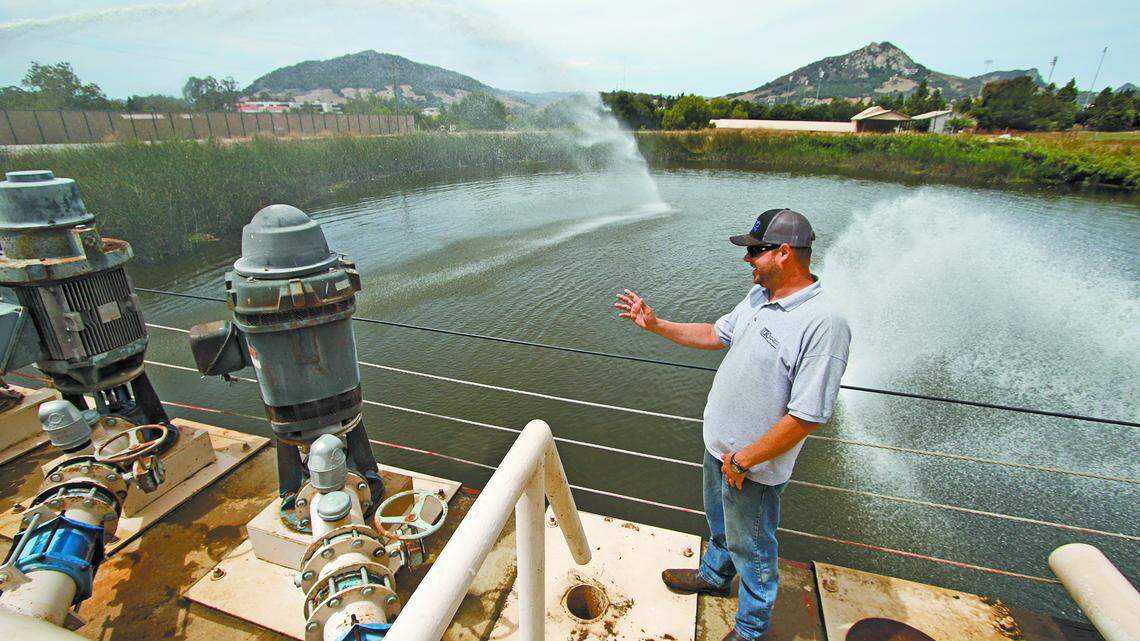
As a way to counter the impacts of the drought and make water use more efficient, Cal Poly’s Irrigation Training & Research Center is in the midst of a summer session that teaches agriculture industry insiders how to update their technology and improve flow management.
The center is in the second year of its program.
“The program enables a grower to ask the right questions when they’re purchasing equipment or looking to make repairs or replacements,” ITRC director Stuart Styles said. “They can be better informed about how to decide what equipment they might use.”
The state of California’s Employment Training Panel allotted $234,000 to the center to train managers of farm companies, equipment dealerships and water districts on improving irrigation systems to combat the economic and employment effects of the drought.
The state panel has set aside $2 million statewide for drought-related training.
Classes offered by Cal Poly’s ITRC — which range in cost from $185 to $420 — focus on drip irrigation; basic pipeline hydraulic, irrigation scheduling; landscape sprinkler design; and chemigation (using fertilizers, soil amendments and pesticides through irrigation water).
Courses held last week focused on the use of pumps, with instruction on how best to calculate flow efficiency.
The 32 participants came from a range of industry backgrounds — including officials from the Oakdale Irrigation District, Orange County Pump Company, Carpinteria Valley Water District, Modesto Junior College and Nichols Farms in Hanford.
“We give them the information, but we leave it up to them to decide whether they might want to replace their system or repair or upgrade,” Franklin Gaudi, a program instructor and ITRC manager, said.
In addition to improved irrigation methods, farmers are increasingly using drones and other devices to calculate how much water their crops need, better enabling growers to conserve, Gaudi said.
In addition to saving water and lessening the burden on declining water tables, the ITRC instruction includes methods of using less energy.
As water tables fall, that can mean drilling farther to access a diminishing supply and more power to draw the water up through pumps.
By calculating the appropriate amount of pump horsepower, growers can reduce the demand for electricity, lowering costs for farmers and relieving some of the burden on the grid.
The program, which also has a winter schedule, has served nearly 300 professionals in 25 classes, logging more than 6,300 hours of training.
Styles said the training program will be expanded to include training for staff workers and people who spend more time in the field than managers tend to do.
Much of the state funding goes to equipment and costs associated with field training for the courses. But money is still available to add more offerings.
This story was originally published August 9, 2015 at 8:40 PM with the headline "Cal Poly irrigation center helps teach agriculture industry to combat drought."