
Atascadero finds itself stuck in FEMA limbo over disaster aid
WASHINGTON — When a 6.5-magnitude earthquake shook the Central Coast a few days before Christmas in 2003, the Federal Emergency Management Agency moved into action. The agency injected tens of millions of dollars into local communities, paying for repairs and long-term risk reduction.
Atascadero, a city of about 30,000 people, reaped particular benefit. It took home $18.9 million, or 45 percent of the federal awards given after the earthquake — the most of any single recipient.
FEMA, it seemed, had the medicine this small town needed. But 12 years later, the agency is one of its biggest headaches.
FEMA says the city didn’t follow federal rules back in 2005, when Atascadero officials leased a building for temporary workspace as they repaired and retrofitted the damaged Historic Atascadero City Hall. In 2013, FEMA demanded $2.65 million back from Atascadero, which has annual revenues of under $20 million. The money could come from the city’s building or general reserve funds, which total about $13 million.
“It wouldn’t be ‘No big deal.’ It’s a huge deal,” Mayor Pro Tem Heather Moreno said, when asked about how FEMA’s decision would affect the city budget. “It would be a significant hit to our reserves.”
But it wasn’t a single city administrator, or even a group of local government worker bees, who approved the lease. It went all the way up to FEMA’s top advisers, according to documents provided by the city.
Now, spurred by a reporter’s questions, California state officials are confronting FEMA about why it has left Atascadero’s appeal unanswered for almost two years, apparently in violation of the agency’s own policies.
So what happens when the federal government gives too much money to a town in need? Who should take the hit?
The city’s side
To be clear, the city of Atascadero doesn’t think federal officials gave it too much money. In documents and interviews, city officials have maintained the issue is more complicated than FEMA is making it out to be.
Hoping to receive assistance from FEMA to open its temporary city offices, Atascadero officials meticulously examined available real estate. The possibilities included trailers, constructing a new building and renting space. Cost and timing made those options less than ideal, leaving just one feasible option: the bowling alley.
“The building is already constructed, is available to be leased, and is in a desirable location,” City Manager Rachelle Rickard wrote in a 2004 letter to the Governor’s Office. “Unfortunately, this is the only option available to the city which will meet our timing and affordability needs.”
The Creekside Lanes bowling alley was losing money, and the owner planned to sell it, the letter from Rickard said. Another government body was considering buying it.
That body was the Community Redevelopment Agency of Atascadero, tasked with improving blighted areas around the city. Though the agency no longer exists, dissolved in 2012 as part of Gov. Jerry Brown’s move to disband all such agencies statewide, it’s the crux of today’s dispute between the city and FEMA.
FEMA has now decided the redevelopment agency was too closely tied to the city, leaving the lease ineligible for federal funding — and Atascadero responsible for the $2.65 million. “It’s very frustrating for us as a city,” Rickard told The Tribune in 2013. “To come back eight years later (and say) ‘Oops, we need our money back.’ That money was spent and gone.”
Multiple FEMA officials, including press secretary Susan Hendrick, declined to answer questions about the case because it is on appeal. (It has been for almost two years, apparently in violation of FEMA’s own 90-day deadline to respond to appeals.) No one at FEMA, however, would confirm the agency has a policy that prevents it from releasing information about an ongoing appeal.
FEMA did say it looks at two standards that could make a lease ineligible for funding: whether one organization in the lease controls the other, and if the same individuals control the decisions of both organizations.
The second standard is at question in Atascadero.
Audit sparked issue
The problems with the lease first surfaced in a Department of Homeland Security inspector general audit in 2012.
The Office of the Inspector General looks for waste, abuse and fraud in the department, which includes FEMA.
The audit maintained that city officials who were also running the redevelopment agency had a conflict of interest. And as a result, the inspector general recommended FEMA take back the money.
FEMA initially challenged the inspector general’s arguments. In a letter to the inspector general’s regional office, FEMA Regional Administrator Nancy Ward said the agency’s chief counsel had reviewed state laws surrounding the Atascadero case and determined the city and redevelopment agency were legally separate.
The two organizations were funded separately, though they had similar goals. The agency’s cash — including revenue from the city’s lease — went to fix “blighted” areas in the community, such as funding affordable housing and Atascadero’s tourism program.
Legally separate or not, the redevelopment agency had close ties to the city. As required by the agency’s bylaws, the city manager served as executive director, the city clerk served as secretary and the city finance director served as treasurer. The City Council also comprised the agency’s board.
Because of this, the inspector general stood by its report — and still does today.
John Kelly, assistant inspector general for emergency management oversight, said in an interview that the lease created a “windfall” profit for the city. He said those who formed the plan in Atascadero apparently “understood this process very well,” and structured it so FEMA couldn’t claim any equity in the project, as would have been required if the city — and not the redevelopment agency — had bought the property.
On the larger question of who should be accountable when the government doles out too much money, Kelly said the burden falls on those who were responsible for knowing the rules: the state of California and the city of Atascadero.
“Just because you relied on bad information does not absolve you from responsibility of doing this correctly,” he said. “They are provided all the regulations and all the guidance, and it’s their responsibility to abide by them.”
Records support city
The guidance the city got, however, indicated that the deal was just fine. There were initial concerns about whether the redevelopment agency could purchase the property and rent it to the city, but they didn’t last long. In April 2005, FEMA official Don Smith gave a green light to the lease, according to the notes provided by the city from a meeting.
“Don spoke generically with the inspector general in Washington regarding our situation,” the notes said. “The IG said that as long as we could give a good reason for the lease instead of the purchase, it would be OK. Don verbally said that it looked like the direct lease was OK and would be funded by FEMA.”
Kelly said it is unlikely FEMA received approval from the Office of Inspector General, but that he had no way to be certain.
The redevelopment agency bought the building and, with FEMA’s blessing, the city planned renovations. The building was then leased to the city and converted to office space, and city staffers moved in.
As far as Atascadero knew for the next seven years, everything was OK.
The 2012 inspector general’s audit changed that.
After initially disagreeing with the inspector general’s audit, FEMA reversed course in July 2013 and said it had made a mistake determining if the city and redevelopment agency were separate. It decided to take back $2.65 million.
“They kept saying they’d checked with the IG and legal and Washington, D.C., at the time,” Rickard said. “And they don’t tell you at the time that that doesn’t mean anything.” Because FEMA declined to answer questions about the case, it’s unclear why the agency backtracked on its defense of the lease.
UC Berkeley professor Mary C. Comerio, who wrote a book about how disaster recovery has changed, said the situation sounded “very unique.”
Help from state
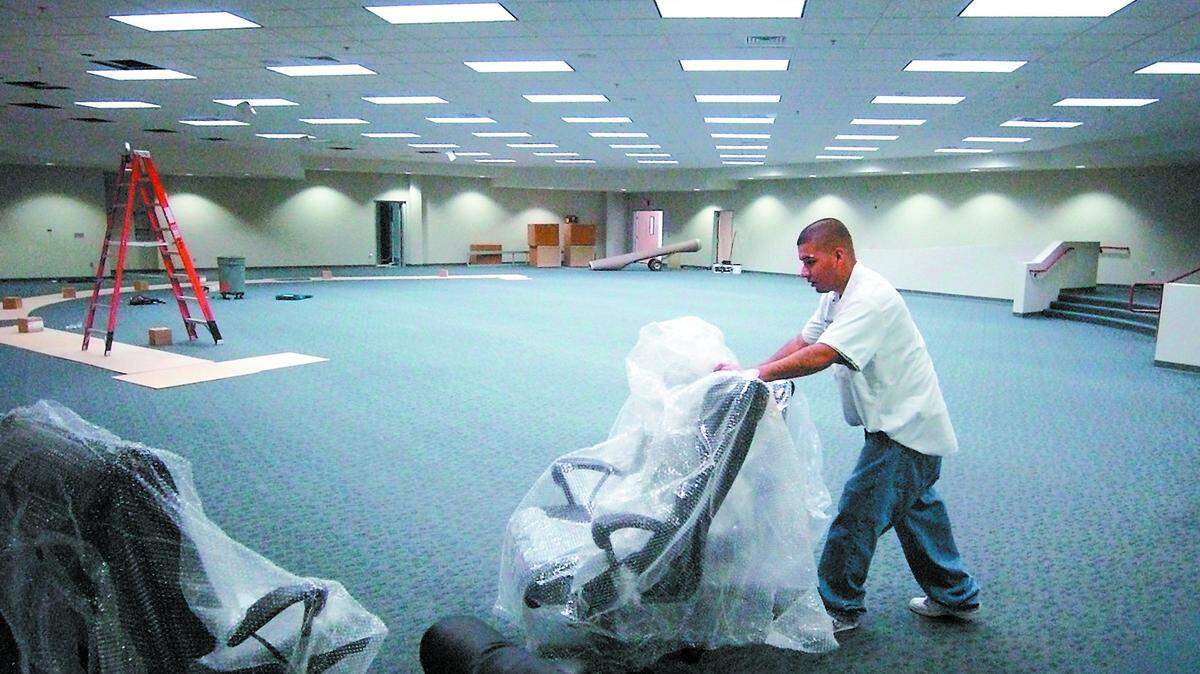
Today, the bowling-alley-turned-city-office-space sits vacant and up for sale by the Atascadero City Council, on behalf of the former redevelopment agency. It’s valued at more than $1 million. A portion of that will go to the city, but it’s unclear how much. The dispute with FEMA is locked in an appeal that’s going on 21 months, and the 90-day deadline to respond to appeals set in FEMA’s Public Assistance Guide has long since come and gone.
As the middleman between FEMA and the city, the California Governor’s Office of Emergency Services has recommended letting Atascadero keep the money.
Asked about the appeal’s delay by the Scripps Howard Foundation Wire, California Assistant Director for Recovery Charles Rabamad promised to raise the issue in a meeting planned with the federal agency. But FEMA asked to delay that meeting because of an emergency in Guam. The agency is on the way to issuing a response, which has cleared its lawyers but is waiting for additional approval, Rabamad said.
“We put them on notice that they need to provide a response,” Rabamad said. “I wouldn’t be surprised if they made a favorable decision for the city.”
Helping Atascadero’s chances, Rabamad said, is a federal court case decided in Florida last year. U.S. District Judge Donald Middlebrooks prevented FEMA from taking back $21 million of hurricane recovery funds for the Florida coast, according to the legal news site Law 360.
Rep. Lois Capps, who represents Atascadero in Congress, isn’t taking sides on the issue, spokesman C.J. Young said via email. The California Democrat, however, is not happy with how FEMA handled the appeal.
“While Congresswoman Capps is disturbed by the extensive delay in the decision process,” Young said, “she has been encouraged by the understanding that the City of Atascadero and FEMA are working cooperatively to find a resolution to this dispute.”
Disputes can drag on
It’s not uncommon for disaster victims to be bogged down in legal fights long after the initial tragedy ends, Comerio said. The earthquake is now 12 years past, but that’s not even close to how long these disputes can last.
“Negotiations between most cities and the federal agencies, particularly FEMA, go on for years,” Comerio said. “It takes 15, 20 years to close the books on a particular disaster.”
Large cities can stay abreast of complicated policies by hiring lawyers and keeping in touch with other large cities, Comerio said. But it’s difficult for a small town like Atascadero to face off against the federal government. Mysterious federal policies can go over the heads of city staff members who may not have experience with these situations.
“The complexity of the bureaucracy and the legal rulings, it’s very difficult for smaller entities to deal with,” Comerio said. “The larger cities understand how important this is, they’ve learned from each other and their people. The smaller cities have no idea.”
COMPARING AID TO ATASCADERO AND PASO
Atascadero received the most federal aid of any single recipient in the wake of the San Simeon Earthquake at $18.9 million.
In contrast, Paso Robles, which was also hit hard by the quake and suffered the most visible damage when the Acorn Building collapsed, killing two women, received $15.9 million for its school district and $4.5 million for the city.
This story was originally published August 8, 2015 at 7:14 PM with the headline "Atascadero finds itself stuck in FEMA limbo over disaster aid."