So Paso Robles wants to build a spaceport? Here’s what it has to do

The space industry is booming — in fact, its economy is projected to go from $500 billion in 2025 to $1 trillion by 2030.
And Paso Robles wants a piece of the pie — since 2022, in fact. But before it can create its own spaceport, it must first be licensed through a process that’s known to be highly complex and rigorous with the Federal Aviation Administration.
After four years of pursuing such a goal, the city announced that it finally had a “solid foundation for advancing the project while identifying the remaining steps needed to complete the licensing process.”
By June 16, the city opened an RFP in hopes of finding a consulting firm to help with the final push of its application for license.
“The recent release of an RFP is intended to identify a consultant to assist the city in completing the detailed flight safety and risk analyses, formal agreements with the FAA and U.S. Coast Guard, updates to the Airport Layout Plan, and completion of applicable state and federal environmental reviews,” City Manager Chris Huot told The Tribune.
So, what’s it going to take for Paso Robles to receive a green light for space travel?
What’s a spaceport license?
According to its website, the FAA’s launch and reentry site operator license authorizes a non-federal entity to operate a launch or reentry site within the United States, allowing them to host, manage and facilitate third-party commercial vehicle activities.
Paso Robles hopes to create what’s called a horizontal space launch facility at its Space Innovation and Technology Park at Airport Road that would launch small jets into orbit to deliver small satellite systems to space on a commercial platform, then re-enter to Earth.
“The plan area will be a place where the existing strengths of the city are combined with the opportunities for the future, capitalizing on the technology transfer and research potential the plan area’s location and base economy provides,” the city’s website said.
The closest and most comparable horizontal launch spaceport is the Mojave Air and Spaceport just near Edwards Air Force Base in Kern County.
The Mojave spaceport location, established in 2004, was the first of its kind.
According to the FAA’s website, there are now currently 14 spaceports throughout the country, nine of which are licensed specifically for horizontal launches. If licensed, Paso Robles would be the 15th location and the second on the Central Coast, next to Mojave.
Huot told The Tribune that if successful, Paso Robles would position itself at the forefront of one of the nation’s fastest-growing industries.
“The project has the potential to create high-paying aerospace and technology jobs, attract new investment, strengthen workforce development opportunities, and diversify the regional economy,” he said. “Economic analyses project hundreds of jobs and millions of dollars in economic output over the coming decades, generating lasting benefits for the city, the Central Coast, California, and the nation’s growing commercial space sector.”
What are the first steps?
The FAA provides applicants with what it calls a “spaceport licensing primer,” available on its website. The five-page guide is considered a “stepping-off point” that represents the collective experiences of FAA personnel and the spaceport community for applicants to “avoid common pitfalls or a needlessly circuitous path,” it said.
It does not provide step-by-step instructions for the application itself.
“The first thing for all prospective spaceport licensees to remember is that the space environment is hard and unforgiving, and licensing is just the first step to accessing space,” the primer said. “If you can apply due diligence in learning about the licensing process in advance, you will exponentially increase your probability of successfully realizing your spaceport business plan.”
First, applicants must submit a pre-application initial contact information request to the FAA in which a representative connects to assess the applicant’s initial plans for establishing a spaceport.
After that, the applicant goes through a pre-application consultation where a licensing team is assigned to support the discussions for final application development. Some key activities considered include the environmental process — as required by the National Environmental Policy Act — and airspace assessments — potentially with the Department of Defense, as well as others.
The guide noted the consultation part of the application process is extensive and could take months or even years to complete.
What are the most common licensing challenges?
According to the FAA’s license primer, the most notable challenges in obtaining the license is establishing stakeholder engagement, co-location with an airport, addressing environmental issues and airspace navigation.
“Time and again, FAA is asked to identify the biggest challenges our applicants may face on their path to achieving a spaceport license. Undoubtedly, failure to engage in early and consistent communications with potential stakeholders tops the list,” the primer said.
Stakeholders can include local airport management and local aviation programs to National Park Services.
So far in this application process, Paso Robles has secured stakeholder engagement through letters of support from Rep. Jimmy Panetta, Sen. John Laird, Assemblymember Dawn Addis and even NASA Director of Strategic Partners Matthew Buffingham, among others.
Other developments, like the $800 million project The Landing, proposed at the old boys’ school along Airport Road, have also expressed their intention to support the airport and potential spaceport.
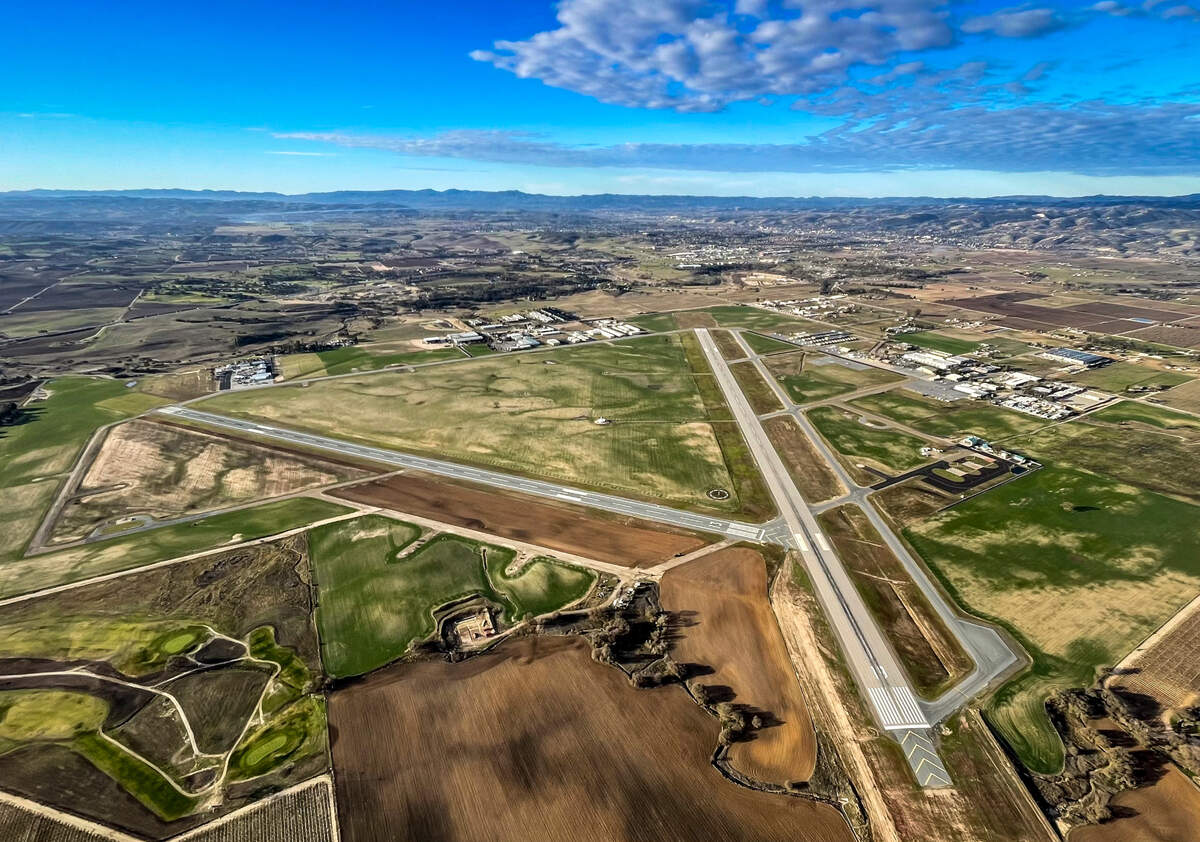
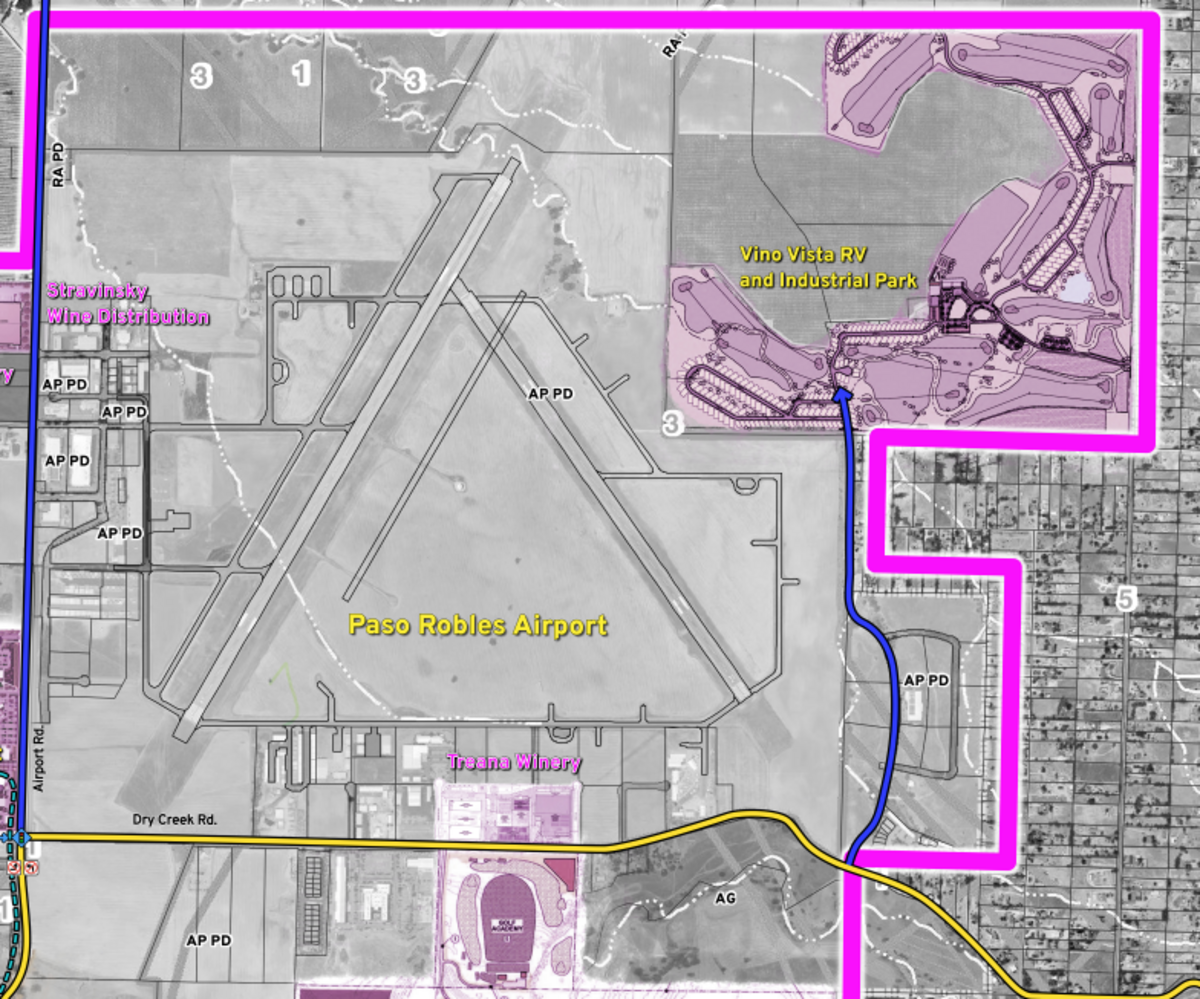
Also working to the city’s advantage is the proposed spaceport’s proximity to the airport which currently has about 1,000 underutilized acres. To put that into perspective, the Paso Robles Municipal Airport consists of about 1,300 acres, while the SLO County Airport has about 340 acres.
Paso Robles economic development manager Paul Sloan told The Tribune that’s what makes this project so viable.
“We just have like a tremendous amount of potential developments out there, for sure,” he said. “And that’s where everyone gets excited about because if we start developing tech, people are going to be flying in, and there’s going to be all sorts of stuff going on out there.”
The city is still working on developing environmental reviews and finalizing the airports master plan for its application, Sloan said.
Under the environmental realm the city is working on what’s called a “corridor analysis,” which determines what would be in an aircraft’s route if it were to fail.
For example, if a jet were to take off northeast, luckily there aren’t any residential areas that could be impacted, Sloan said — maybe just some grapes.
Lastly, the city must also update its airport master plan, which hasn’t been touched for 20 years and costs about $500,000 to update — the funding secured by Panetta in 2024 through the Federal FAA’s Airport Improvement Program to support the modernization of the airport’s master plan including updates to the airport layout plan, spaceport plan, aeronautical survey and sustainability efforts.
What’s the timeline?
The Tribune contacted the FAA for comment, but a representative said it couldn’t provide any information about any specific applications.
“Each application is unique,” a representative said. “There is no standard timeline, and the review process can vary due to the applicant’s readiness and the license scope. If the FAA denies an application, the applicant can appeal the decision and request reconsideration.”
As Paso Robles continues to work on its licensing application, Sloan said it hopes to hire the final consulting firm by September, then submit the final application 18–24 months from then.