Safety net for SLO County foster youth faces big budget cut this summer
When Marshall Ramsey’s mother passed away when he was just 15 years old, he entered the foster care system — but not without a dedicated volunteer who had his back every step of the way.
Ramsey, now 18, is a first-year computer science major at Cal Poly. It’s a position he didn’t expect he’d be in when he first entered the foster system in San Luis Obispo County, even though his foster experience was better than most, he said.
Through five different foster homes — most of which were old family friends or the parents of other students — Ramsey knew he could turn to a volunteer from the Court Appointed Special Advocates for Children, or CASA, a nationwide nonprofit that trains volunteers to advocate for children who become wards of the state.
CASAs maintain regular contact with their charges, developing a relationship to best understand their needs and interests both in court and in their personal lives, according to CASA’s website.
At times, Ramsey said that his CASA worker “knew (his) interests a little bit more than my actual foster parents, depending on the parent,” serving as a mentor, guide and the parental figure as needed. He said his CASA worker’s support could be as serious as helping him navigate the court system or as lighthearted as taking him kayaking or a getting a quick lunch.
“My CASA worker was mostly in the loop when it came to my grades, my personal problems — I felt more comfortable with discussing that with them than more temporary people,” Ramsey said. “I guess they were like a combination of a foster parent as well as a social services worker, because they were able to get answers and report to the court thoroughly.”
But while Ramsey has been able to enjoy relative stability through his foster housing journey, CASA is facing a future rife with uncertainty as it braces for a roughly 25% reduction in incoming funding, jeopardizing its ability to serve youth like Ramsey, CASA executive director Marina Bernheimer said.
“That’s a really significant portion of our funding that is on the chopping block based on the California State Legislature’s budget and the county budget,” Bernheimer told The Tribune. “Frankly, in this funding landscape, there is more competition for all grants — all nonprofits are really having difficulty with fundraising at this point.”
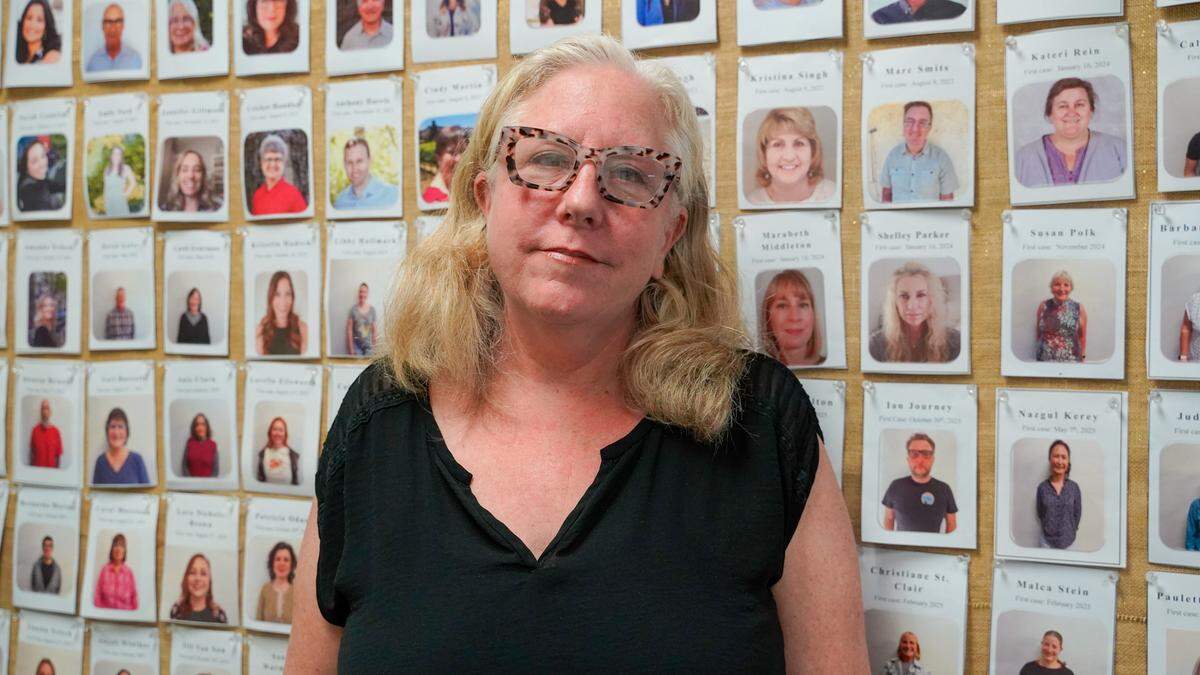
Funding cuts coming at all levels
Bernheimer said CASA as an organization has put its clients in better positions to succeed than most foster youth.
While foster youth face a higher rate of homelessness, human trafficking and incarceration, CASA’s kids have largely “beat the odds,” Bernheimer said.
Last year, 100% of the 12 high school-age foster youth served by CASA graduated from high school and enrolled in college, compared to 40% nationally.
And 100% of their San Luis Obispo County charges landed in stable housing after aging out of the foster care system over the past year, Bernheimer said.
She attributed a significant share of CASA’s success to its internal mentor program, which trains volunteers to do “all of the things that a parent would do” for high school-aged children, including filling out college applications, getting tutors in high school, applying for financial aid for college, learning how to write a resume and applying for jobs.
The mentor program is also the program most heavily impacted by incoming funding cuts that will start hitting the statewide CASA organization of 44 individual offices on June 30, Bernheimer said.
The local CASA branch’s $1.4 million budget will be reduced by around 25% over the next fiscal year due to a trio of individual funding streams drying up: federal reductions are coming to funding for the Victims of Crime Act, a five-year, $60 million funding allocation from the state to the statewide CASA is set to expire on June 30, and the county is cutting an $80,000 annual grant last year that CASA has received every year for the past 12 years.
CASA isn’t the only social servies nonprofit facing funding challenges, but that doesn’t make things any easier.
“I know that Lumina (Alliance) also relies on those dollars and has been doing advocacy together with us to try to get those dollars ... in the budget as well, but those have been a diminishing source of funds,” Bernheimer said. “My understanding is that prosecution of white collar crimes has been less of a priority and has been diminished, so there’s fewer dollars in that bucket of VOCA (Victim of Crime Act) funds to then be distributed to victims of crime.”
CASA asks for volunteers, funds from state
Bernheimer said CASA has no intention of discontinuing or shrinking the availability of its programs for foster youth, but it will have to make internal staffing cuts and consider closing its Higuera Street office, which serves as a home base for its volunteers to make private court calls.
“Fewer staff means that we serve fewer kids,” Bernheimer said. “We don’t have fluff at this organization, nor do my other partners in nonprofits, so cuts to our budget means cuts to services to kids unless we’re really, really careful, which we are.”
She said these cuts are coming during an unexpected uptick in the number of children being removed from their existing home situations into the foster system over the past several months.
Over the past year, CASA’s 174 volunteers has served over 200 children between birth and age 21, with 35 more children currently on the organization’s wait list, according to data provided by the organization.
“There’s been a noticeable rise in the last couple of months, and that feels particularly painful at a time when our resources are shrinking and the need is increasing,” Bernheimer said.
With budget season coming to a close in the Legislature in a month, Bernheimer and other branches of CASA are asking lawmakers for a last-minute $20 million allocation to the organization to maintain its services, Bernheimer said.
She also encouraged San Luis Obispo County residents to volunteer their own time or donate money where possible.
Ramsey said he hopes CASA is able to weather the storm and continue serving people who have stood in his shoes.
“For someone in that kind of position, they would need a supportive role or a person to help them, and CASA was that for me,” Ramsey said. “I believe it can be like that for many others, and it wouldn’t be smart to take that away from someone who would need it.”