Artemis II moon mission from liftoff to splashdown: See the best photos
By Sadie Dittenber and
Joe Tarica
The Artemis II mission and its four astronauts splashed down off the coast of San Diego on Friday afternoon after traveling more than 248,000 miles into space and completing a record-breaking trip around the moon.
The historic mission was the first manned flight of its kind since 1972, taking NASA astronauts Victor Glover, Reid Wiseman and Christina Koch and Canadian Space Agency astronaut Jeremy Hansen the farthest into space any human has ever traveled.
The 10-day mission — pilot by Glover, a Cal Poly alum — served as a test flight that will inform future space travel as NASA imagines long-term trips to the moon, and possible flights to Mars, according to NASA.
During their travels, the crew witnessed some spectacular sights and captured high-resolution photos depicting never-before-seen regions of the moon and a solar eclipse, the agency said.
Here’s a look at some of the photos published by NASA, documenting the trip from its launch on April 1 to its splashdown on Friday.
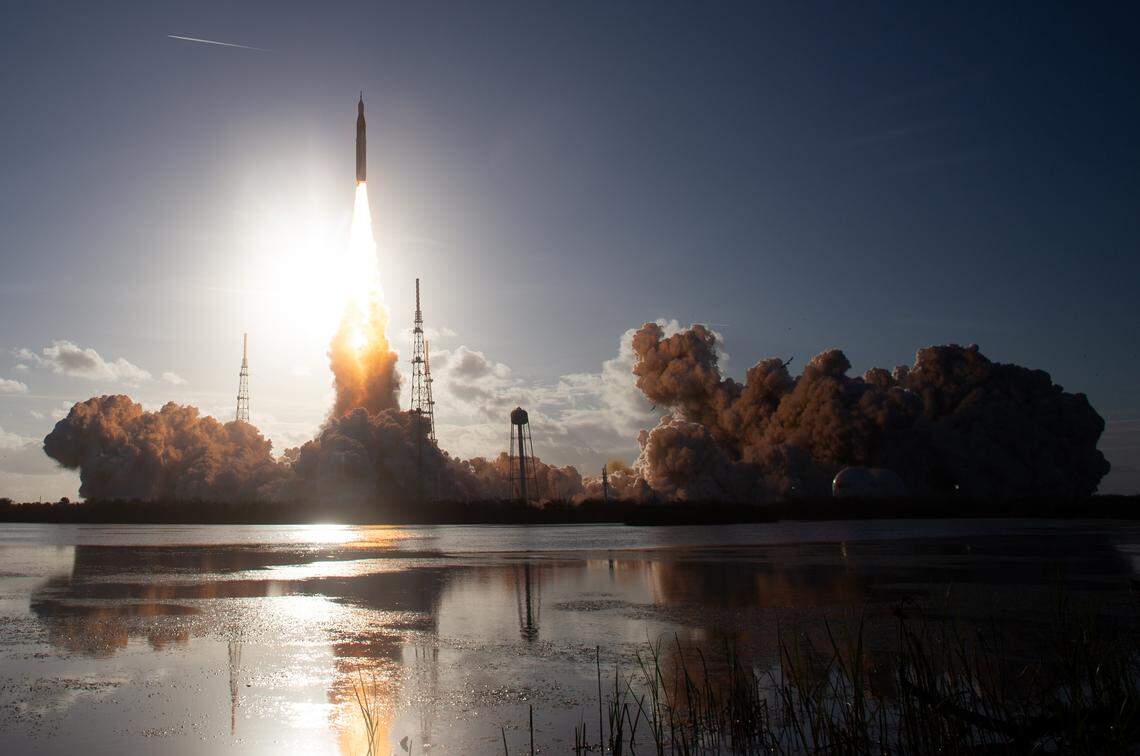
NASA’s Space Launch System rocket carrying the Orion spacecraft with NASA astronauts Reid Wiseman, commander; Victor Glover, pilot; Christina Koch, mission specialist; and CSA (Canadian Space Agency) astronaut Jeremy Hansen, mission specialist onboard launches on the Artemis II mission, Wednesday, April 1, 2026, from Launch Complex 39B at NASA’s Kennedy Space Center in Florida. Joel Kowsky NASA
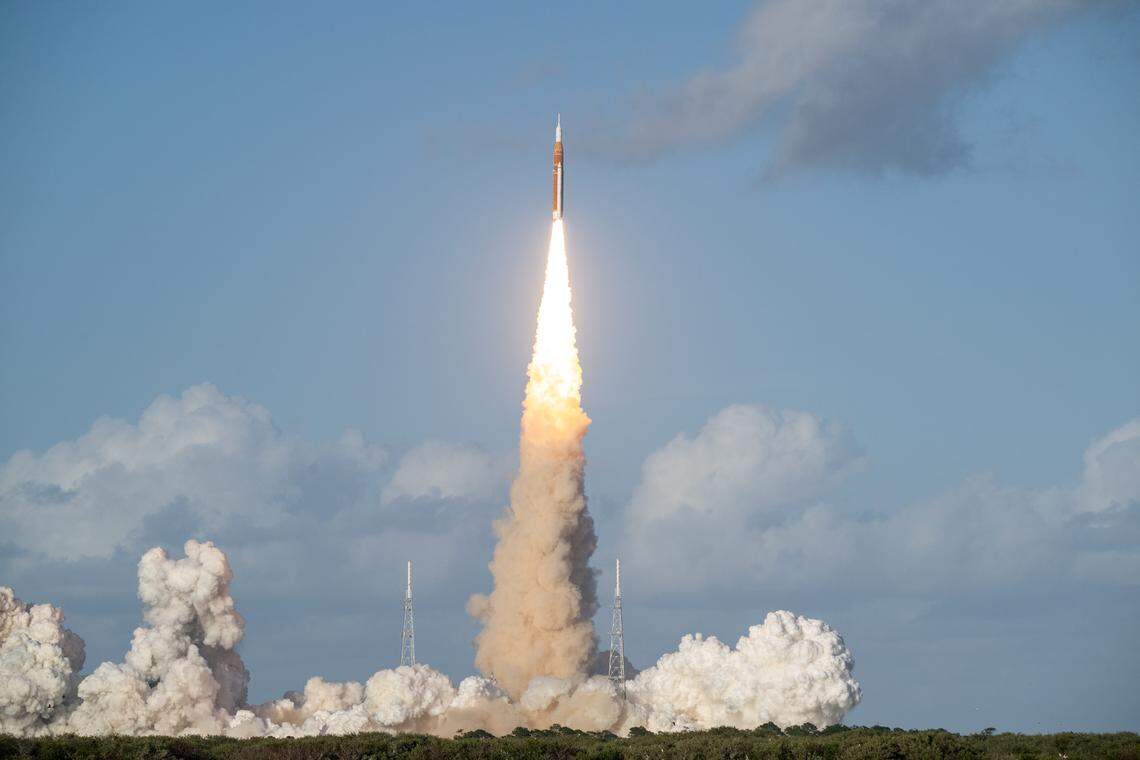
NASA’s Space Launch System rocket carrying the Orion spacecraft with NASA astronauts Reid Wiseman, commander; Victor Glover, pilot; Christina Koch, mission specialist; and CSA (Canadian Space Agency) astronaut Jeremy Hansen, mission specialist onboard launches on the Artemis II mission, Wednesday, April 1, 2026, from Launch Complex 39B at NASA’s Kennedy Space Center in Florida. Keegan Barber NASA
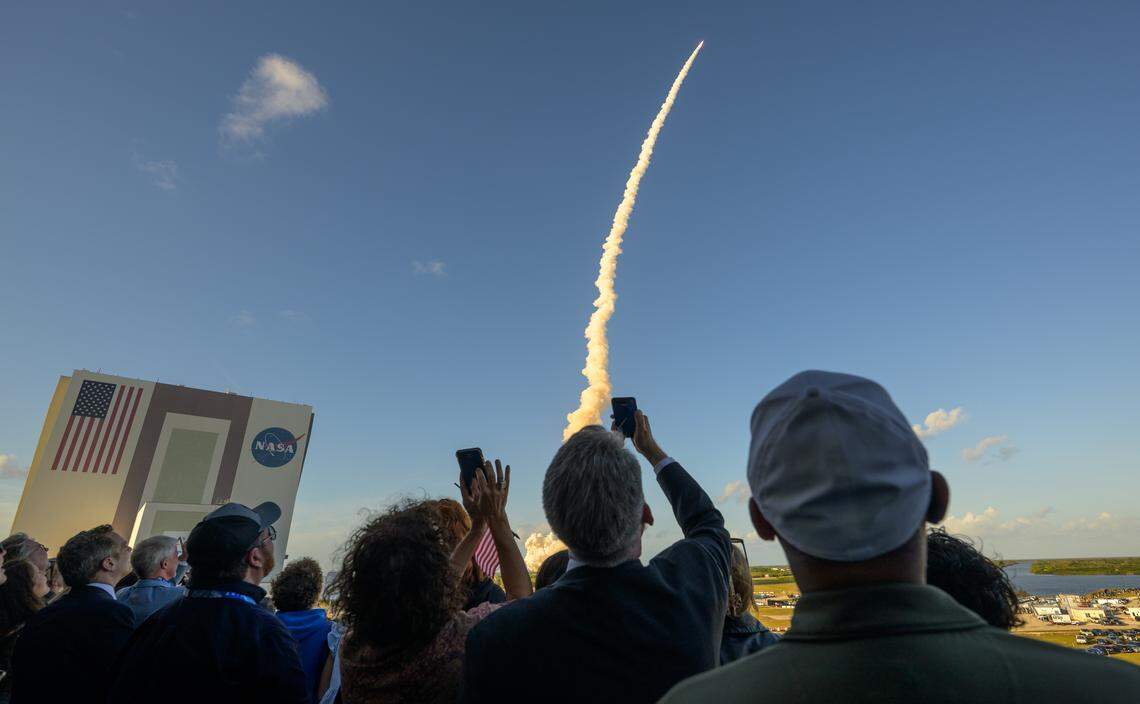
Guests at the Banana Creek viewing site watch the launch of NASA’s Space Launch System (SLS) rocket and Orion spacecraft with Commander Reid Wiseman, Pilot Victor Glover, and Mission Specialist Christina Koch from NASA, and Mission Specialist Jeremy Hansen from the CSA (Canadian Space Agency) on the Artemis II mission, Wednesday, April 1, 2026, at NASA’s Kennedy Space Center in Florida. Keegan Barber NASA
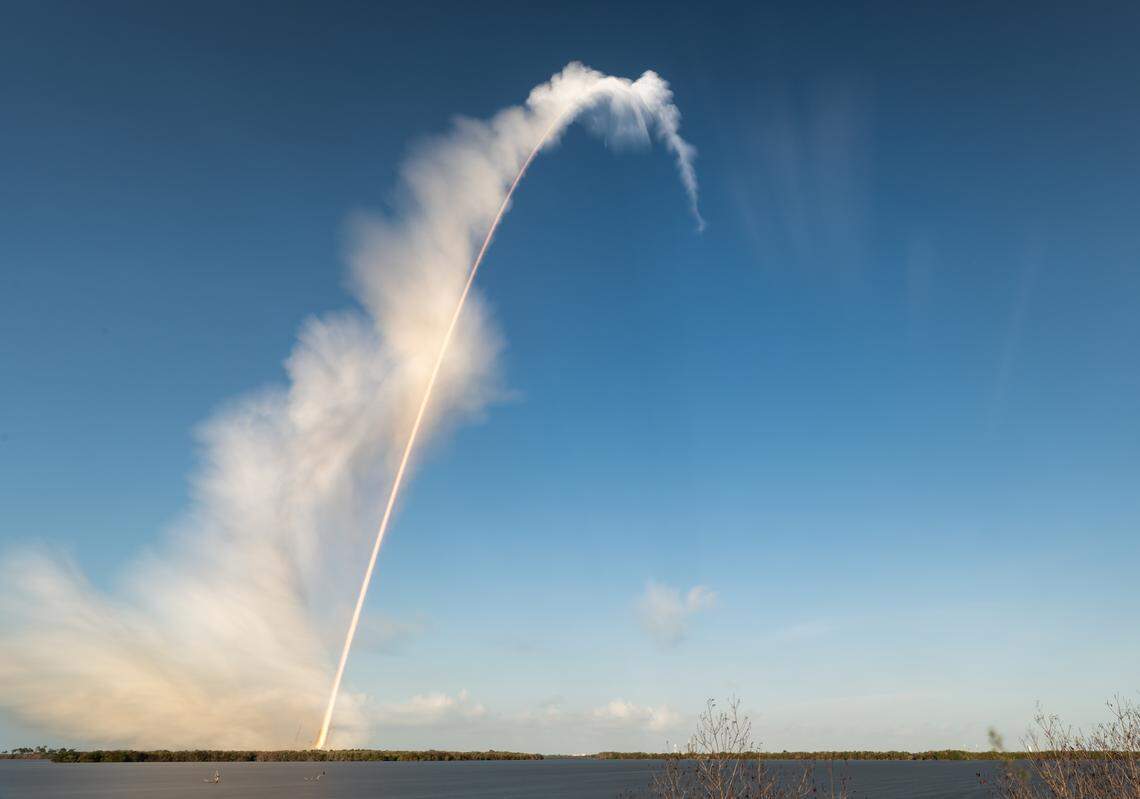
In this three-minute exposure, NASA’s Space Launch System rocket carrying the Orion spacecraft with NASA astronauts Reid Wiseman, commander; Victor Glover, pilot; Christina Koch, mission specialist; and CSA (Canadian Space Agency) astronaut Jeremy Hansen, mission specialist onboard launches on the Artemis II mission, Wednesday, April 1, 2026, from Launch Complex 39B at NASA’s Kennedy Space Center in Florida. Keegan Barber NASA
Guests watch the launch of NASA’s Space Launch System rocket carrying the Orion spacecraft with NASA astronauts Reid Wiseman, commander; Victor Glover, pilot; Christina Koch, mission specialist; and CSA (Canadian Space Agency) astronaut Jeremy Hansen, mission specialist on NASA’s Artemis II mission,, Wednesday, April 1, 2026, from Operations and Support Building II at NASA’s Kennedy Space Center in Florida. Bill Ingalls NASA
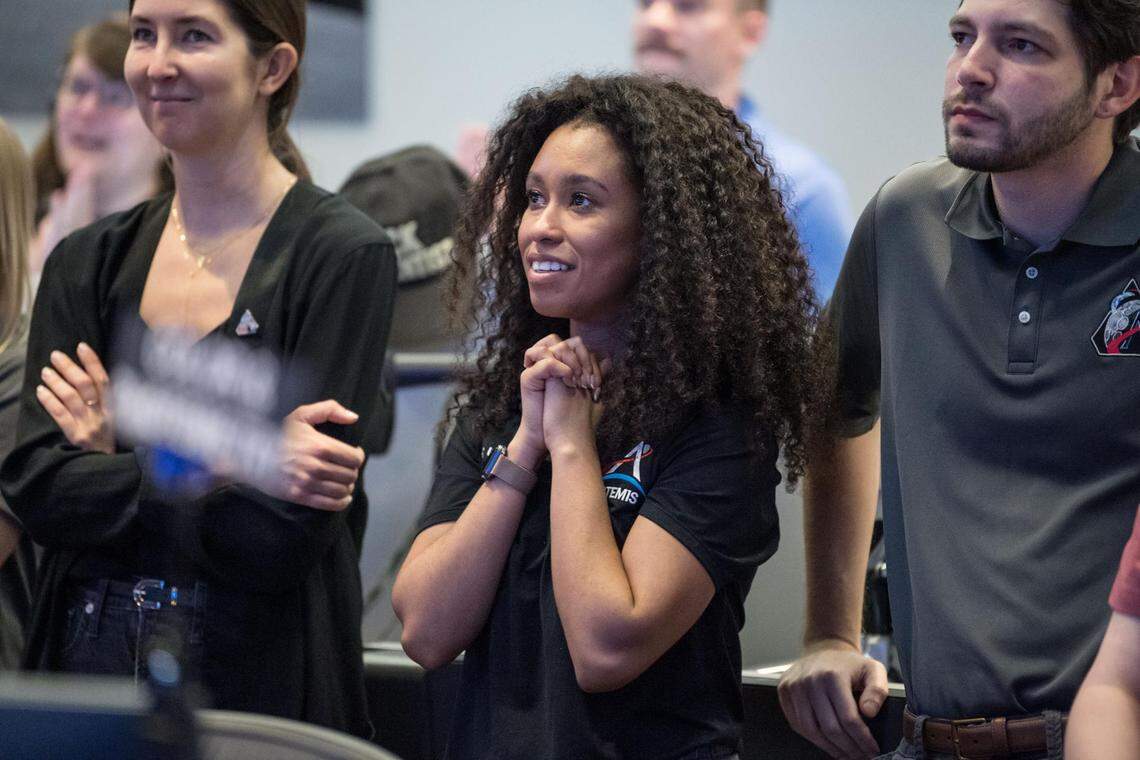
Members of the Artemis lunar science team, from left, Ariel Deutsch, Amber Turner, and Wilfredo Garcia-Lopez, watch the Artemis II launch from the Science Evaluation Room (SER) in Mission Control at Johnson Space Center in Houston on April 1, 2026. NASA
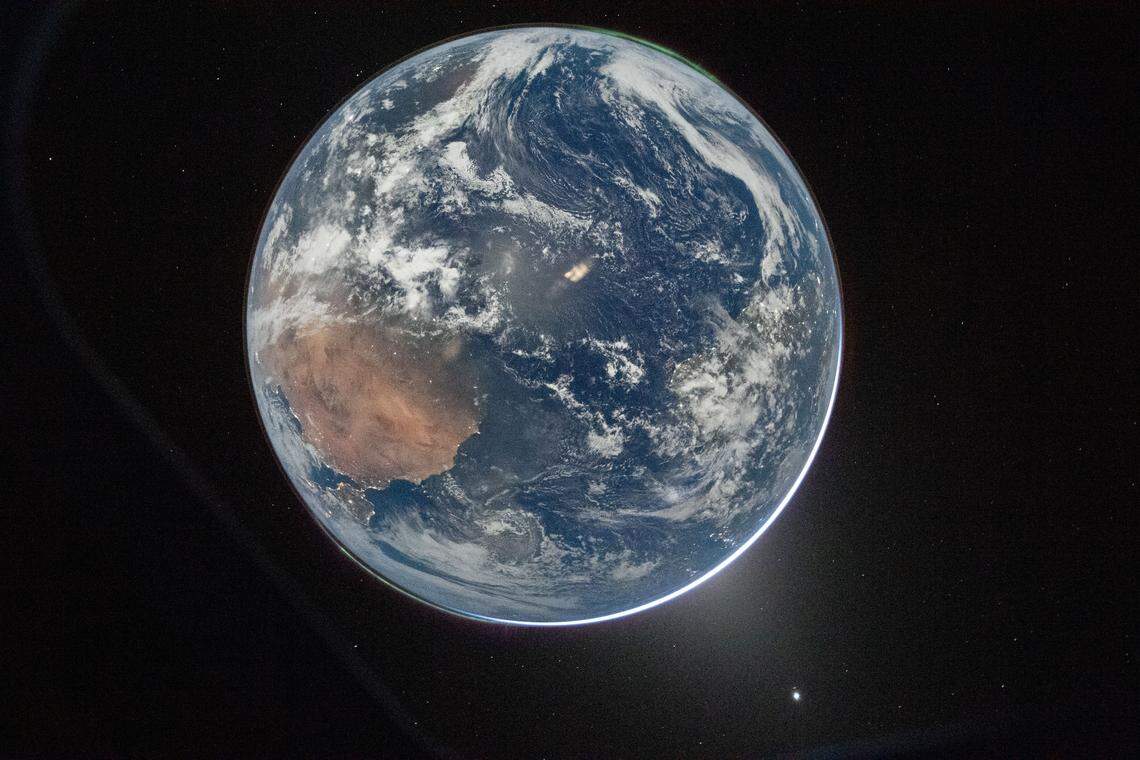
NASA astronaut and Artemis II Commander Reid Wiseman took this picture of Earth from the Orion spacecraft’s window on April 2, 2026, after completing the translunar injection burn. The green glow of the Northern Lights is visible along the upper edge. Reid Wiseman NASA
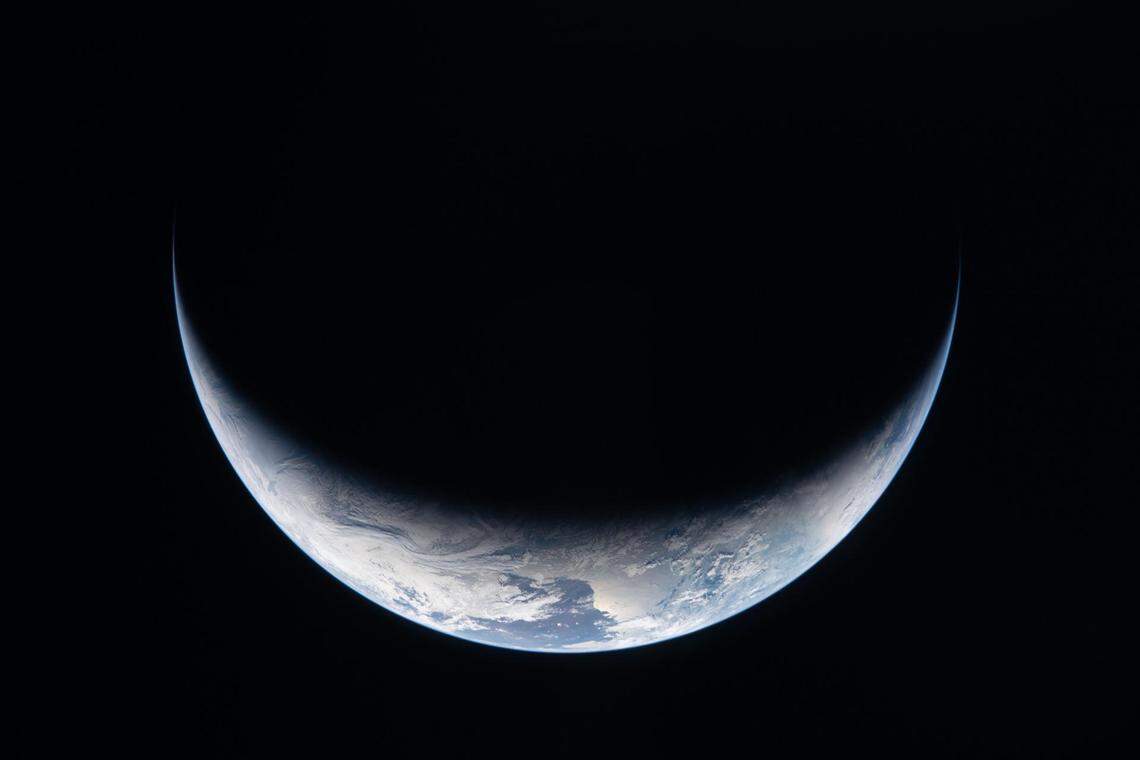
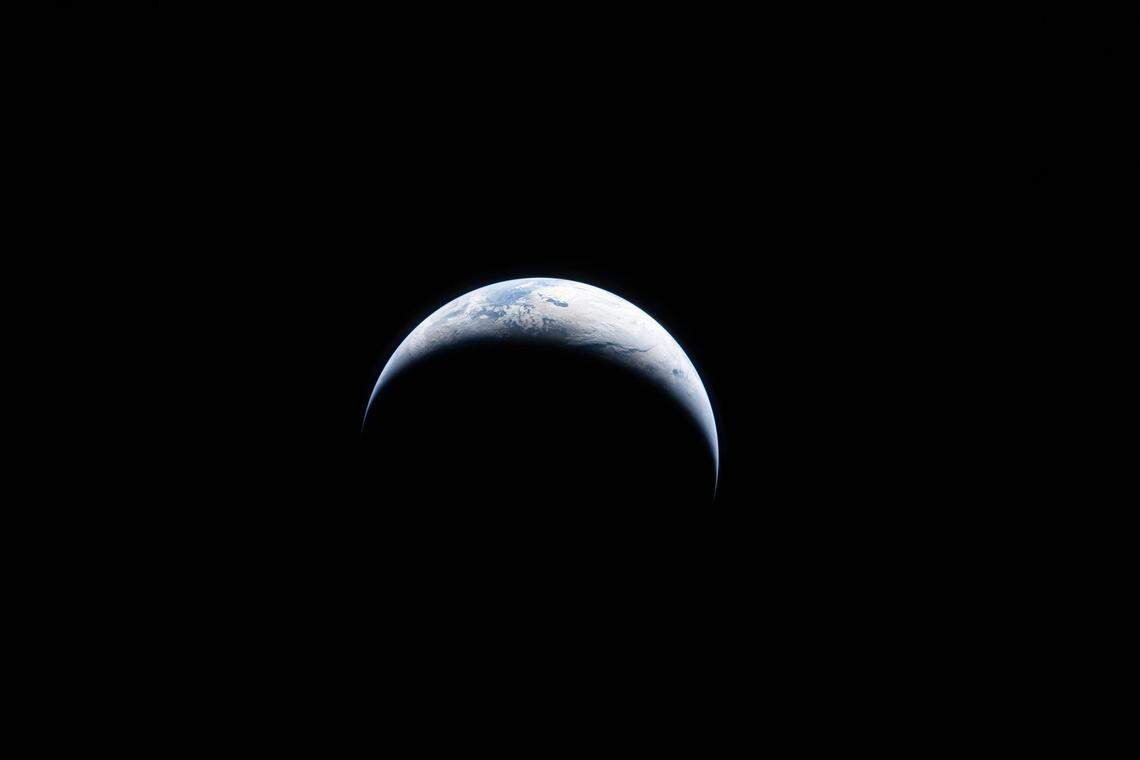
A sliver of Earth is illuminated against the blackness of space in this photo taken by an Artemis II crew member through an Orion spacecraft window on the third day of the mission. NASA
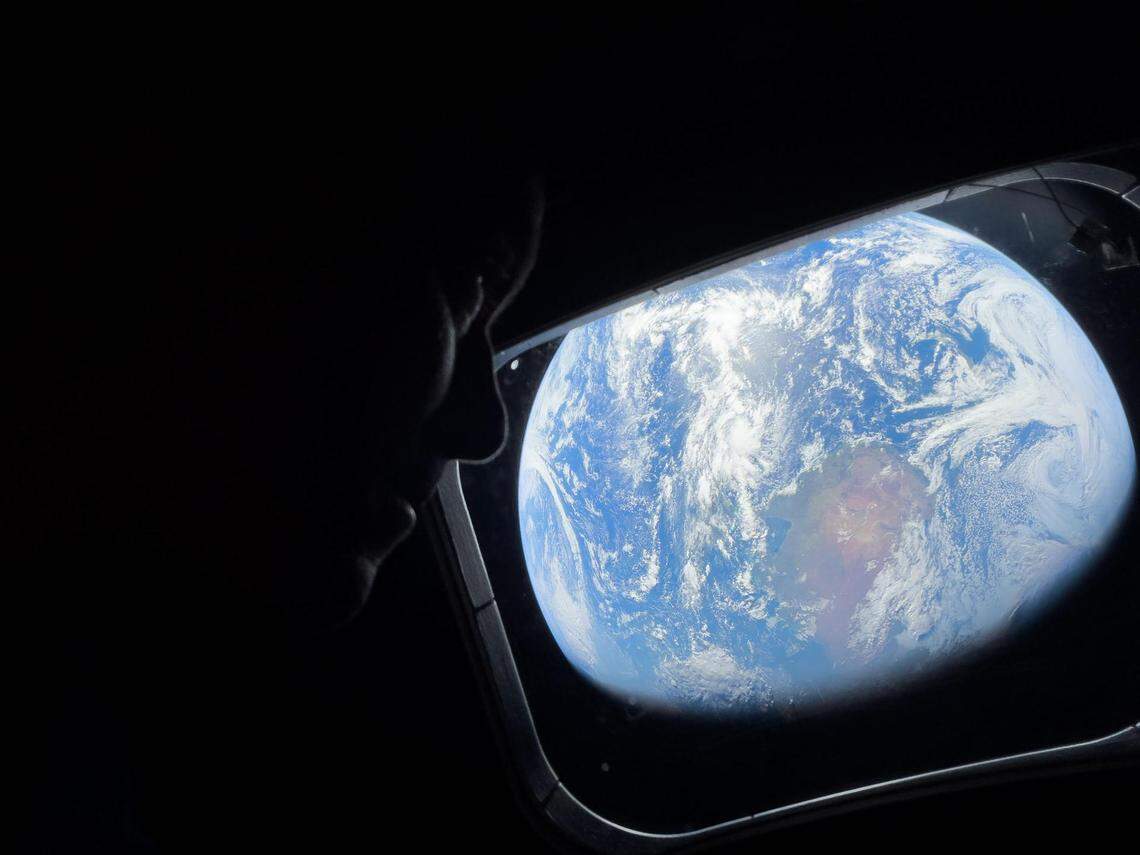
NASA astronaut and Artemis II Commander Reid Wiseman peers out of one of the Orion spacecraft’s main cabin windows, looking back at Earth on April 4, 2026,, as the crew travels towards the moon. NASA
Earth is illuminated against the blackness of space in this photo taken by an Artemis II crew member through an Orion spacecraft window on April 4, 2026. NASA
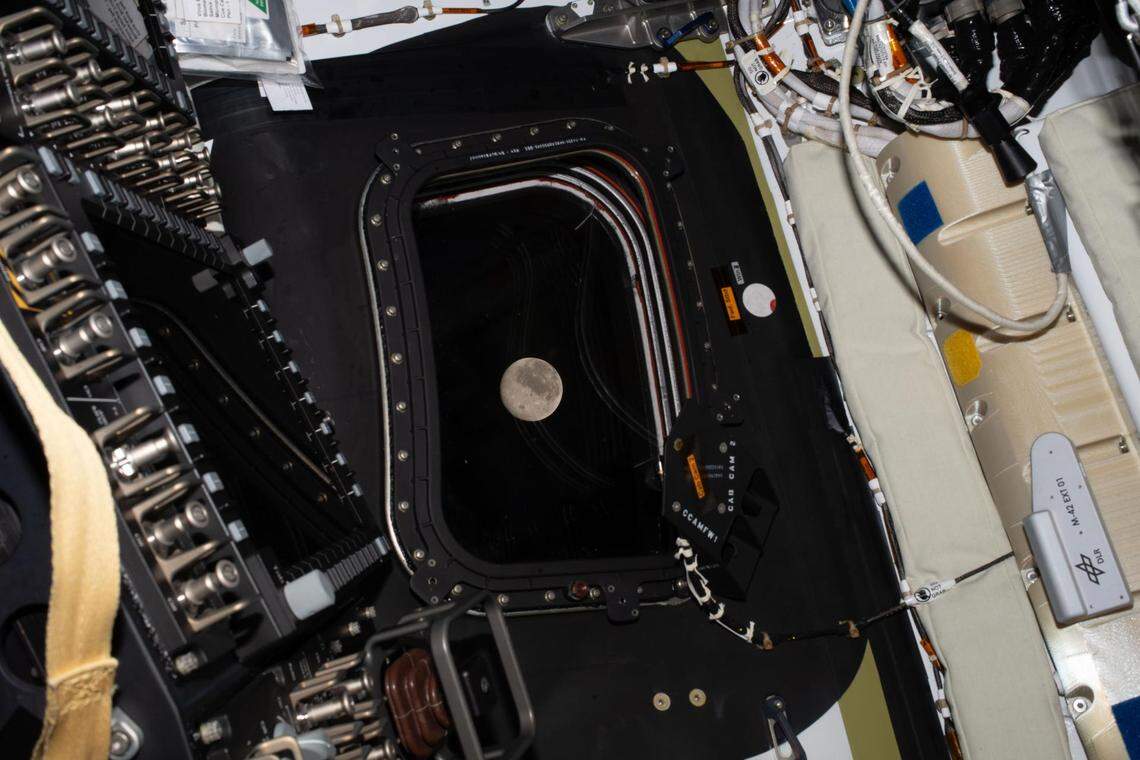
Before going to sleep on flight day 5, the Artemis II crew snapped one more photo of the Moon, as it drew close in the window of the Orion spacecraft. Orion and the four humans aboard entered the lunar sphere of influence at 12:37 a.m. EDT on April 6, at the tail end of the fifth day of their mission. NASA
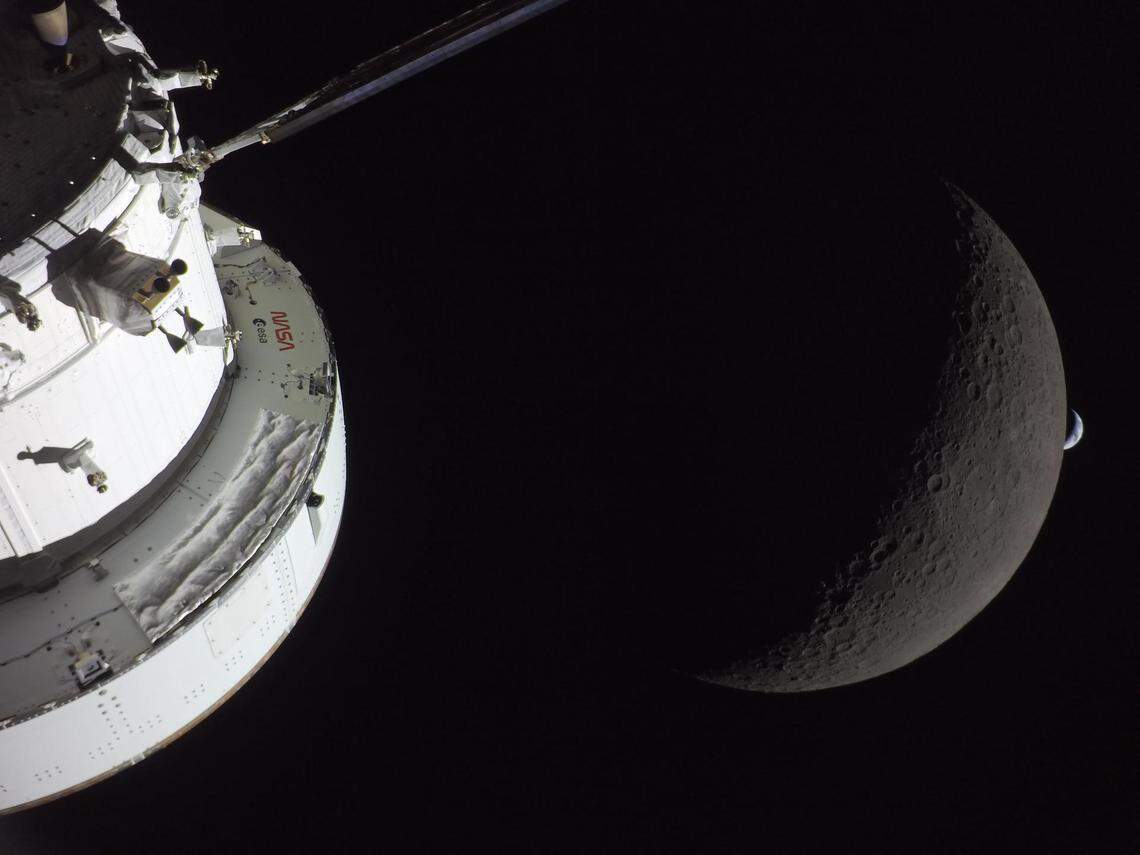
NASA’s Orion spacecraft captures the moon and the Earth in one frame during the Artemis II crew’s deep space journey at 6:42 p.m. ET April 6, 2026, on the sixth day of the mission. The right side of NASA’s Orion spacecraft is seen lit up by the sun. A waxing crescent moon is visible behind it. And then, a crescent Earth, tiny compared to the moon, is about to set below the moon’s horizon on the right. NASA
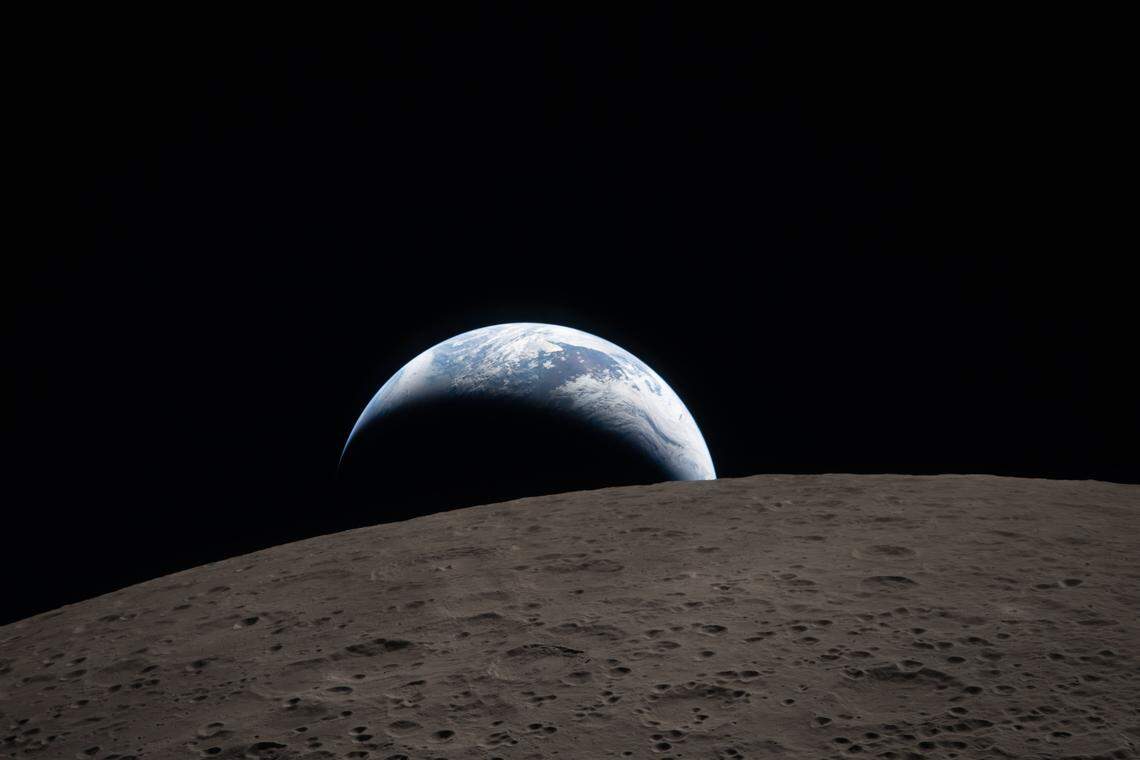
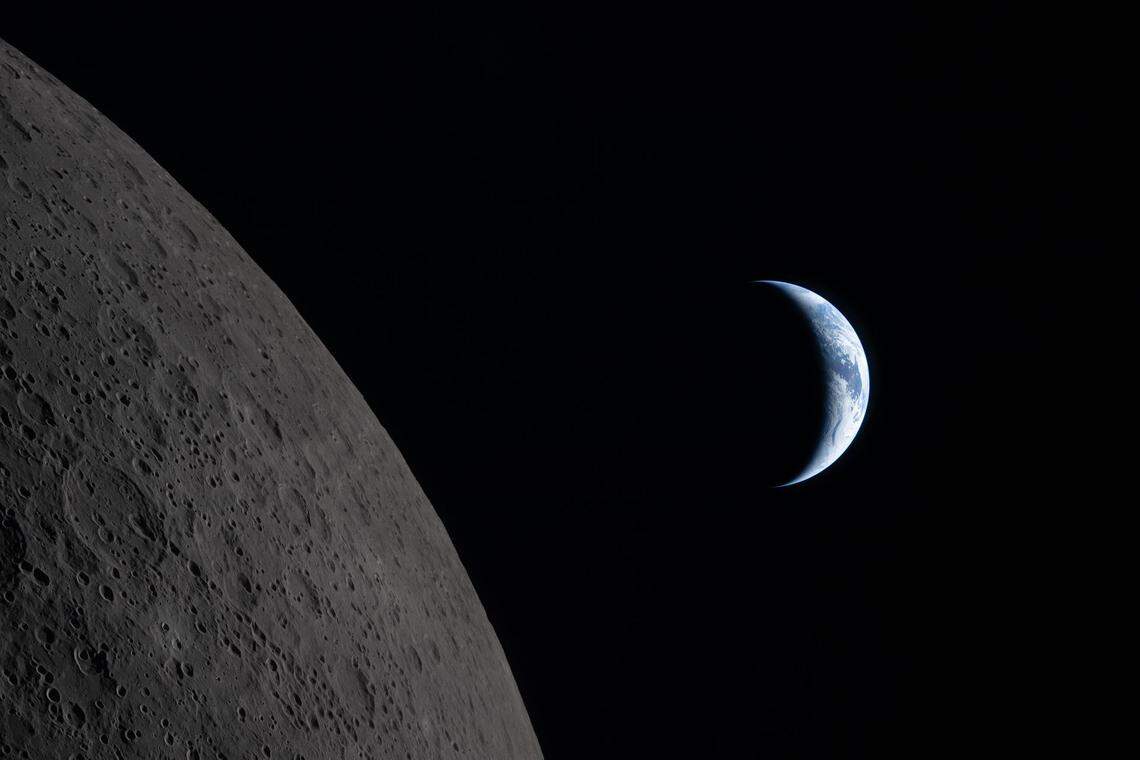
Earthset captured through the Orion spacecraft window at 6:41 p.m. EDT, April 6, 2026, during the Artemis II crew’s flyby of the Moon. A muted blue Earth with bright white clouds sets behind the cratered lunar surface. The dark portion of Earth is experiencing nighttime. On Earth’s day side, swirling clouds are visible over the Australia and Oceania region. In the foreground, Ohm crater has terraced edges and a flat floor interrupted by central peaks—formed when the surface rebounded upward during the impact that created the crater. NASA
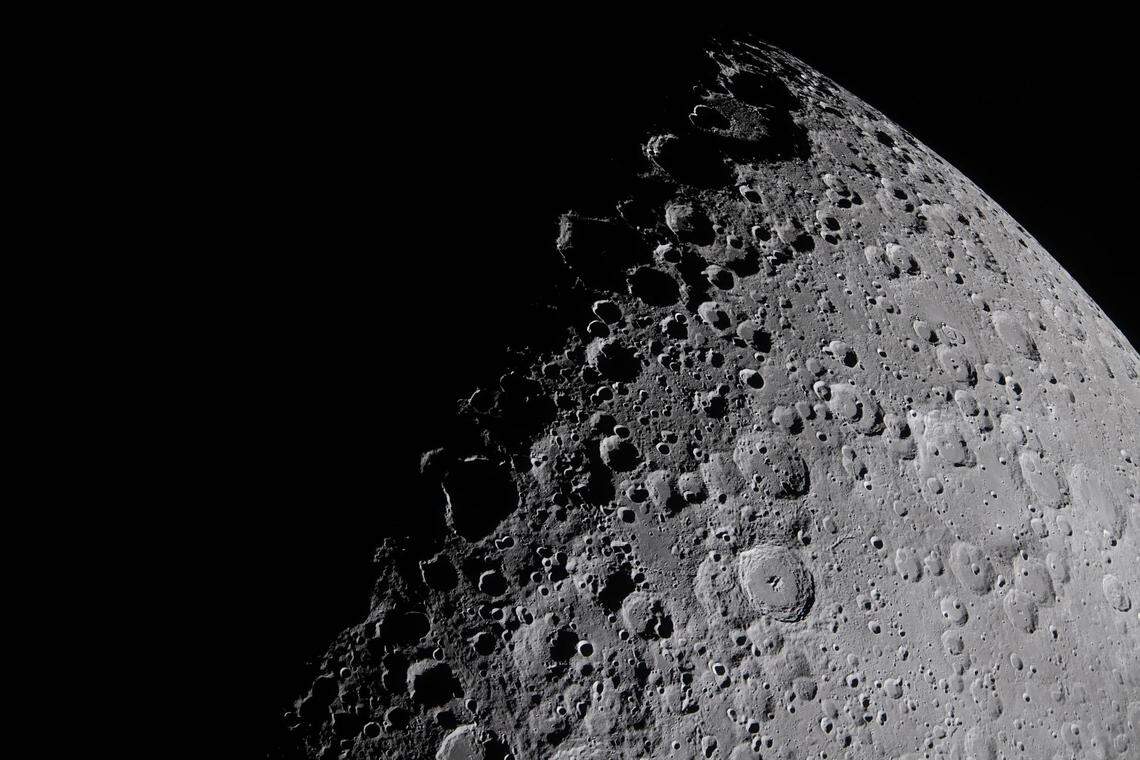
The Artemis II crew captures a portion of the moon coming into view along the terminator — the boundary between lunar day and night — where low-angle sunlight casts long, dramatic shadows across the surface, during the lunar flyby on April 6, 2026. NASA
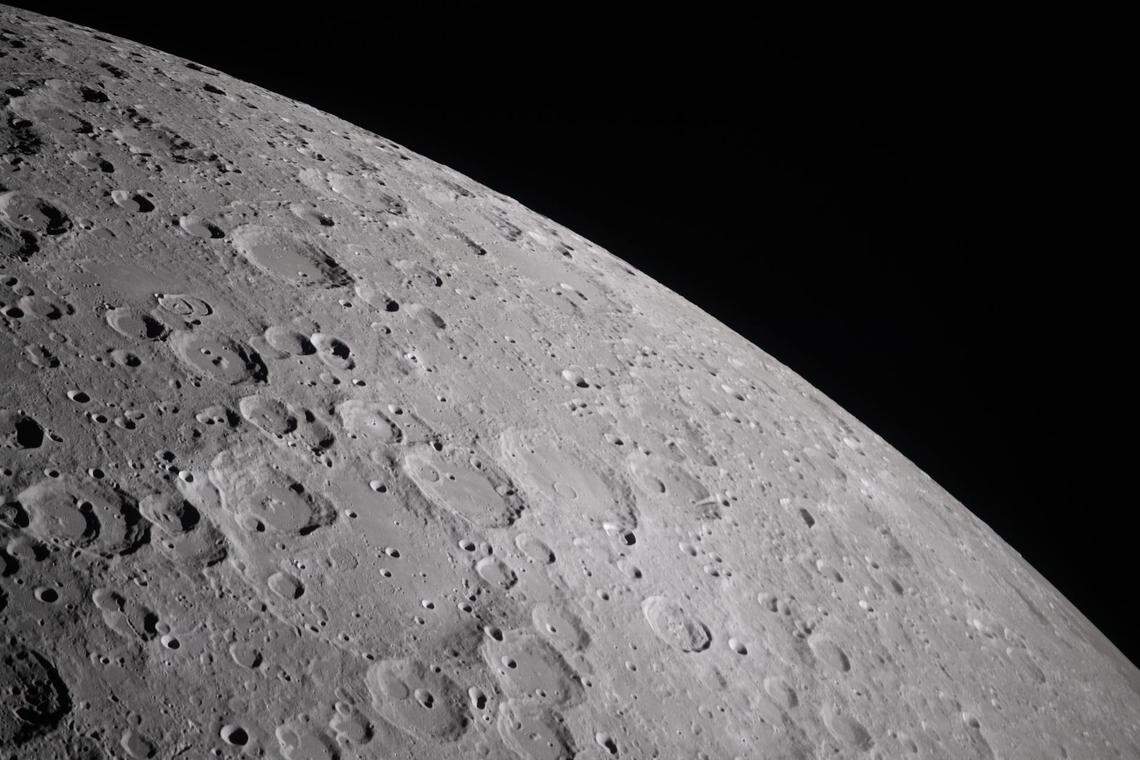
During the lunar flyby observation period on April 6, 2026, the Artemis II crew captures craters dotting the surface of the moon, revealing its rugged, ancient surface. This scarred landscape reflects a long history of cosmic collisions. NASA
Earth draws closer to passing behind the moon in this image captured by the Artemis II crew during their lunar flyby on April 6, 2026, about six minutes before Earthset. NASA
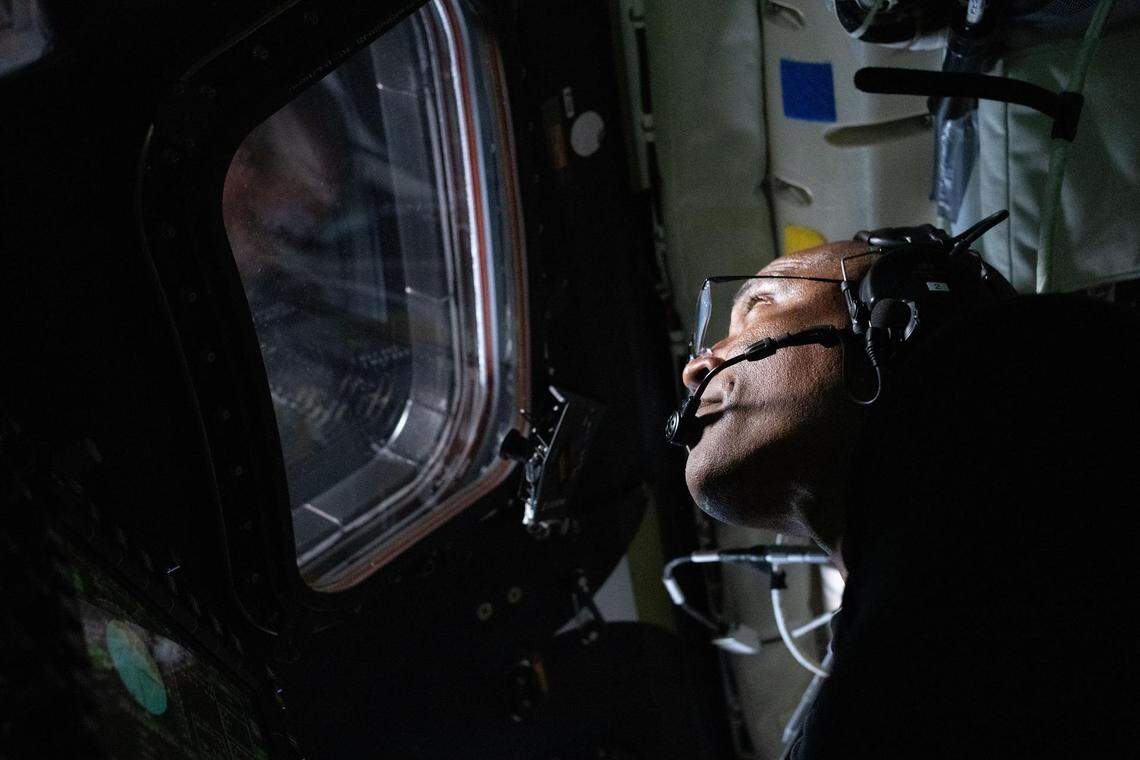
NASA astronaut and Artemis II Pilot Victor Glover pictured here in the Orion spacecraft during the Artemis II lunar flyby on April 6, 2026. Glover and his fellow crewmates spent approximately seven hours taking turns at the Orion windows capturing science data to share with their team back on Earth. At closest approach, they came within 4,067 miles of the moon’s surface. NASA
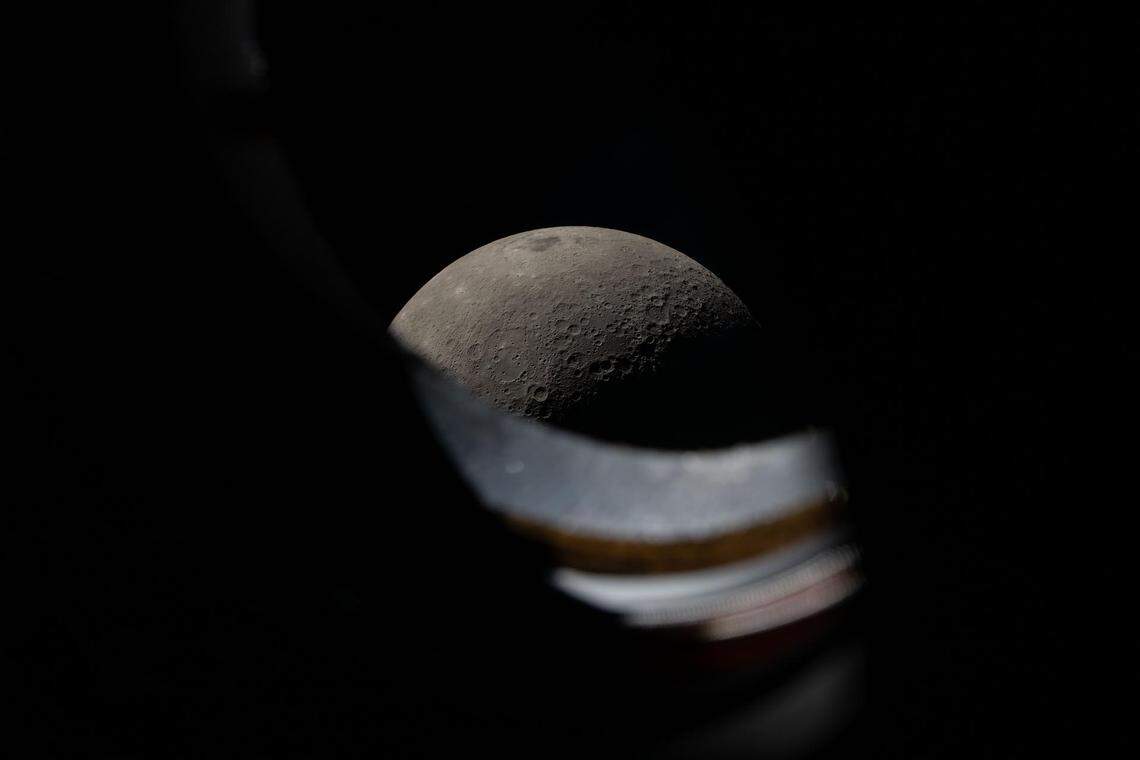
The moon peeks above the window sill of the Orion spacecraft during the Artemis II lunar flyby on April 6, 2026. The Artemis II crew spent about seven hours at the Orion windows during the flyby, taking photos and recording observations on the moon to share with scientists on the ground. NASA
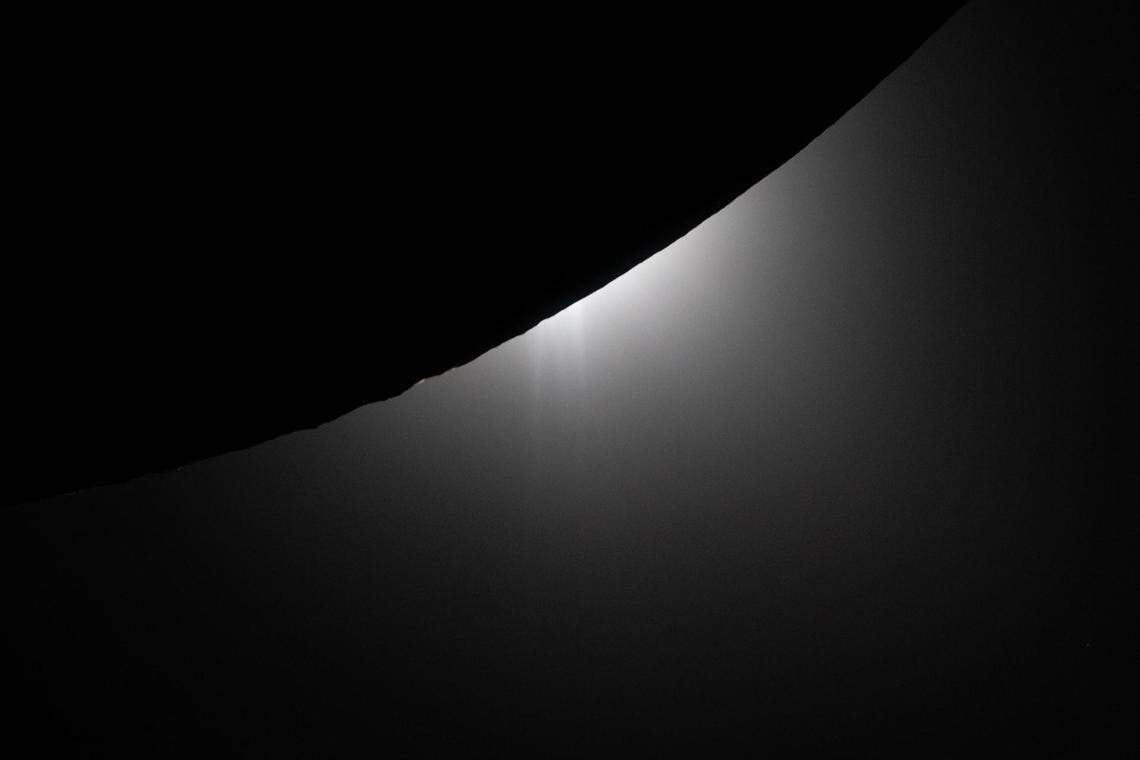
In this view captured by the Artemis II crew on the Orion spacecraft, a wedge of the moon in nighttime is visible in the foreground, as the sun sets on the opposite side. This image captures the beginning of a total solar eclipse that astronauts were able to observe at the end of their lunar observation period during Orion’s closest approach to the moon on April 6, 2026. NASA
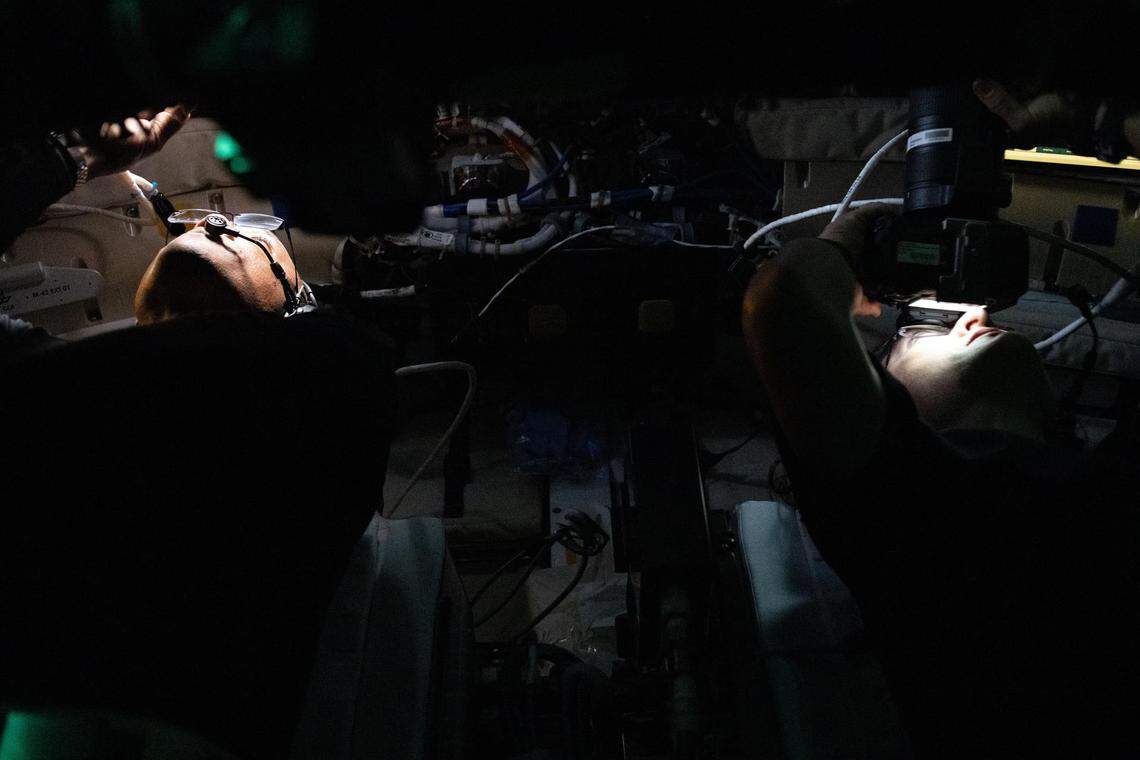
Artemis II Pilot Victor Glover and Mission Specialist Christina Koch gather images and observations of the lunar surface to share with the world during the lunar flyby on the sixth day of the mission on April 6, 2026. The crew spent approximately seven hours taking turns at the windows of the Orion spacecraft as they flew around the far side of the moon. At closest approach, they came within 4,067 miles of the moon’s surface. NASA
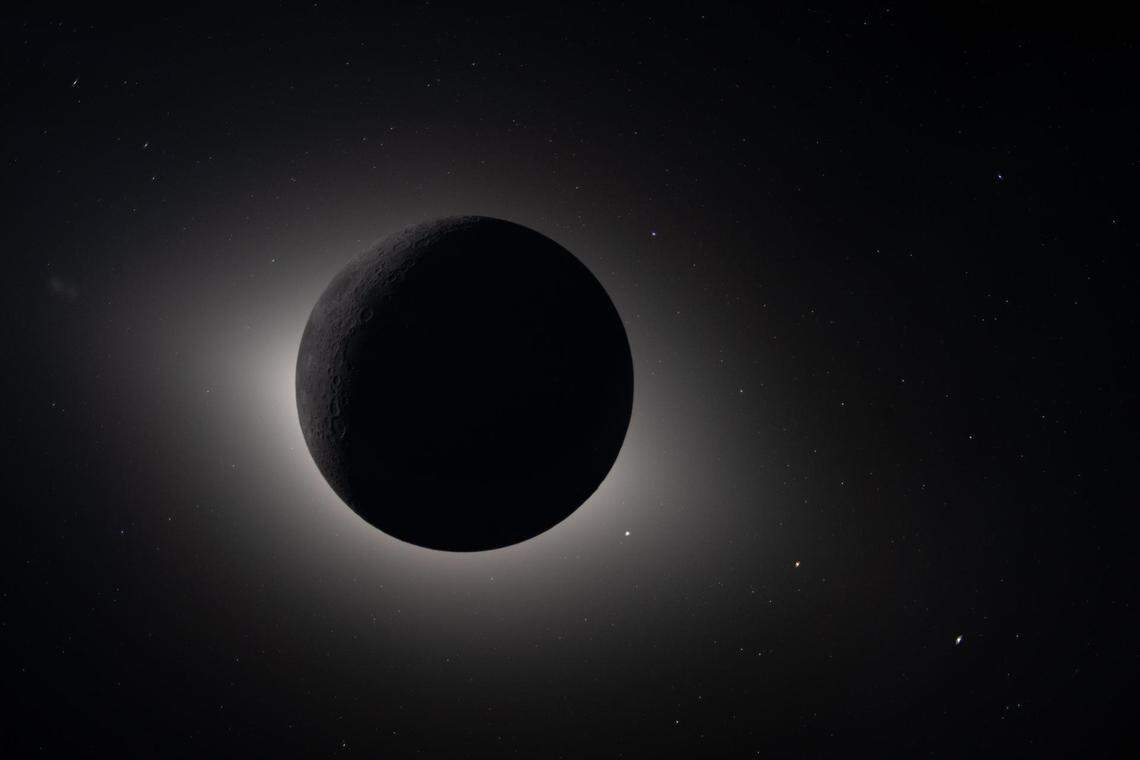
Captured by the Artemis II crew during their lunar flyby on April 6, 2026, this image shows the moon fully eclipsing the sun. NASA
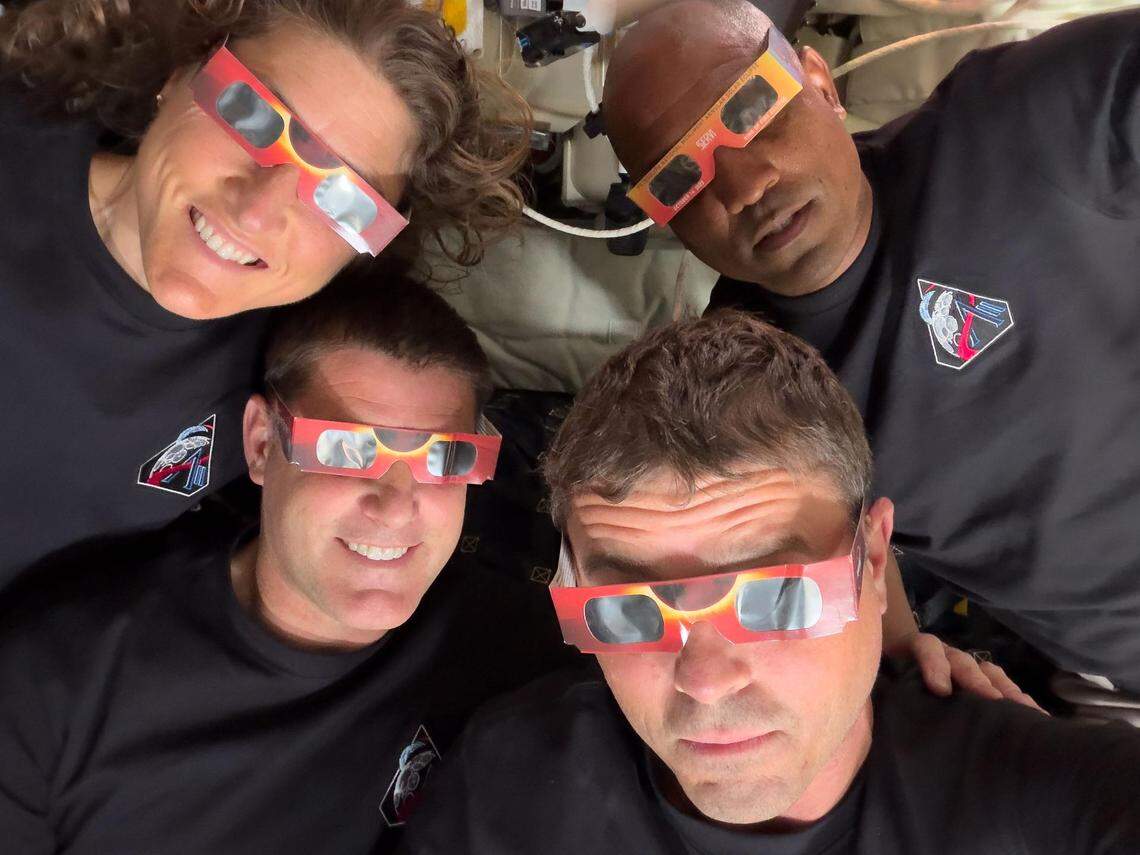
The Artemis II crew — Mission Specialist Christina Koch (top left), Mission Specialist Jeremy Hansen (bottom left), Commander Reid Wiseman (bottom right), and Pilot Victor Glover (top right) — uses eclipse viewers, identical to what NASA produced for the 2023 annular eclipse and 2024 total solar eclipse, to protect their eyes at key moments during the solar eclipse they experienced during their lunar flyby on April 6, 2026. NASA
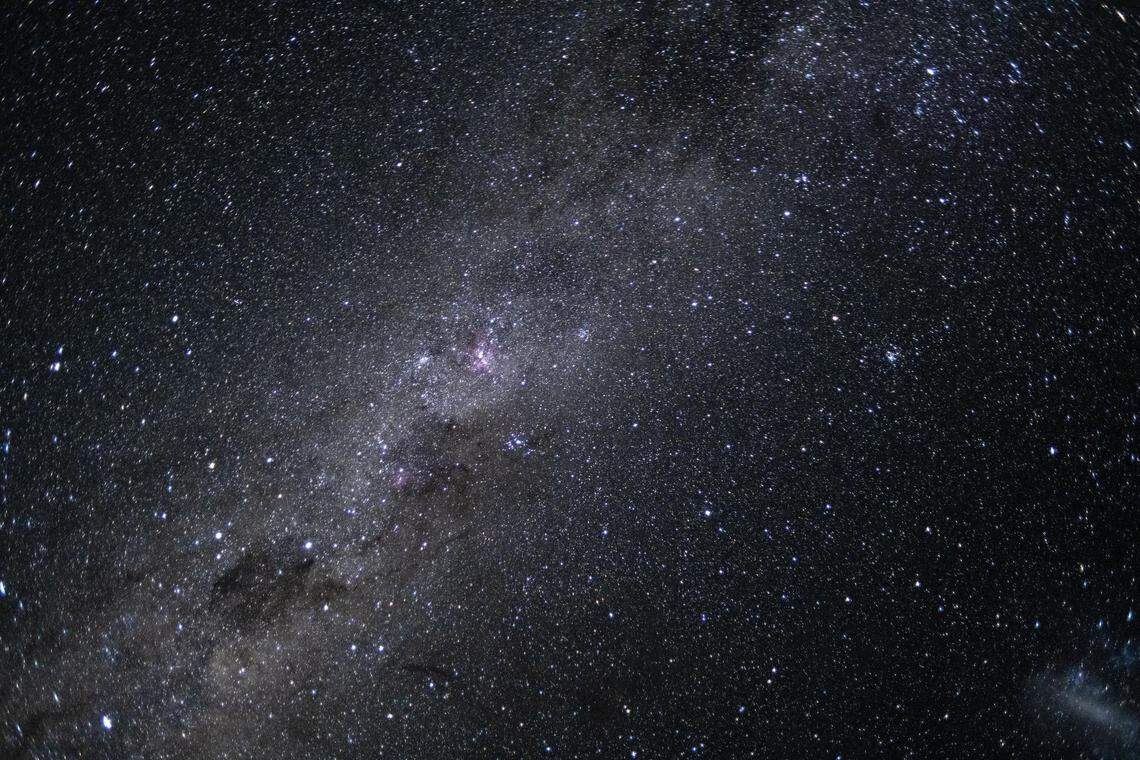
The Artemis II crew captured this photo of our galaxy, the Milky Way, on April 7, 2026. The Milky Way’s elegant spiral structure is dominated by just two arms wrapping off the ends of a central bar of stars. Spanning more than 100,000 light-years, Earth is located along one of the galaxy’s spiral arms, about halfway from the center. NASA
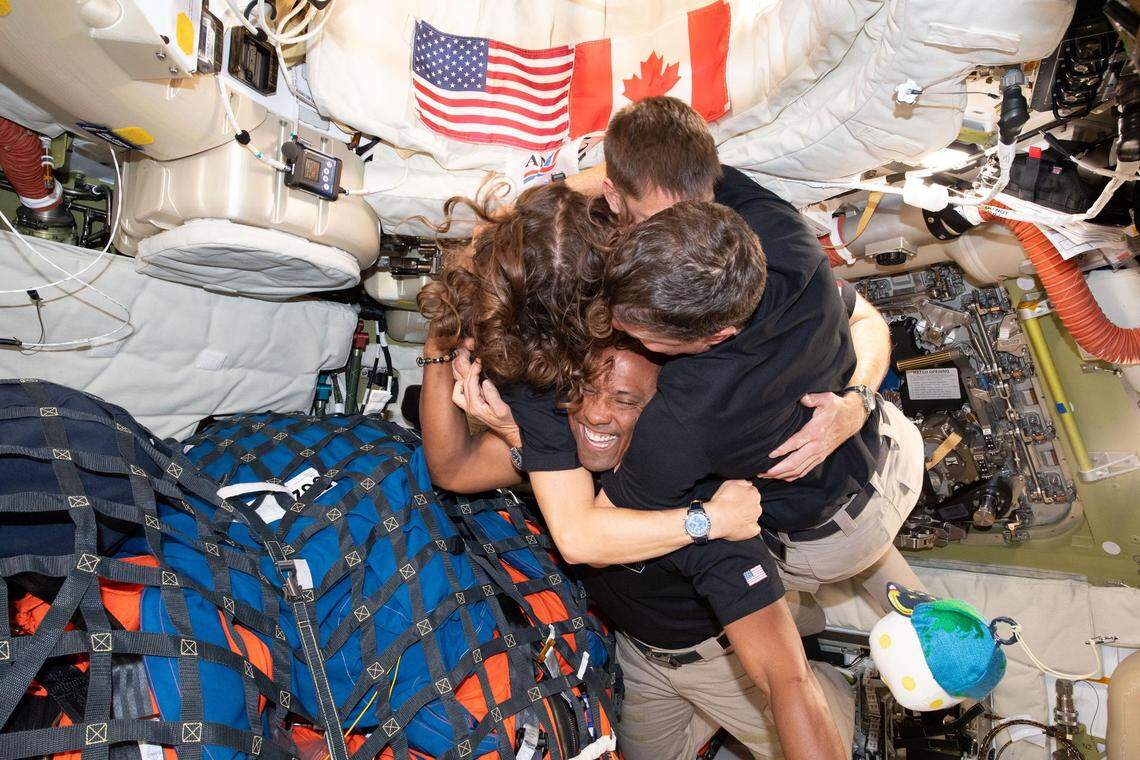
The Artemis II crew — clockwise from left, Mission Specialist Christina Koch, Mission Specialist Jeremy Hansen, Commander Reid Wiseman, and Pilot Victor Glover — take time out for a group hug inside the Orion spacecraft on their way home on April 7, 2026. NASA
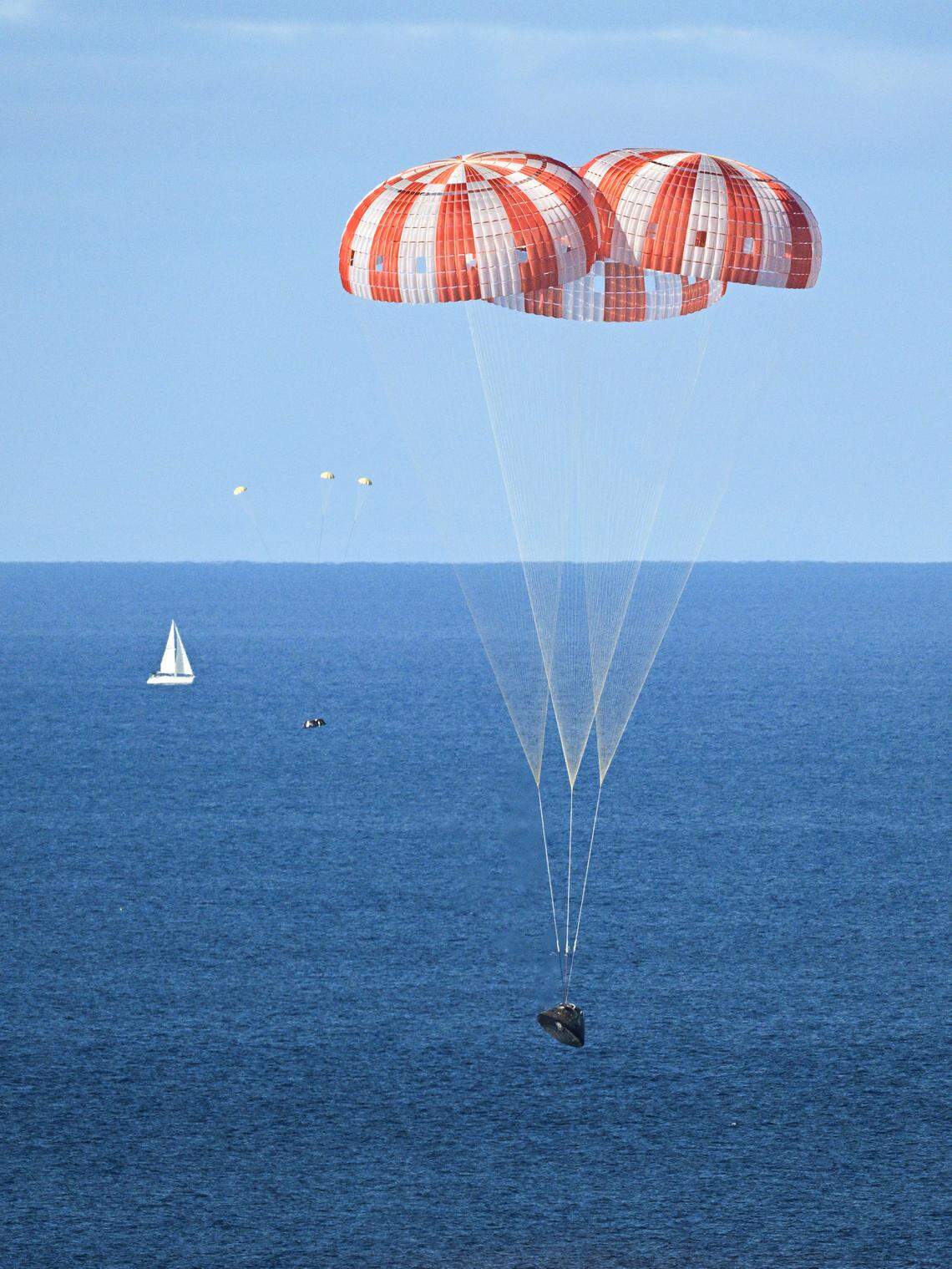
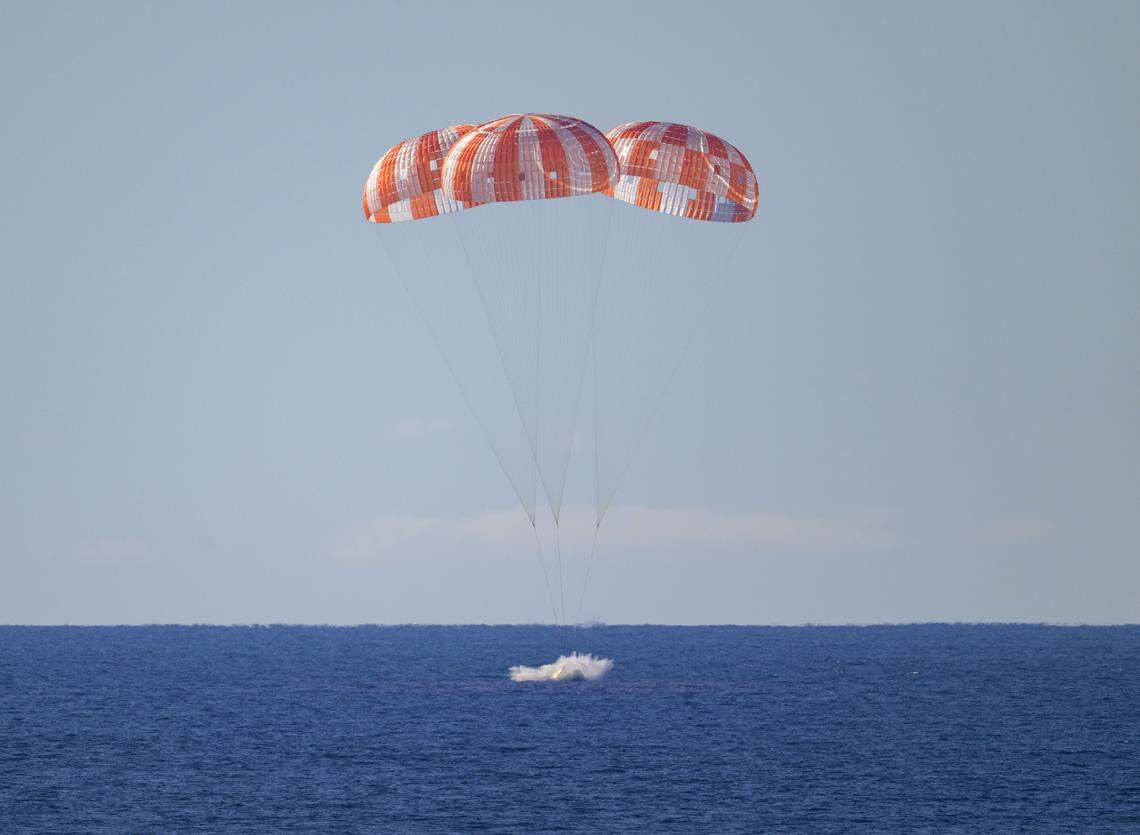
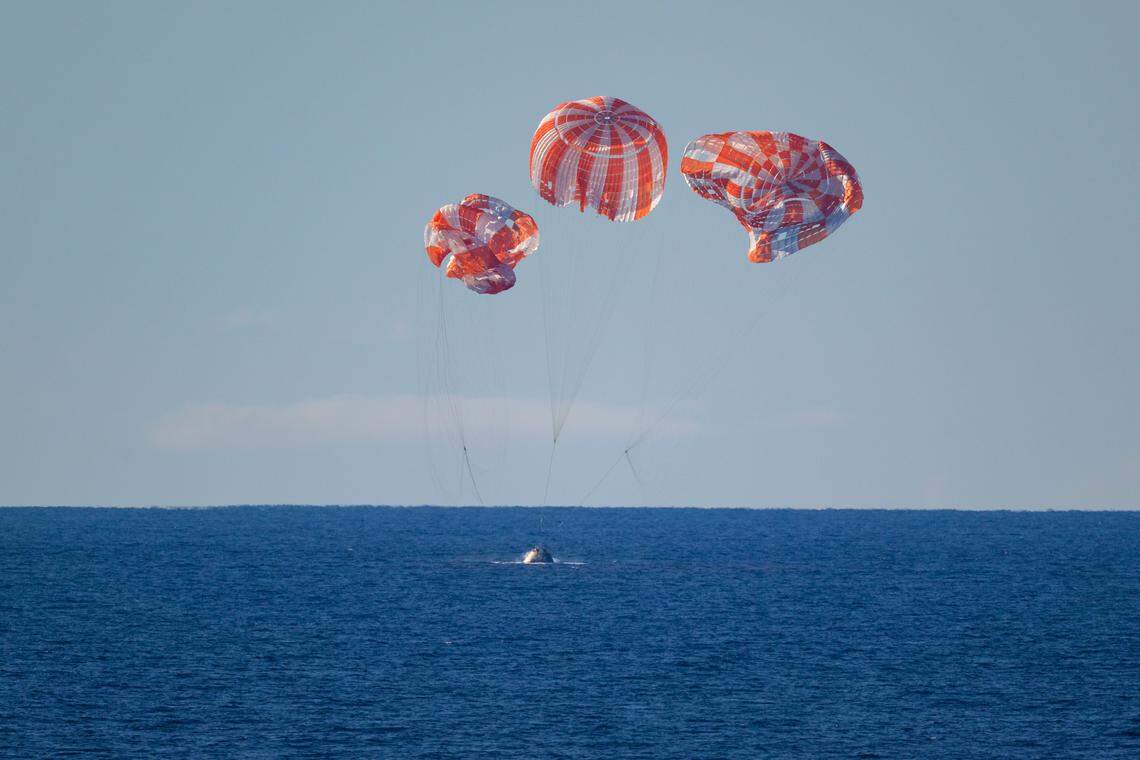
NASA’s Orion capsule descends under its main parachutes over the Pacific Ocean following a successful 10-day Artemis II mission, April 10, 2026. Josh Valcarcel NASA
NASA’s Orion spacecraft with Artemis II NASA astronauts Reid Wiseman, commander; Victor Glover, pilot; and Christina Koch, mission specialist; and CSA (Canadian Space Agency) astronaut Jeremy Hansen, mission specialist, lands in the Pacific Ocean off the coast of California, Friday, April 10, 2026. Bill Ingalls NASA
NASA’s Orion spacecraft with Artemis II lands in the Pacific Ocean off the coast of California, Friday, April 10, 2026. Bill Ingalls NASA
U.S. Navy divers and Artemis II astronauts aboard an inflatable raft are approached by helicopters and lifted away to the recovery ship after egressing NASA’s Orion spacecraft following splashdown in the Pacific Ocean near San Diego, California, on Friday, April 10, 2026. James Blair NASA
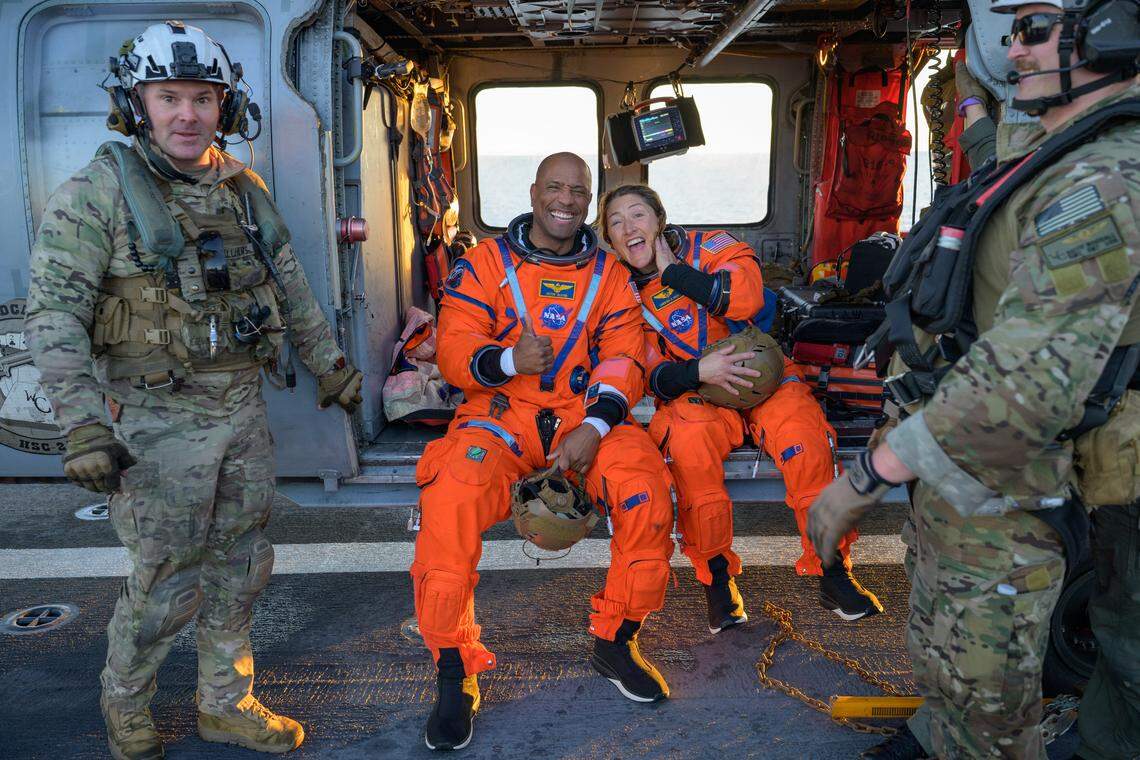
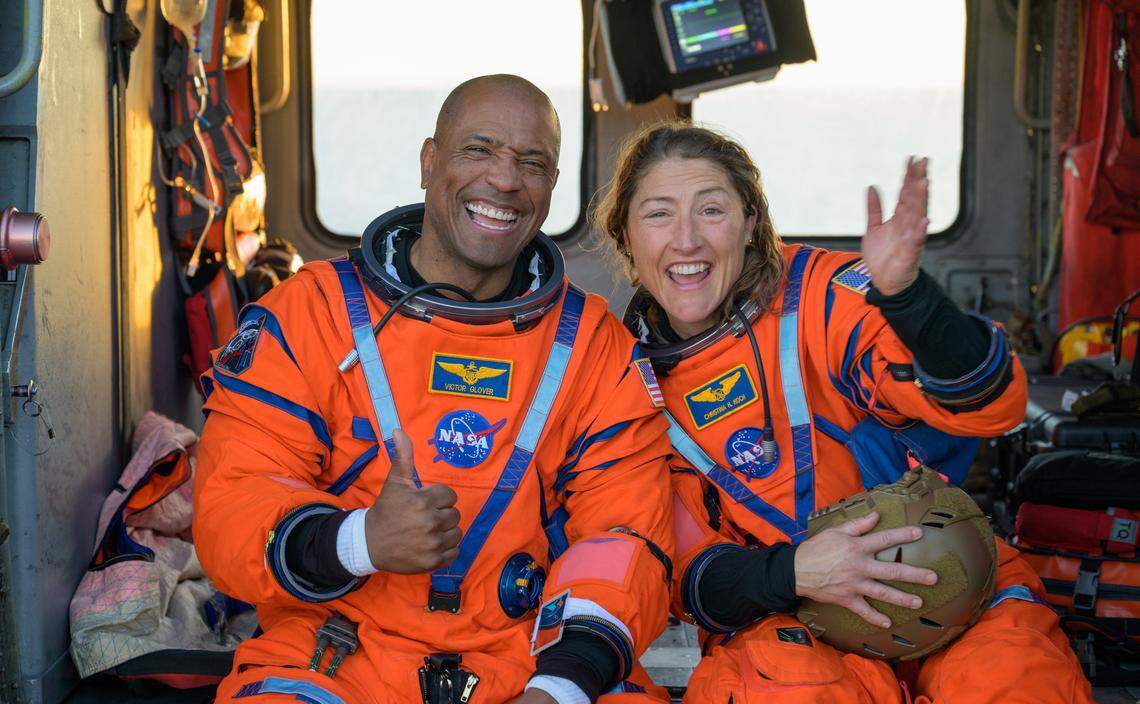
NASA astronauts Victor Glover, Artemis II pilot, left, and Christina Koch, Artemis II mission specialist, are seen sitting on a Navy MH-60 Seahawk from Helicopter Sea Combat Squadron (HSC) 23 on the flight deck of USS John P. Murtha after they were extracted from their Orion spacecraft after splashdown, Friday, April 10, 2026, in the Pacific Ocean off the coast of California. Bill Ingalls NASA
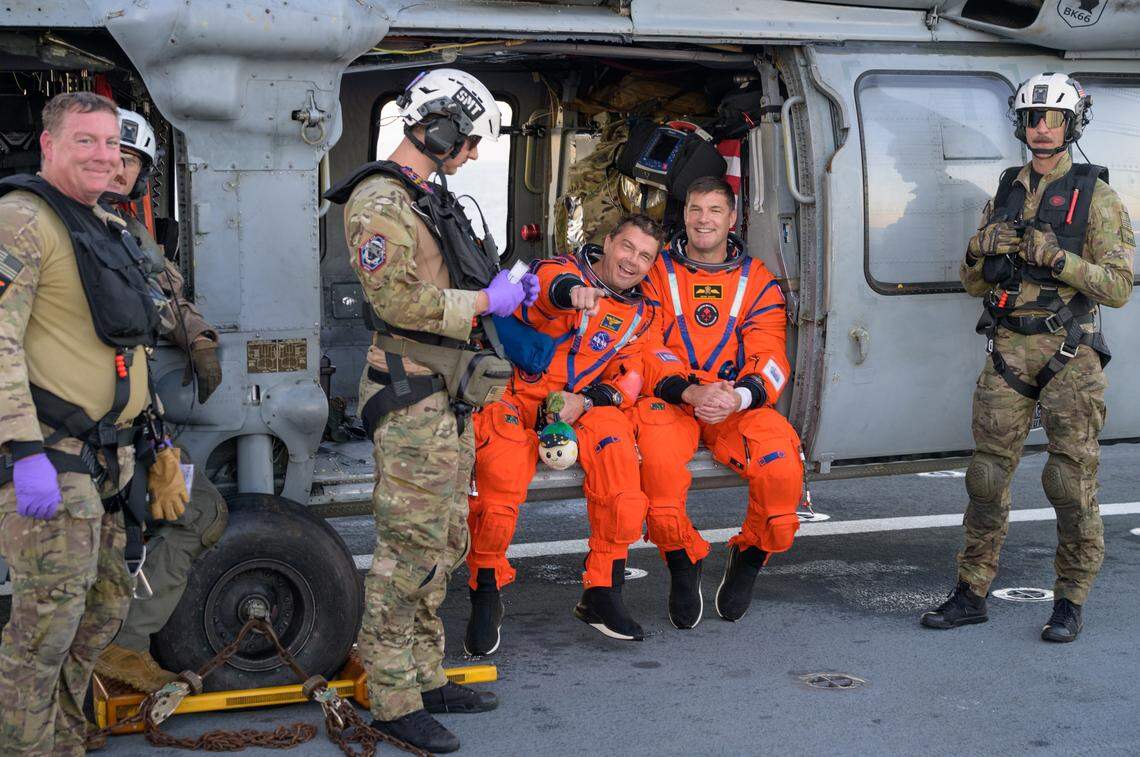
NASA astronaut Reid Wiseman, Artemis II commander, left, and CSA (Canadian Space Agency) astronaut Jeremy Hansen, Artemis II mission specialist, are seen sitting on a Navy MH-60 Seahawk from Helicopter Sea Combat Squadron (HSC) 23 on the flight deck of USS John P. Murtha after they were extracted from their Orion spacecraft after splashdown, Friday, April 10, 2026, in the Pacific Ocean off the coast of California. Bill Ingalls NASA
NASA astronauts Victor Glover, Artemis II pilot, left, and Christina Koch, Artemis II mission specialist, are seen sitting on a Navy MH-60 Seahawk from Helicopter Sea Combat Squadron (HSC) 23 on the flight deck of USS John P. Murtha after they were extracted from their Orion spacecraft after splashdown, Friday, April 10, 2026, in the Pacific Ocean off the coast of California. Bill Ingalls NASA
This story was originally published April 11, 2026 at 11:06 AM.
Joe Tarica is the editor of The Tribune in San Luis Obispo. He’s worked in various newsroom roles since 1993, including as an award-winning copy editor, designer and columnist. A California native, he has been a resident of San Luis Obispo County for more than 35 years and is a Cal Poly graduate. Twitter: @joetarica