
A Cal Poly grad will make history with Artemis moon mission. Watch launch here
Cal Poly graduate and NASA astronaut Victor Glover is set to make history Wednesday afternoon with the rest of the crew of the Artemis II on the first manned mission to orbit the moon since 1972.
The rocket is currently targeting a launch from NASA’s Kennedy Space Center in Florida during a two-hour window starting at 3:24 p.m. PDT on Wednesday, though that is subject to change based on a variety of factors.
Glover will join fellow NASA astronauts Reid Wiseman and Christina Koch, and Canadian Space Agency astronaut Jeremy Hansen on a 10-day journey around the moon.
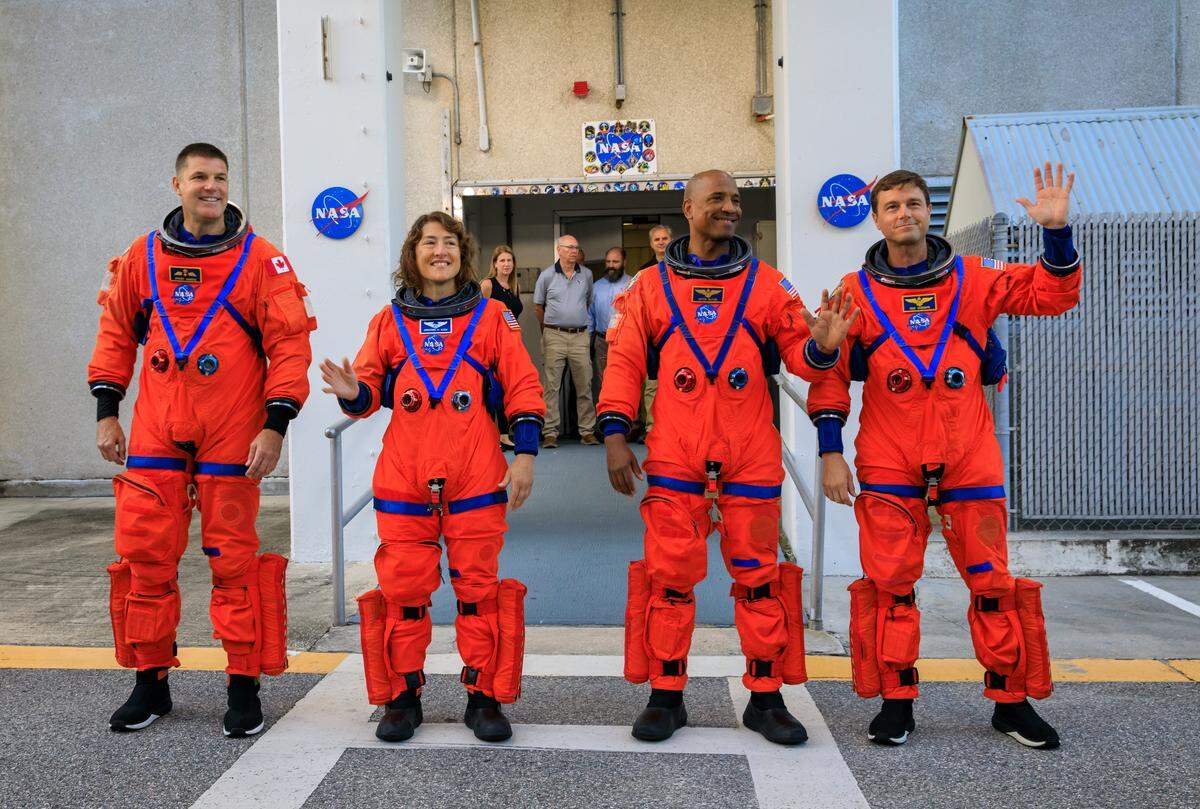
Artemis II is NASA’s first crewed mission under the Artemis program, which “will send astronauts on increasingly difficult missions to explore more of the moon for scientific discovery, economic benefits, and to build on our foundation for the first crewed missions to Mars,” the agency’s website said.
The mission will set several spaceflight records, including Glover becoming the first person of color and Koch becoming the first woman to travel to the moon’s proximity.
The Artemis II mission will not include a lunar landing, though that is planned for future Artemis missions.
Broadcast coverage began early Wednesday with live views and audio commentary of tanking operations beginning at 4:45 a.m. PDT on NASA’s YouTube channel.
At around 10:30 a.m., the NASA’s feed showed the astronauts in their orange suits playing a traditional pre-flight card game, taking photos and keeping things light.
Full coverage on the streaming service NASA+ began at 9:50 a.m. PDT. Other streaming services such as Amazon Prime are expected to also pick up coverage of the historic launch.
You can view the official NASA broadcast in the video below:
Beyond the main coverage, the space agency also released a number of other live views to keep an eye on throughout the launch, including views from Kennedy Space Center in Florida and the Orion spacecraft itself.
The Kennedy Space Center view was already live as of Wednesday morning, though the Orion feed was not expected to start until 3:30 p.m.
You can view those both below:
%20Cropped.jpg)