Neighbors fight 92-unit apartment complex coming to SLO County city. Here’s why

A 92-unit apartment complex in Arroyo Grande is facing an appeal by the project’s immediate neighbors, who say it will overtax the nearby parking and street traffic.
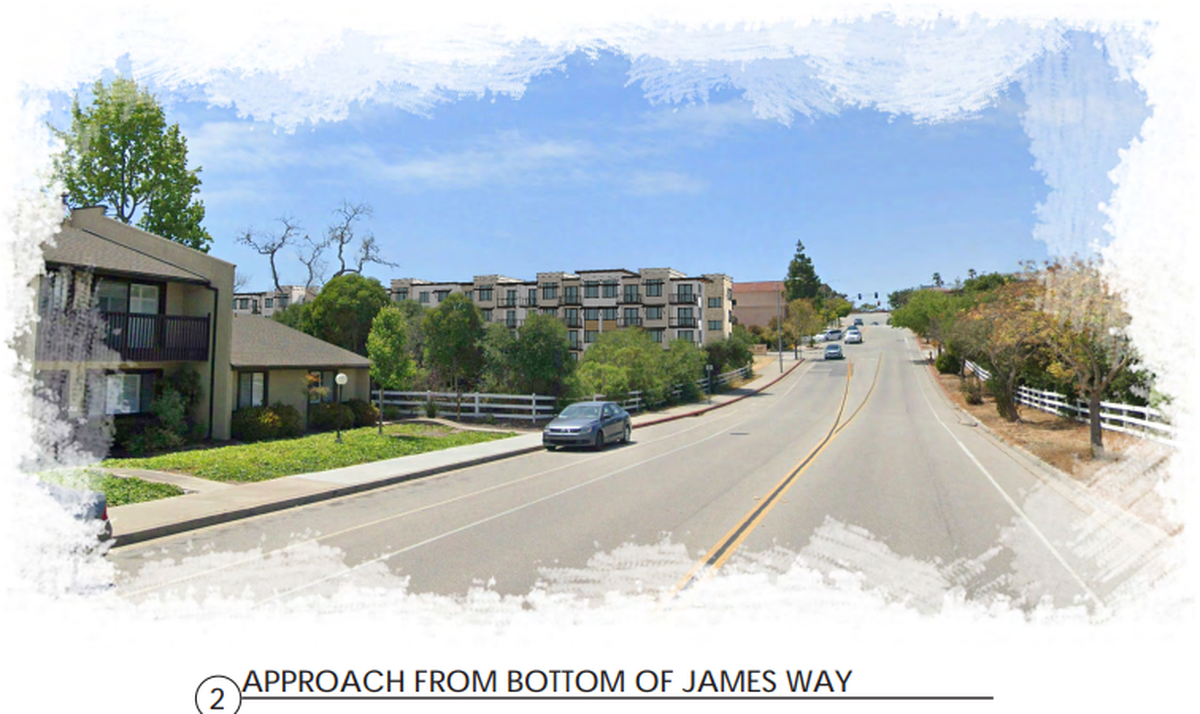
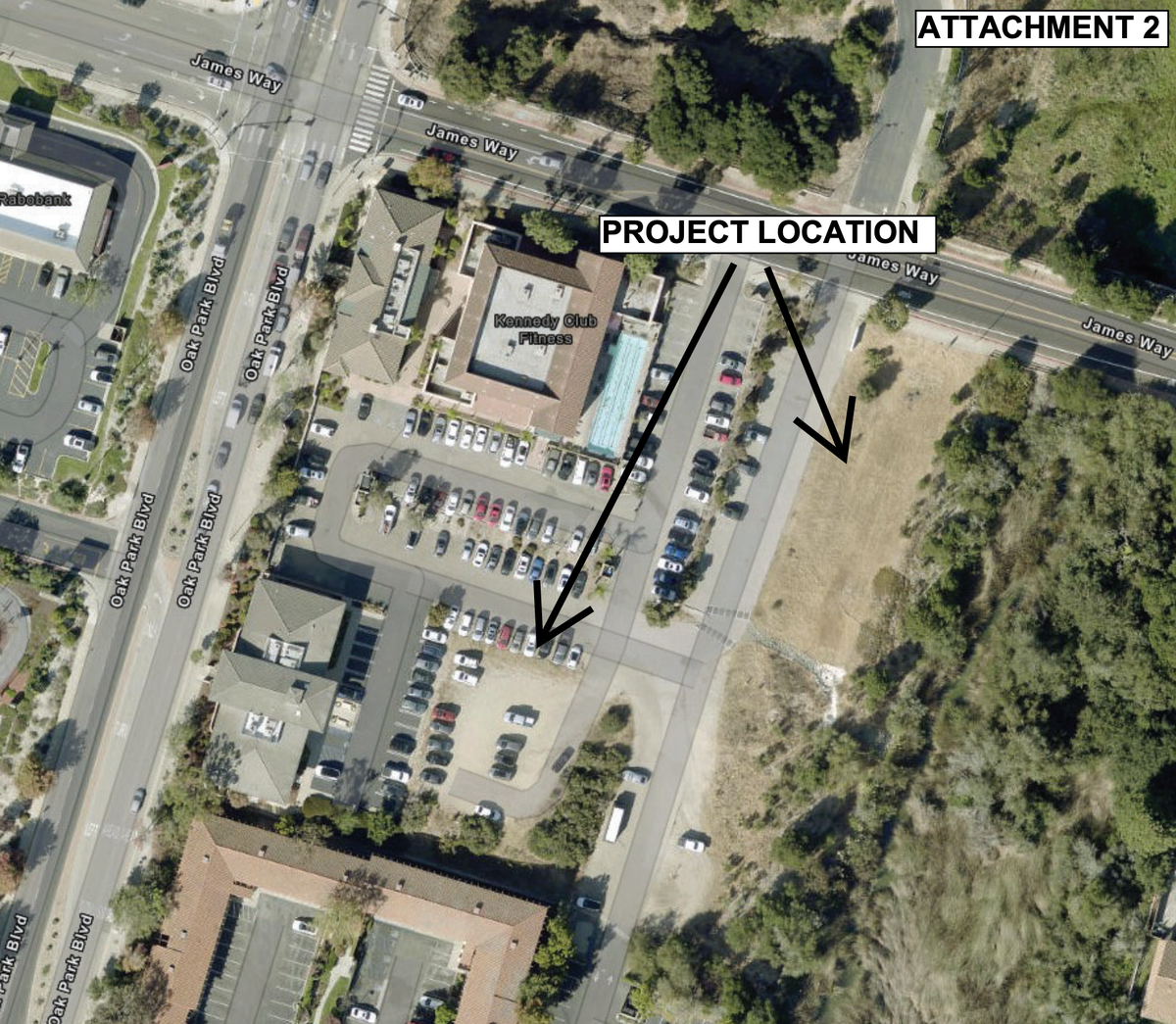
At a packed Arroyo Grande City Council meeting, residents and neighbors turned out to share their displeasure with the Creekside Junction apartment complex planned on a pair of lots at 1271 and 1281 James Way between Oak Park Professional Plaza and the Oak Park Leisure Gardens residential development.
Previously approved by the Planning Commission in January, the project by applicant Russ Sheppel appeared before the City Council after its immediate neighbors, Pismo Medical Properties LLC, Arroyo Grande Partners LLC and Ray Bunnell filed an appeal of the project.
The appeal contests the project’s legality on multiple fronts, including its parking, proximity to a creek that borders the property and perceived “preferential treatment,” according to the staff report.
However, prior to Tuesday’s hearing, the appellants requested a continuance to April 14, leaving the project’s status in limbo until then.
“I traveled over 2,000 miles to be here to proudly present to you what I think is a very needed application of somebody who’s willing to make a statement for the community itself, and that would be housing,” Sheppel said. “I’m not going to give it to you tonight — I was prepared to present, and I look forward to doing that in a month from now.”
Parking highly contested by neighbors
Neighbors of the project — from private residents to business owners and clients — were quick to call the Creekside Junction’s parking inadequate.
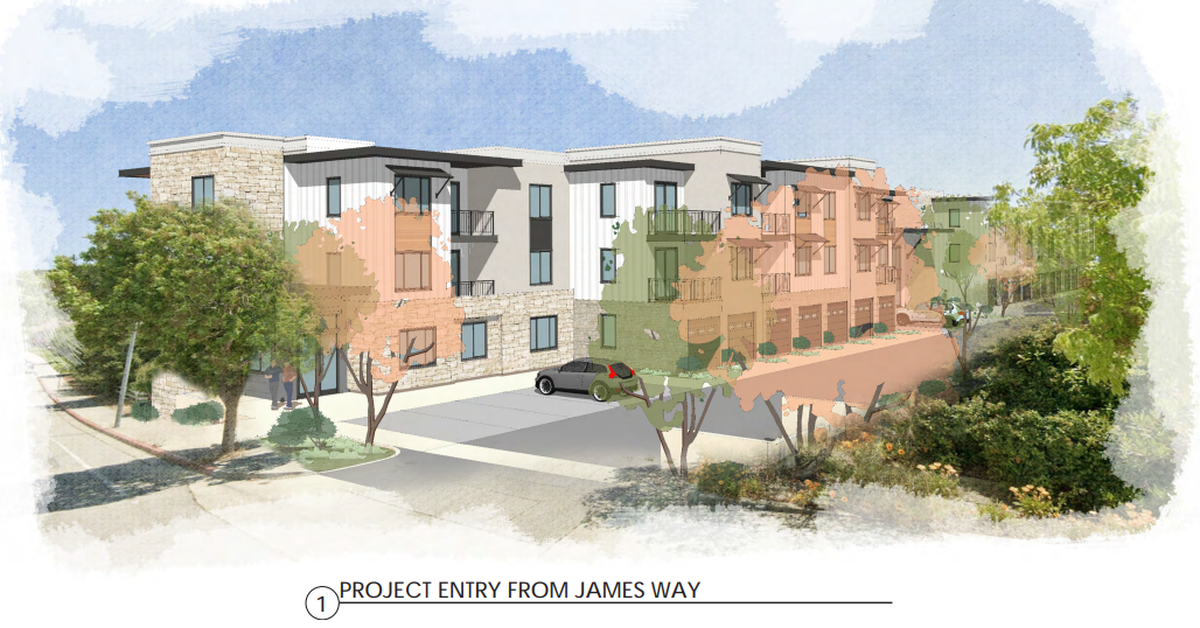
Consisting of two new four-story residential buildings, the residential units will be made up of 20 studios, 58 one-bedroom units and 14 two-bedroom units, with 15% of the units set aside as affordable housing.
As approved, the applicant requested concessions to lower the number of required parking spaces under the city municipal code from 99 to 98. The applicant also requested a concession to reduce the minimum of 10% of the gross lot area for off-street parking to 8.23%.
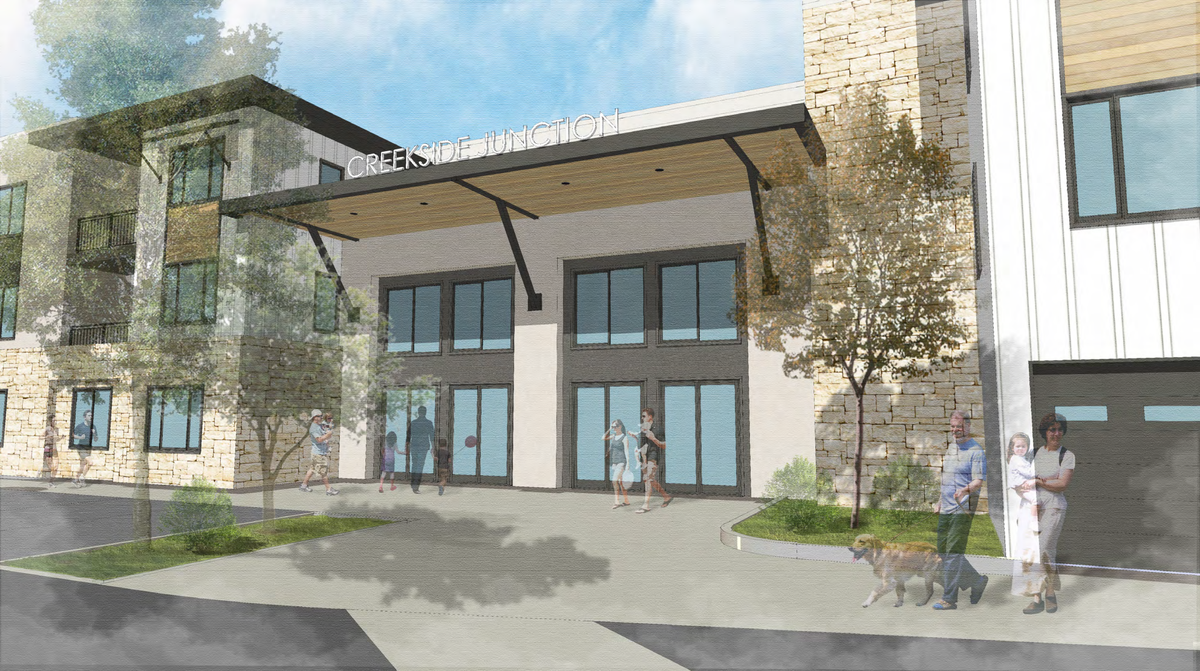
Those spaces were spread over 31 one-car garages under the building, 18 parking spaces proposed to be shared with the nearby Best Western hotel, 47 non-designated surface parking spaces and a pair of designated surface parking spaces, according to the staff report.
That reduction in required parking — like the project’s height concession that waives the city’s 35-foot height limit in favor of a 45-foot design — was made possible by state density bonus laws that require cities to make concessions to developments which include an affordable housing component.
Meanwhile, the appellants said the 18 parking spaces shared with the nearby Best Western Casa Grande Inn would strain the parking capacity of the lot, while overflow parking and increased traffic would heavily impact their business’ parking and accessibility.
Bunnell, who owns the inn, asked Sheppel to reconsider his project and explore other options for the project site.
“I was not the original developer of the Casa Grande, but I would like to invite all of you to drive through and see what can be done with the Creekside — in preservation of the creek in that area, the previous developer (of the inn) did an excellent job,” Bunnell said during public comment. “And it’s a great place for our guests to spend time and enjoy, and the same thing could be done with this property.”
He continued: “Another possibility is maybe Mr. Sheppel would consider donating to the city for community park and get a real nice tax deduction.”
State law likely clashes with residents’ concerns
Though no action was taken on Creekside Junction at Tuesday’s meeting, its previous approval by the city’s Planning Commission may provide a look at the grounds on which the project will be challenged — and why those challenges may not hold up.
The exemptions that allowed for the project’s off-site parking are the product of the Housing Accountability Act, and denying them would put the city at risk of violating state law — a legally expensive proposition.
Resident concerns about traffic congestion and parking were mostly echoed by the Planning Commission, but because most of the concerns fell under aspects of the project made possible by the Housing Accountability Act, the Planning Commission opted not to deny the project because state law protects those concerns.
During public comment, applicant attorney Chris Guillen said despite the continuance he expects the project to be approved.
“Just to state it for the record, and especially in light of sort of the public comment that’s happening now on the project, we want to make it clear that this is the fourth hearing on the project under the Housing Crisis Act, and there’s only five permitted under state housing law,” Guillen said. “We do anticipate that on the 14th, it’ll be the final hearing on the project, and we will receive an approval on that date.”