70 SLO County families could lose housing under new citizenship policy. Why?
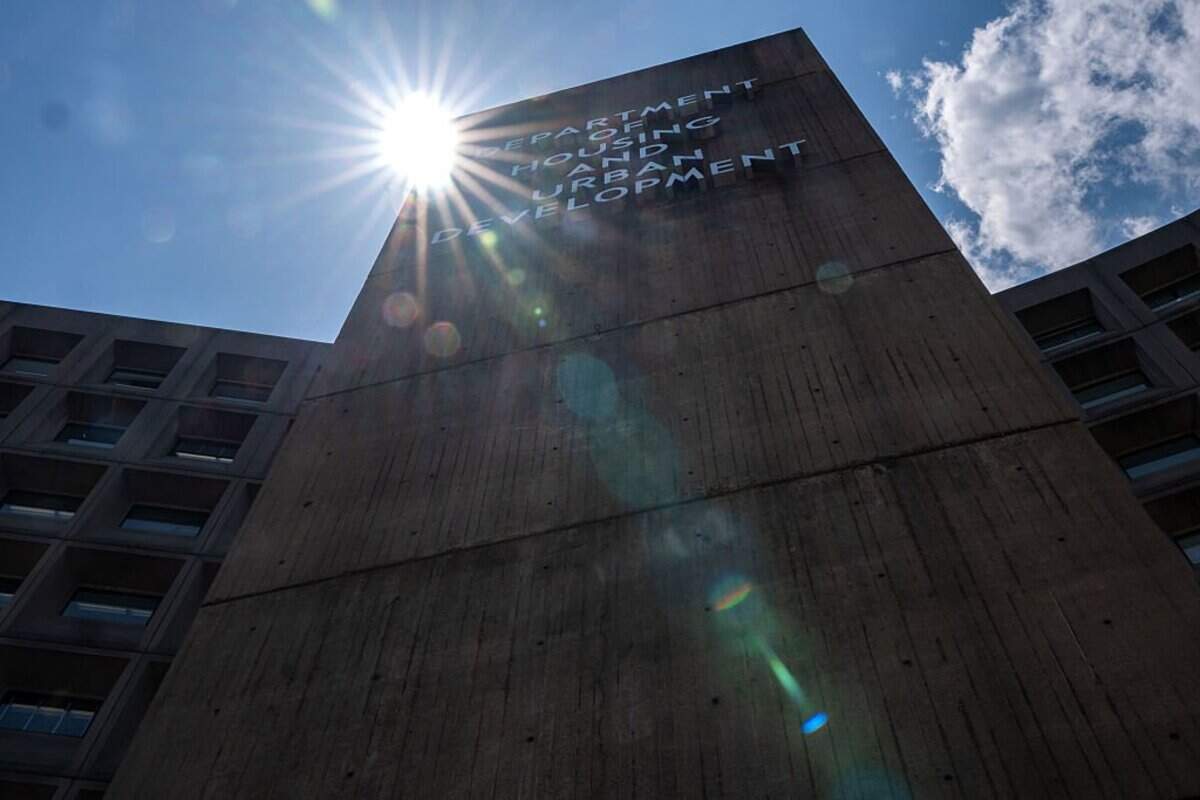
The federal Department of Housing and Urban Development is looking to kick non-citizen and mixed-status households off of the Housing Choice Voucher program — and at least 70 San Luis Obispo County households may lose their housing as a result.
On Feb. 20, HUD proposed a new rule that would require all residents who use federally subsidized Housing Choice Vouchers to submit proof of U.S. citizenship.
In a news release, HUD Secretary Scott Turner said the policy change is intended to close “loopholes” that allow noncitizens and mixed-status families to receive federal assistance.
“Under President Trump’s leadership, the days of illegal aliens, ineligibles and fraudsters gaming the system and riding the coattails of American taxpayers are over,” Turner said in the release. “HUD’s proposed rule will guarantee that all residents in HUD-funded housing are eligible tenants.”
“We have zero tolerance for pushing aside hardworking U.S. citizens while enabling others to exploit decades-old loopholes,” Turner continued.

Currently, there are 70 mixed-status families — including 154 eligible children, all citizens — enrolled in the Housing Authority of San Luis Obispo’s affordable housing system. For some of these residents, including a mother of three who agreed to speak with The Tribune under the condition of anonymity, losing access to HASLO’s housing could mean pulling up decade-old roots in the area.
Her family, which includes her husband and their three U.S. citizen children, has lived in subsidized housing for a decade after one of her kids’ schools in Arroyo Grande introduced the family to HASLO’s services, she said.
HASLO’s housing was a significant step up from the family’s previous living conditions, when the whole family — including her newborn infant at the time — was living in her sister’s garage in the middle of winter. Now, with that security at risk again, the mother said she hopes the government will have some mercy for the children she’s raised in this country.
She hopes that HUD reconsiders the policy change “for the sake of the children — not for the parents who lack documentation — but for the children, who are the ones who truly need housing,” she said. “The parents also need it, but the children are the ones who get housing, because they are the ones with the proper documentation.”

Rule change could set back housing relief efforts
According to HUD’s news release, a HUD and Department of Homeland Security audit of HUD’s databases identified around 200,000 tenants with incomplete or unknown eligibility verification. HUD estimated around 24,000 “illegal aliens, ineligibles and fraudsters” in 20,000 mixed-status households currently receive the benefits in question.
The proposed rule change would cause nearly 80,000 U.S. households to lose their housing assistance, including nearly 37,000 children, according to the National Low Income Housing Coalition.
According to the Coalition, verifying the citizenship status of every person receiving federally subsidized housing would require HUD to perform citizenship checks on over 4.3 million U.S. households.
While performing that verification and adding a citizenship verification component to the intake process for subsidized housing will be time-consuming and expensive — as many people who live in subsidized housing don’t possess proof of citizenship — there will also be a hidden cost to homeless service providers nationwide, HASLO executive director Michelle Pedigo said.

The mother who spoke with The Tribune said she entered the United States on a visa, and was not asked for proof of citizenship during the intake, as her children were already citizens.
If all 80,000 mixed-status households currently receiving federal housing subsidies lose that aid, many are unlikely to land in housing, potentially adding even more people to already overburdened homeless service providers, she said.
“The impact is going to be that there are tens of thousands of eligible citizen children that are in these households where the family would either have to choose between leaving the housing or removing the people who are not eligible citizens from the household,” Pedigo said. “In most cases, that’s their parents, and so that doesn’t work, and those families are at risk losing their housing.”
Worse, the all-citizen households that would replace the mixed-status households will cost providers like HASLO more in the long run, Pedigo said.
Mixed-status families receive a portion of the subsidy that full citizen families receive because their housing benefits are prorated by the number of eligible people in the household, she said. A 2019 study of mixed-status and citizen-occupied subsidized housing conducted by the Congressional Research Service found that replacing all mixed-status households with full citizen households would increase subsidy costs by around $200 million annually.
For example, a family of five making $39,000 a year living in a $1,800 a month apartment has three members eligible for benefits, they would receive $1,167 from HASLO, but a household of the same size, income and rent made entirely of citizens would receive $1,634 — a $467 difference, Pedigo said.
“They’re not doing anything underhanded or anything fraudulent,” Pedigo said. “They’re participating in the program the way it’s been designed for decades.”

HUD policy change not finalized
With the comment period for the new HUD directive open until April 21, Pedigo is hoping that staunch public opposition could forestall or cancel the new policy entirely.
This directive on mixed-status families is not the current administration’s first attempt to remove non-citizen residents from subsidized housing.
In May 2019, during President Donald Trump’s first term, HUD proposed a similar rule, but the move was heavily contested and later withdrawn in April 2021 under President Joe Biden, according to the National Housing Law Project.
But if the policy goes into effect, HASLO will eventually have to start cutting off funding evicting households with non-citizen residents, which will likely prove burdensome for landlords, Pedigo said.
Pedigo said HUD’s framing of mixed-status families as fraudsters “was disappointing to me, because it implies that these people snuck into the housing somehow and are receiving subsidy under the table and doing something illegal when really, this has been the rule for decades.”
For her part, the mother who spoke with The Tribune said she and her family are preparing to move on from their HASLO-funded housing, even with the knowledge that the family cannot bear the local cost of housing.
“Perhaps we will soon leave the program,” the mother said. “Perhaps, just as we were blessed to find something once, God will put something new in our path again.”