SLO County won’t cap housing growth across county anymore — except in one town
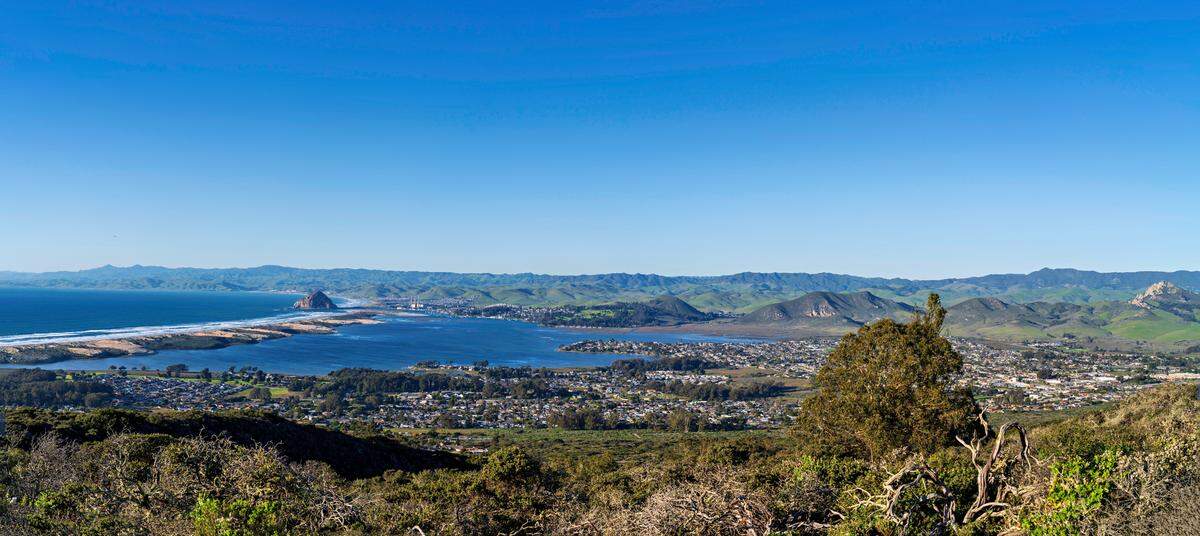
Parts of San Luis Obispo County are set to see the number of allowed housing units increase next year — and the infamously building-averse Los Osos is in line to allow more homes.
On Tuesday, the San Luis Obispo County Board of Supervisors held a hearing on growth rate allocations for unincorporated parts of the county, which dictate the maximum number of home permits that can be issued each year.
During the meeting, county long range planner Dominic Delporto said in 2025, builders only used around 11% of the maximum countywide dwelling unit allocation, or 112 dwelling units requested out of 1,036 allowed.
On a more local level, the Nipomo Mesa Water Conservation Area saw 27% of its 134-unit maximum allocation utilized, according to the staff report. Conversely, Los Osos’ 25-dwelling unit allocation went unfilled because though several applications were filed, they were still in the use permit process, long-range planning division manager Corey Hahn said.
After receiving a review of countywide dwelling unit allocations for 2025, the board turned its attention to the next year and the changes recommended by staff — namely, the elimination of growth rate limits for the Nipomo Mesa and across the county.
Los Osos, which was under a building moratorium from 1988 to October 2024, was the only exception to the removal of growth rate limits.
Los Osos Community Services District board member Chuck Cesena said the CSD, Golden State Water Co. and S&T Mutual Water Co. — the three water purveyors who tap into the Los Osos Groundwater Basin — found the county staff’s justification for an 0.4% growth rate “unpersuasive.”
“The (Basin Management Committee) also noted the uncertainties in the transient model, but recognized correctly that the model uncertainty implies the impacts may be underestimated as well as overestimated,” Cesena said. “Said another way, uncertainty isn’t a green light, it’s a warning sign.”

Los Osos CSD opposes additional groundwater pumping
Delparto said the county’s local coastal program requires a 1% growth cap for Los Osos, but the annual growth rate is to be established based on reviews of groundwater data, the true limiting factor for the community.
But the sources of groundwater data that the county relies on weren’t all in agreement on how much the community allows to grow.
While the Los Osos Basin Management Committee’s “transient model — which simulates groundwater levels and seawater intrusion in the basin using existing data — recommended that the county adopt a 0% growth rate for Los Osos for 2026, county groundwater sustainability director Blaine Reely said the Board should adopt a growth rate of 0.4%, maintaining the previous year’s maximum of 25 new dwelling units.
That 0.4% growth rate would essentially be a “rerun” of the current year’s allocation, though of course that’s no guarantee that the allocations will be filled, Hahn said.
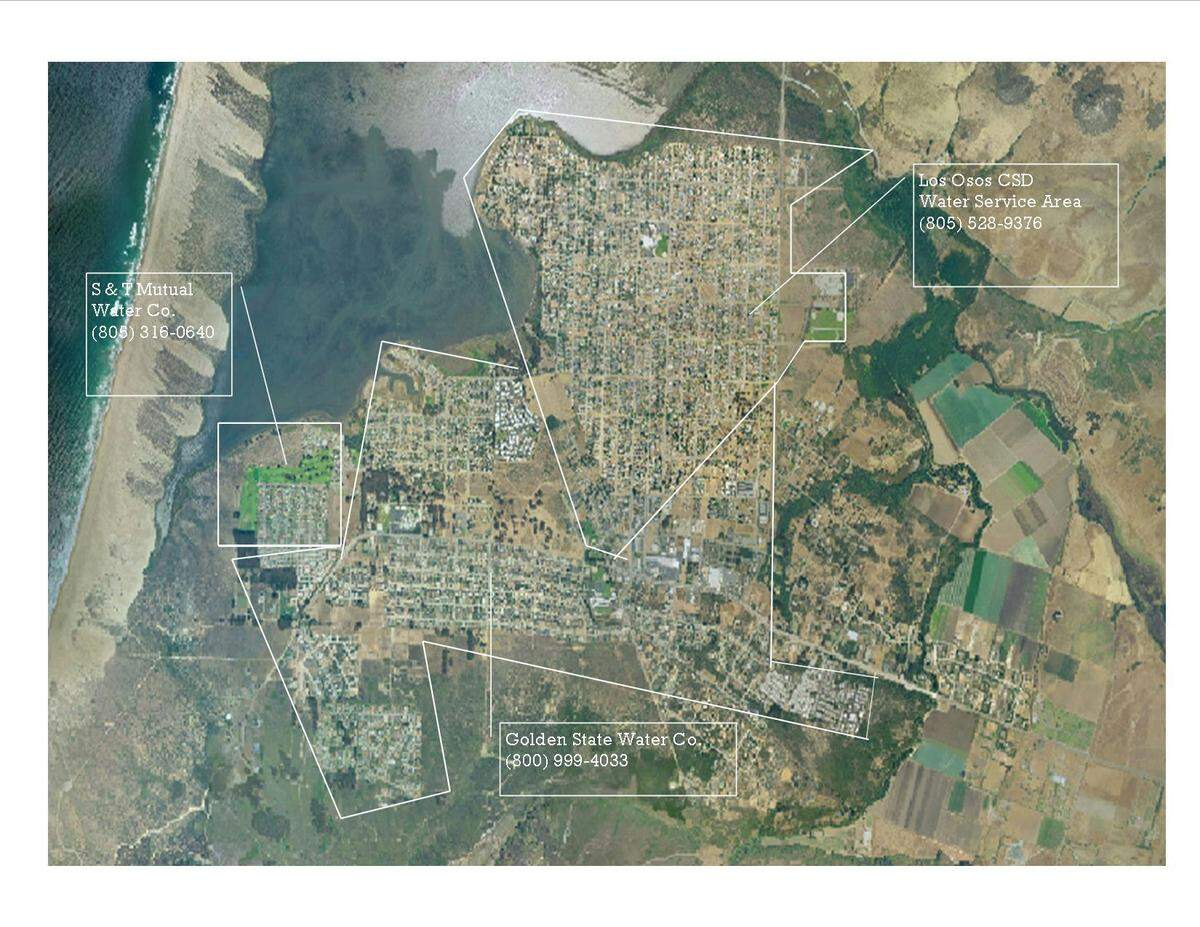
Los Osos Community Services District general manager Ron Munds said as data on the health of the Los Osos Groundwater Basin is somewhat spotty — and won’t have a five-year average for water levels established until 2028 — proceeding with caution in expanding the number of allocated dwelling units is the best practice.
Seawater intrusion continues to be an issue for the basin, and must be fully accounted for in any talks of expanding housing in Los Osos — something Munds said he didn’t feel was done in the county staff’s recommended amendment.
Munds said while staff such as Reely may have an idea of what the right amount of water pumping should look like, “they do not know the operational challenges we face on a daily basis, which include water quality issues like seawater intrusion, nitrate contamination, emerging contaminants like PFAS, but also the pumping distribution and constraints that we are trying to implement to maximize the quantity of water that we can pump on any given day to the community.”
“The rate of intrusion is what needs to be steady and confirmed to take the cloud of uncertainty, which I feel is a distraction in this conversation today, out of the discussion,” Munds said. “On that note, one of the county consultants stated that there’s ample time to react to the uncertainty, which I believe is an irresponsible comment and approach when it comes to protecting our community’s only water supply.”
Supervisors eliminate countywide growth rate caps
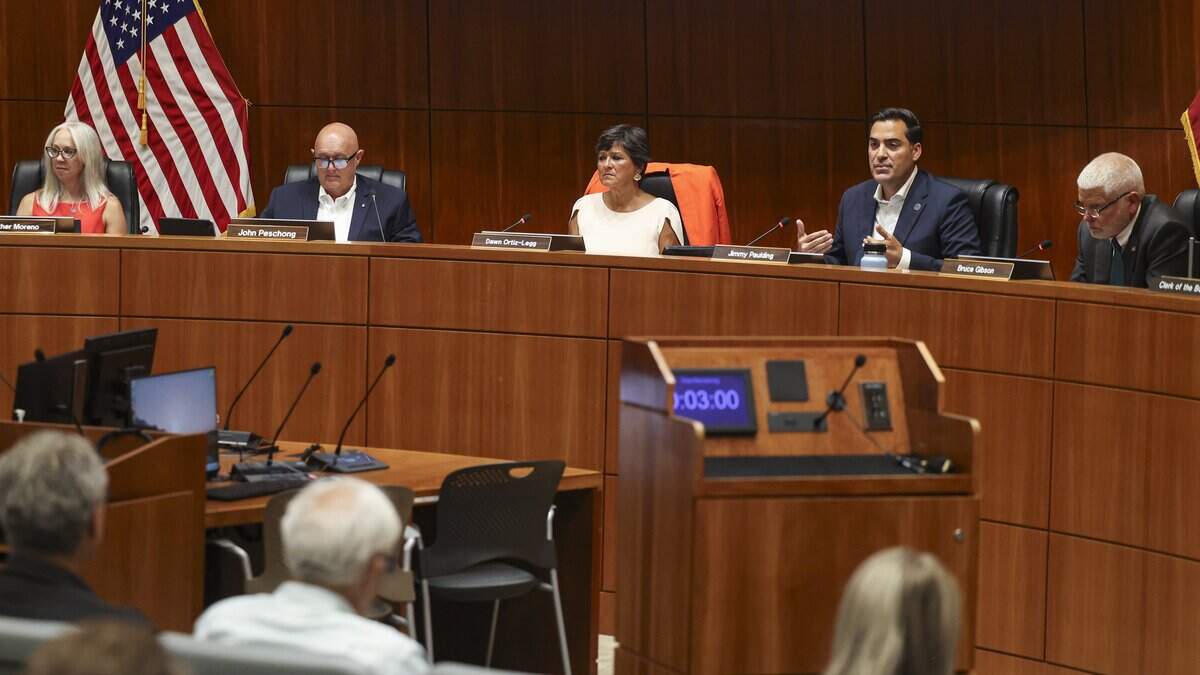
Despite the Los Osos CSD’s warnings of overtapping the basin, the Board voted 4-1 to approve the staff’s amendment, with Supervisor Jimmy Paulding the sole “no” vote, removing growth caps for the unincorporated parts of the county save for Los Osos’ 0.4% cap.
Supervisor Bruce Gibson argued that Los Osos’ cap was a “conservative response” to the concerns voiced by the Los Osos CSD.
According to the county staff’s presentation, the 0.4% growth rate for next year had already been reduced from 0.6% to 0.4% to try to address these concerns, though a 0.8% growth rate is prescribed for 2027.
Starting in 2028 and beyond, growth rates can be established based on a five-year rolling average that is currently in the data collection stage, according to the staff report.
“We could certainly justify 0.6% as per the growth management ordinance that’s set out, but keeping the growth rate at 0.4% so we can continue the efforts to exercise the transient model for some different scenarios is more than protective of the groundwater,” Gibson said.
Gibson said he supported eliminating the growth cap in the rest of unincorporated San Luis Obispo County because the number of permit requests haven’t approached the cap in recent years.
Paulding said he voted against the growth rate changes because he couldn’t support the elimination of growth caps for the Nipomo Mesa Water Conservation Area.
“It’s no secret that the bulk of the housing that we’re seeing in the unincorporated areas in San Luis Obispo County is occurring in the community of Nipomo,” Paulding said. “This growth management ordinance only looks at when a building permit is processed — it’s not looking at what the number of units in the overall pipeline are based on land use approvals, so it doesn’t give us a good tool to actually measure what’s coming and whether or not we have the infrastructure, resources and services to support that growth.”
This story was originally published December 18, 2025 at 9:20 AM.