SLO is considering more renter protections. What’s potentially on the table?
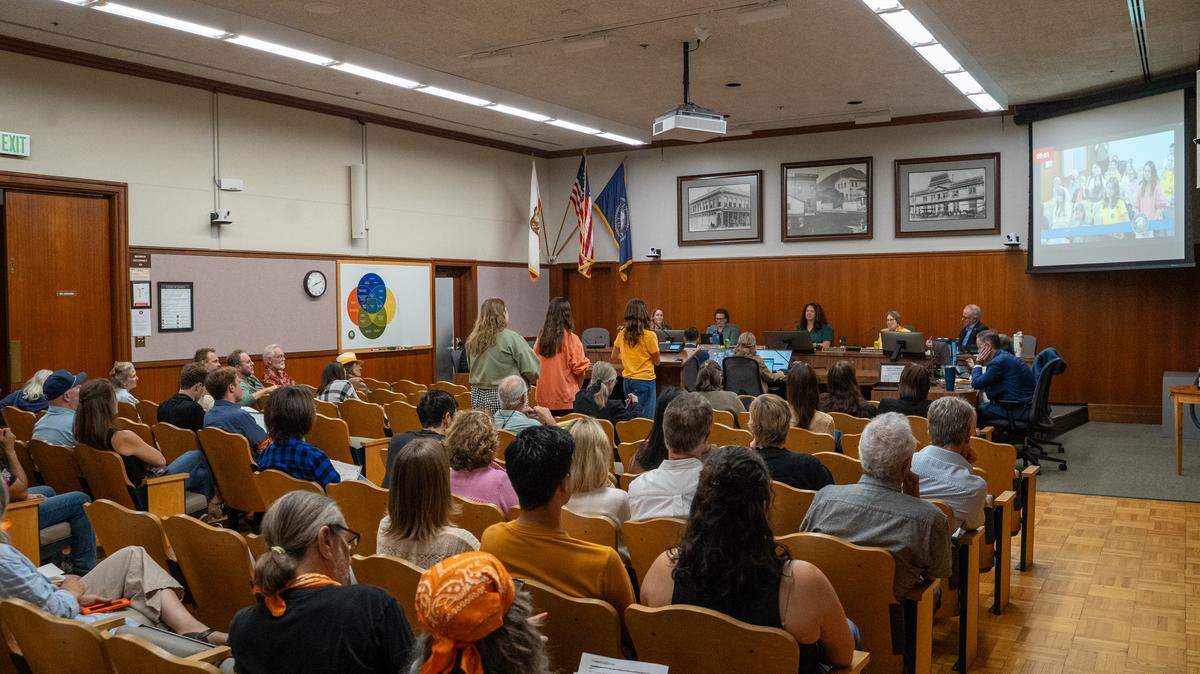
The city of San Luis Obispo heard concerns about the city’s cost of living and tight rental housing market from landlords and tenants alike at a study session hosted by the city Monday — but will any meaningful change come of the conversation?
At a special San Luis Obispo City Council meeting, the council discussed a slate of potential policies that could be used to address the city’s hostile renting environment in preparation for a rollout of some of those policies over the next few years.
Potential policies discussed by the council include introducing a rental registry to better track rental data, expanded eviction protections beyond the existing Tenant Protection Act and rent stabilization.
At the preliminary discussion, the City Council showed some appetite for pursuing expanded tenant protections — but which policies will be implemented, along with how the city will pay for them, remains an unknown.
Mayor Erica Stewart said she’s hopeful that the city can put together policies that can ease the burden of tenants, but that starts with fully understanding the situation and the city’s limitations.
“At the same time, we want to move fast,” Stewart said. “This is our constant challenge as a government entity, of trying to make sure we take in all sides of an issue, get the thorough data, and at the same time, make some decisions that affect people’s lives sooner than later.”
Would new rental policies be effective?
At the special meeting, expanded tenant protections were one of the most discussed aspects of the study session.
According to data included in the staff report, while around 60% of the city’s residents are renters, 64% of those renters are considered exempt from the Tenant Protection Act because the homes are owned by small landlords and not larger companies.
As a result, over 55% of renters in the city are considered cost-burdened, meaning they spend more than 30% of their income on rent, and over 30% of renter households are severely cost-burdened, meaning they spend more than 50% of their income on rent, according to the staff report.
One potential policy that received the council’s feedback was the establishment of a rental registry, which would be a digital database of all rental housing units in the city.
Several council members indicated that introducing a rental registry is an important first step in expanding renter protections, as it’ll allow the city to more accurately tailor its policies using data
As is, the city requires a business license for all rental properties, and the data gathering aspect of a rental registry could be in part folded into the licensing process, including details on owner information, rent amount and basic property characteristics such as age, number of units and square footage, according to the staff report.
The main concern with creating a registry would be privacy, as having all of those data points publicly accessible may violate the privacy of some landlords, city staff and councilmembers said.
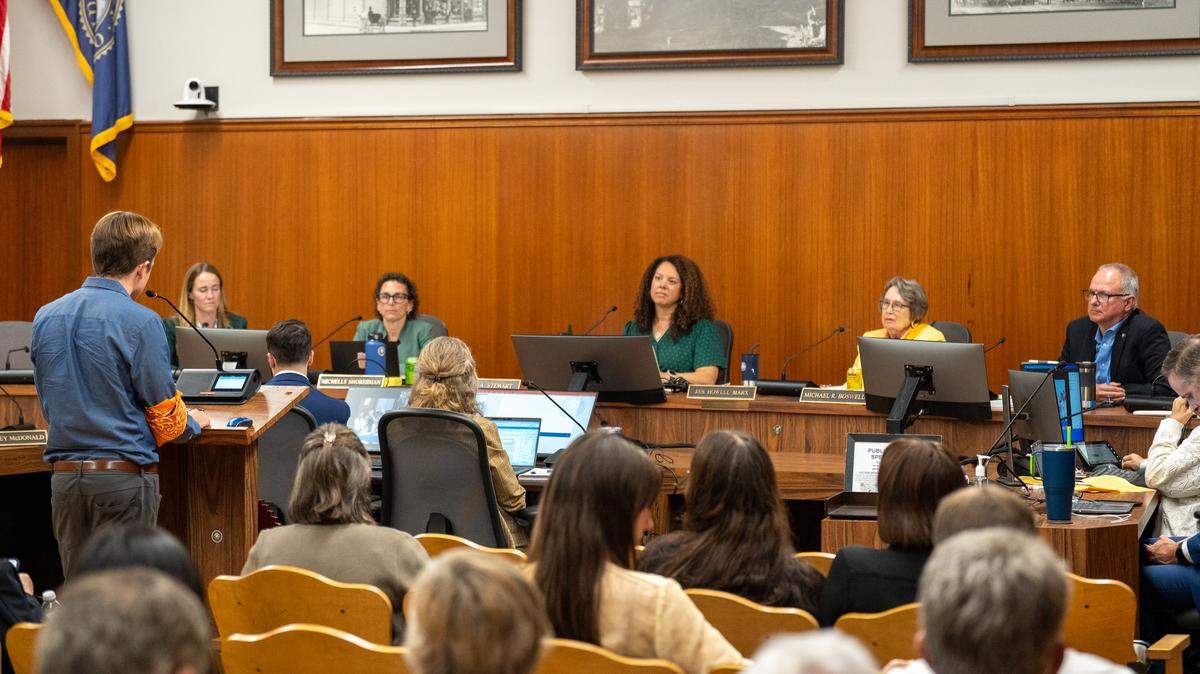
Other potential policies hinged on expanding the Tenant Protection Act to cover more of San Luis Obispo’s renter population.
Cities can adopt tighter rent increase limits than the Tenant Protection Act, which limits rent increases to 10% or 5% plus that year’s consumer price index, whichever is lower. City staff did not specify the amount that rent increases could be limited to in San Luis Obispo, leaving that to the council’s discretion at a later date.
The council also discussed expanding the Tenant Protection Act’s just cause eviction protection, which covers all rental housing except owner-occupied single-family homes, mobile homes, duplexes and single or multi-family housing built within the last 15 years.
The act’s just cause eviction provision requires landlords to provide reasons including failure to pay rent, an owner withdrawing a unit from the market, an owner deciding to occupy their own rental and substantially remodeling a unit.
Because so many of San Luis Obispo’s rental units aren’t covered by the Tenant Protection Act, the city could expand its provisions locally to cover all housing types in the city, along with applying its provisions to tenancies that last shorter than 12 months.
The council also heard presentations on making multifamily housing smoke-free through a local ordinance, expanding education of landlord and tenant rights, added mediation and legal resources and creating a safe housing checklist.
Plenty of ideas, but not much funding
Though the City Council showed support for many of the policies discussed at the meeting, the question of cost — for a city that’s already projecting a budget shortfall in the next financial year — means that SLO will need to pick its battles on what policies it can support.
Many of the programs discussed at the study session, including the safe housing checklist, providing direct rental assistance for households facing eviction and the smoke-free ordinance were considered a low overall resource need, meaning they would require minimal staff hires and would fall in the ballpark of $50,00 to $150,000 a year.
However, some of the more impactful programs that require more enforcement and interaction between landlords, tenants and the city would require significantly more resources, staff said.
Rolling out a rental registry — considered a “medium resource need” at $150,000 to $300,000 per year by staff — could take a year, with a specific study session on the topic tentatively scheduled for February.
The aforementioned just cause eviction protections and rent stabilization policies were both considered “high resource needs,” meaning they could cost the city a minimum of $300,000 a year, according to the staff report.

Renters demand action quickly; landlords skeptical
While the council was generally supportive of the policies discussed in the study session, some landlords and business owners in attendance said the policies could harm their businesses and make housing more expensive overall.
San Luis Obispo Chamber of Commerce governmental affairs director Rachel Whalen said the chamber supported the creation of a rent database, but it did not believe the Tenant Protection Act requires any expansion locally.
The chamber supports “policies that maintain and improve the quality of housing in our community, which is critical to attracting and retaining the talented workforce that sustains our local economy,” Whalen said.
“At the same time, we caution against adding regulations that go beyond California’s Tenant Protection Act, as we believe the Tenant Protection Act has the necessary protections, and expanding those regulations could unintentionally discourage investment and make it even harder to build the housing San Luis Obispo so urgently needs,” Whalen said.
Property manager Matthew Roberts said he understood why the city was looking at expanding tenant protections, but asked the Council to exempt smaller, individual property owners from some of the new policies.
He cautioned that adding fees attached to programs such as a rental registry would push rents up in the long term.
“A few people say, ‘Oh landlords, they’re all rich,’ but if you buy a house in San Luis Obispo, you’ve got to put 30% down,” Roberts said. “In order to do that, you need to have $300,000 — you’ve got an investment that’s a million dollars, so you have to make a certain amount back to pay that mortgage of $300,000.”
Members of the San Luis Obispo Tenants Union disagreed, and made up the overwhelming majority of speakers during the public comment period.
SLO Tenants Union co-founder Tyler Coari asked the council to act quickly to combat rapidly rising rents in the city.
“Existing state and local laws do not protect most renters in our cities,” Coari said. “That said, our excellent city staff have identified common sense, prudent solutions that other California cities have implemented — solutions that will work here too, if we have the courage to stay the course.”
Councilmember Emily Francis said she recognized the need for more proactive policy on rent increases because despite the city’s best efforts, it hasn’t built its way out of the housing crisis.
“We keep telling people to be patient, we just address the supply side, rents are going to go down, but we have a pro-housing council, and we’ve added 3,800 units over the last 15 years, and Cal Poly’s added, what, 2,800 units, I think they said, and still, our rents are outpacing inflation,” Francis said. “I know we need more housing — that is part of this equation, but it’s not going to fix things here.”