
Meet the 17-year-old activist leading a movement against ICE on the Central Coast
Editor’s note: Stephanie Zappelli reported this story in partnership with the USC Annenberg Center for Health Journalism as part of the 2025 California Health Equity Fellowship.
Cesar Vasquez set down his megaphone for a moment while protesting federal immigration agents swarming a quiet neighborhood in Santa Barbara County.
Like many teenagers, he needed to give a Zoom presentation at just that moment. But instead of presenting a final project, Vasquez planned to explain the impact of ICE on his community — with the hope of recruiting volunteers.
Dozens of U.S. Department of Homeland Security agents descended on the Santa Maria neighborhood on the morning of Nov. 13, armed with about 40 cars, an armored truck, firearms and flash-bangs. Vasquez led a crowd of about 50 people, all gathered to push the agents out of the area — but he had made a commitment to speak to prospective volunteers at Cal Poly.
So mid-protest, he stepped aside to join the meeting from his phone.
“It was so dystopian,” he said.
When Vasquez returned to the crowd, he confronted a Santa Maria ICE agent known for being aggressive with protesters. The agent shoved Vasquez, then a different officer fired flash-bangs into the crowd.
“They sounded like guns, and so people were afraid that they were getting shot at,” Vasquez said. “It was a very excessive show of force.”
When the officers left, Vasquez and other members of the 805 Rapid Response Network searched the neighborhood for people who needed help. They learned that ICE had taken 10 people into custody from a nearby farm, along with another four from a house in the neighborhood.
They join the 1,035 people taken into custody by federal immigration agents on the Central Coast since President Donald Trump was inaugurated on Jan. 20, according to data collected by the 805 Rapid Response Network.
The escalation of ICE activity is spreading fear among the Central Coast immigrant community, as adults and children are taken from their homes, workplaces, grocery stores and courthouses without notice.
Vasquez didn’t have time to process his thoughts and feelings about the raid until he drove away. Not only did he fear for his own safety, but he worried that ICE would further escalate its use of force in his hometown, Santa Maria.
“I hope I never have to live a day like that again,” he said.
But fear doesn’t keep Vasquez from his work.
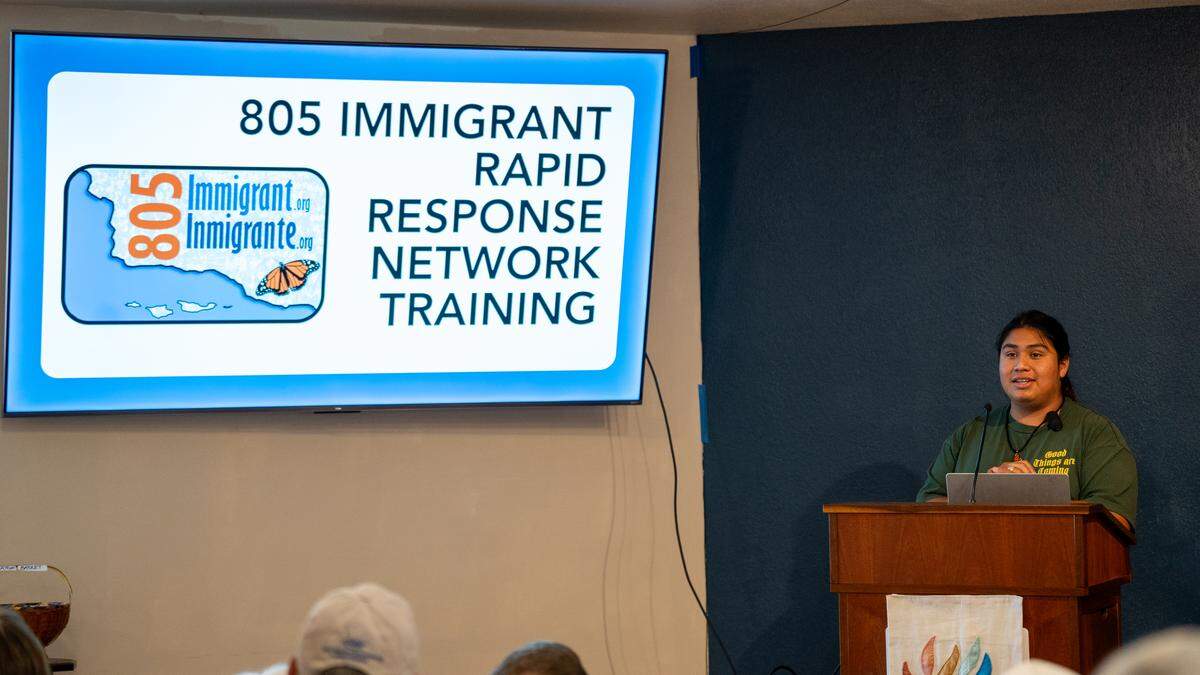
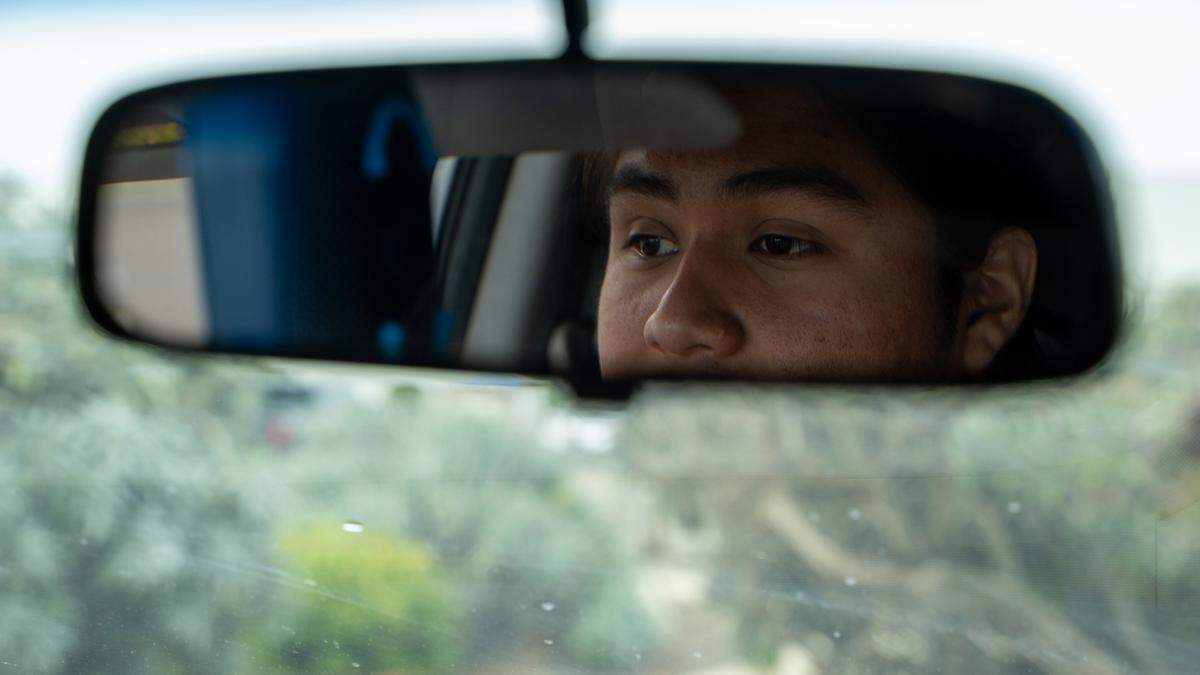
The moment Vasquez graduated from high school in June, he started patrolling the Central Coast for ICE with the 805 Rapid Response Network. He started as a volunteer, and was hired as a full-time employee in August.
At just 17 years old, he leads multiple teams of volunteers with the nonprofit organization.
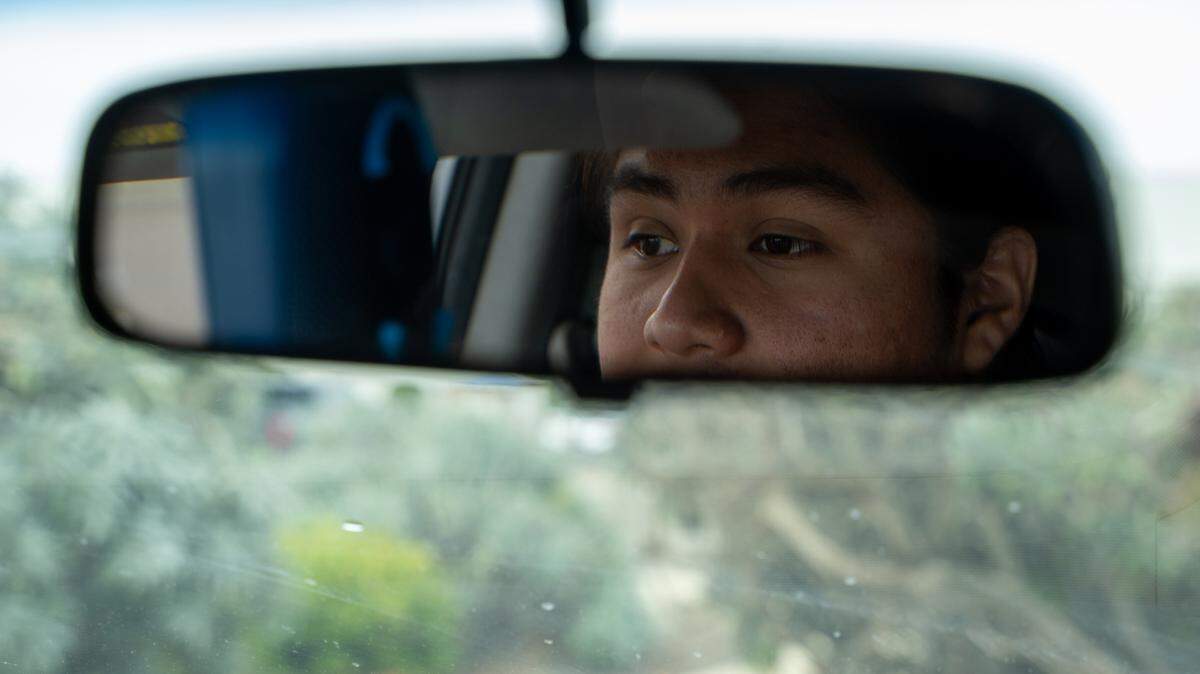
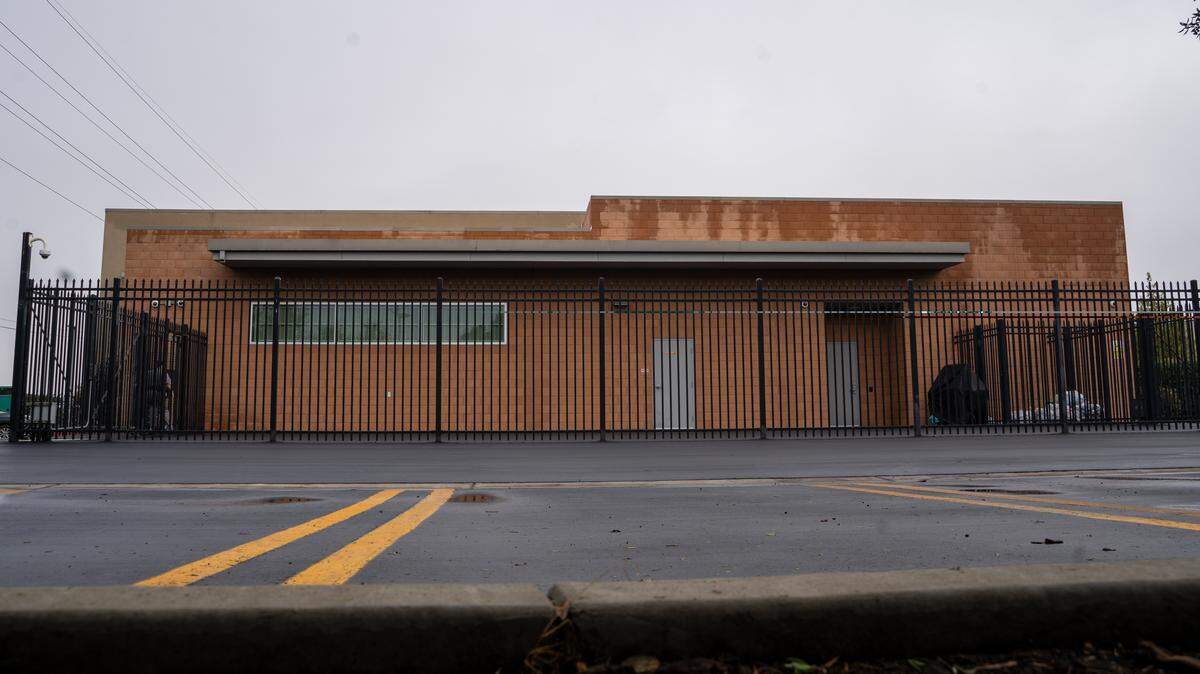
On a recent autumn afternoon, Vasquez parked outside the Santa Maria ICE Facility to monitor the agents’ comings and goings.
While Vasquez waited for action, a monarch butterfly landed on the chain link fence surrounding the facility. The heaviness of the day lifted for a moment, and he smiled.
“That’s beautiful,” he said.
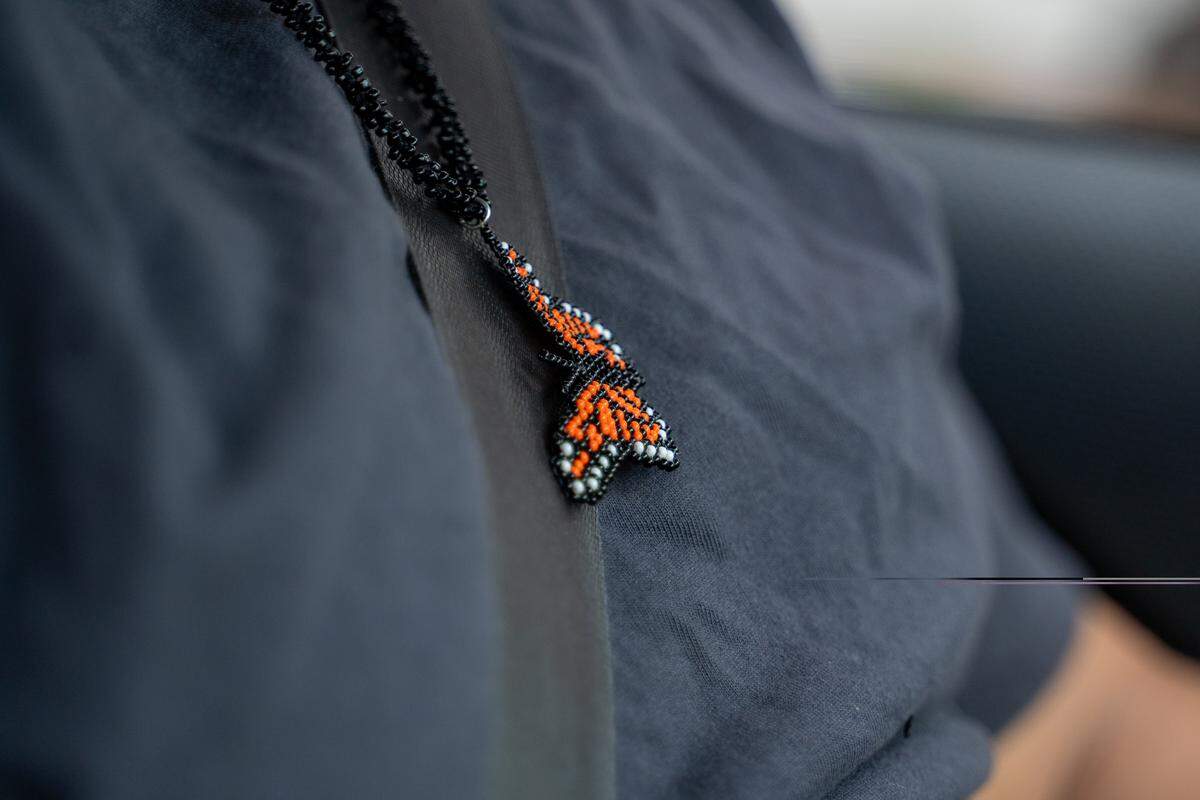
To Vasquez, monarchs are a symbol of the resilience of immigrants like his parents and neighbors. He often wears a necklace of a beaded monarch.
“Monarch butterflies, they encompass what I believe to be the perfect world,” he said. “A monarch butterfly travels across borders with no limitations. It’s proud, it’s happy. It soars with its people, without having to worry about these imaginary lines that we call borders. And so they are the dream that I am striving for.”
Rapid responder is always on the move
These days, like the butterflies, Vasquez pretty much lives his life on the go.
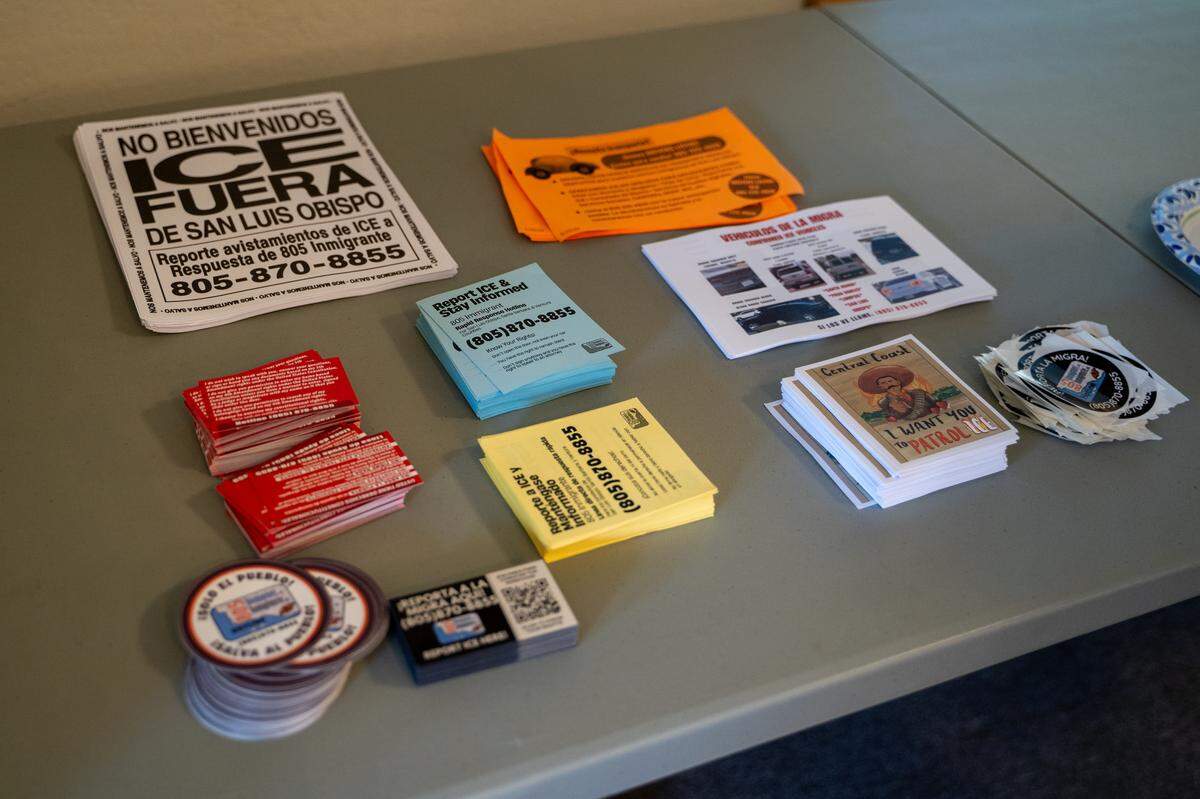
Everywhere he goes, he carries a toothbrush and a change of clothes, along with stacks of red “Know Your Rights” cards in the backseat of his car.
He often wakes before sunrise to search for ICE vehicles as farmworkers commute to the fields.
While patrolling, he looks for vehicles and license plate numbers seen at different California ICE offices. The agents are known for frequenting the Santa Maria Jail, the FBI office, the San Luis Obispo County Jail, and the Santa Maria and San Luis Obispo courthouses.
When rapid responders spot ICE, they send a text blast to people enrolled in the Rapid Response Network’s alert system.
Vasquez also trains volunteers and delivers donations to families separated by ICE. He watches every single video of people being taken into custody by immigration agents to make sure they aren’t forgotten.
In Mexican culture, people celebrate Día de los Muertos to remember loved ones who have died. The idea is, if people stop talking about their loved ones, they will be forgotten. This tradition motivates him to watch every video, he said.
“It’s so the universe knows that, like, someone’s still looking out for them,” he said.
Vasquez said he’s haunted by the stories of families separated by ICE.
Once, he saw ICE take a man from outside the Santa Maria Jail in front of his daughter.
The ICE agent ripped a card from the father’s hand. The card held the man’s Alien Registration Number, an identification number assigned to non-citizens by the U.S. Department of Homeland Security. People can use that number to find their loved ones in the ICE locator system.
“(The agent) taunted the daughter and was like: ‘You want the card? You want the card? You’re not getting the card.’ And (he) put it in his back pocket and drove away,” Vasquez said. “They’re very much dehumanizing the people, and doing whatever makes them feel, like, the most in power.”
Another day, he met a father whose wife and two young children had been deported. Vasquez helped the father pack their things to send to Mexico.
“He’s still a father, but he isn’t going to be able to be a dad for a really long time because his family is gone,” he said
As a child of immigrants, these stories hit close to home, Vasquez said. He wants to protect families from being separated by ICE, so people don’t have to live in fear and kids don’t have to grow up so fast, he said.
A lifetime of activism
At the age of 14, Vasquez founded a nonprofit organization called La Cultura Del Mundo to offer resources to students from immigrant families.
He started the organization with his childhood friend, who spoke to The Tribune on the condition of anonymity to protect her safety.
She used to help Vasquez run La Cultura del Mundo, but now she’s focused on being his friend — encouraging him to take breaks from his work and find a balance in life.
But it’s hard for young people like Vasquez to step away from the work, because the elders in the immigrant community are being targeted by ICE and children are stepping in for their parents, she said.
“For youth to have to step up instead of those adults who aren’t targeted, it speaks volumes that there is something wrong in the world,” she said. She encouraged adults who aren’t targeted by ICE to support Vazquez’s work.
“If kids are able to do this, then why shouldn’t they,” she said.
Vasquez started his activism by advocating for fair wages for farmworkers at local government meetings and speaking at protests. He envisioned a lifetime of activism. But now that his work puts his safety at risk, he doesn’t know what the future holds.
Considering the increasingly aggressive behavior of ICE agents, Vasquez is aware that he could be arrested without cause, injured or even killed doing this work.
One officer put his hand on his gun while talking to Vasquez at an immigration enforcement operation, and another officer shoved him at the protest on Nov. 13.
In Oxnard, federal immigration agents allegedly rammed their vehicle into the truck of Leo Martinez, an immigrant rights activist who works with VC Defensa, the Los Angeles Times reported. Martinez was arrested at the scene and later released without charges, the L.A. Times said.
“It’s become very scary, very quickly,” Vasquez said, but he accepts the risk because he believes in the work.
“I’m put in this position to help the people in my community,” he said. “If I don’t — if I’m not on, if I’m not communicating, if I’m not helping the families, the volunteers, it’s like, there is the risk of someone being taken (by ICE).”
When the world feels heavy, he reminds himself to lead with love, he said.
“With everything I’ve seen, with everything I’ve heard, you know, it’s been very easy for me to fall into periods of hate, but I’m really trying to ensure that if I’m leading a movement, that that movement is being led with love, because the second we lead anything with hate, we are an oppressor,” he said.
Tracking ICE takes a toll
Vasquez often talks with fellow activists about the mental health toll of responding to ICE. They swap stories about frequent nightmares and having to constantly scan the streets for ICE vehicles, whether they’re working or not.
“A lot of us are having nightmares every night, you know, and not able to live comfortably,” he said. “There’s not a lot of time to cope with that.”
He said he rarely has the opportunity to process his emotions about what he witnesses on the job — a trend that licensed clinical social worker Dr. Yanira Hernandez has noticed among people engaging with ICE.
Hernandez is the founder of Pa’lante Therapy in Los Angeles. She does a lot of work in the immigrant community and said rapid responders have reported PTSD symptoms like hypervigilance — meaning their body is on high alert for danger. This can look like constantly scanning for ICE vehicles, and feeling a moment of panic when spotting one.
She said rapid responders can experience vicarious trauma from witnessing ICE arrests and the resulting family separation. She said rapid responders protecting their communities from ICE share some experiences with other types of first responders.
For example, when firefighters run into burning homes, their lungs take in smoke. But the health impacts of inhaling smoke often don’t manifest until later.
“For rapid responders, that fire can probably look like grief, fear, sadness, rage,” she said. “Maybe we’re not feeling it right away, because our body is still in that survival mode,” she said, but those feelings will catch up.
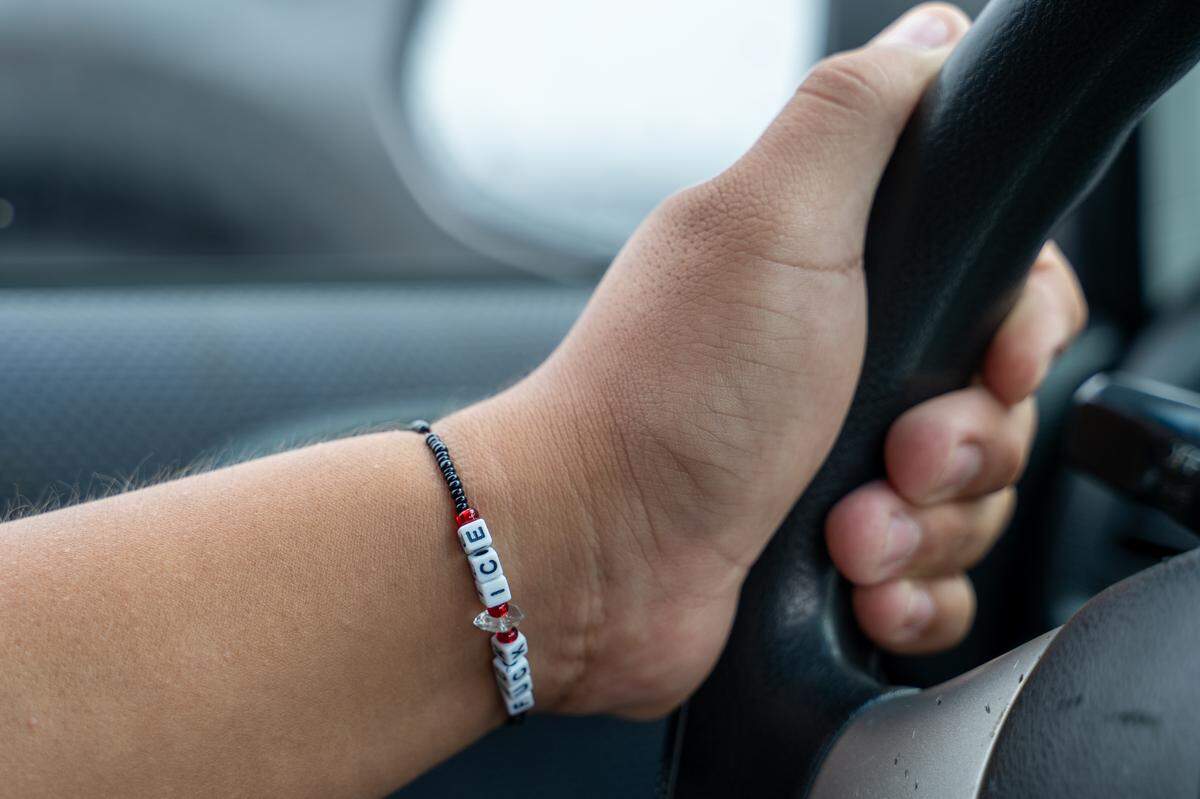
She encouraged rapid responders to validate their own emotions, and if they aren’t able to access their emotions, start by identifying sensations in their body. Then, take a moment to address those sensations.
“Even just taking a minute or two of your time — we all have a minute or two — of just stopping and really centering ourselves and then really asking yourself, ‘What is it that I need right now?” and then going from there,” she said.
She encouraged rapid responders to discuss what they’ve witnessed with each other.
“If one person says how they’re doing, I’m sure that’s going to be an invitation for other people to,” she said. “You’re just building a community right there, and that alone is a healing space.”
She also recommended Latinx Therapy, a network of therapists that offers support to people impacted by ICE. Learn more at latinxtherapy.com.
“The issues around immigration (are) not new,” she said. “But I think this is the first time that we’ve seen it done in such a dehumanizing way — we’re all being shook by this.”
‘He is a changemaker,’ sister says
Growing up, Vasquez was a smart kid who got good grades in school, and he was an early bird — often waking up his sisters to get to class on time, his 26-year-old sister told The Tribune.
But he was also an anxious kid; if they got a flash flood warning, he’d warn the whole house that they were going to flood.
“I never thought, like, those qualities as a child would now translate to what he’s doing now,” she said.
She spoke on the condition of anonymity to protect herself from retaliation.
Vasquez decided not to continue his education right now so that he could focus on his activism. But sometimes, his sister wishes he could be a regular 17-year-old who gets to go to college and party with his friends.
“I think all of us just want him to be this normal teenage kid, and I think that my brother has been a constant reminder that we are not in a normal world,” she said.
“We are in a world where we need to speak up. We are in a world where we need to be that example in our community,” she continued. “He has taken all the things I learned in college into action, and I thank him so much for having the passion, the willingness, and the love for his community.”
“Because I think sometimes a lot of us forget, and a lot of us just kind of want to run — and my brother has this firm standing in our community, and he loves it, he will protect it and he reminds us all that we never should forget where we come from,” she said.
“Regardless of who the person next to us is, we should always protect them like our own,” she said.
In August, she visited Santa Maria to support an immigrant rights protest he organized called La Marcha de la Puebla.
At first, she was angry at the adults asking him questions during the march. But then she understood the role he chose as a community leader, and she felt so proud of him.
“He’s just my little brother. My little, boogery brother. And he is resilient,” she said. “He is a changemaker. He is a freedom dreamer.”
“If you don’t want your sibling to have to give up building Legos in the living room, you need to support my sibling and others who are doing their work so that no more kids have to give up being a normal teen because of our political climate,” she said. “Because your sibling could be next.”