
Family fled to SLO County after killings in Mexico. Then, ICE came after them

It was unusual for 13-year-old Mariana Torres to miss her summer classes at Morro Bay High School over the summer.
On Tuesday, July 8, her teacher was informed that Mariana, who requires intensive special education, would be absent for an appointment in Santa Maria for her family’s asylum case.
But when Mariana didn’t show up to class for the rest of the week and into the next, the teacher began to worry for the girl and her family.
The Tribune agreed to keep the teacher’s name anonymous due to school district policy.
What Mariana’s teacher and other educators from the summer program did not know was that the girl and her family had been taken at their appointment by U.S. Immigration and Customs Enforcement, or ICE.
“I was very angry when I found out that that’s what had happened to them,” the teacher told The Tribune.
The Torres family — Mariana, her two younger siblings, 12-year-old Maximiliano and 10-year-old Agripina, and their mother Rosa Torres — had been living in Los Osos after escaping a dangerous situation involving the killing of Rosa’s brother and husband by cartel members in their home country of Mexico.
“We came to the United States out of fear,” Rosa told The Tribune in Spanish during a phone interview.
But ultimately, the family did not find the long-term sanctuary they were seeking.
A month after their asylum case was dismissed in June by the Department of Homeland Security at an immigration court hearing in Los Angeles, the family was taken to an ICE processing center in Texas, where Rosa decided against taking on an arduous appeal after nearly a month in detention and self-deported back to Mexico with her three children.
They were dropped off in Mexico by the end of July.
Now, as Rosa and her kids settle back into their home country, she continues to live with “a lot of fear” and “a lot of trauma” from the death of her husband and brother and said she has not been the same ever since.
“I don’t know if I feel comfortable being here in Mexico because of everything that happened, to be honest,” Rosa said.
Family seeks asylum after cartel members kill wife’s brother, husband
Rosa’s path to the United States began in 2015.
It was that year, the same year her youngest child was born, when Rosa’s brother was killed by cartel members in their home state of Guerrero, located along the Pacific Coast and known for tourist spots like Acapulco and Zijuatanejo.
The cartel members later told her husband, Jesus Benitez, that if he didn’t come work for them, they would kill him as well.
Benitez refused, and after the threat on his life, Rosa, her husband and their family decided to leave Guerrero the following year.
They moved north to Michoacán, where the couple lived for five years working, caring for their kids and hiding from the cartel, who Rosa said were by then on the hunt to kill her husband.
Eventually, Rosa and her husband decided he should leave to find work in Tijuana.
But by May of 2020, Rosa learned Benitez had been located and killed by the cartel there.
She took a weeklong trip by bus to Tijuana alone, leaving her children by themselves for the first time with their aunt.
“Imagine how I felt, to go there with the pain of losing my husband and leave my kids alone,” Rosa said.
Still fearful of the cartel, Rosa traveled anyway to pick up her husband’s body and attend his funeral with other relatives in Tijuana.
She then returned to Michoacán feeling compelled to leave Mexico for her children’s safety.
She was advised by her sister-in-law, Ofelina Benitez, who lived in San Luis Obispo County at the time, to apply for asylum at the border.
Three years after her husband’s death, Rosa and her kids traveled to Tijuana to apply for asylum through the CBP One application, Rosa said.
The family waited for their asylum appointment for nearly six months after arriving in Tijuana, Rosa said, until January of 2024, when they were granted an appointment and allowed entry into the United States that same day.
From the border, the family headed up to Los Osos to live with Benitez and start their life in the country.
Little did they know at the time, but within 18 months, a U.S. election, the return of Donald Trump to the White House and an aggressive, new immigration policy would reverse their dreams in an instant.
The asylum process while living in SLO County
Rosa and her kids had their first immigration court hearing in Los Angeles in September of 2024.
The hearing was brief, lasting only about 30 minutes. The judge asked her if the family had applied for asylum, if they had changed their address and if they needed more time to get a lawyer, Rosa said.
“It’s not unusual that at the first master hearing nothing happens in your case,” said Elizabeth Ramirez, an attorney for the Mixteco Indígena Community Organizing Project, or MICOP.
Ramirez did not represent the family in court but said these “master hearings” are typically short and are intended to provide updates to a case, request more time and prepare for the “individual hearings” where evidence is presented.
Rosa said the family did not have an attorney present for their immigration court hearings.
When a person enters the U.S. with an asylum case, they are not granted asylum immediately but are instead placed into removal hearings that require them to defend themselves in court, Ramirez said.
Since the start of the current Trump administration, Ramirez said asylum cases have become more “monitored” than in previous years.
On June 4, Rosa and her kids appeared at their second immigration hearing in Los Angeles.
At that hearing, an official from the Department of Homeland Security motioned to dismiss the family’s case for asylum, according to documents the family provided to The Tribune.
“The official told the judge that there weren’t any arguments to continue with this case, and that they dismiss it,” Rosa said.
Federal immigration officials have the power and jurisdiction to dismiss any asylum case in court they determine they no longer want to continue, Ramirez said.
This legal tactic is used to expedite the removal process and has been seen at other immigration hearings in the state, such as in San Francisco this year.
These case dismissals essentially place an asylum seeker into unprotected legal status, and therefore under the authority of federal immigration authorities like ICE.
“The judge told me, ‘If they detain you outside of the courtroom, I can’t do anything,’” Rosa said.
As the family left court that day, three ICE agents were outside to meet her. The agents asked her to confirm her name and to follow them into an elevator down to the bottom floor of the Los Angeles courthouse.
The family stayed in a room with other people taken from the courthouse for immigration purposes for nearly two hours, Rosa said.
Unlike other cases where federal immigration enforcement have detained an individual immediately following a court hearing, the ICE agents in Los Angeles told Rosa her situation was different, and from there gave her an ankle monitor and let the family go.
The family’s ‘alternative detention’ before ICE detainment
For more than a month, the family continued their life as normal in Los Osos, with the exception of Rosa’s new ankle monitor and the family’s frequent video check-ins with ICE.
But following the June hearing, ICE placed the family under surveillance through an “alternative detention” process called the Intensive Supervision Appearance Program, or ISAP.
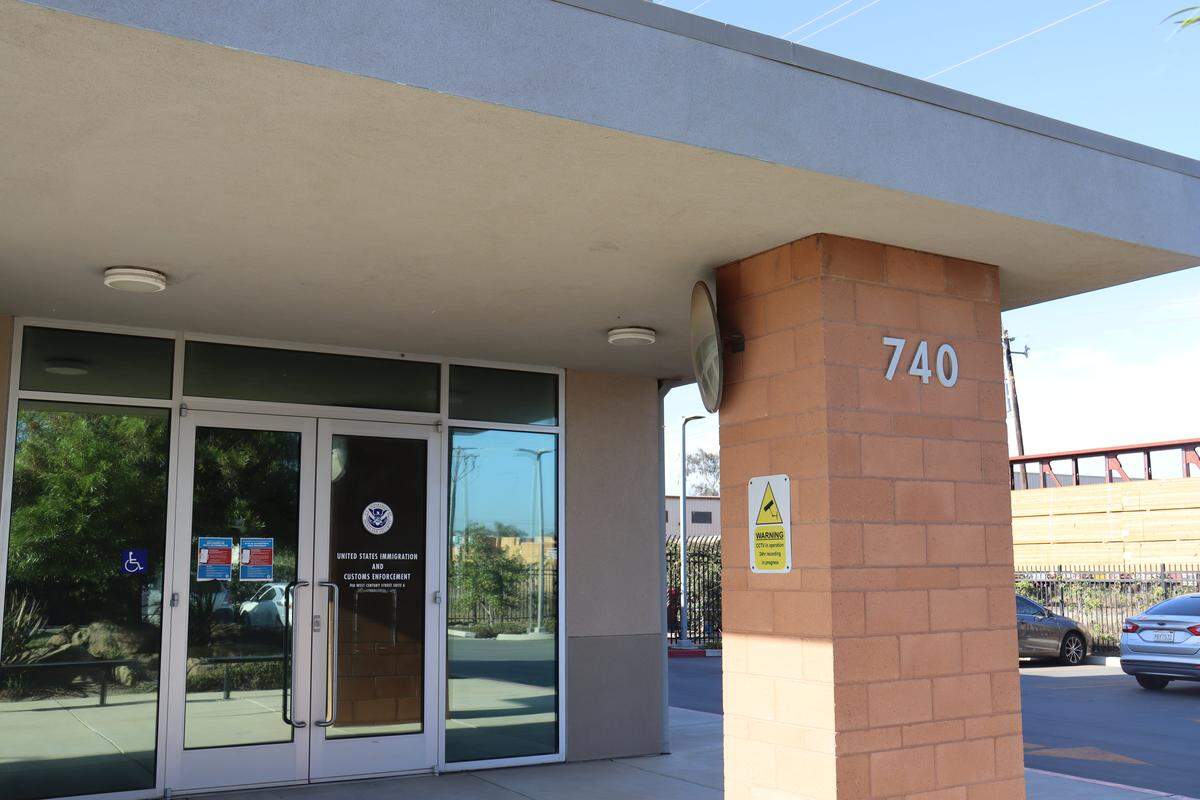
The family’s first appointment with ISAP was five days after their L.A. hearing, on June 9 at the ICE facility in Santa Maria, and they were told to report there every 15 days on top of their regularly scheduled video calls from home, Rosa said.
Then, on July 8, Rosa and her kids headed down to Santa Maria in the morning for what they thought was just another ICE check-in.
But once the family arrived inside the ICE office, they were blindsided to learn they would not be leaving.
The agents told Rosa, “Tell whoever brought you or who you came with to go because you’re not going to leave here,” she said.
Rosa replied, “Oh, really?” to which the agent said, “Yes.”
According to Rosa, the family had not appealed their case for asylum following the June court hearing, which had been enough reason for ICE to detain her and her kids.
The family did not leave the ICE facility until around 3:30 p.m. and were given minimal food, according to Rosa, before heading to Camarillo and later Los Angeles.
Then, to Rosa’s surprise again, she was told they would be flying to a family detention center in Texas that night.
That’s because, unlike Texas, California does not have any detention centers designed to hold families, according to Ramirez of MICOP.
So in order for the family to stay together, Rosa and her kids would have to be sent out of the state.
Life for the family at the ICE detention center in Texas
For more than three weeks, Rosa and her children were kept in the South Texas Family Residential Center in Dilley, Texas.
They had one room for the four of them as well as access to a phone, Rosa said, and were free to move in and out of the room as they pleased.
The family had been told to drink from the running tap water in the facility, but Rosa said the water tasted like chlorine and that she eventually got a bad stomach ache from it.
According to an ICE spokesperson, “claims regarding undrinkable water at the facility are false, and ICE remains committed to ensuring appropriate conditions of confinement.”
Rosa said she would later have to buy bottled water for the family from a convenience store located inside the detention center.
During their period in detention, Rosa said both of her daughters also developed bad allergies that a medical attendant at the facility told her was very common among other detainees.
The allergies gave them pimples all over their body, Rosa said, and some got infected.
She added that her daughter Mariana would not eat at times because the food in the facility was not good.
Although the family had access to a phone, Rosa said her attempts to call people were unsuccessful and that she didn’t receive any messages for more than a week.
People attempt to reach family outside of facility, GoFundMe is organized
Meanwhile in SLO County, after more than a week of Mariana not showing up to class, her teacher frantically began asking colleagues if they knew where the girl could be.
On July 17, she said she learned from another educator that the family, including Mariana, had been taken by ICE.
The teacher began reaching out to Benitez, Mariana’s aunt, who she knew the family had been living with for some time in Los Osos, in order to inform her about the family’s detainment and help contact them.
Benitez helped track down the detention center in Texas where the family was being detained, and from then on a team of educators began calling ICE and the facility relentlessly.
Tiffany Buckman, a former teacher of Mariana’s at Los Osos Middle School, told The Tribune she had been involved with calling the ICE detention center among the other several educators.
Buckman said the educators would call the ICE facility in Texas “four to five times a day” attempting to reach the family.
But ICE began denying the group of educators information on Rosa and her kids because they were not family, the summer class teacher said, and although she was in contact with Benitez, the aunt had left the U.S. prior to the family’s detainment, and had been traveling through Mexico, making it difficult to reach her.
Benitez told The Tribune she had been able to speak to Rosa early on during the family’s stay at the Texas facility, but their conversation only lasted about 5 minutes.
It would be nearly two weeks until Rosa, who did not have access to any numbers, could speak to anyone again over the phone.
The educators would leave Benitez’s phone number during each call to pass along to Rosa, Buckman said, and she also deposited close to $200 into the family’s account at the facility for them to use for calls.
Buckman also started a GoFundMe for the family on the day she learned of their detainment, which she said gained the attention of Assemblymember Dawn Addis and Congressman Salud Carbajal.
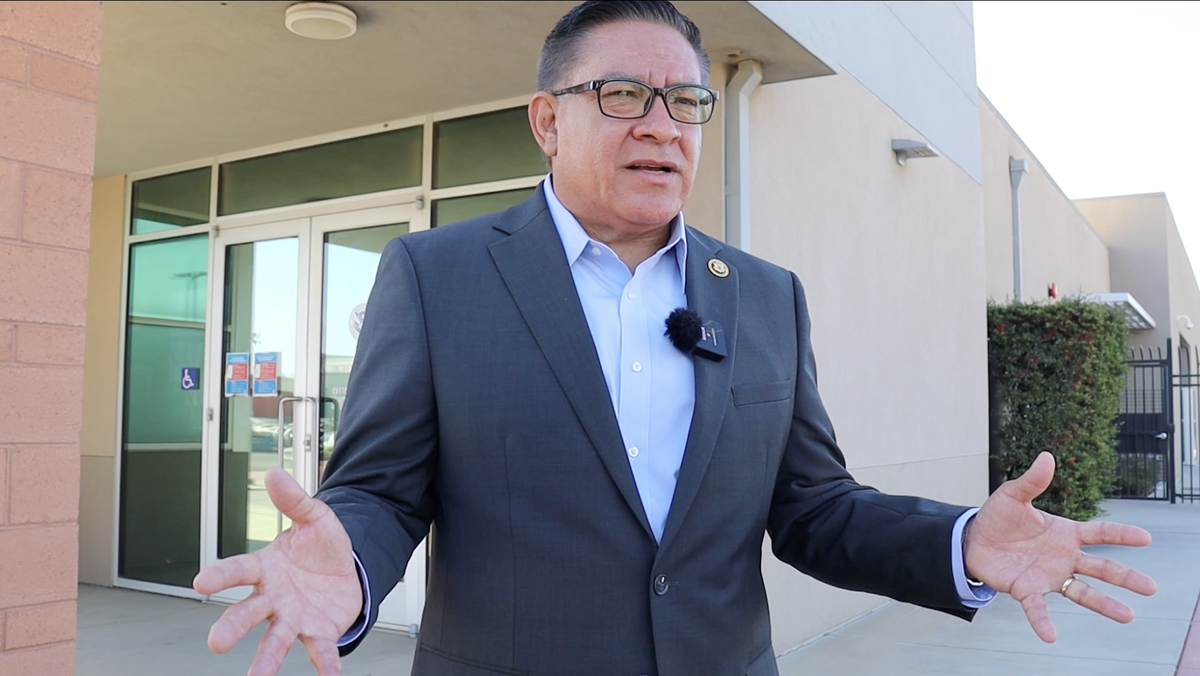
According to Buckman, Carbajal’s support was eventually “the most instrumental piece” for the family’s release from the ICE facility, and said the congressman had been working with the Mexican consulate to ease the process of getting back to Mexico.
The money from the GoFundMe then went to pay for expenses like bus fairs and basic needs following the family’s voluntary deportation back to Mexico.
Ultimately, after a “reasonable fear” interview in ICE detention that turned out unsuccessful, the family grew restless and decided to self-deport instead of appealing their case, which could have taken months to process.
A “reasonable fear” interview gives detainees the chance to be heard by a judge based on the dangers in their home country, according to Ramirez.
“If it’s general fear that people have, that’s not going to be enough to win a case, especially now,” Ramirez said.
On July 31, they were driven and crossed back into Piedras Negras, Mexico.
The family’s future in Mexico
Since the beginning of September, Rosa said her children have started back up at school.
She said Mariana, however, has had to stay home because finding special education for her in Mexico is not as easy as it was in the U.S.
Her teacher from the summer program said she had seen tremendous progress for Mariana during her time in SLO County.
For the first time Mariana was playing with toys and sitting at her desk with all the other students, she said.
“Now, it’s like heartbreaking to know that there isn’t a system, or there aren’t teachers that are prepared over there to help her build on those skills,” she said.
Now back in Mexico, Rosa said she would take the opportunity to live in the U.S. again in a heartbeat, but not for her own sake.
“It’s not for me,” Rosa said. “It’s for my kids.”
Chloe Shrager and Stephanie Zappelli contributed to this story.