Did SLO County’s crackdown on July 4 fireworks work? See the stats
AI-generated summary reviewed by our newsroom.
- SLO County agencies cited 27 fireworks violations and seized 600+ pounds total.
- Despite enforcement, fireworks potentially triggered eight fires and a major building loss.
- Officials expect mailed citations and rising fines to deter future violations.
San Luis Obispo County’s crack down on illegal fireworks on the July 4 weekend this year led to dozens of citations and hundreds of pounds of illegal fireworks being confiscated — but according to law enforcement, the stricter penalties didn’t make a huge difference from previous years.
A new county-wide ordinance passed in May banned illegal fireworks, with fines up to $1,000 per offense and criminal penalties up to $2,000 for possession or use of dangerous fireworks. Fireworks were banned completely in unincorporated areas of the county.
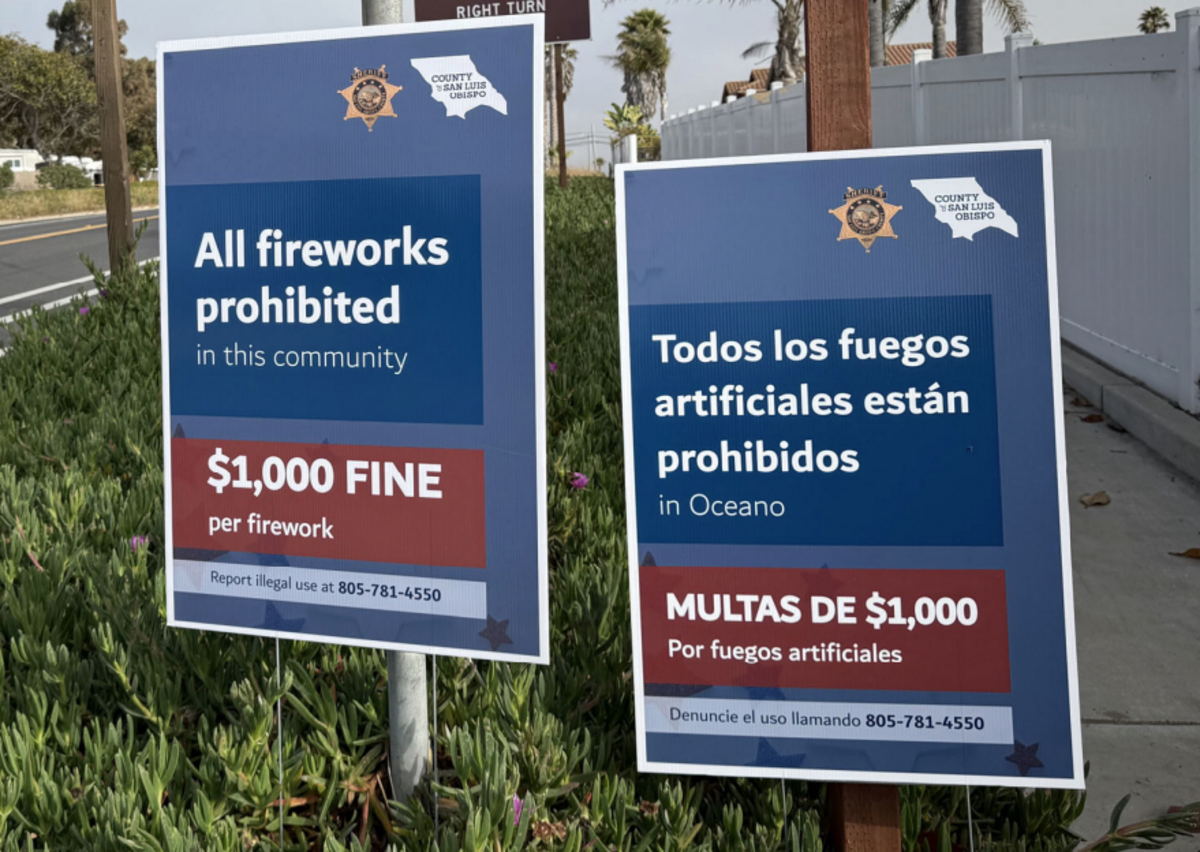
To enforce the rules, the SLO County Sheriff’s Office and Cal Fire focused on the busiest areas and also used drones to detect and cite offenders. The county printed 40 signs about the fines and posted them in the coastal communities of Cayucos and Oceano.
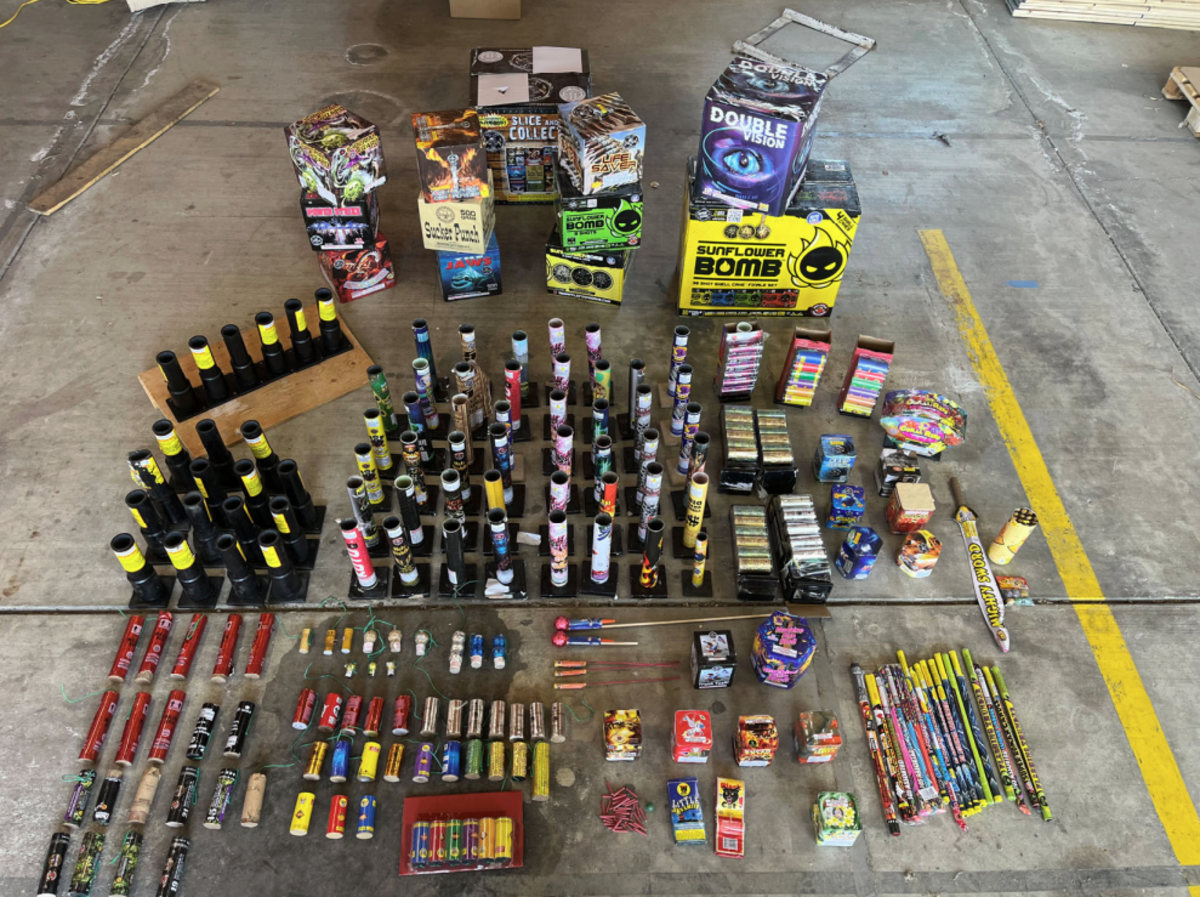
In total, these agencies confiscated over 600 pounds of illegal fireworks and cited 27 violations during peak fire season.
Even so, the July 4 crack-down did not prevent a firework-caused fire from destroying the historic Templeton Feed and Grain that night. Four juveniles were later identified as suspects in the fire.
Other fires since have continued to devastate SLO County. The Gifford Fire, the largest active wildfire in California, surpassed the Madre Fire that burned 80,000 acres in the Carrizo Plains starting over the July 4 weekend.
It’s important to note neither of the two latter fires have been linked to fireworks, but they do have a common factor:
“All these fires have one thing in common is they were all started by one spark,” SLO County Fire Department Chief John Owens said at Tuesday’s Board of Supervisors meeting. “That’s what our interdiction, with seizing the fireworks and making these contacts and issuing citations, is doing, is stopping that one spark.”
Owens said there were eight fires between July 3 and 6 that were potentially caused by fireworks.
“Any one of those fireworks ... that were seized could have started a Gifford Fire, could start a Madre Fire or a Feed and Grain fire someplace else,” he said.
Despite law enforcements’ efforts, however, this year was not much different from others.
“We did not see a decrease in illegal fireworks throughout the areas that Cal Fire serves,” Cal Fire Battalion Chief for Law Enforcement Zach Nichols told The Tribune.
How many people used illegal fireworks on July 4 weekend?
On July 4, the SLO County Sheriff’s Office fielded over 1,000 emergency calls, 900 of which were after 6 p.m., Owens said at Tuesday’s meeting. Around 200 to 300 calls came in during a one-hour period after 9 p.m., right after the sun went down, he said.
Through on-the-ground patrols and drone surveillance, the Sheriff’s Office cited 24 violations and confiscated over 350 pounds of illegal fireworks, Owens said.
The SLO County Fire Department and Cal Fire made contact with over 100 individual parties regarding illegal firework use, but issued only three citations. The agencies seized over 250 pounds of illegal fireworks.
Nichols said for Cal Fire, these citation numbers are relatively comparable to past years. This is because misdemeanors must be committed in an officer’s presence to be cited.
“We may be able to see a firework go off, but maybe didn’t see who did it, which is why citations are generally low,” he said.
However, the fines issued on July 4 are not the only fees violators might see. The county’s new ordinance allows citations to be sent out in the mail after July 4 to properties where illegal firework activity was observed by officers or drone surveillance, Nichols said.
“I think as soon as you see the administrative citations coming out from the county, people are going to be a little shocked,” he said.
He predicts that firework use will decrease next year as fines set in.
The new regulations did not apply to “safe and sane” fireworks — essentially any fireworks that do not explode or leave the ground — in incorporated cities and parts of the county.
In unincorporated communities like Oceano, Cayucos, Nipomo, Avila Beach, Shandon, Creston and Santa Margarita, all fireworks were banned, but Supervisor Bruce Gibson said enforcement was focused on the most dangerous explosives.
He said the results of the new regulations were “variable.”
Gibson observed fewer fireworks in his hometown of Cayucos, where the community posted signs about the fines at beach access points, than in years past.
But other places, like Nipomo, did not see as much enforcement attention, Supervisor Jimmy Paulding said.
“Next year, it is my hope that we could get a drone in that area as well, and then more boots on the ground,” Paulding said at Tuesday’s meeting.