SLO County wastewater facility gets approval for $54 million upgrade
A San Luis Obispo County wastewater treatment plant is set to receive a major upgrade for the first time in more than 25 years.
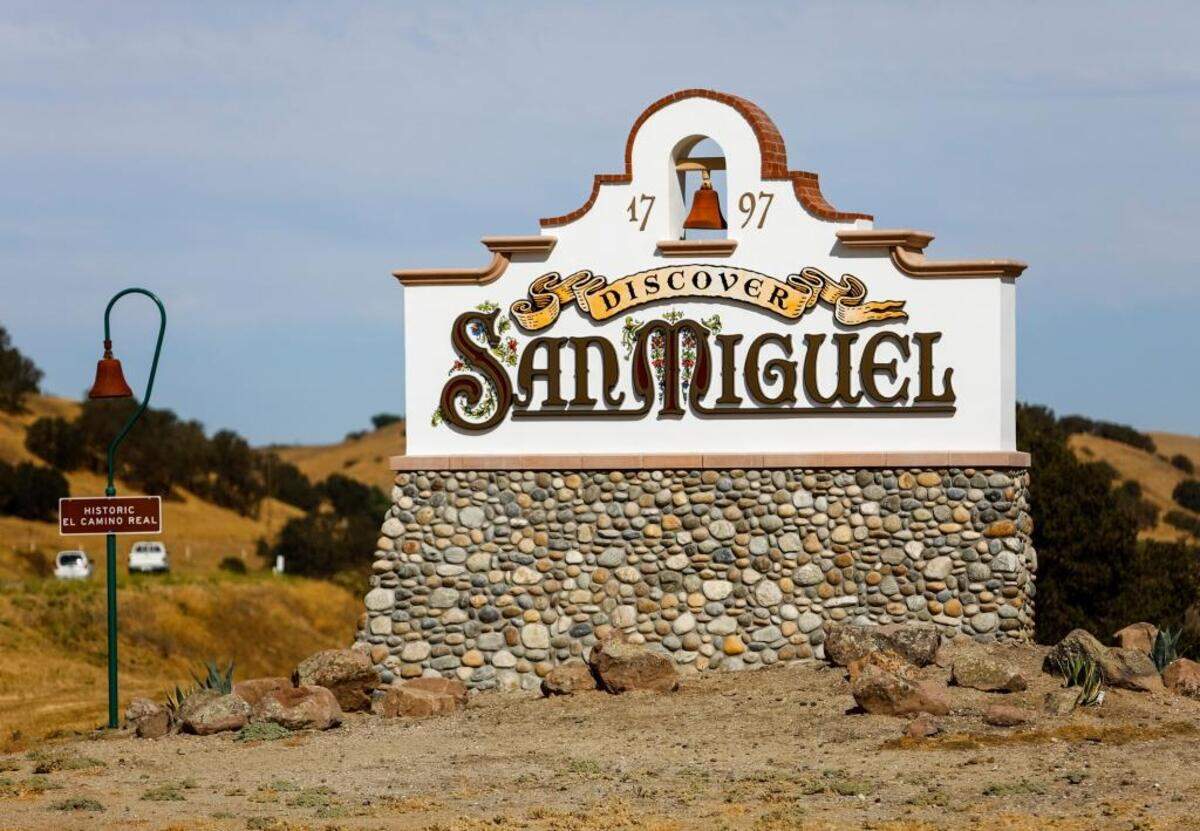
In San Miguel, hundreds of thousands of gallons of wastewater are treated each day at the Machado Wastewater Treatment Facility — and with the new upgrades approved by the San Luis Obispo County Planning Commission on Thursday, the facility’s treatment capacity will more than double.
The Machado Wastewater Treatment Facility, first constructed in 1944, hasn’t seen any significant upgrades since 1999, when the facility’s capacity was raised to its current processing level of 200,000 gallons per day.
Wastewater treatment facilities such as Machado are designed to take in wastewater from residential and commercial sewer lines, filter out pollutants and harmful substances, extensively clean the water and eventually return the flow of water back into the water supply.
San Miguel Community Service District general manager Kelly Dodds said the upgrades will be done in two phases to raise the facility’s capacity, raising the capacity to 325,000 gallons per day in Phase 1 and 500,000 gallons per day by the end of Phase 2.
“As part of the upgrade, the facility will transition from a pond system to a Membrane Bio Reactor (MBR) treatment process,” Dodds said in an email. “This change will significantly enhance our treatment capabilities and enable the production of recycled water — initially for on-site use, and eventually to support irrigation and other non-potable applications across the District.”
Why are upgrades needed?
According to the San Miguel Community Service District’s 2020 Master Plan, the wastewater facility was identified as a candidate for upgrades as early as 2018, when the Central Coast Regional Water Quality Control Board issued a letter advising the San Miguel CSD to immediately proceed with planning an expansion to the existing wastewater facility.
At the time of the Master Plan’s publication, the wastewater treatment facility was nearing its treatment capacity most days, averaging around 150,000 gallons per day and exceeding its max capacity of 200,000 gallons every so often.
As is, the facility serves a little under 800 connections across the San Miguel service area — 14 business connections, 742 single family residential connections and 25 multifamily connections — according to the staff report.
In the letter, the Central Coast Regional Water Quality Control Board said the wastewater facility was also “chronically out of compliance” with permit limits for total dissolved solids, chloride and sodium, urging the San Miguel CSD to consider including salt and nitrogen removal capabilities in the expansion plans.
To make that expansion work, the San Miguel CSD purchased around 18 acres of untouched land north and east of the existing facility, according to the Master Plan.
With the new expansion, the Machado facility will be able to process up to 500,000 gallons of wastewater per day — more than enough to support population growth in San Miguel for the foreseeable future, said Amber Davis, a representative of project planner Quest Planning.
“Based on the population projections within the San Miguel Community Services Plan, 500,000 gallons per day is the minimum treatment capacity for that projected growth,” Davis said during the meeting. “We’re proposing phased implementation of the project, which will keep the treatment facility compliant with the order from the Regional Board to meet the requirements and projected flows over the next 30 years.”
The new facility expansion will redevelop around 39 acres immediately surrounding the existing the wastewater plant’s holding ponds and percolation beds, according to the upgrade project’s final study adopted in August 2022.
In total, three new percolation beds, new influent and effluent holding ponds — used for holding incoming wastewater and treated wastewater coming from the plant, respectively — a maintenance building, a storage yard, a permanent operations building and additional supporting infrastructure will be introduced to the wastewater facility.
According to the upgrade project’s March 2024 environmental study, the facility’s electrical service and control infrastructure will also be upgraded to accommodate the new facility components.
A full buildout of all planned upgrades will cost between $23 and $54 million, with some of the cost covered by the state of California’s Clean Water State Revolving Fund, Dodds said during the hearing.
“The State Water Resources Control Board (SWRCB) has included the project in its Intended Use Plan (IUP), and the District is expected to receive approximately $23 million in construction funding through CWSRF, with potential for additional support,” Dodds said. “Once a funding agreement is executed, we’ll have clarity on the minimum grant amount available.”
What’s next for wastewater facility upgrades?
Dodds said the construction on the facility upgrades will likely start in early 2026, though that date is contingent on the approval of the construction grant agreement between the San Miguel CSD and the State Water Resources Control Board.
Dodds said the San Miguel CSD isn’t expecting service disruptions for existing customers during the upgrade process, but said extended delays could affect how quickly the CSD is able to add new connections, potentially requiring restrictions on new hookups to prevent overloading the system.
Assuming all funding is in line, Dodds said the project will take one to two years to complete.
“Without grant funding, the project would not be financially feasible,” Dodds said. “Although it’s too early to predict any potential changes to customer rates, our objective is to avoid rate increases — a goal achievable only with adequate grant support.”