Atascadero may raise sewer rates to fund water plant upgrades. ‘Gotta pay to flush’
Atascadero residents could soon see their sewage bills go up after the state mandated the city undertake a costly plan to upgrade its water treatment plant.
To help fund the project — currently expected to cost upwards of $173 million — the city is considering a sewage service rate increase of 18.5% to go into effect this year, followed by a potential increase of the same amount again in 2026.
A single-family household would pay over $100 more every year, according to the staff report from the April 22 city council meeting.
But there is still a chance the rate increase might fail.
Approved in 1996, California Proposition 218, also known as the “Right to Vote on Taxes Act,” places certain procedural requirements on local governments regarding any increases to property-related fees, subjecting the increase to a majority protest.
Under the law, Atascadero must send out a notice of the rate increases to be considered by the community over a 45-day review period leading up to a public hearing on June 10, where residents and community members will have the opportunity to protest the increase.
If a majority of impacted homeowners or lease holders protest the rate increase, Atascadero would be legally blocked from imposing the fee at that time. If approved, rates would increase by 18.5% this year and would require another vote next year before the second increase goes into effect.
“We’re kind of kicking the can by doing one-year increase, but if we don’t do one-year increase, it’s going to cost more,” City Council Member Seth Peek said at the meeting.
The motion to pursue the rate increase passed with only Peek voting no.
How much would your sewage rates increase?
Located east of the Chalk Mountain Golf Course, the Atascadero Water Reclamation Facility collects and treats wastewater from the city’s sewer system, processing an average of 2.39 million gallons a month.
It serves approximately 5,500 parcels, with the remainder of the city served by private on-site septic tanks, Atascadero Public Works Analyst Ryan Betz said at the meeting.
Customers connected to the city’s sewer system are billed a fixed charge for the city’s wastewater treatment service, which is called a sewer service charge or wastewater service charge.
Prior to the new rate discussion, the most recent rate increase was in 2023, Betz said. The time before that was 1994, he said.
If passed, residents and renters in Atascadero will see an 18.5% increase in their sewage service bill on July 10, with another increase of the same size expected the following year.
Rates would vary depending on the type of customer. This year, the wastewater bill for a single-family household would increase by $8.91 per month under the proposed rates — a change from $48.15 to $57.06 a month. Annually, that is a $106.92 increase from $577.80 to $684.72 a year.
The rate increase will be lower for apartments and condos, mobile homes and senior apartments with currently lower rates — $6.68, $5.34 and $3.12, respectively — while non-residential charges vary depending on the establishment.
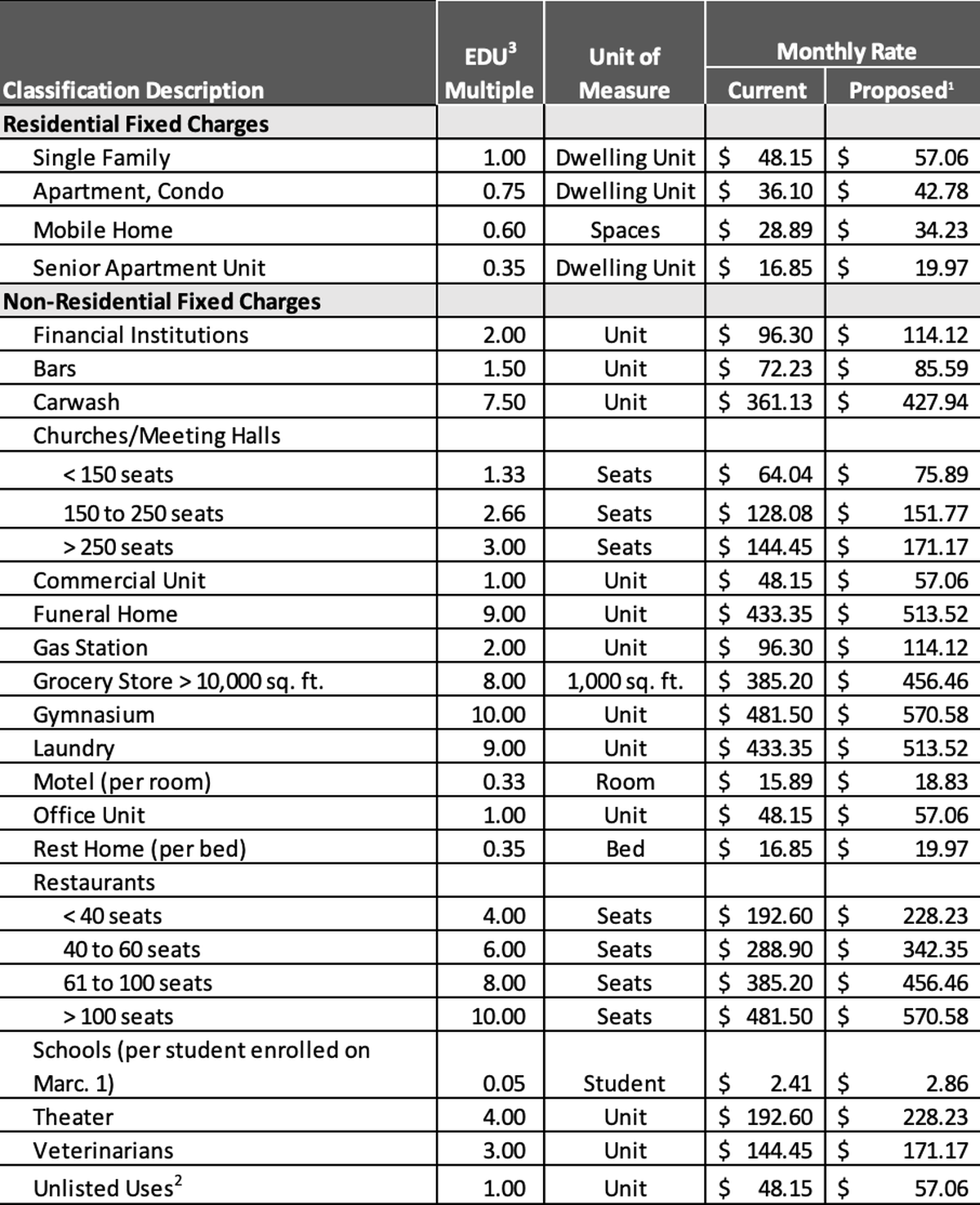
These rates will raise $895,000 for the wastewater treatment service, which will go toward paying for an improved, state-mandated secondary water reclamation facility in Atascadero.
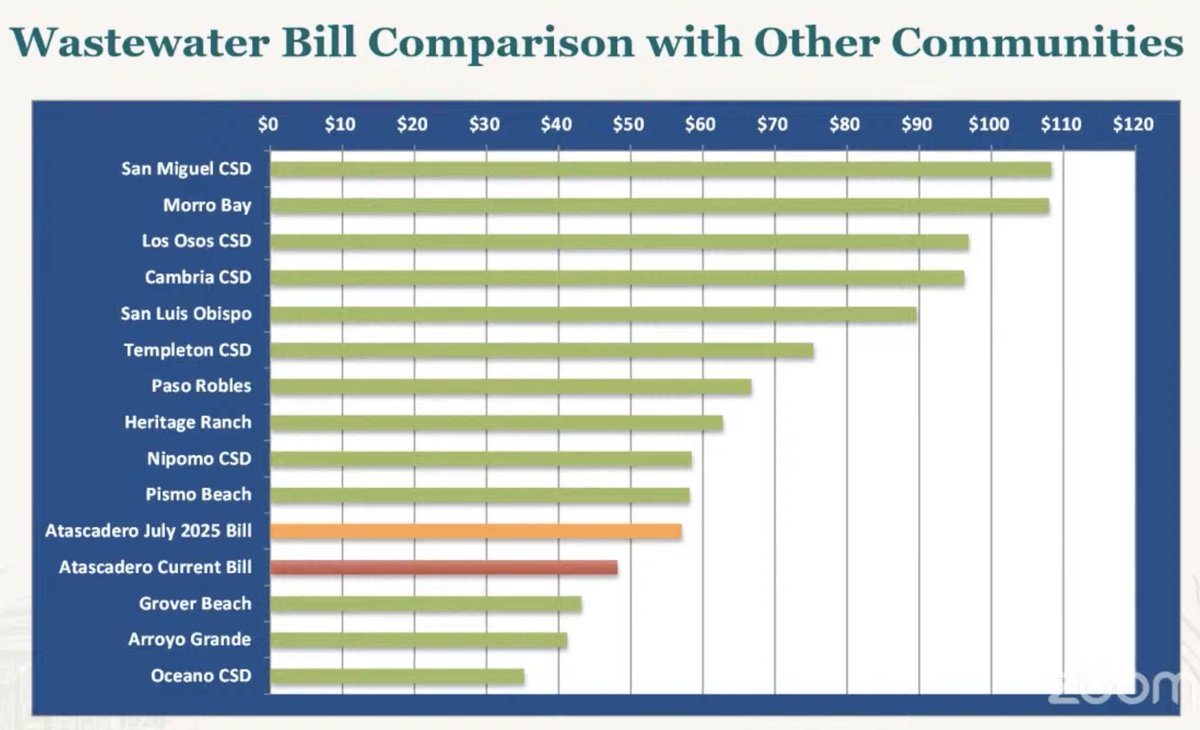
Under the new rate levels, Atascadero would still maintain its ranking as having the fourth-lowest wastewater rates of any city in SLO County right now, according to a rate analysis by independent financial consultant Clayton Tuckfield.
“As frustrating as it is, it is not outrageous,” Atascadero Mayor Charles Bourbeau said at the meeting. “I would stand before anybody and say, ‘This is not outrageous.’ You gotta pay to flush, you know. There’s no free lunch.”
Why is the city raising wastewater rates?
One of the main things driving up costs is Atascadero’s need for improvements to its wastewater treatment plant.
Atascadero’s Water Reclamation Facility is 45 years old, nearly at full capacity and running on outdated technology not up to state standards, City Manager Jim Lewis said.
Now, the city is stuck between a rock and a hard place, mandated by state law to make expensive improvements to the plant.
“In this state of California, regulatory agencies are forcing us to take a plant that works and upgrade it to full comprehensive secondary treatment,” Lewis said. “We were mandated to enter into a general permit a couple years ago to build that plant. So now, instead of expanding a plant that we have today for $20 to $30 million, that’s $100 million number. We don’t have a choice there.”
To get up to code with state regulations, the city must make major improvements to its water collection and treatment facility, including the addition of a new secondary treatment process and repairs to two off-site pumps — which, in total, will cost upwards of $173 million, according to the staff report.
“Those are really jaw-dropping numbers and and they’re going to be really hard on this community,” City Council Member Susan Funk said.
Lewis and the members of the City Council expressed their empathy for those in the community who would bear the financial burden.
“Rate increases always are tough,” Lewis said. The city “pained over this 18.5% number,” he said.
Unless another solution can be found, however, the rate will have to increase by the same amount again next year.
He requested the council’s approval to form a working group of community stakeholders — renters and homeowners — to help address concerns and come up with better options.
The city is also pursuing state funding through Proposition 4, which was passed in 2024 to allocate $10 billion for environmental and climate projects, Lewis said. He said the climate bond has funded similar projects up to 30%.
City representatives said they planned to meet with wastewater lobbyists in Sacramento in an effort to secure state funding.
“We have to have other funding from other agencies if the state is going to mandate these technologies,” Lewis said.
Other potential strategies to lower costs include partnering with neighboring communities to treat their waste water in exchange for funding for the plant improvements or reducing flow to the treatment plant by encouraging home and business owners to recycle water on-site.
“It’s definitely not certain that current Atascadero customers are going to have to shoulder all that load,” Funk said. “ ... We don’t want to be driving people out of their homes with the cost to handle our waste. That’s crazy.”
How can I protest the vote?
Atascadero residents and business owners showed up to protest the rate increase at the City Council meeting.
“Please vote NO on this ridiculously high rate increase,” Atascadero resident W. Russell wrote in an email to the council before the meeting. “We’re being squeezed too tightly from everywhere. Those on limited income are really affected most and it’s just not fair. We understand the need to increase occasionally but this isn’t right the way it’s being proposed. Take it back to the drawing board and figure out something better for all.”
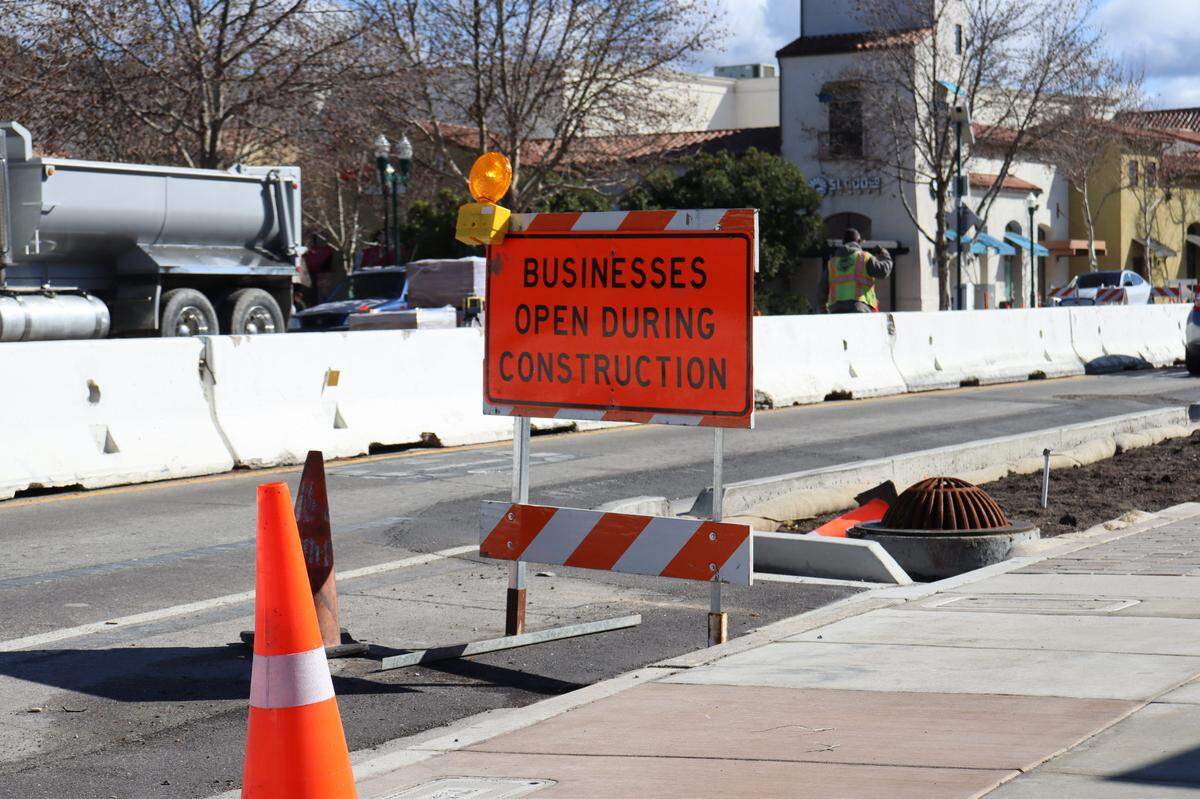
A few residents who spoke at the meeting highlighted the poor timing of the rate increase for small businesses who are already struggling to keep afloat during the construction downtown.
“The project downtown, the ECR project, specifically, has been pretty devastating, limiting access to our storefront and many others,” Matt Corning, the owner of A-Town Chop Shop, said during the meeting. “We’ve endured non-stop construction, limited visibility, disappearing foot traffic and month after month of declining revenue.”
Corning asked for the council to review its decision and possibly change course.
“We’re not asking for favors. We’re asking for fairness, and we’re asking for a real chance to survive,” Corning said.
But the public will have time to give input before the rate increases kick in.
Consistent with Prop 218, the public has 45 days to protest, which started on April 22. The City Council will reconvene to discuss the proposed rate increase at a public hearing on June 10, where protests can be made.
The rate increase could be blocked by a majority protest of impacted property owners — that is, if the residents of at least 2,802 of the 5,603 impacted parcels protest.
The city is currently circulating a notice detailing how to submit valid protests.
If a majority protest is not met, the wastewater rate increase will be imposed on July 10.