Will Trump tariffs hurt SLO County’s housing market? Local experts aren’t quite sure
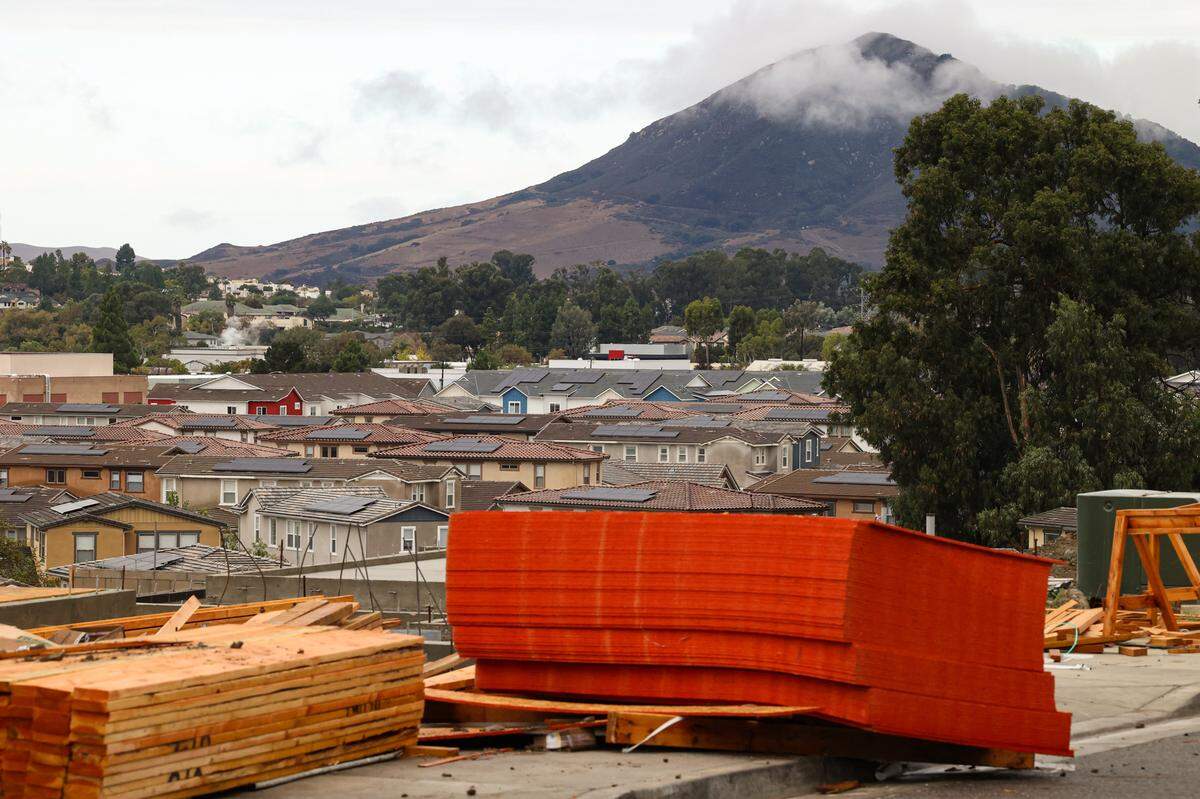
Building a home in San Luis Obispo County may become even more costly in the next few months — but not entirely for the reasons you might expect.
In the months leading up to his second presidential election victory, President Donald Trump made tariffs a core piece of his economic platform.
Since taking office in January, Trump has fully embraced tariffs as a way to increase economic pressure against Mexico, Canada and China, but announcements of tariffs were quickly followed by delays and wholesale cancellation of some import tariffs.
This back-and-forth approach has left some local experts in the home building and construction industry confused about whether their industry may be affected by price increases — a difficult proposition in the already-expensive California building environment.
Atascadero-based builder and CEO of Z Villages Max Zappas said as the election wore on, he became wary of Trump’s increasing willingness to implement tariffs and began noticing more concerns among his fellow builders and subcontractors about the effect they would have on building costs.
“I think I expected him to follow through on them,” Zappas said. “I didn’t expect it to be quite so aggressive and so quick, but it seems as though at least currently that a lot of them are being used as kind of negotiating points for one reason or another, and they keep being postponed.”
Are local builders concerned about tariffs?
On Feb. 1, Trump signed an executive order imposing 10% tariffs on imports from China and 25% tariffs on imports from Canada and Mexico, but agreed to a 30-day pause on the North American tariffs when he got the concessions on immigration he was looking for.
He then announced plans to raise steel and aluminum tariffs Feb. 10, meaning all imported steel and aluminum would be taxed at 25%.
The original 25% tariffs on Canadian and Mexican goods went into effect March 4, along with a doubling of Chinese import tariffs that raised the tax to 20%. But just two days later, Trump postponed the 25% tariffs on Mexican goods and some Canadian imports for a month.
The flip-flopping on whether or not the tariffs would stay in place has made budgeting out some local projects difficult, because they have yet to go into effect for a prolonged period of time and they haven’t had a significant market impact yet, Zappas said.
But Zappas added that the material price hikes “aren’t one of our top concerns.”
“So far in conversations, we’ve just said we’re going to keep an eye on it in the event those things start to stick and prices start to take off,” he said.

Zappas said compared to the inflation in building material prices between 2020 and 2024 that cooled the rate at which housing could be built across the country, the tariffs will likely have less of an overall financial impact on construction costs.
However, this largely remains to be seen; if tariffs are reinstated and kept in place for an extended period of time, they could have a similar effect on the construction industry, he said.
“We’ve had the conversation already of procuring material ahead of time and just storing it or having it available so that we can lock in the price and not be exposed to the price changing,” Zappas said.
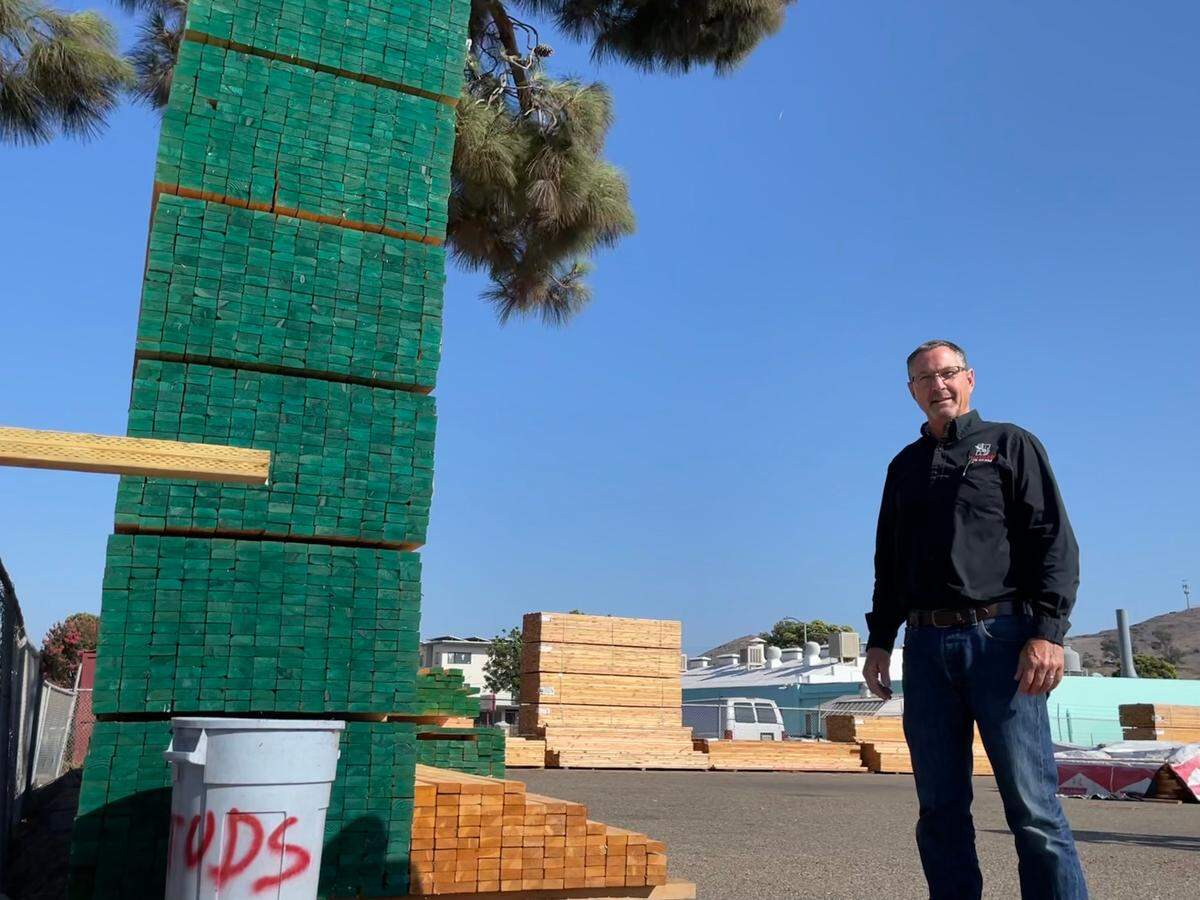
Conversations like this are happening across the residential construction industry — but panic-buying building commodities such as lumber isn’t the answer to the problem, Hayward Lumber market sales manager Brandon Saubert told The Tribune.
“Things have been pretty stable, but during that kind of COVID era and those prices going up, there was a little bit ‘the toilet paper effect’ where everyone kind of hoarded toilet paper, and it made it a scarcity, which it hadn’t been,” Saubert said. “Then all of a sudden there was going to be some price increases and just regular supply and demand stuff — that’s what we’re hoping doesn’t happen with lumber or any other building materials.”
In 2019, prices for a frame package of lumber for a 2,400-square-foot home averaged around $9,000, and rapidly rose top around $35,000 by 2021, Saubert said.
By 2024, prices for that same amount of lumber had depreciated back down to an average of around $11,000, where it held steady, Saubert said.
Availability of lumber is unlikely to change, even with trade war tensions on the rise, but prices are likely to increase even more than they do in a normal year should the tariffs be kept in place long-term, Saubert said.
While the industry has dealt with import tariffs on Canadian lumber before — including an increase from 8% to 14.54% last year — the unreliability and higher overall price hike of Trump’s tariffs has introduced more price uncertainty into a lumber industry that’s only started to see prices plateau in recent months after four years of rapid inflation and deflation in price, Saubert said.
“If it costs more from the source, it’ll cost more to the end user, and so we’ll have to navigate that,” Saubert said.
lumber in the last 5 years more than doubled, but also came down almost as much. Let me explain it this way: A frame package for a 2400 sqft home in 2024 averaged $11,000. That same frame package reached its highest point in the last 5 years in June 2021 coming in just under $35,000. Compared those to an average of $9,000 for the year 2019.
Tariffs are not the sole source of pressure on SLO County home builders
While tariffs may start to significantly impact construction costs within a few months should they stay in place long term, they’re not the only complication coming down the line from the federal government putting pressure on builders, Zappas said,
In California, the rising cost and lack of availability of homeowners insurance in the wake of the Pacific Palisades wildfire is already turning up the heat on buyers, who may face unexpectedly higher costs for their home purchases, he said.
On the builder side, however, increased arrests and deportations of undocumented immigrants by U.S. Immigration and Customs Enforcement at the direction of Trump are a “hotter topic with (subcontractors) than materials,” Zappas said.
“A lot of the subcontractor pool around here has people who may be undocumented, or are somewhat in the cross hairs of those efforts,” Zappas said. “If labor goes, their ability to complete projects goes.”
What do tariffs mean for SLO County’s housing market?
Templeton-based RE/MAX Realtor and Generation Build founder Michael Massey said in terms of market impact, raising prices on building goods will likely spell higher prices for homes in San Luis Obispo County — though this shouldn’t come as a surprise to anyone familiar with the slow housing stock growth in the region.
He cited a recent estimate from the National Association of Home Builders that found that tariffs are likely to add around $9,200 to the cost of building a new home.
Another NAHB analysis of the construction industry found that around $204 billion worth of goods were used in the construction of housing in 2024, $14 billion of which were imported from outside the United States. That means approximately 7% of all goods used in new residential construction originate from a foreign nation.

However, because of San Luis Obispo County’s status as a highly sought-after destination for homebuyers that tend to have enough money on hand to meet the market’s high median costs — $968,000 as of the California Association of Realtors’ latest market analysis — Massey said he’s not predicting a “massive slowdown” in local sales.
Like Zappas, though, Massey said the question of whether tariffs will be in effect long-term — and the stock market volatility that that question has already created — has a higher chance of affecting the average homebuyer looking to buy in San Luis Obispo County.
“This is the hardest state to build anything — it’s already hard enough, and there’s a lot of red tape and a lot of hoops that people need to jump through to try to get anything built in California and in San Luis, Obispo County,” Massey said. “This is something from the federal government that is just going to make it harder and increase costs for the developer, for the couple that wants to build their retirement home, or a first time homebuyer that’s kind of getting inspired and looking for a piece of dirt and want to build a 1,000 or 1,200-square-foot home there.”