Hwy. 1 slide on Big Sur coast is still moving a foot a day. When will the road reopen?
A stubborn slide that has closed a portion of Highway 1 on the Big Sur coast continues to move as much as a foot a day, Caltrans said, meaning travelers won’t be able to experience the full scenic drive anytime soon.
Repairs and monitoring activities continue at the still-unstable Regent’s Slide area about 27 miles north of the San Luis Obispo-Monterey county line.
The road has been closed at the site since the hillside collapsed on Feb. 9, 2024.
“The height, steep slope and instability at Regent’s makes it very difficult to pin down a repair completion date,” Caltrans spokesman Kevin Drabinski told The Tribune Thursday.
With summer only a few months away, that means the peak tourist season could be in jeopardy again.
However, all but a small portion of the Big Sur highway stretch is open to traffic, for any spring break travelers looking to visit the area.
Northbound traffic is stopped about 25 miles north of the county line, two miles north of Lucia. Southbound traffic is stopped seven miles north.
At both spots, travelers must then turn around and go back the way they came, although northbound travelers can take the steep, twisty Nacimiento/Fergusson Road back to Highways 101.
With light traffic on the National Scenic Byway, Drabinski advised visitors to go now.
“It feels like you have the spectacular highway to yourself,” he said.
Businesses remain open in the still accessible stretches of the highway.
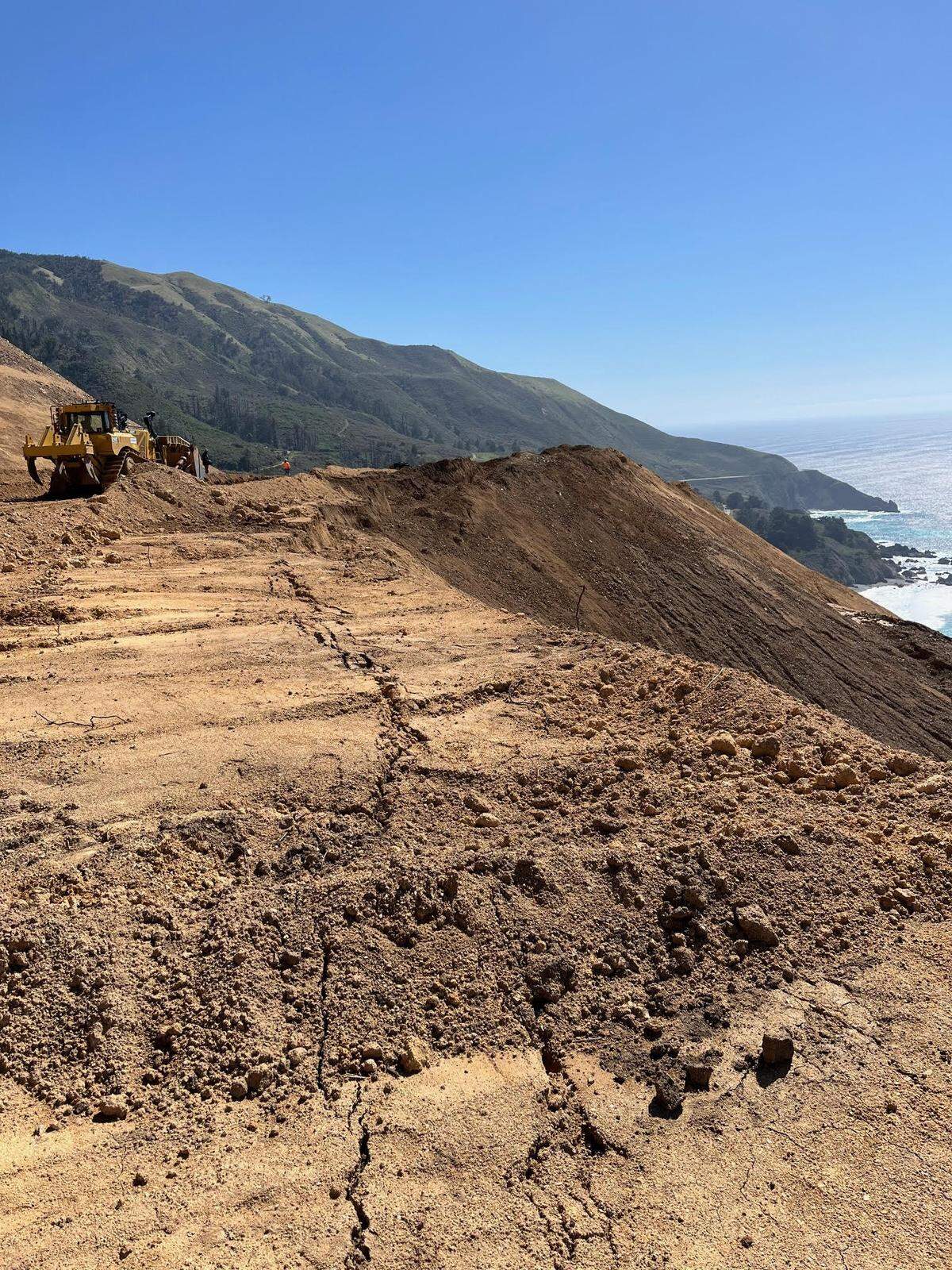
What’s happening now at Regent’s Slide
The original Regent’s Slide, about 450 feet above the highway’s pavement, oozed about 300,000 cubic yards of rock and dirt onto and around the Great American Road that travels through Big Sur and what’s acknowledged as some of the most spectacular coastal scenery in the world.
Then, a second slide in late summer exacerbated the situation at the same site, extending the closure indefinitely.
“The new slide in August continues to move at an average rate of one foot per day,” Drabinski said, with “more extreme movements of this slide following recent rains.”
With the weather forecast calling for more wet weather, the situation could be exacerbated.
“It is likely that rains forecast to arrive over the next couple of weeks will continue to activate more movement across the repair site,” he said.
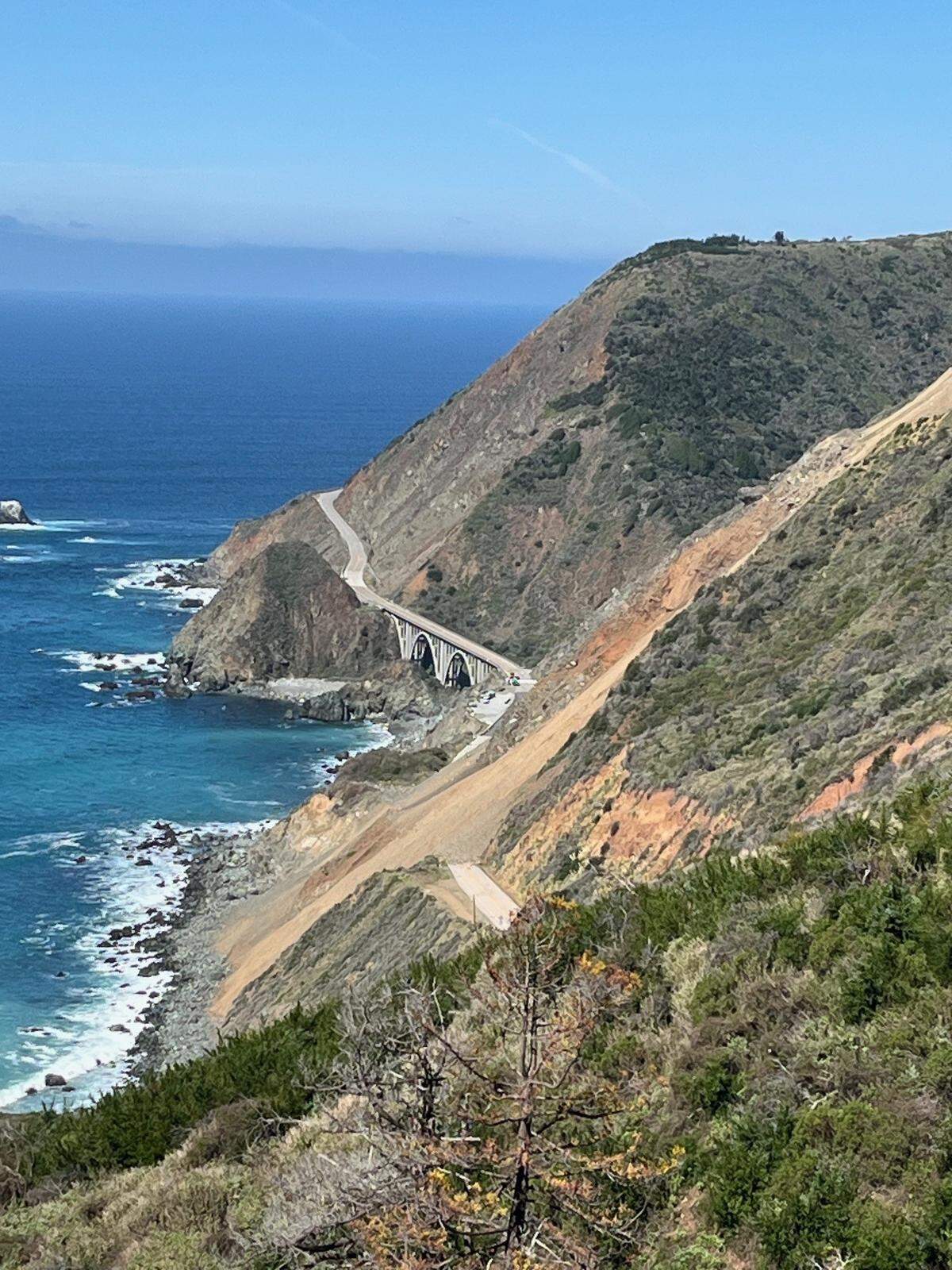
Caltrans is keeping a close watch on the slide area as work continues
Drabinski, who visited the site on Friday and Sunday, did report some encouraging news on a couple of fronts, however.
“The excavation we are performing now is leaving a stable slope behind it, as confirmed by our monitoring equipment,” he said. “This is critically important as it confirms that, as we excavate behind and above the new slide that appeared in August, we are not activating new movement above us.”
Drabiniski added that “there probably isn’t another part of California more monitored than the slopes at Regent’s.”
Weather permitting, daily drone flights are done over the site, producing 3D imagery, allowing Caltrans to monitor and understand changes on the mountain, which occur daily and over time, he said.
“We have measuring equipment buried 100 feet in the slope at locations which keep track of movements as well as monitors at surface level,” Drabinski said, adding that “we, of course, also have visual inspections daily by our crews on site.”
For further road information and updates, go to Caltrans social media, such as X, Facebook and Instagram.