Controversial SLO County cabin village project is getting scaled back. What changed?
Less than a year after it was approved by the San Luis Obispo County Board of Supervisors, a controversial housing project that aims to help homeless people living in encampments has gotten some major modifications.
Though the Board previously voted 3-1 to approve the Welcome Home Village project in May, the board on Tuesday had to reconsider the project’s approval due to financial issues related to the project’s size.
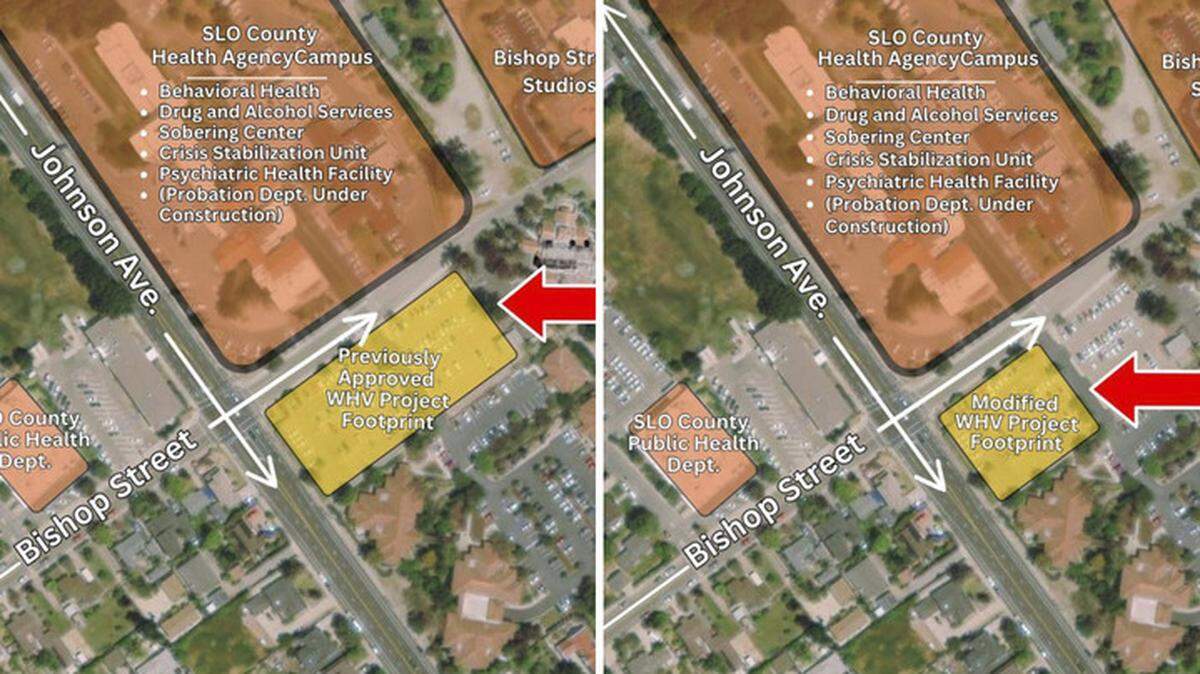
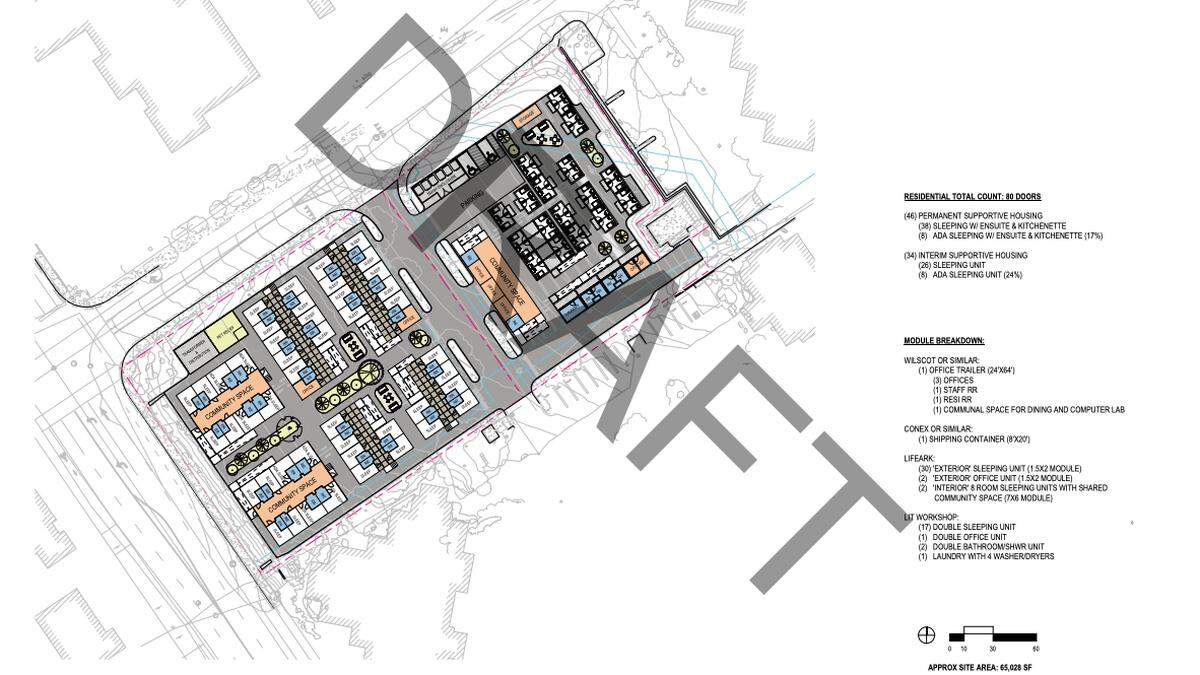
Originally approved as an 80-unit cabin-style village for homeless individuals on the San Luis Obispo County Health Agency parking lot on Johnson Avenue, the new plan cut the project down to a total of 54 cabins, according to the meeting staff report.
San Luis Obispo Homeless Services Division communications manager Suzie Freeman said inflation played a role in the redesign.
While the project’s budget remains the same as when it was approved, the $13.4 million in Encampment Resolution Fund monies that the county received in 2023 covers fewer units now than it did when the project was laid out, Freeman said.
During its consent agenda, the Board ultimately passed the scaled back version of the project Tuesday.
“We look forward to working with the community on the development of the Welcome Home Village,” Supervisor Dawn Ortiz-Legg said at the meeting. “This is a big step forward, we’ve been working on this for a while.”
Why did the Welcome Home Village shrink?
The project went through several changes in its initial proposals, switching locations from the Department of Social Services lot at the corner of South Higuera Street and Prado Road to its current location near the corner of Johnson Avenue and Bishop Street.
Neighbors of the project’s current site largely opposed the project, expressing their opposition at a May 2 community meeting on the project and the its original May 22 Board of Supervisors hearing.
Many of the neighbors’ concerns were focused on safety and the effect the project’s population would have on nearby parking. Some nearby medical professionals who work at the Bishop Medical Center opposed the project due to its proximity to their offices and clients, though county officials from the Department of Social Services have highlighted the location for its access to medical services and public transit.
Billed as a missing link between unsheltered homelessness and getting homeless individuals reintegrated into housing, the $13.4 million village was supposed to start construction in the fall of 2024.
The project was also set to cost the county around $1.84 million each year after opening, according to Homeless Services Division program manager Jeff Al-Mashat at the time of the project’s first Board approval.
As the project progressed, it became clear that the project would have to be reduced in size, Freeman said.
The structures were also required to be Wildland-Urban Interface compliant, which required the installation of sprinkler systems in all 54 units and ancillary buildings, as well as applying other fire protections such as fireproof coating on all structures, Freeman said in an email.
Additionally, the project site is located on an incline, requiring more site preparation than the original Department of Social Services lot location, Freeman said.
Freeman said during the redesign, the county has kept in touch with interested community members through email updates on the project since last year.
“Generally, the community has been appreciative of the updates, and the team has been responsive to questions,” Freeman said in an email. “The county plans to host community workshops this year to share more details on the project and gather additional input while the project is in development.”
What will the project look like now?
The modular cabin buildings from San Francisco-based developer DignityMoves have previously been used in a pair of similar 5Cities Homeless Coalition projects in Grover Beach, and are broken down between interim beds intended to stabilize clients over a 90-day period and permanent supportive beds that are for long-term clients.
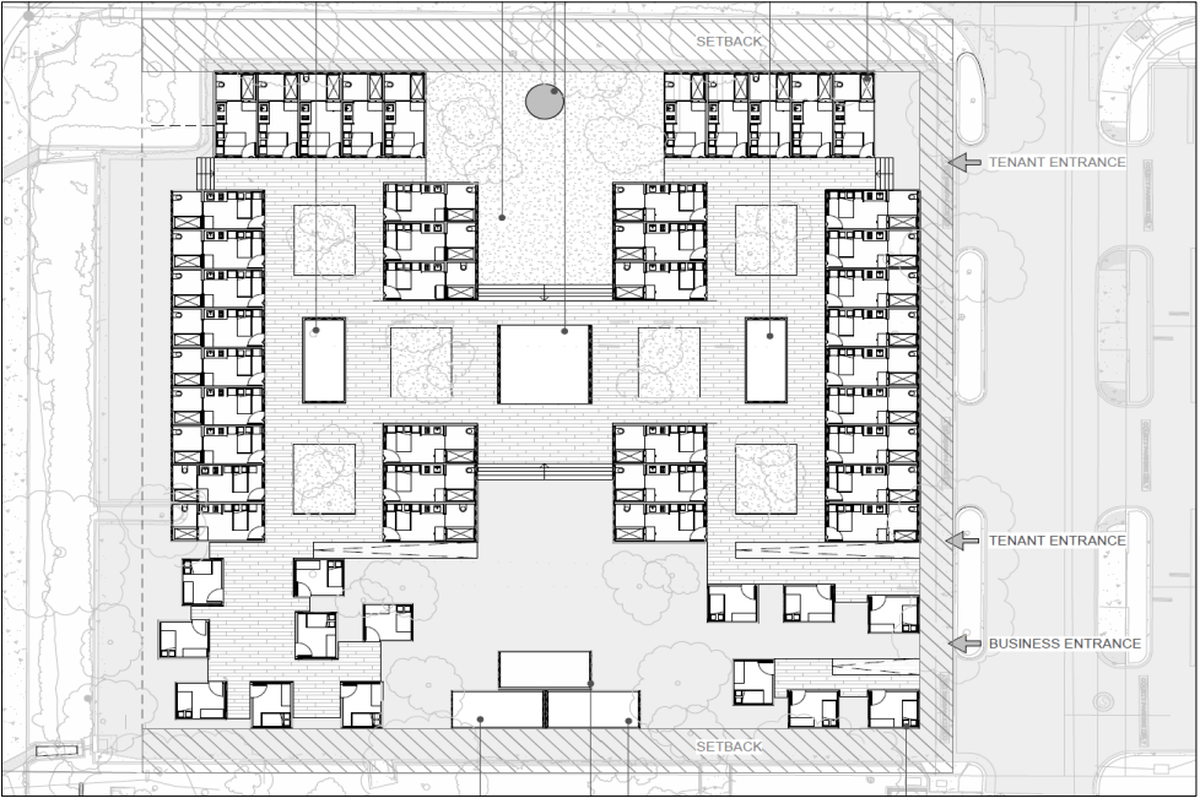
In its new form, the Welcome Home Village’s 34 interim and 46 permanent beds have been reduced to 14 interim and 40 permanent beds, nearly halving the project’s footprint along Bishop Street, according to the staff report.
The revamped project will still offer individualized case management, basic medical care, mental health assessments, substance abuse treatment services, wellness activities, education and self-improvement opportunities, social-emotional skill building and job readiness training.
Freeman said with the changes approved, the project will now look to open to residents by the end of 2025.