Wild winds are whipping up warm weather in SLO County. What are the Santa Anas?
With the official start of winter only a couple weeks away, a December heat wave has struck San Luis Obispo County.
On Friday, San Luis Obispo was expected to reach a high temperature of 75 degrees, according to the National Weather Service.
Saturday will be nearly as hot in SLO with a high of 73 degrees, the forecast said, with above-average temperatures and some wind expected throughout the weekend.
“Locally, gusty winds are expected (Friday) and Saturday, mostly for mountain and foothill locations,” the National Weather Service said on its website. “Moderate Santa Ana winds are expected Monday night through Wednesday along with a drying trend.”
According to local meteorologist John Lindsey, the warm, downslope winds go by several different names — Santa Ana winds in Southern California, Diablo winds in Northern California and the Santa Lucia winds on the Central Coast — but they’re basically the same thing.
Whether you live in SLO County, you’re likely feeling those wild winds drifting down from higher ground.
What causes this windy weather phenomenon? And how does it stoke dramatic upticks in temperature?
Here’s what to know:
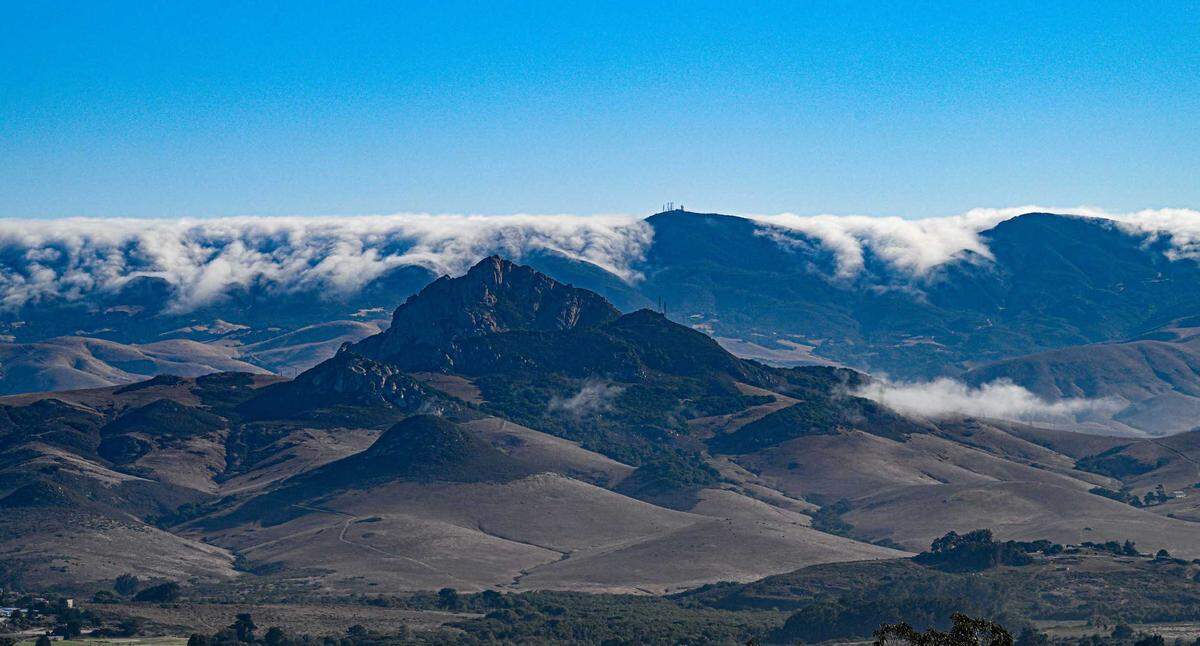
What are Santa Ana winds?
The blustery breezes known as the Santa Ana winds are dry, warm winds originating from the Great Basin in Southern California, according to Robert Fovell, an emeritus professor of atmospheric and oceanic sciences at UCLA.
The winds pick up when high-pressure desert air flows toward low-pressure air off of the coast. The interaction of the two air systems causes hot, dry winds, the weather service said.
“High pressure at the surface basically shoots these winds towards the coast where there’s lower pressure, so we get that driving force of that pressure gradient,” said Bryan Lewis, a meteorologist for the weather service. “That’s where those winds generate from.”
“(The winds) bring those warmer temperatures when they (go) down slope, down mountains and hills,” Lewis said.
The force of gravity pulls air down from higher elevations, such as the nearby Santa Lucia Mountains, toward the Pacific Ocean, Lindsey said.
The technical term for these downslope air currents is called katabatic winds.
The name translates to “going downhill” in Greek, Lindsey said.
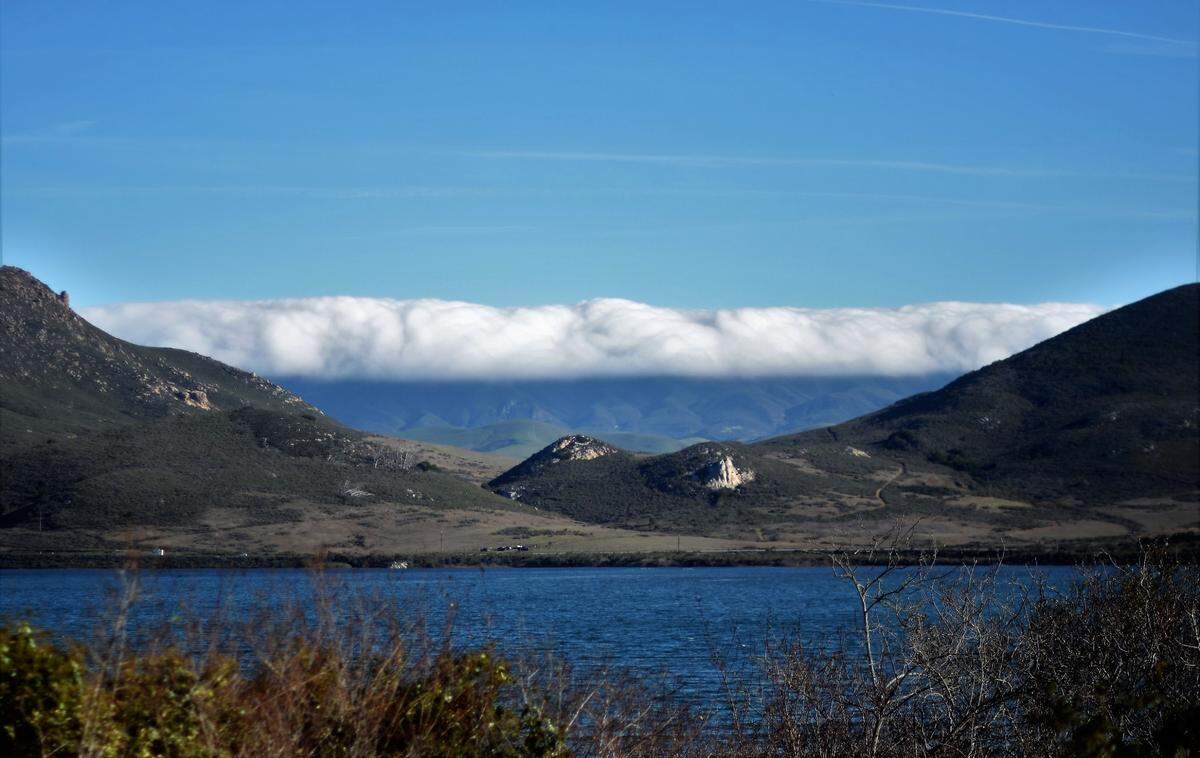
Are Santa Lucia winds different?
Santa Lucia and Santa Ana winds are essentially the same type of gusts, according to Lindsey.
“Every area has their own name for the winds,” but the names all apply to the same kind of warm, downhill blusters, he said.
What time of year do warm winds occur?
Warm winds can occur anytime of the year but are most common from September through May, the National Weather Service said.
The cooler months of the year provide better conditions for the Santa Ana winds, and are most likely to arise in October, November and December, Lewis said.
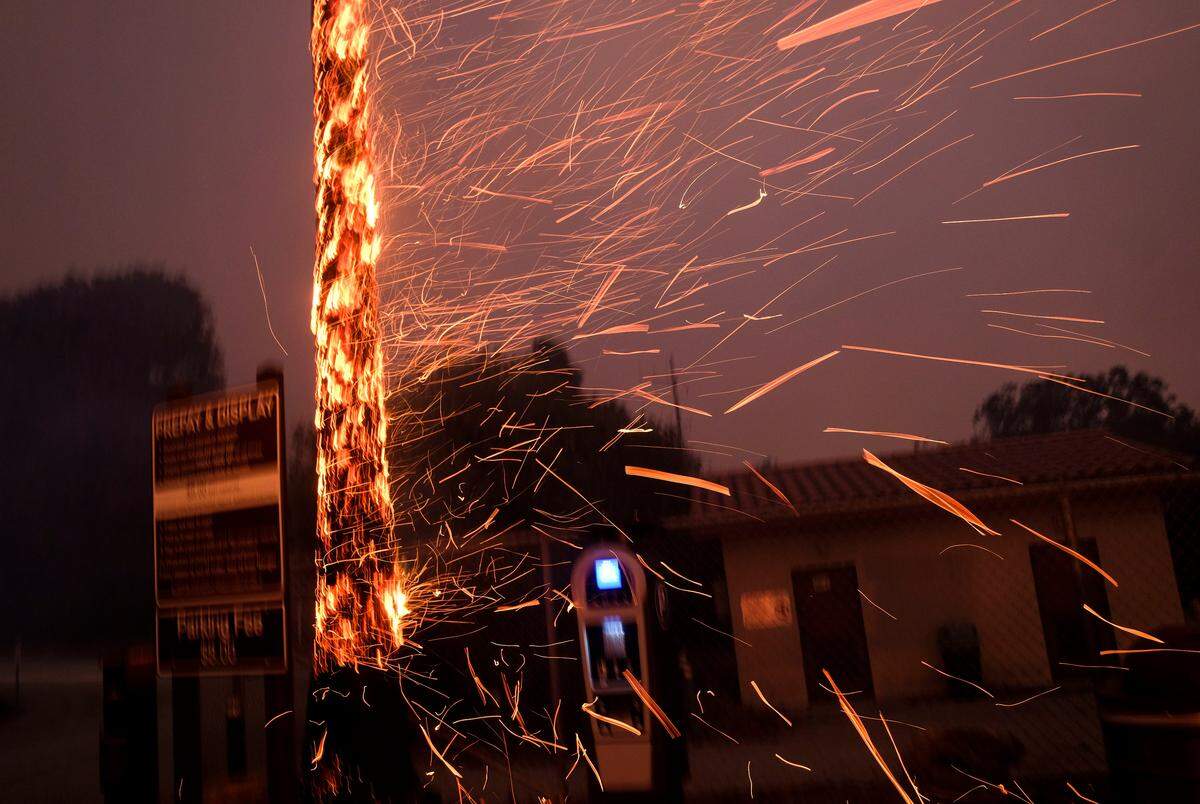
Are the winds dangerous?
The warm winds are typically accompanied by low humidity, which can pose significant wildfire risks, according to Lewis.
The dryness, strength and speed of these winds can quickly spread flames across California landscapes, the weather service warned, as well as cause property damage.
“When winds get significantly strong enough, they can do things like knock over power lines and down small trees,” Lewis said.
How long will warm winds last in SLO County?
Winds are expected to strengthen Friday afternoon into Saturday morning with winds reaching up to 35 miles per hour, Lewis said.
There will be a lull in blusters Sunday, but the forecast shows wind whipping up again Monday afternoon through Tuesday evening, he said.
On those days, some areas of SLO County could experience high gusts up to 50 miles per hour, according to Lewis.
This story was originally published December 6, 2024 at 2:04 PM.