20 tiny homes could surround a historic SLO adobe in new affordable housing project
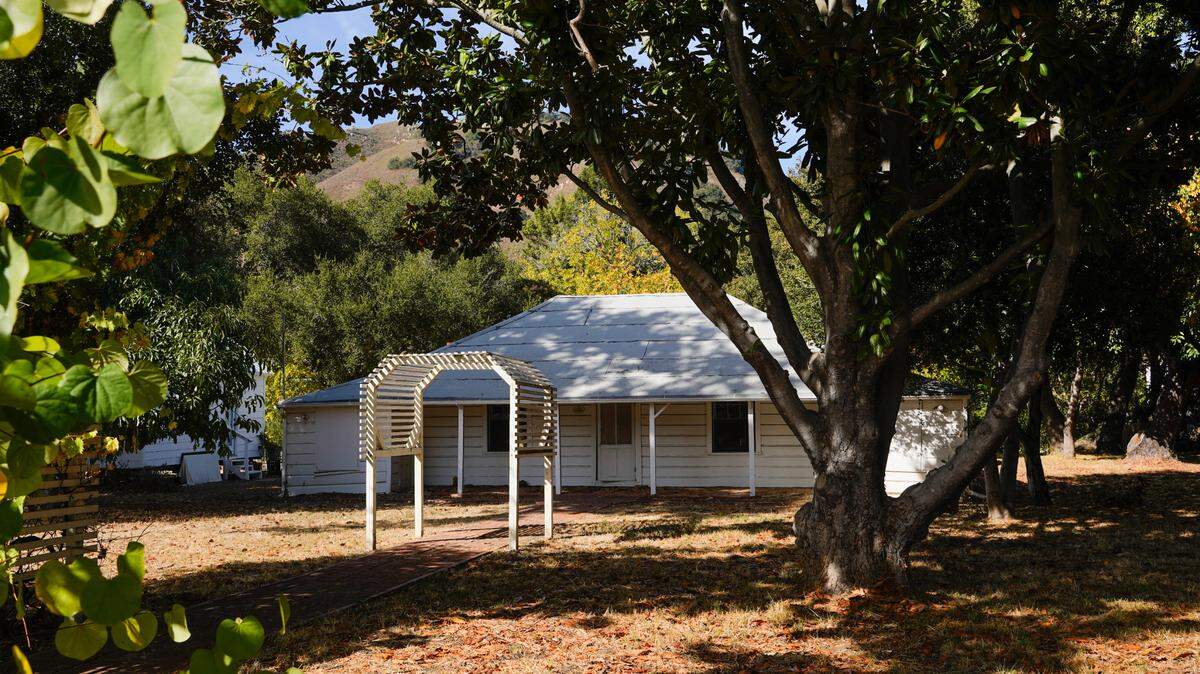
A new affordable housing project is moving forward at the site of a historic adobe in the middle of San Luis Obispo.
Waterman Village, a 20-unit tiny home community for people living on low or very low incomes, gained unanimous approval from the San Luis Obispo Architectural Review Committee Monday evening, sending the project on to final approvals in the coming months.
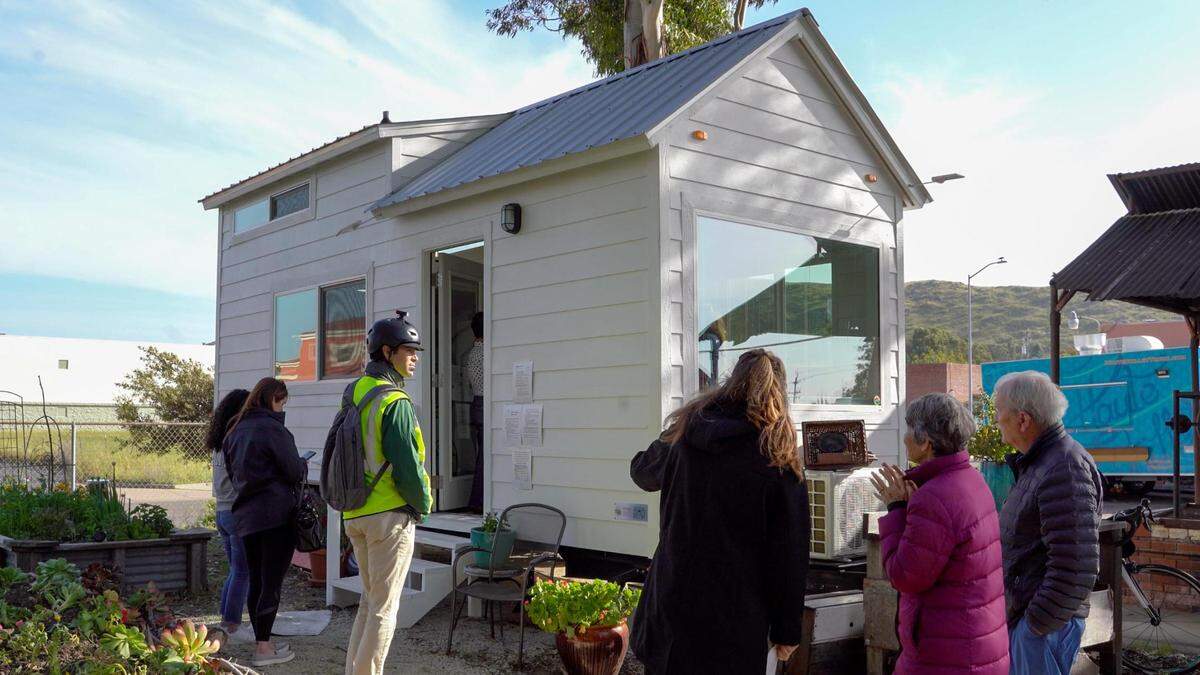
The project, which calls for installing 20 prefabricated affordable homes ranging in size from 220 to 264 square feet on the property at 466 Dana St., has been in the works for more than three years, backed by affordable housing developer Smart Share Housing Solutions.
But more than 200 years before it was ever considered for an affordable housing project, 466 Dana St. may have had a different purpose: the original founding site of the Mission that would give rise to the city of San Luis Obispo.
As it stands, the property has been relatively unused for the past three decades, with the public unable to access the parcel or its original adobe structure, which is falling into disrepair, according to the ARC staff report.
With the construction of the new tiny home community, Smart Share hopes to both bring the site back into usefulness while honoring and preserving the property’s historic features, Smart Share Housing Solutions executive director Anne Wyatt said.
“As we start looking at it in more detail, it’s important to note that not only is it affordable homes, but we’re also looking at a project that’s been geared toward providing rehabilitation of the historic adobe, public access and creating all-electric highly efficient homes geared towards sustainability, and a neighborhood park that will be open at the property,” Wyatt said.
How historic is the Waterman Village site?
Throughout its extensive history, the 466 Dana St. location has been known by many names.
Thomas Kessler, executive director of the History Center of San Luis Obispo County, said the earliest records of the site date back to the founding of the San Luis Obispo Mission in 1772.
Kessler said that the Mission that San Luis Obispo residents have come to associate with the heart of the city was the third attempt by Spanish settlers’ to establish a mission, predated by the 466 Dana St. site and another intermediate location.
“When (the Mission) was founded, it was founded there, and that very first winter, the very first time they had the storms go through, it flooded,” Kessler said. “So they said, ‘OK, no, this isn’t gonna work,’ and they picked another spot a little further up where they built in ‘73, and it was two or three years later that the native peoples from the Central Valley came in and burned the place down, to which I say, fair enough.”
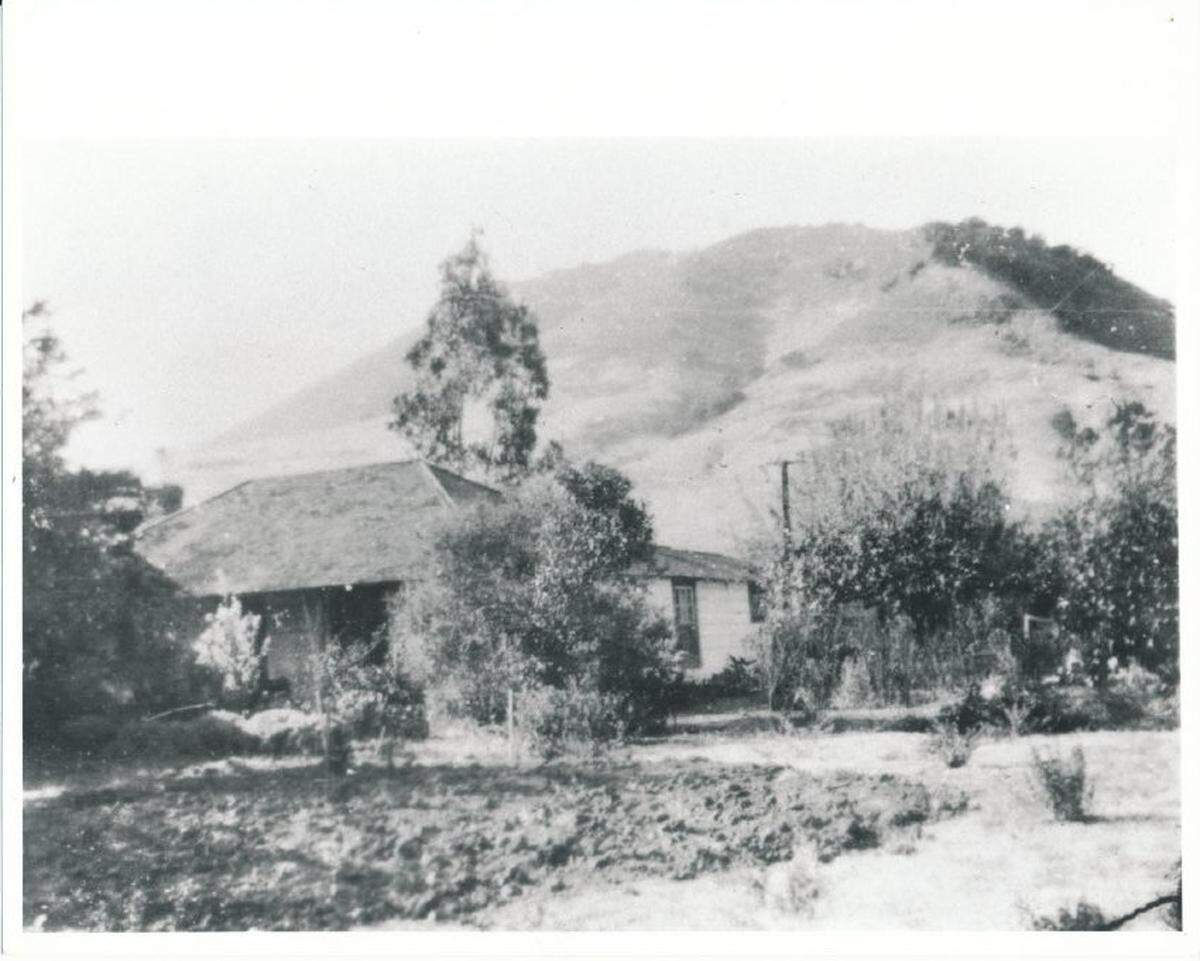
The current structure — an adobe building housed in wood paneling to preserve the masonry — is younger than the Mission, Kessler said. Historcially, the adobe has been called the Simmler Adobe or Butron de Canet Adobe — or the Rosa Butrón de Canet de Simmler Adobe — with historical records differing on the construction date.
Kessler said the History Center’s records show that the adobe may have been built as early as 1830 by John Dana, predating the founding of California, while the city master list website says it was built in 1860. Regardless of the actual construction date, Kessler ballparked the adobe as one of the 30 oldest structures standing in San Luis Obispo.
Kessler said after being discarded as the original Mission site, the plot of land served a wide range of roles over the past two centuries.
In the 1850s and early 1860s, when it served as the home of postmaster Jacob Simmler, the walls of the adobe served as the de facto place for lawyers to post legal announcements, as the first newspaper in San Luis Obispo had yet to print a page, according to the city’s master list website.
Later, the structure served the agricultural lands that originally covered most of the San Luis Obispo city area and later as a brewery in the 1880s and ‘90s.
The structure became associated with local news again in the late 1920s, when it became the home of San Luis Obispo Daily Telegram reporter Mary Gail Black.
A 1988 Tribune story mentioned Black’s “friend” Mildred Waterman — in truth her partner — buying the property in the 1920s, though it took plenty of time to make the dirt-floor building safe for human habitation.
“We didn’t have any money, so we got boards from the yard and put them down on the floors,” Black recalled in the 1988 story. “Until 1942, that was it.”
In a 1988 story about Black’s decision to leave the home to the city due to rising repair costs, the adobe was described as having a “damp, chilly atmosphere” after close to 150 years of continuous use.
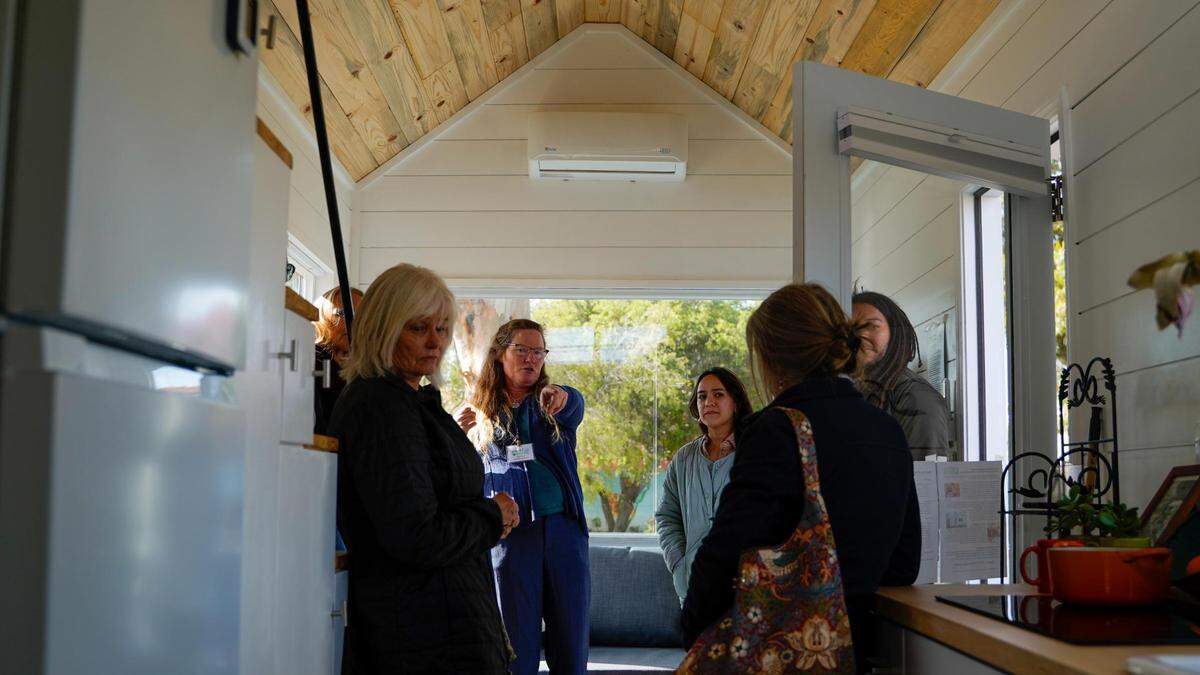
Black died on July 30, 1989, at the age of 91, bequeathing the property to the city under the stipulation that it be restored for public use and the trees onsite preserved, and that the project would be named after her late partner Mildred Waterman, Wyatt told The Tribune at an April 2023 showing of one of the prototype tiny homes.
Kessler said since then, the city has done little to make good on its original goal of turning the site into a park or restoring the adobe, with the structure lagging behind the restoration of better-known properties such as the Jack House and Dallidet Adobe.
“There are two kind of schools of thought of historic preservation in this town,” Kessler said. “There are the people who moved here in 1972 to go to Cal Poly and they thought it was perfect, and they wanted (it) to be 1972 for the rest of time, or there’s the people who have lived here for generations and have family albums and stories and have seen the way the town has changed over the years, and they know that it’s grown enormously since 100 years ago, from 200 years ago, it’s gonna continue to grow, and that’s OK.”
Is affordable housing a good use of a historic site?
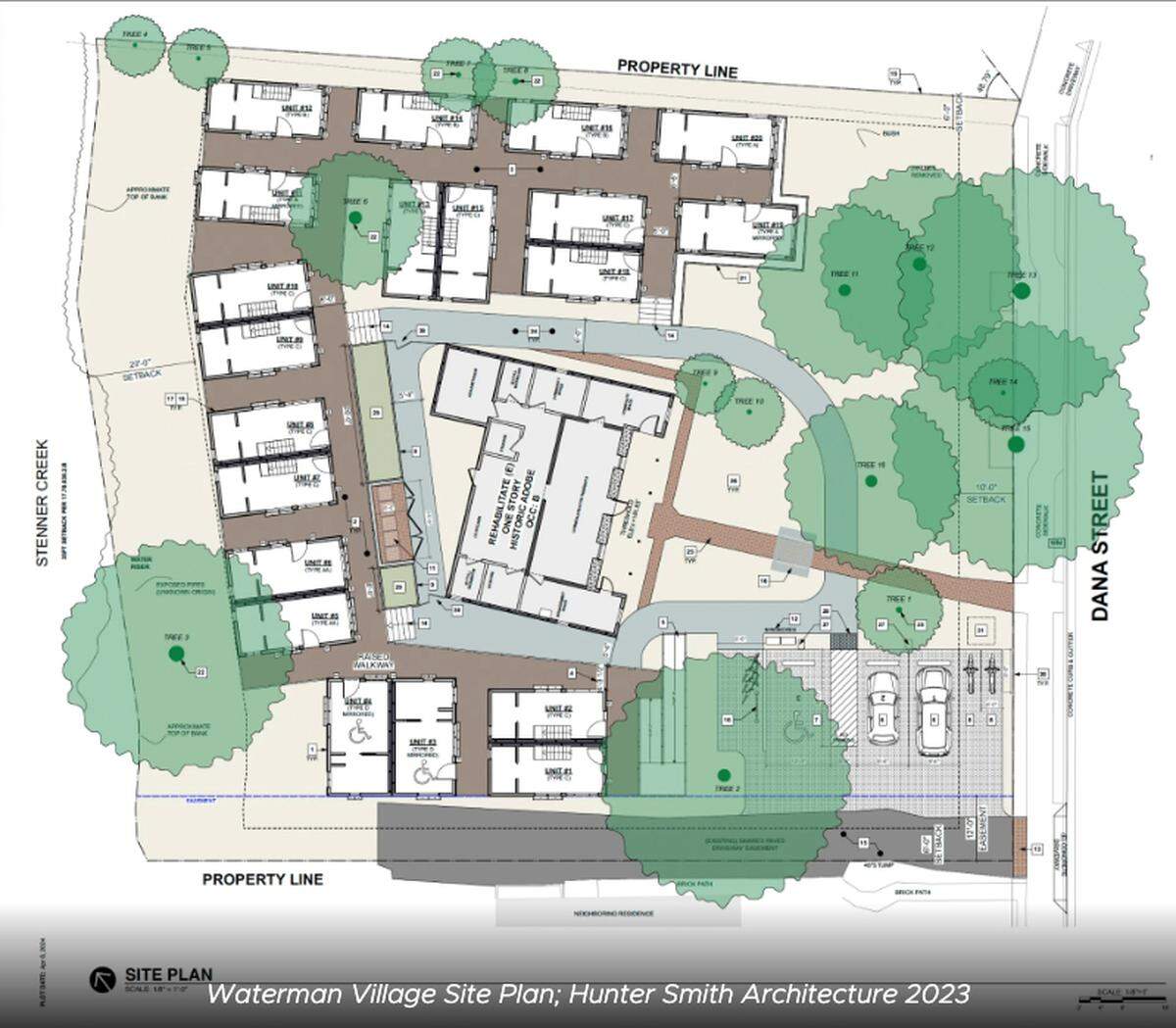
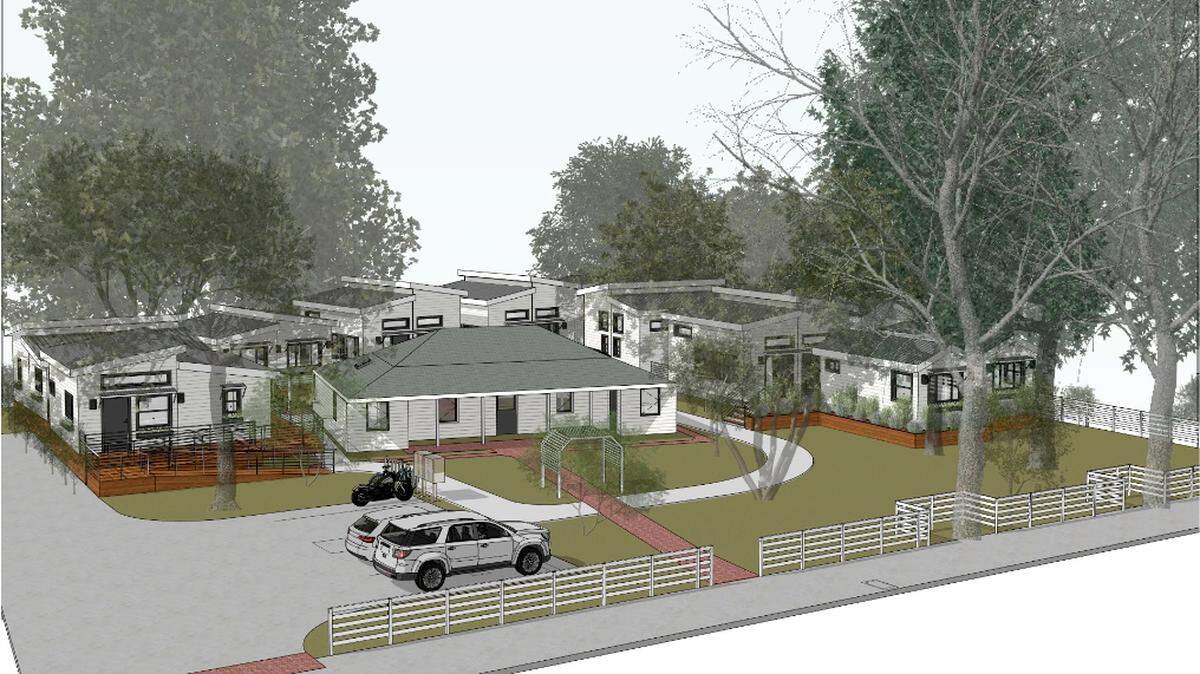
Smart Share Housing Solutions’ plan for the project site involves adding 20 tiny homes on raised pier foundations suitable for 100-year floods clustered around the sides and back of the adobe.
Just four parking spaces will be provided for the units due to a density bonus law that allows developers to request exceptions to parking rules, rather than the 29 that would be required for a project with this many residences. The project will also get two street parking passes, and expects residents with cars to purchase monthly passes for the new Nipomo Street parking garage half a block away, Wyatt said.
Non-historic additions to the property will be removed, along with 12 trees, while the adobe itself will undergo rehabilitation to repair many of the issues with the structure.
Once rehabilitation of the adobe is complete, it will be used as a community gathering area and administrative space for the on-site property manager, according to the staff report.
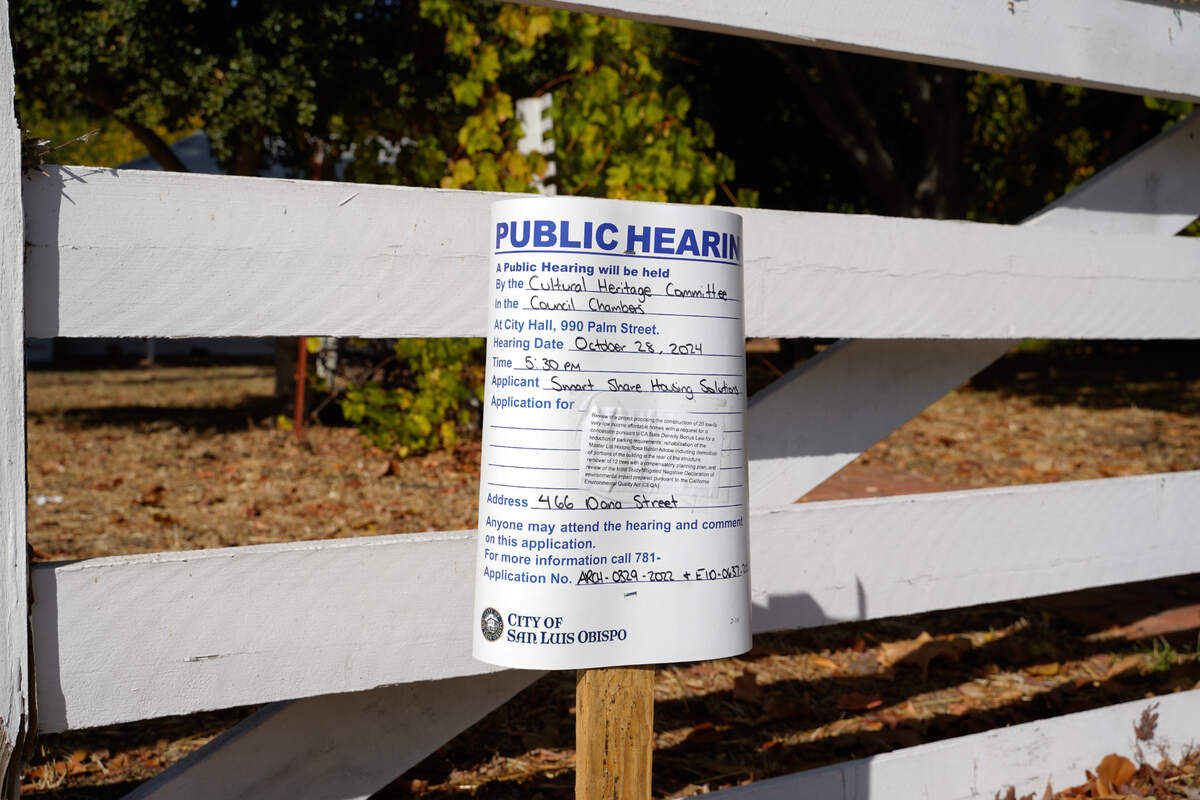
At its Oct. 28 meeting, the San Luis Obispo Cultural Heritage Committee voted 4-3 to approve the project, with members Benjamin Arrona, Daniel Bernard and vice chair John Tischler voting against the plan.
At Monday’s ARC meeting, several residents expressed skepticism that the project’s car-free approach could work near downtown San Luis Obispo, and that the rehabilitation of the adobe would be feasible in an affordable housing community.
“This organization has no money, they have no expertise in construction, they’ve never done a project like this and we’re basically putting this into the hands of amateurs,” resident Leslie Halls said during public comment. “As the ARC, I realize that’s not your purview, but I think if you’re going to approve this, the first thing we do is improve the adobe, make that a priority, and I’m sure there are state grants available to fix that adobe.”
Kessler said he viewed the adobe’s potential as an affordable housing village to be a net positive for the project.
“Historic preservation does not mean freezing everything in amber,” Kessler said. “Things are always going to change, and need to change, so if this project can incorporate bringing this building into a use that it’s going to be used and maintained, then great — it’s better than it just sitting there rotting, because right now, nothing is happening there.”
What happens next?
Having gained the approval of the architecture and cultural heritage committees, Waterman Village will next go before the San Luis Obispo Planning Commission in the coming months, Wyatt said.
After receiving unanimous support from the ARC, Wyatt said she’s optimistic that the project will be approved for construction and can break ground in early 2026.
“’We were pleased to have an unanimous approval from the ARC tonight, so on that front, I think this meeting went just as we would have it,” Wyatt told The Tribune. “We’re looking forward to an unanimous approval from the Planning Commission on Dec. 11.”
This story was originally published November 20, 2024 at 5:00 AM.