
Workers tear down homeless camps in Santa Maria Riverbed as lengthy cleanup begins
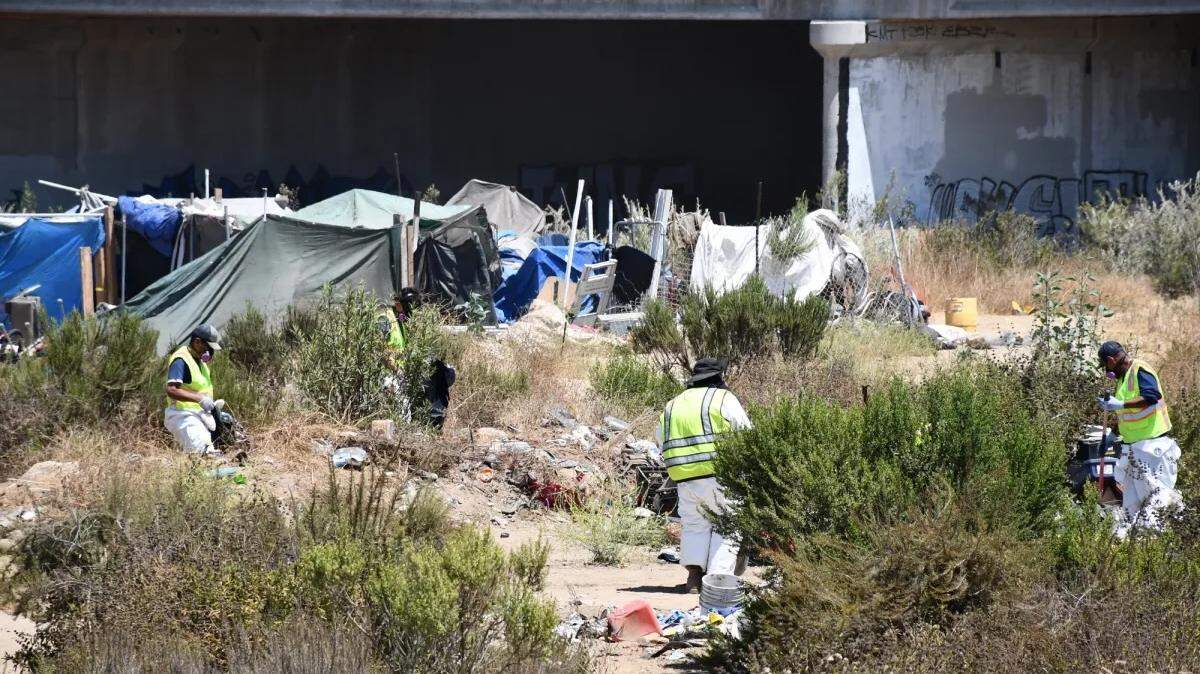
A planned removal of homeless encampments in the Santa Maria Riverbed began Thursday following months of coordination and days after the distribution of eviction notices.
Coincidentally, as work in the riverbed started, Gov. Gavin Newsom on Thursday issued an executive order instructing cities and other local jurisdictions to address encampments, noting that tools and authority now allow action to address the situation.
The Santa Maria Riverbed cleanup historically has hit roadblocks because of the fact that it mostly falls within the jurisdiction of San Luis Obispo County. However, nine months of coordination led to this week’s work.
“Those that are living there have taken advantage of the fact it’s on a jurisdictional boundary and there’s a lot of finger-pointing and legal issues. We’ve luckily been able to come together and resolve those things,” Santa Barbara County District 4 Supervisor Bob Nelson said.
Most living in the riverbed have ties to and end up in the city of Santa Maria since it’s the closest community.
Santa Barbara County spearheaded the cleanup but had help from other agencies and nonprofit organizations.
“This collaborative effort highlights the importance of cross-county partnerships to tackle issues that transcend geographical boundaries. This was the culmination of nine months worth of work, and there is still a lot of work to be done,” Nelson said.
Initial efforts reportedly will focus on 15 of the sites in the next seven to 10 days, although there’s a much larger number to be removed within the coming weeks.
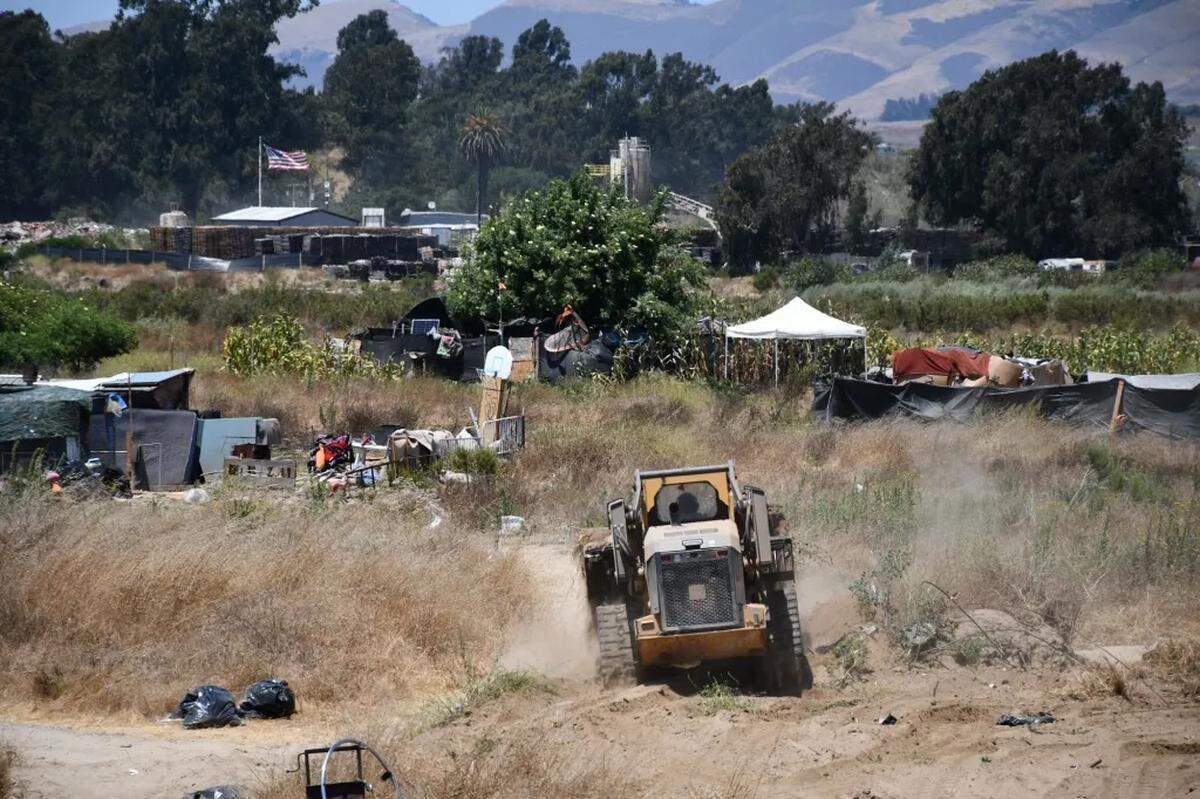
Ahead of the cleanup, organizers issued 72-hour eviction notices and made efforts to connect the riverbed residents with services.
“This is going to be a process somewhere between six weeks and three months probably,” Nelson said.
SLO, Santa Barbara counties team up to tackle encampments
Because of the encampments’ location along the Santa Maria River, which is in San Luis Obispo County, and the fact that many residents are from the Santa Maria area, the cleanup required collaboration between Santa Barbara and San Luis Obispo counties.
San Luis Obispo County homeless services division communications manager Suzie Freeman said while the effort was spearheaded by Santa Barbara County and its Encampment Resolution Funds, San Luis Obispo County, the city of Santa Maria and nonprofit Good Samaritan Shelter all played a hand in resolving the encampment.
Freeman said the efforts are the result of months of planning and coordination between multiple agencies since November, with the first cleanup in the area starting in April.
“To resolve encampments, people must be referred to housing and sheltering options, and that doesn’t happen in a day,” Freeman said. “Finding housing in this area is hard for anyone. For those living in encampments, it requires months of work between case managers and clients as they navigate an impacted housing market. “
Jurisdictional issues and multiple property owners aren’t the only complexities.
Concerns about communicable diseases spreading among riverbed community members added another level of urgency to address the situation.
In addition to chronic homeless and drug users posing various challenges because of their addictions, the riverbed community reportedly includes undocumented workers with other needs.
One resident remained ready to leave for safety reasons but hesitated to relocate because of concerns about her multiple cats.
“She’s really worried about the cats, so we’re trying to find a solution for that to get her out of there and get her the services she needs to get herself back on track,” Nelson said.
Small villages made up of tents and canopies sit among the brush in the dry riverbed west of Highway 101 near the north end of Preisker Lane.
Tall cornstalks can be seen near one site north of the levee, while another had chickens. At some sites, elaborate encampments included more than one level.
Workers removed the pile of the materials by hand while a heavy equipment operator worked at another location in the riverbed.
The Santa Barbara County-led cleanup effort also included Good Samaritan Shelter representatives on site while Santa Maria city rangers and police officers remained close by. Workers for a contractor removed the debris.
“The idea is we clear off a space and then we don’t let people repopulate that space,” Nelson said.
They expect some riverbed residents will attempt to set up camps elsewhere, but ongoing enforcement efforts will aim to stop any new communities.
During a Santa Maria City Council meeting on July 16, county employees estimated that as many as 125 people lived in the riverbed.
This is the second riverbed cleanup this year. In April, a city-county partnership led to the removal of 21 camp locations in the riverbed.
Recent efforts to resolve encampments have shown some successes, with 19 people entering shelters or interim housing and three people housed among 81 served as of June 30, according to county tallies.
As communities across California wrestle with homelessness issues, the U.S. Supreme Court ruled that local governments have the authority to implement and enforce policies to clear unsafe encampments from communities.
“It’s time to move with urgency at the local level to clean up these sites to focus on public health and to focus on public safety,” Newsom said Thursday.
Even before Newsom’s order and the U.S. Supreme Court ruling, Santa Barbara County leaders had started working to address the homelessness and environmental concerns in the riverbed, Board of Supervisors chairman Steve Lavagnino said.
“Our efforts demonstrate our commitment to leading by example and being ahead of the curve in providing compassionate and effective solutions,” Lavagnino added.
This story was originally published July 26, 2024 at 5:13 PM with the headline "Workers tear down homeless camps in Santa Maria Riverbed as lengthy cleanup begins."