
Should State Street stay car-free? Santa Barbara weighs future of main stretch
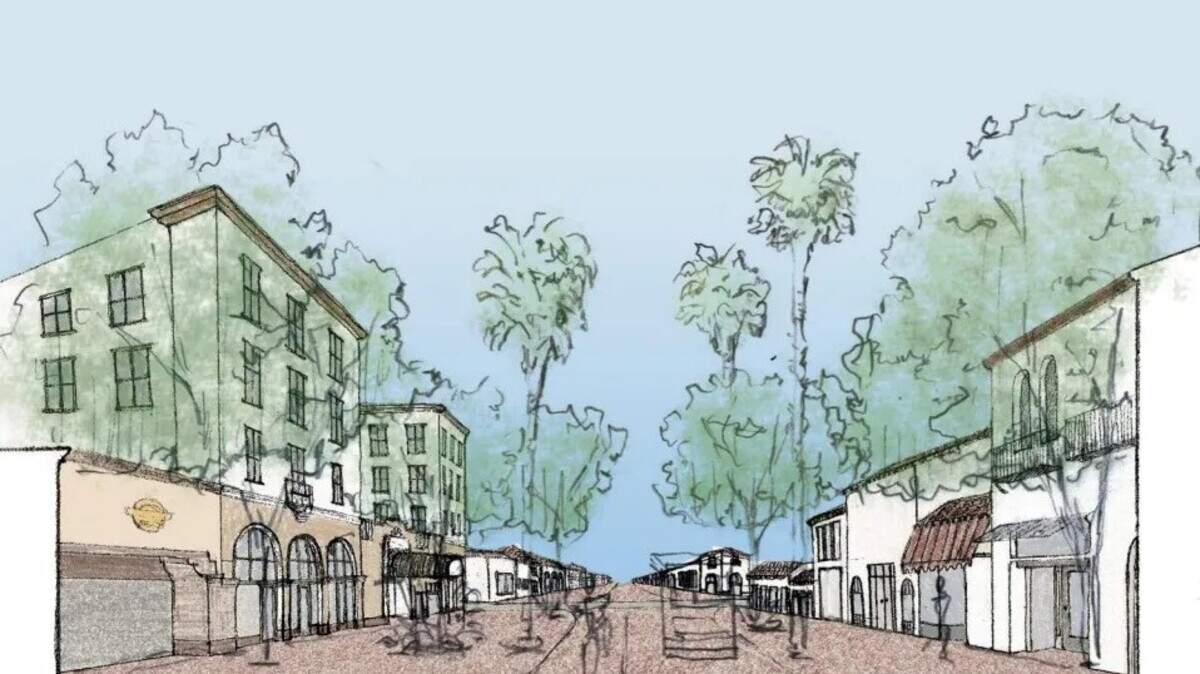
The idea of cars returning to State Street is losing gas.
Although the State Street Advisory Committee ran out of time before making any formal votes, most members of the public who spoke at the meeting pushed the idea of keeping cars off the road and encouraged “experiential transit,” such as pedicabs and trolleys.
Ian Baucke, who grew up in Santa Barbara and recently returned after college, said State Street should remain closed to cars.
“State Street is more attractive, vibrant, peaceful, joyful, post-COVID than it ever was in my lifetime,” Baucke said. “The sole reason I think that is true is because it is car-free.”
Baucke said the carless area should even extend into the 400 block, all the way to the 1300 block in front of the Arlington Theatre, both places where cars are still allowed.
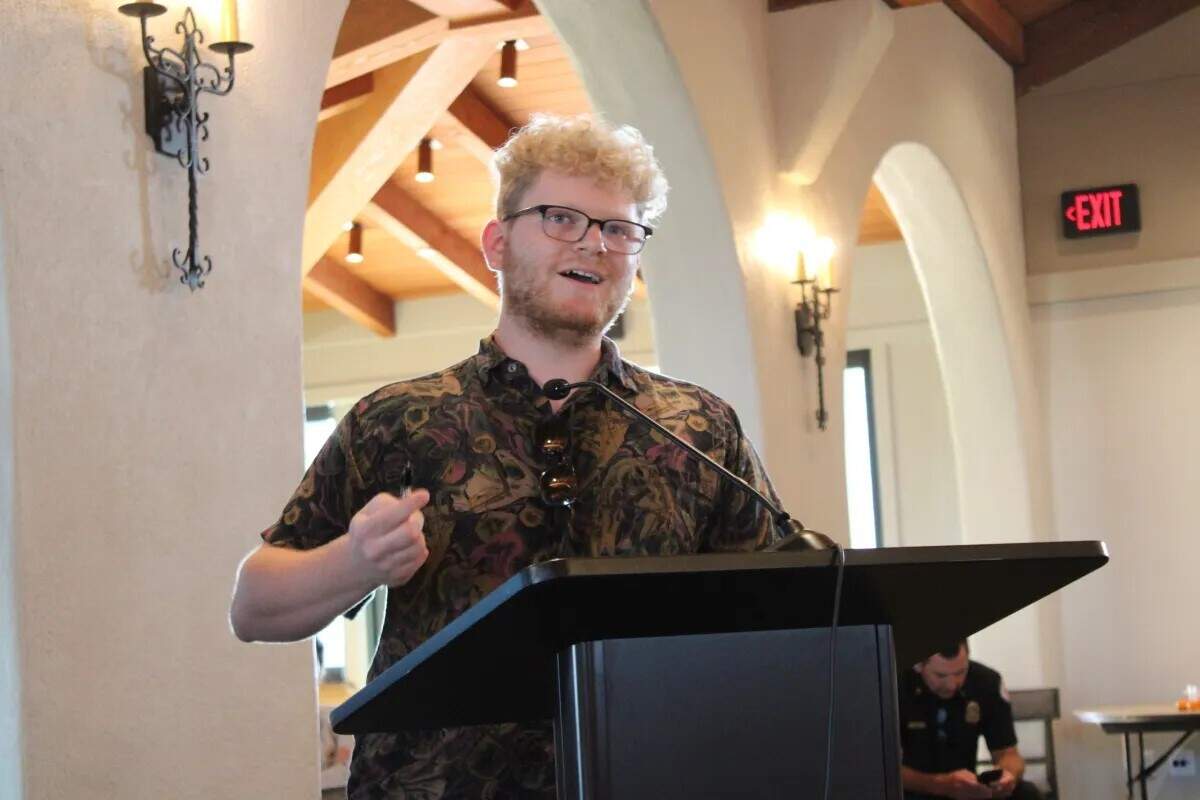
He, along with a hefty contingent from the organization Strong Towns Santa Barbara, spoke loudly and clearly in favor of keeping State Street a pedestrian promenade with separated bike lanes.
The comments came during the State Street Advisory Committee meeting Wednesday at the Cabrillo Arts Pavilion. About 150 people attended. It was the first public reveal of the plan, block-by-block, for State Street. The committee did not deliberate or take a vote on the plan. The committee voted to continue the discussion next month.
Among the biggest changes was the 500 and 600 blocks, which staff proposed to be flat, flexible and curbless. The streets would have 20-feet wide car-free lanes for bikes, pedestrians and transit and 60 feet for pedestrians, dining and performers.
The 700 to 900 blocks would be flat, flexible and curbless, and “pedestrian-prioritized.” Vehicles for loading and delivery would be allowed in early hours. Bikes would be allowed, but with “walk your wheels” options for certain times throughout the week, such as during Old Spanish Days’ Fiesta.
The 1000 through 1200 blocks would have one-way car travel, two-way bike lanes and a larger sidewalk for pedestrians, exhibit space and dining.
The 1300 block would have two-way car lanes and two-way bike lanes and some type of “Gateway” between Upper State Street and the downtown core.
The blocks would have names such as “arts district, entertainment district and De la Guerra District.”
Santa Barbara’s Community Development Director Eli Isaacson set the stage for the meeting by sharing a quote from former Santa Barbara Mayor Hal Conklin who said, “Santa Barbara’s downtown should invoke a sense of place, a sense of history, and a sense of celebration.”
“That’s really the touchstone for the work of this committee and staff up to this point, so I want to make sure we acknowledge Hal’s contributions to the development of this framework and our city in general,” Isaacson said.
Conklin died in 2021.
Santa Barbara is currently undergoing an effort to redesign State Street. The staff and a 15-member committee are working on a State Street Master Plan. A draft is scheduled to be released later this year. Santa Barbara’s State Street, from the 500 to the 1300 block, was closed to vehicles in 2020 at the start of the COVID-19 pandemic.
The community has struggled with what it should look like permanently since, with people disagreeing over whether those blocks should remain car-less. Santa Barbara Mayor Randy Rowse has unapologetically showed his support for returning vehicles to State Street until the city finishes its master plan. Some property owners and business leaders have also professed support for returning cars to State Street.
The Santa Barbara City Council will ultimately make the final decision next year. None of the plans, as of now, have any source of funding.
According to a city of Santa Barbara survey, however, a majority of people want the street to remain closed to vehicles, with people wanting more pedestrian activity, bike use, and outdoor dining. Many of the people who don’t like the current promenade say that people on electric bikes have taken over the street and made it unsafe for everyone else.
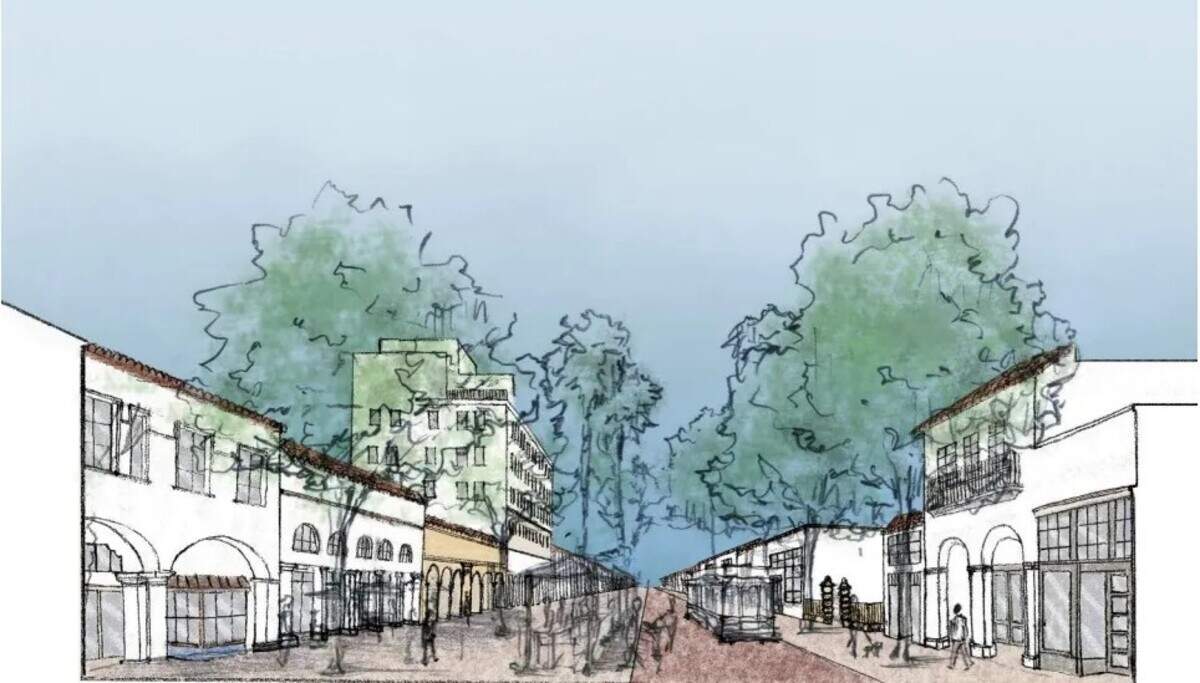
The new plan includes separated bike paths, unlike what exists now, which is often people on bikes whizzing down the middle of the street.
“The question of bikes is not controversial at all — no, I am just kidding,” said architect Anthony Grumbine, who worked on the design sketches.
He noted that the plans focus on pedestrians and bicycles first, and that a key to them co-existing is through separated lanes. Any streets that are flattened or “curbless” would not have vehicle travel, other than for service vehicles.
“On all the designs that you see, we are trying to get to curbless as much as possible, and as flexible as possible, because in general that is a better pedestrian-minded design,” Grumbine said.
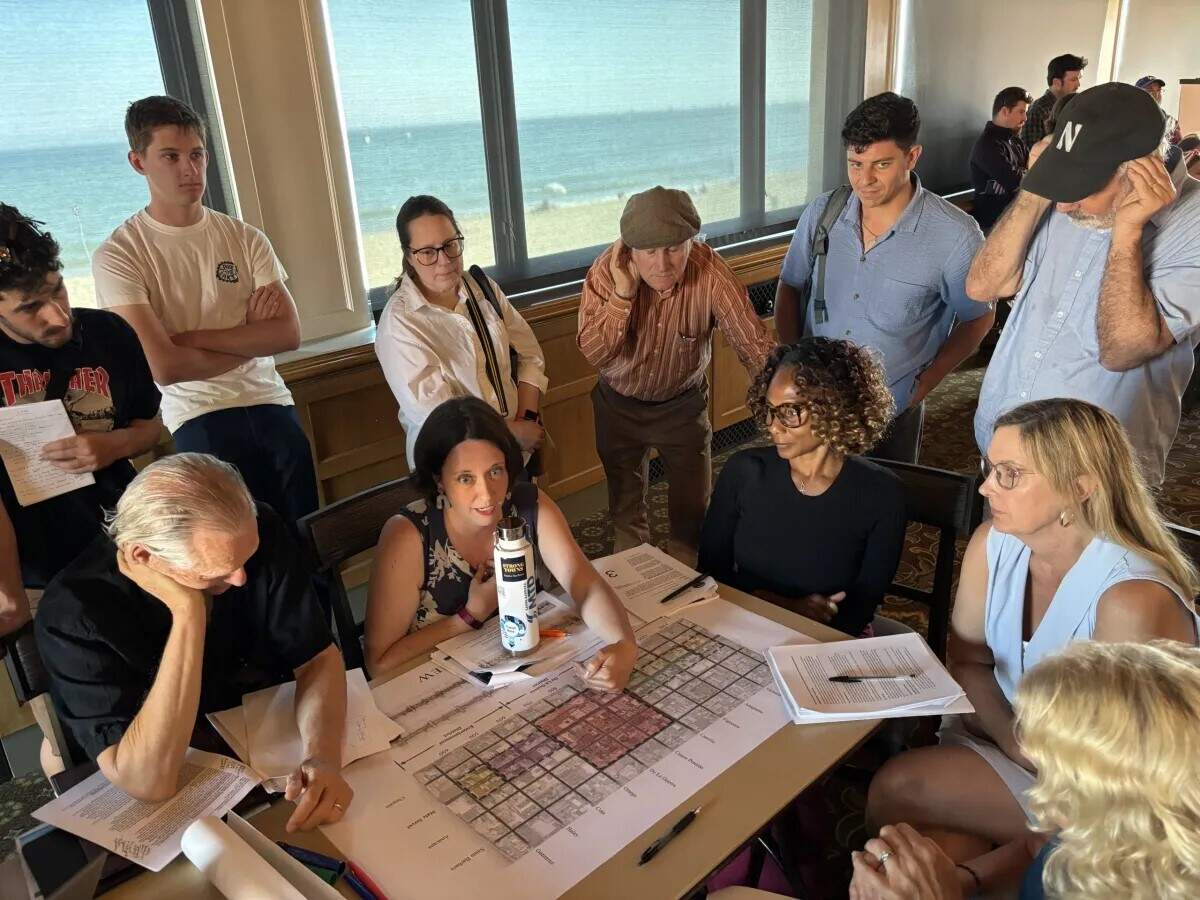
State Street Master Planner Tess Harris, who is on maternity leave, made an appearance at the meeting and took part in the discussion. The members of the committee broke up into groups for about an hour, and then a designated representative reported to the public what was said. Harris gave the update for her group.
She said her group supported the idea of the 700 and 800 blocks being open to bicycles during the morning and afternoon commute hours and for a trolley on the entire street.
“There seemed to be more of a majority consensus, not the entire group, but most of the group felt like some kind of shuttle trolley or some kind of system going up State Street the full length, made a lot of sense,” Harris said.
Her group said there was a consensus for adding a one-way vehicle lane, along with bicycles, to the 900 block, and focusing on creating passive recreation opportunities.
“The idea was of really accentuating the paseos and art and making it the open space for housing,” she said.
— Noozhawk South County editor Joshua Molina can be reached at jmolina@noozhawk.com.
This story was originally published June 27, 2024 at 10:09 AM with the headline "Should State Street stay car-free? Santa Barbara weighs future of main stretch."