A decades-old building moratorium could be lifted in Los Osos. Is there enough water?
Los Osos is one step closer to lifting its 35-year building moratorium.
Since 1988, construction in the coastal town of 15,500 people has been effectively banned due to a limited water supply, habitat constraints and ineffective wastewater treatment infrastructure. The Los Osos Community Plan, however, seeks to solve those challenges by setting rules for development that protect sensitive habitats and the water supply.
On Thursday, the California Coastal Commission is poised to approve the Los Osos Community Plan with a handful of revisions. If the commission supports the plan, the San Luis Obispo County Board of Supervisors will vote on the modifications in September or October, according to SLO County Supervisor Bruce Gibson.
After that, the commission would vote on the plan one last time in December — clearing the way for the county to start issuing building permits for Los Osos early next year, Gibson said.
“The growth envisioned for Los Osos is all carefully managed, consistent with available resources,” Gibson said. “The growth won’t happen faster than we can be sure that the water supply can sustain it. The growth won’t happen unless we can assure that we’re properly mitigating the sensitive habitat that gets impacted when we do this new development.”
In Los Osos, 238 people are on a waitlist to build single-family homes and another 19 are waiting to build multi-family homes, according to a report by commission staff.
Restarting development would “address the long-delayed dreams of people who’ve been literally waiting 35 years to build on their land — I mean, a whole generation. That’s an amazingly long time,” Gibson said.
Some community members, however, are worried the basin can’t support new development and asked the commission to delay its decision on the plan to give time for more public engagement.
Emily Miggins, a member of citizen group Los Osans for Good Governance, is one of those people.
“We know that we need housing,” Miggins said. “However, in order to have a population increase, you need assurances that you’re gonna be able to deliver that water. And so, the purveyors are saying we can deliver the water — it doesn’t mean healthy water.”
What started the building moratorium?
Los Osos only has one water source: the Los Osos groundwater basin.
A population boom in the 1970s and ‘80s overdrew the basin, and the remaining groundwater was polluted by nitrates from poorly designed septic systems and chlorides from seawater intrusion, the staff report said.
Los Osos buildings originally collected their waste with individual septic systems. Most of those septic systems didn’t contain the waste sufficiently and leaked nitrates into the groundwater.
In 1988, the SLO County Regional Water Quality Board banned new developments from installing new septic systems, essentially placing the community under a building moratorium.
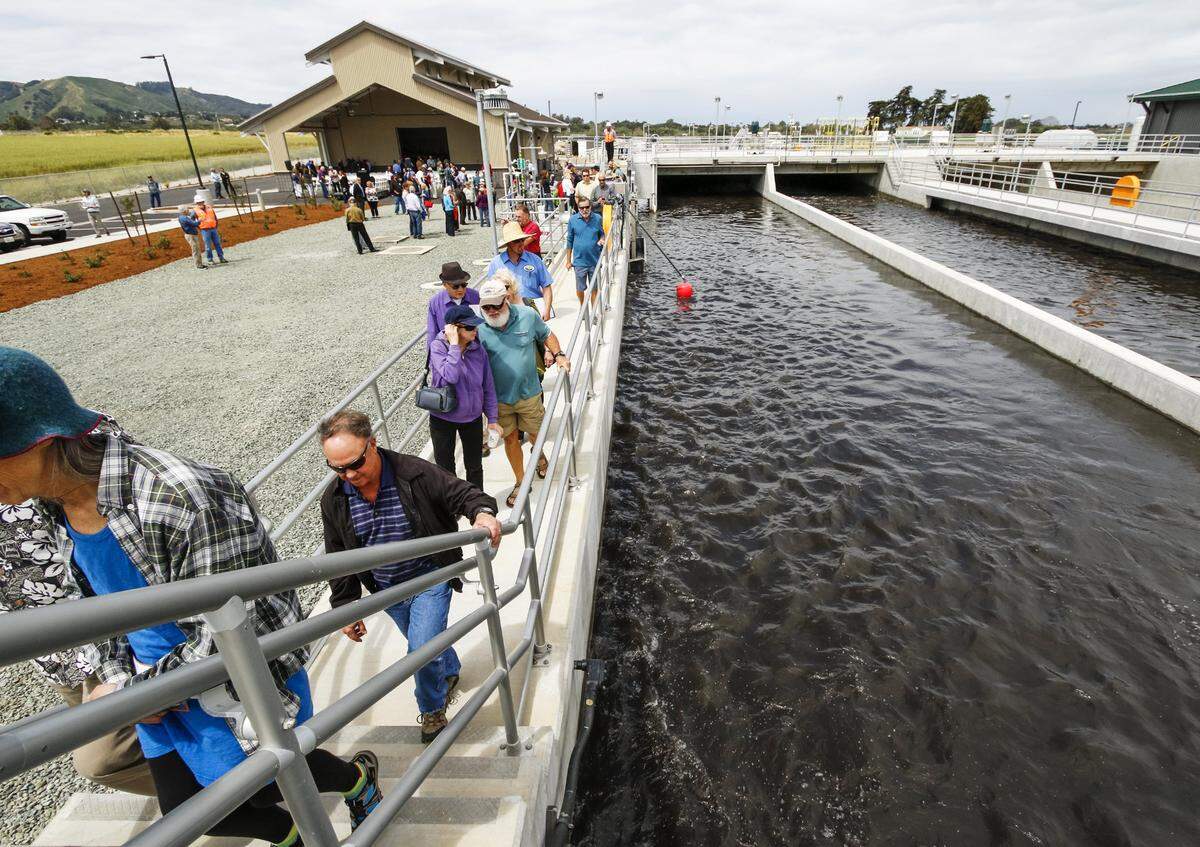
After at least two failed attempts to build a public sewer system, the Coastal Commission approved plans to build the Los Osos Water Recycling Facility in 2010. However, the commission still prohibited new development from connecting to the facility until the county set rules for managing the water supply and protecting sensitive habitats.
The facility treats the wastewater and then pumps some back into the basin to replenish the water supply, the report said.
The Los Osos Water Recycling Facility became fully operational in 2016, but without a completed Los Osos Community Plan, the building moratorium continued.
Status of the basin
In 2015, the county and three Los Osos water purveyors adopted a court-ordered plan that set rules for managing the groundwater and “triggers that would help determine when the basin was no longer being over-drafted,” the report said.
A Basin Management Committee monitors the groundwater and publishes annual reports on the health of the basin.
Now, the Los Osos Basin is “trending towards sustainability,” the commission staff report said.
According to the committee’s 2023 report, Los Osos is only using 69% of the basin’s sustainable yield, which is the amount of water that can be pumped from the basin by certain wells without depleting the water supply and worsening seawater intrusion. This means the basin is no longer in overdraft, the report said.
The committee tracks three other metrics for the health of the basin: the water level and the levels of nitrate and chloride contamination.
The basin hasn’t yet met its goals for water, nitrate and chloride levels, but “the trends are tracking exactly (with) what was predicted,” indicating that the basin will eventually meet those goals, SLO County Groundwater Sustainability Director Blaine Reely said.
“That’s why there’s comfort, at least on the part of the county, to move forward with very limited growth,” he said.
The water levels and nitrate and chloride contamination are linked to the basin’s yield, Reely said. If the basin yield is healthy, the three other metrics will follow and hit their own targets, Reely said.
“The basin yield metric shows us that water levels are coming up. If the water levels in the groundwater basin are coming up, that’s creating hydraulic pressure that will push the seawater out,” which is measured by chlorides, Reely said. “The same thing is true with nitrates.”
Miggins, however, said she’s skeptical of the phrase “trending towards sustainability.” She asked the county to better explain to the public why its acceptable to proceed with development when the basin is only meeting one of its four metrics.
She also wants to know if the county could rescind building permits and halt development if the basin’s health declines.
Rules set by the plan
The Los Osos Community Plan would establish four new major rules that address water, wastewater and habitat concerns associated with infill development in Los Osos.
As currently written, the plan would allow a maximum 1.3% growth rate for new residential units per year. Commission staff, however, advised that the plan cap growth at 1% instead, which would accommodate about 50 new units per year, according to the staff report.
Meanwhile, new developments must connect to the Los Osos Water Recycling Facility. Homes outside of the facility’s service area must use septic systems that meet water quality standards so they don’t pollute the basin, the report said.
New developments must be served by water within the basin’s sustainable yield and acquire a “will-serve” letter from the neighborhood’s water purveyor, the staff report said.
Finally, developers building in the town must pay a fee for disturbing sensitive habitat on the construction site. Those payments will transfer to a fund used to maintain the greenbelt surrounding Los Osos.
“Every square inch of Los Osos is considered environmentally sensitive habitat area,” Gibson said. “If you’re going to build a new house, you’re going to pay per square foot of disturbing this habitat.”
The fund offers a way for developers to mitigate the impact of construction on the environment, while creating a funding source for conserving larger swaths of wild land nearby.
If the new plan is implemented, the county could finally build a 5,000-square-foot dog park near the Los Osos Community Center, Gibson said. Previously, the county couldn’t build the dog park in the environmentally sensitive habitat area. But if the plan is passed, the county can pay the necessary mitigation fees and build the park.
Commission staff recommended that the plan set more “cumbersome” rules for development in the greenbelt — something the commission will consider on Thursday, Gibson said.
Staff also advised that the county plug these new rules into the existing Estero Area Plan instead of publishing them in a separate document, he said.
Community members like Miggins remain unsatisfied with the plan. She wants it to answer a series of questions, including:
- Could the county halt development in Los Osos if the basin starts to trend away from sustainable levels?
- How will the county address traffic and emergency response concerns in Los Osos with a larger population?
- Will the county prioritize building affordable housing if the plan passes?
She suggested that the county host a town hall to inform the community on the plan and get feedback for how the plan can improve.
“A continuance would allow for additional community outreach and education efforts, ensuring a more inclusive and informed decision-making process,” she wrote in a letter to the commission.
The California Coastal Commission will vote on the plan on Thursday. Its meeting starts at 9 a.m. at the Inn at Morro Bay on State Park Road. People can watch a livestream of the video at cal-span.org/meeting/ccc_20240612-20240614/live.