Homeless union sues SLO County over management of safe parking site
More than a year after its formation, the local chapter of the California Homeless Union announced Tuesday that it is suing San Luis Obispo County and the Community Action Partnership of San Luis Obispo over management of the Oklahoma Avenue Safe Parking Site.
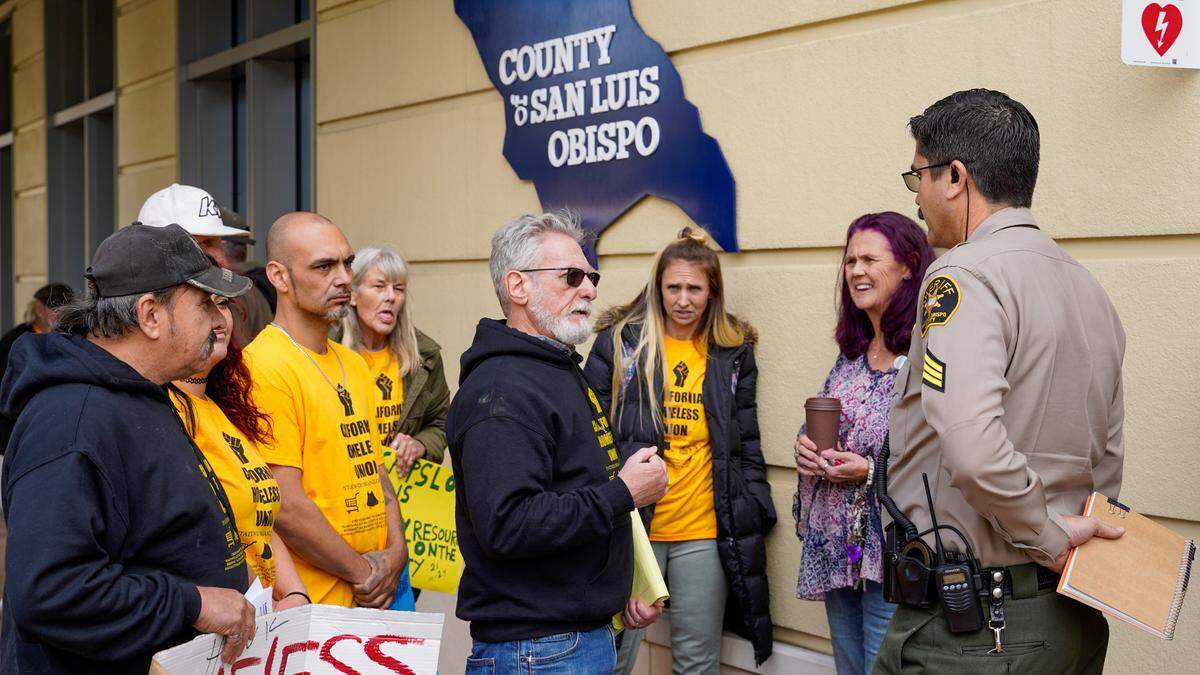
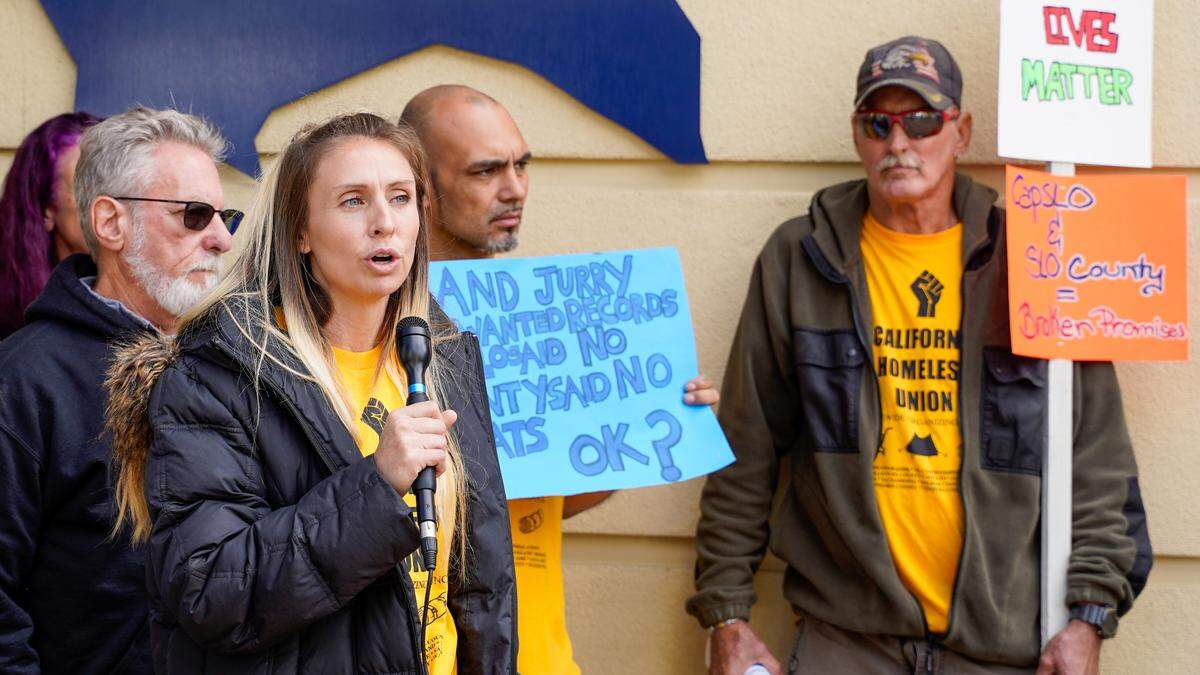
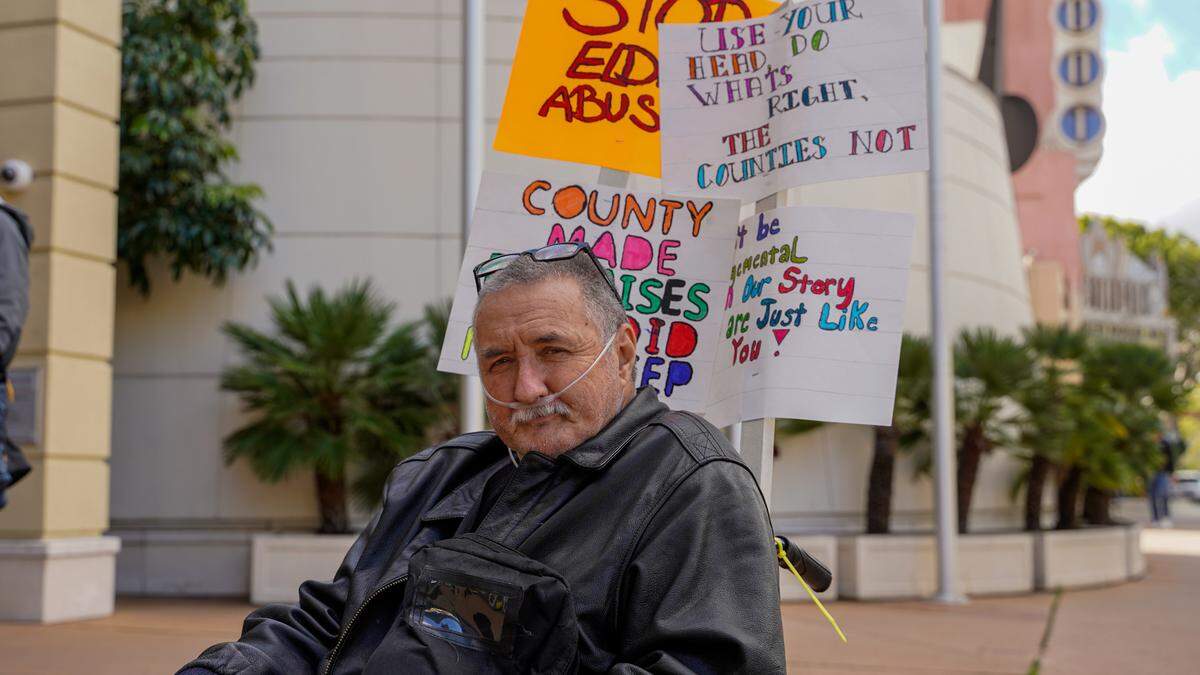
At a demonstration and news conference held in front of the Katcho Achadjian Government Center, the union and its attorney Anthony Prince announced they had filed a lawsuit against the county and CAPSLO, seeking an injunction to halt the closing of the Safe Parking Site on Highway 1 north of San Luis Obispo.
During the demonstration, Prince said the actions of CAPSLO and the county had violated the Oklahoma Avenue residents’ First, Eighth and Fourteenth Amendment rights by allegedly taking punitive action against those who joined the union.
Prince said the union would also seek damages and a declaratory judgment that the county and CAPSLO had evicted residents of the site, depriving them of their vehicular homes and other property without a fair exit process, and exposing them to state-created dangers by rendering them homeless.
“This local union here is one of our strongest, bravest and most unified local unions in the whole California Homeless Union,” Prince said during the protest. “It isn’t about the attorneys. It isn’t about the advocates. It’s about the homeless themselves. We say homeless, not helpless.”
Both the county and CAPSLO issued statements to The Tribune shortly after the demonstration, clarifying their outlook on the lawsuit.
“The Oklahoma Parking Site was originally established as a short-term parking program for people to find stability while engaging with service providers,” the county said in its statement. “The program was never intended to be a permanent housing option for those admitted to the site. While housing was a goal of the program, the guarantee of housing was never promised.”
Why is the homeless union suing SLO County, CAPSLO?
The union’s demands largely center on the health and safety hazards residents of the Oklahoma Avenue site would face if evicted from the parking site.
The county announced early in 2023 that it would draw down operations at the site by the end of the year, and it’s in the process of finding exit solutions for the remaining residents.
Currently, around two dozen people still live at the site, which has seen its footprint reduced in recent months as residents leave via eviction, agreed-upon housing exit plans or a relocation exit deadline, Prince said.
“The most important element of our lawsuit is that we’re asking the court to issue a preliminary injunction as soon as possible to prevent the county from closing down the site until such time as there’s a process in place to determine what people actually need, and how they’re going to be provided with a housing alternative (that) is safe, accessible, durable and appropriate, something they haven’t done for two years,” Prince said during the demonstration.
Prince said the lawsuit also sought damages for residents who were removed from the parking site in September and December last year, and said the county did not provide a due process when seeking to remove residents from the premises.
In December, the county asked seven residents to leave after it said they failed to pursue housing “with the necessary level of diligence and cooperation,” according to the county’s removal notice.
Prince said because San Luis Obispo County lacks housing options for the residents and their vehicles, evicting them from the site for failure to “pursue something that doesn’t exist” would constitute a “state-created danger” in violation of the residents’ Fourteenth Amendment rights.
At the protest, Prince said CAPSLO intentionally withheld data and documentation requested by a grand jury tasked with investigating living conditions at the parking site last year to obfuscate the truth about how money was spent and how residents were treated.
SLO County, CAPSLO respond to lawsuit
In its statement to The Tribune, CAPSLO denied Prince’s allegations of hiding data from the grand jury.
“Our protocol for providing files to government entities (e.g., Grand Jury) or individuals is that the request must be made in writing,” the CAPSLO release said. “We have no record of any mailed or emailed requests to our Homeless Director, CEO (signer of contract), process server or on our CAPSLO hotline by the Grand Jury or any other entity or individual.”
In its statement, CAPSLO provided clarifications of what it termed “misinformation by the California Homeless Union.”
According to the statement, CAPSLO did not manage or operate the parking site and only provided voluntary outreach and housing navigation services to residents.
CAPSLO said that 58% of the nonprofit’s funding comes from donations and CAPSLO funding streams, while county funding makes up the remaining balance, which is audited once a year by a certified public accounting firm to ensure it is in compliance with accounting standards.
The CAPSLO statement contrasted the organization’s metrics for successful outcomes at the parking site — which require 20% of the site’s households to be actively engaged in case management pathways to permanent or interim housing solutions — with the site’s outcomes so far.
According to the statement, 64% of individuals have achieved some form of interim or permanent housing connections, including reunification with friends or family, sober living, or an emergency shelter at time of program exit.
The statement also said 50% of individuals achieved permanent housing with CAPSLO’s assistance at time of program exit, though site residents and advocates have disputed these figures before.
The nonprofit also provided a total of 3,222 services or direct links to services such as alcohol or drug abuse support, case management, childcare, temporary housing and other financial aid, vehicle repairs, benefits, advocacy, transportation and move-in assistance, according to the CAPSLO statement.
“We are proud of the work we do in the community and to support those living in homelessness to find safe and secure housing,” CAPSLO said in the statement. “We will continue to work with the County and our partner homeless service providers to think outside the box to bring solutions to this issue.”
In its statement, the county said its draw-down of the parking site has “for the most part been successful with wide participation in a relocation assistance program and numerous individuals finding new housing opportunities.”
The county acknowledged the rights of its community members to protest the closure of the parking site but cited health and safety concerns highlighted in the June 2023 grand jury report as a reason to continue its closure as planned.
The county remained committed to offering case management and program-based solutions for the remaining residents.
“The county and its partners continue to offer case management and program-based solutions to those living at the site as the county compassionately moves forward with the planned closure of the Oklahoma Parking Site,” the county said in an updated statement to The Tribune on Wednesday.
What’s next?
According to Prince, with the lawsuit filed and served, the county will have 30 days to respond with an answer to the complaint and has already hired an outside counsel to represent it.
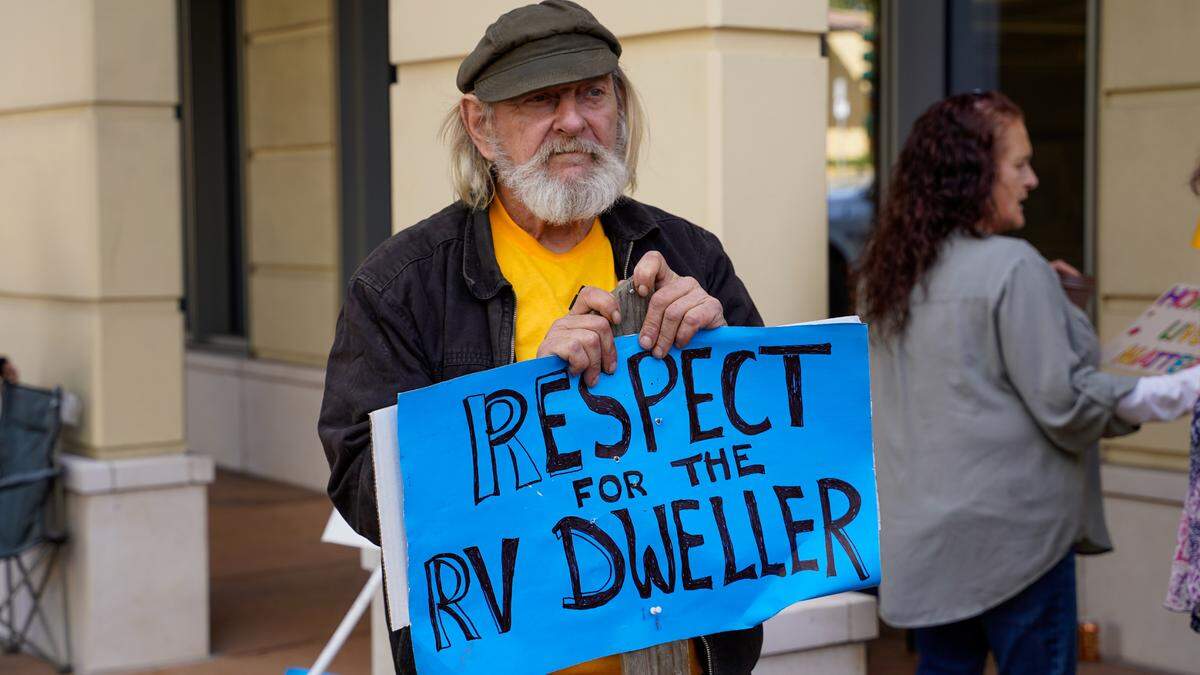
Prince said people living in their RVs and vehicles is one of the fastest growing segments of the homeless population in the United States, and it’s a group that need stronger legal protection.
“The next step for us here is to broaden out this fight, because it’s not just about people in their RVs, it’s not just about the homeless you see on the streets — it’s about everybody who’s one step away, one missed rent payment, one layoff, one family medical emergency, one paycheck away from becoming homeless,” Prince said. “There is no way that they’re gonna get away with pushing around people who won’t be pushed, and that’s the significance of the formation of this homeless union: We mean business.”
This story was originally published January 24, 2024 at 9:07 AM.
CORRECTION: On Jan. 24, 2024, San Luis Obispo County issued a corrected press statement to The Tribune removing language regarding California Homeless Union attorney Anthony Prince. The corrected statement is included in the story below.