Atascadero man chose homelessness to reset his crumbling life. Now he has a path forward
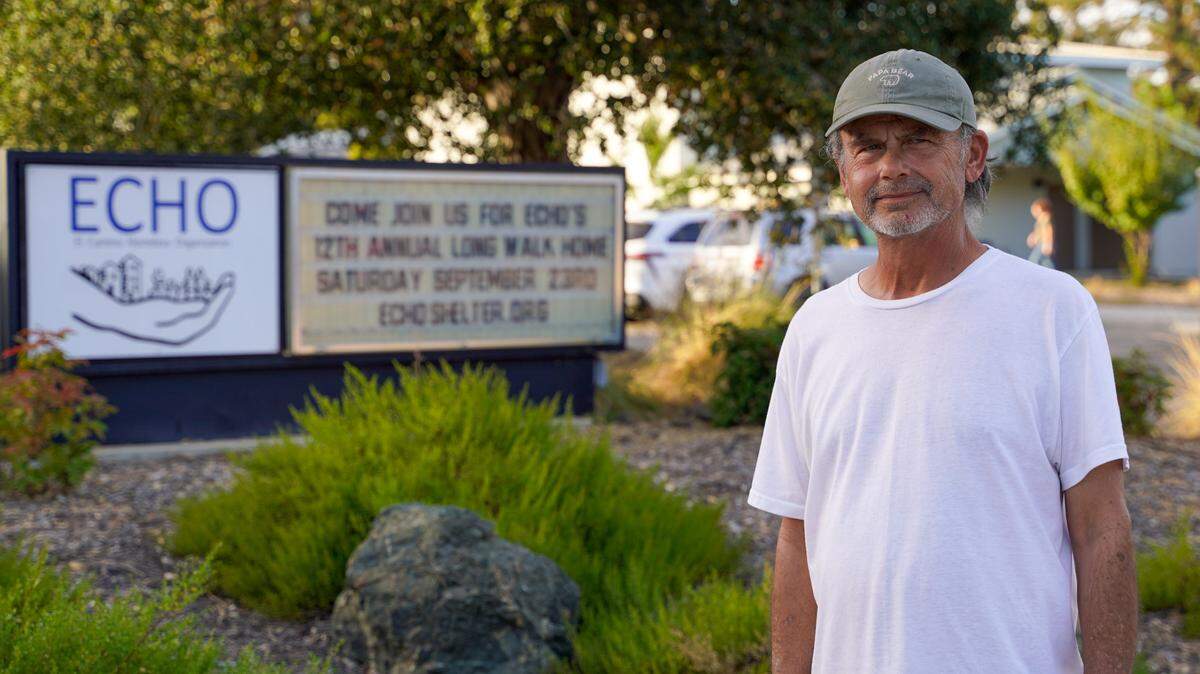
Editor’s Note: This is the first in a series profiling unhoused residents in San Luis Obispo County, how they get by and what they’re doing to stabilize their living situations.
Just 13 years ago, Paso Robles resident Rob Sutterfield could be found behind the counter of his family’s business, El Camino Liquor.
Those were “the innocent days,” Sutterfield said. “It was a beautiful job.”
That was before the series of events that led to Sutterfield’s “downfall,” he said.
In 2008, Sutterfield’s father was diagnosed with Alzheimer’s disease, he said.
After 30 years of business, Sutterfield decided to sell the store in 2010 and spend his time as his father’s caregiver, a financially and mentally stressful decision that left him spread thin.
He cared for his father for a year before transferring him to a memory care facility.
Sutterfield later sold his Atascadero home in 2017 — the same year his father died — hoping to use the money to pay for his and his wife Sheryl’s medical costs, with the couple moving into an extension on his stepson’s home between 2017 and 2022.
The pair lived in the extension through the end of Sheryl’s life, Sutterfield said. She died in 2022 from a combination of health complications, including lung cancer and eventually COVID-19, he said.
“My immediate circle — we all worked together — all of a sudden was gone,” Sutterfield said.
Left alone, Sutterfield said, it was time to start over from scratch.
In early 2023, that meant abandoning his housing and most of his possessions, in the name of practicing the “law of subtraction,” the art of removing anything excessive or wasteful from life, he said.
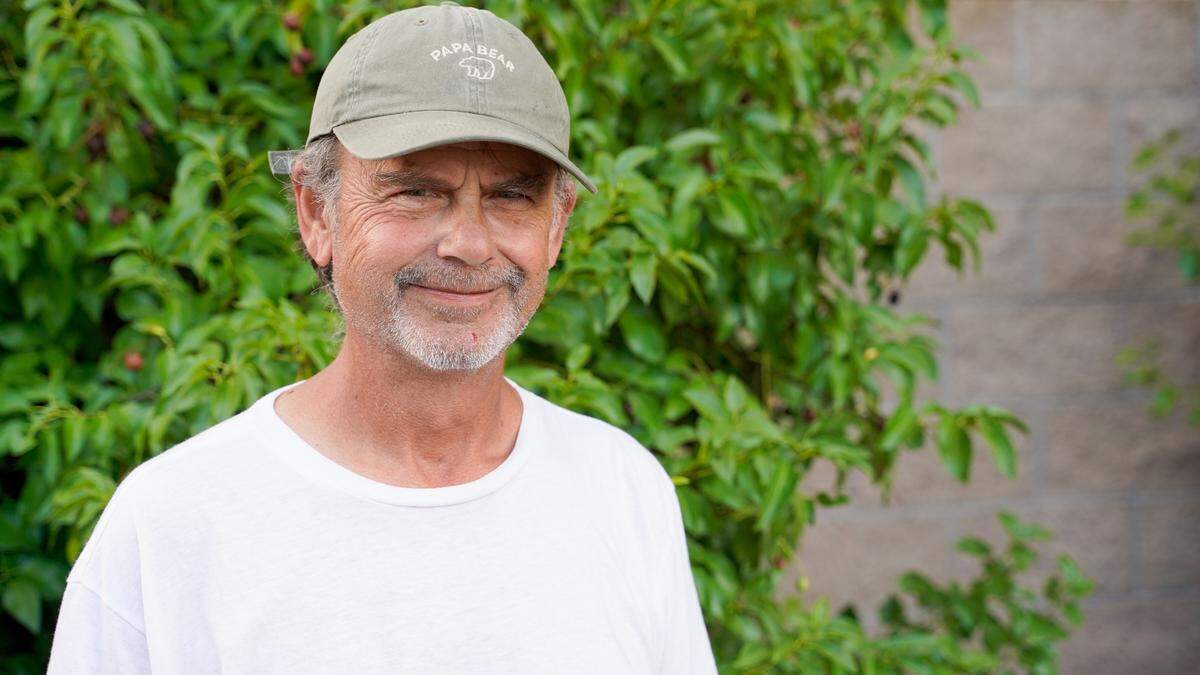
What is the ‘law of subtraction’?
Sutterfield, 63, can now be found at the El Camino Homeless Organization’s Atascadero shelter, where he has decided to restart his life.
Prior to becoming homeless, in early December 2022, Sutterfield was charged with driving under the influence, he said.
“The economy has changed so much, and I’ve never made a lot of money, but I decided right then and there that I’m not going to drive anymore,” he said.
In early 2023, he made the decision to leave his family’s home, packing a couple of suitcases with the bare essentials and personal paperwork, selling his car and leaving everything else untouched, he said.
“I built a place on the back of a family member’s house,” Sutterfield said. “(Sheryl) passed away there, and my job was done — I can’t live with them anymore, so here I am.”
Sutterfield is in debt from paying for his wife’s medical treatments and owes back taxes to the IRS, which he said he’ll work to pay off once he’s rehoused. He doesn’t even have a bank account anymore.
According to Sutterfield, the law of subtraction is about leaving behind unnecessary attachments, both physical and mental.
“I don’t want to think about things,” Sutterfield said. “I don’t want to have to keep everything in a certain order — it’s bad enough having to carry these 10 things.”
Reducing the amount of mental and physical clutter allows Sutterfield to be more intentional in how he spends his time, he said.
“The law of subtraction is, don’t continue to try to make people think the way you want them to think,” Sutterfield said. “If you’re uncomfortable in a circle of people, take a few steps back. You don’t need to shoot the s--t with people that are around you all the time.”
Unhoused resident: ECHO was first place I turned to
Sutterfield said the ECHO shelter was his first stop after leaving his housing.
“When I realized that I was going to be homeless, I just figured, ‘Well, go for it. Don’t beat around the bush. Go to ECHO,’” Sutterfield said. “I did find resources there — good connections in a crazy place.”
While staying at ECHO, Sutterfield has avoided unsheltered homelessness while working his way toward a housing situation that can keep a roof over his head as he reintegrates into a working routine.
That’s not to say being homeless has been easy, he said.
Due to the wear and tear of the repeated traumas of disorganization, negativity, hopelessness and drug and alcohol abuse by people around him, Sutterfield likened homelessness to dementia, with many days and weeks mixing together.
He’s also caught pneumonia twice, possibly from staying in congregate shelters, he said.
Sutterfield said he also suffers from neuropathy in his hands, which makes many forms of skilled labor difficult, and he can’t lift more than 20 pounds due to a hernia, making it hard to find work.
Each day, Sutterfield works with social workers, case managers and people who can connect him to the resources he needs, and he has become a regular in ECHO’s chore rotation, which keeps him busy and engaged, he said.
Sutterfield said without attachments to more frivolous activities such as watching TV, life has become more focused, both in his housing search and during downtime.
In his off hours, he walks, sometimes as far as 12 miles each day — a good way to clear his mind between searching for housing and case work, he said.
“I’m not scared of living in a shelter,” Sutterfield said. “Wears you thin, but kids are happy here, working people are happy here and senior citizens are happy here.”

What’s next for Rob Sutterfield?
After around four months of working with ECHO case managers, Sutterfield said it’s paid off.
Sutterfield said he was provided a Section 8 housing voucher by the Housing Authority of San Luis Obispo County, which will get him a spot in HASLO’s newly opened Paso Robles Homekey complex.
Sutterfield’s voucher only requires him to pay 30% of his monthly income for rent, he said, a critical factor given his disability and difficulty finding work.
He said it’s unclear exactly when his new home will become available for move-in, but in the meantime, he’ll continue staying at ECHO.
Sutterfield said he sees the Homekey complex as a potential stepping stone toward more independent living, as his voucher may be transferable to housing that isn’t specifically for formerly homeless individuals.
Once his housing is more settled, he wants to start volunteering for homeless organizations such as ECHO, to give back to people who have been in his situation.
Through it all, though, Sutterfield credited the law of subtraction for keeping him mentally healthy and grounded.
“I call it gravity — a blessing that keeps you on the Earth,” Sutterfield said. “It’s just a way of finding some kind of purpose in a worse situation.”
This story was originally published October 16, 2023 at 1:03 PM.