
Rare ‘ring of fire’ eclipse happens this weekend. Here’s how to see it in SLO County
A solar eclipse will darken skies across the Western Hemisphere on Saturday, giving San Luis Obispo County viewers a rare opportunity to view a unique astronomical event.
According to NASA, the annular solar eclipse — in which the moon passes between the sun and Earth while it is at its farthest point from Earth, creating a so-called “ring of fire” — is expected to be visible for millions of people across the United States, Mexico and countries in South and Central America.
Some areas will only experience a partial view of the ring of fire due to a narrow eclipse path.
Can I see the eclipse in SLO County?
The last time a solar eclipse darkened local skies was in 2017, when a total eclipse blocked out roughly three-quarters of the sun — wowing San Luis Obispo County viewers who gathered to watch the spectacle.
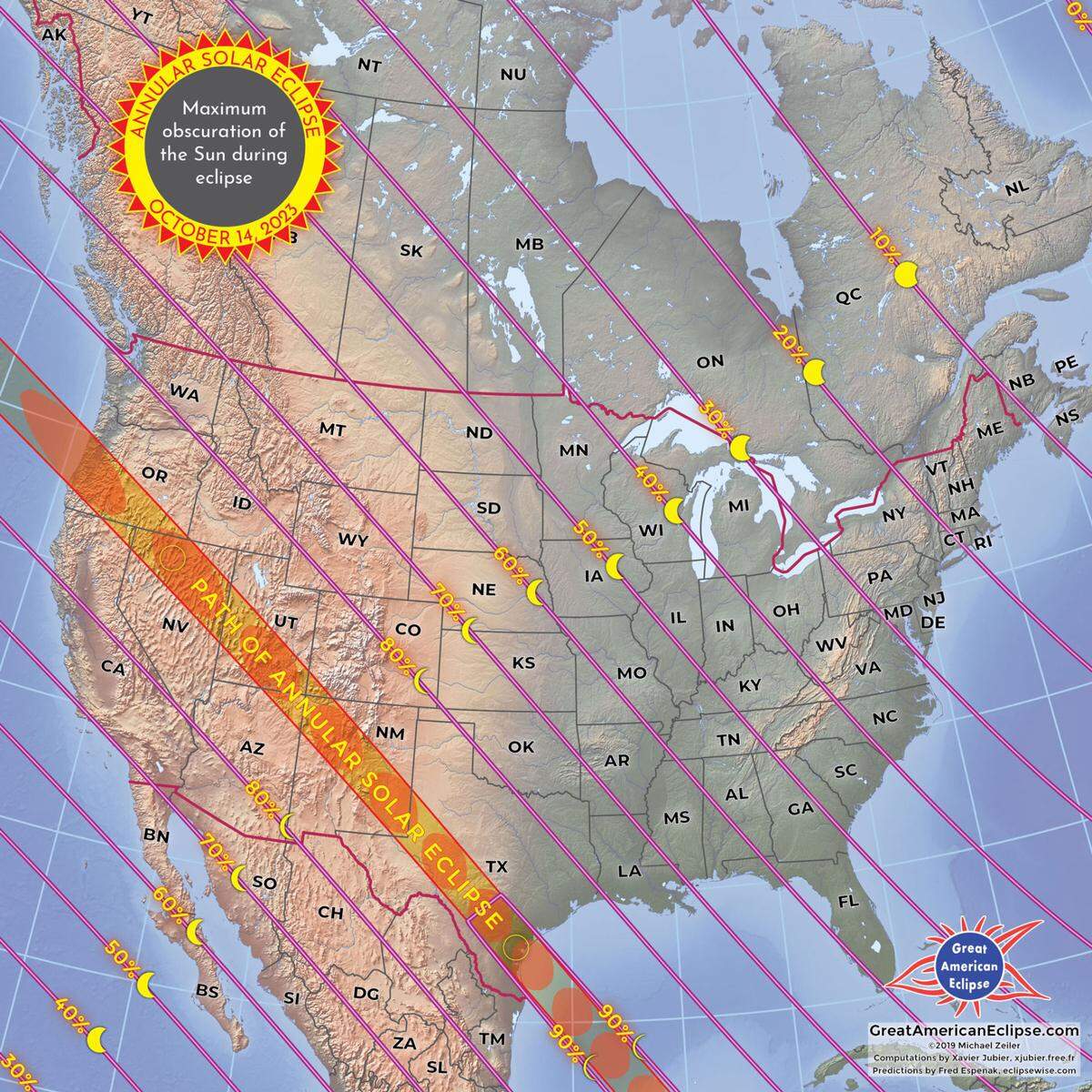
This month’s eclipse will begin in the United States, traveling from the coast of Oregon to the Texas Gulf Coast, according to NASA.
The path is very narrow — only 118 to 137 miles wide — meaning a relatively small section of the country will get to see the full eclipse.
San Luis Obispo County is not in the eclipse path, so viewers there will not be able to see the full “ring of fire.”
However, locals will see a partial eclipse of between 70% and 80%, according to NASA’s data.
During a partial eclipse, only part of the sun will be covered, which will give it a crescent shape.
In San Luis Obispo County, the eclipse will begin at about 8:06 a.m., with a peak around 9:21 a.m. It is expected to end at around 10:45 a.m.
In California, the full eclipse will only likely be viewable in the northeastern-most corner of the state, in the area of Modoc National Forest.
For a look at the eclipse path, check out NASA’s eclipse website at science.nasa.gov/eclipses.
How to watch it safely?
During an annular solar eclipse, the sun will not be completely blocked by the moon — meaning you should not stare directly at the eclipse without specialized eye protection.
That includes not looking at it through a camera lens, binoculars or a telescope unless you have a special-purpose solar filter secured to the device.
NASA advises using solar-viewing glasses, or “eclipse glasses,” which are available at many large retailers. You can also use a handheld solar viewer.
It’s important to note that regular sunglasses are not safe for viewing an eclipse, no matter how dark they are.
You should also always inspect your eclipse glasses or handheld viewer before use, NASA said. If damaged, discard the device.
Parents or adults should also supervise children using solar viewers.
If you don’t have eclipse glasses or a handheld solar viewer, there are several indirect viewing methods you can use that don’t involved looking directly at the sun. That includes using a pinhole projector that projects the image of the sun onto a nearby surface so you can see its altered shape.
For more information on how to view the eclipse safely, visit NASA’s website at science.nasa.gov/eclipses/future-eclipses/eclipse-2023/safety.
Can I watch it online?
If you want to get the full eclipse experience, there will be several free online broadcasts dedicated to the event.
Space.com is expected to livestream the eclipse with help from NASA starting at 8:30 a.m. on Oct. 14. That broadcast will be available at space.com/how-to-watch-annular-solar-eclipse-ring-of-fire-october-14.
When is the next solar eclipse?
If you miss out on this eclipse, you’ll have another chance to see one relatively soon.
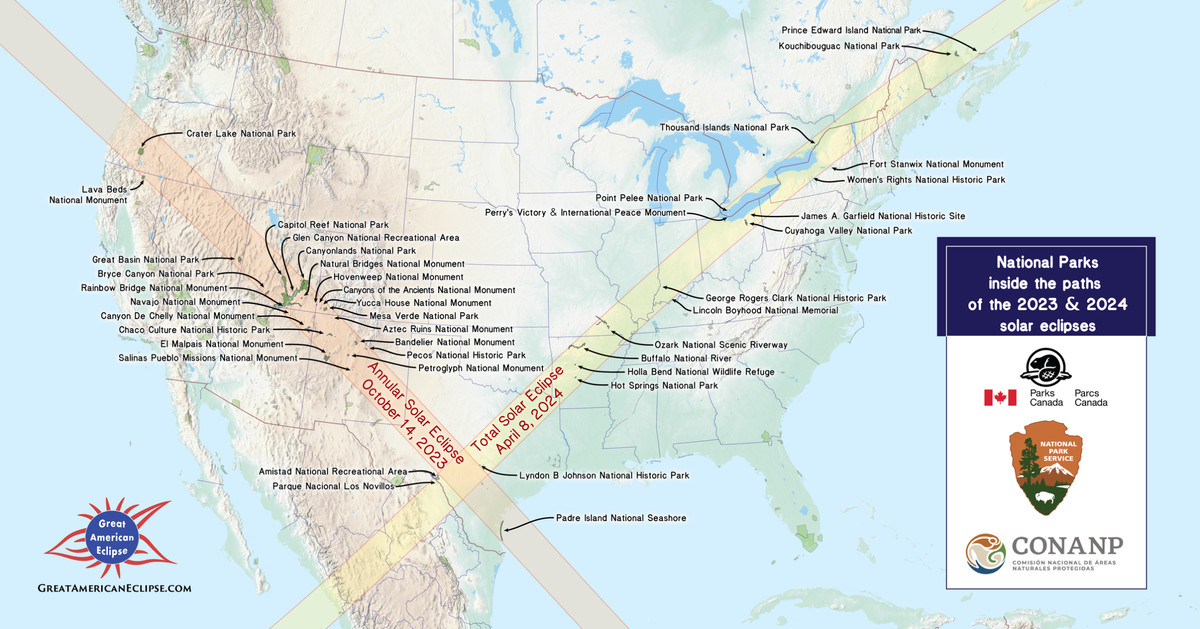
A total solar eclipse is expected to occur on April 8, 2024, crossing Mexico, the United States and Canada, according to NASA.
San Luis Obispo County is well outside the eclipse path for that event, which will head from Texas to the Northeast states, but local viewers will still get to see a partial eclipse of between 40% and 45%.
The next annular solar eclipse that will be visible from the United States is on June 21, 2039 — but that will only be visible from Alaska, according to NASA.
This story was originally published October 6, 2023 at 12:08 PM.
%20Cropped.jpg)