
Santa Barbara council votes against reopening State Street to cars
It’s status quo on State Street.
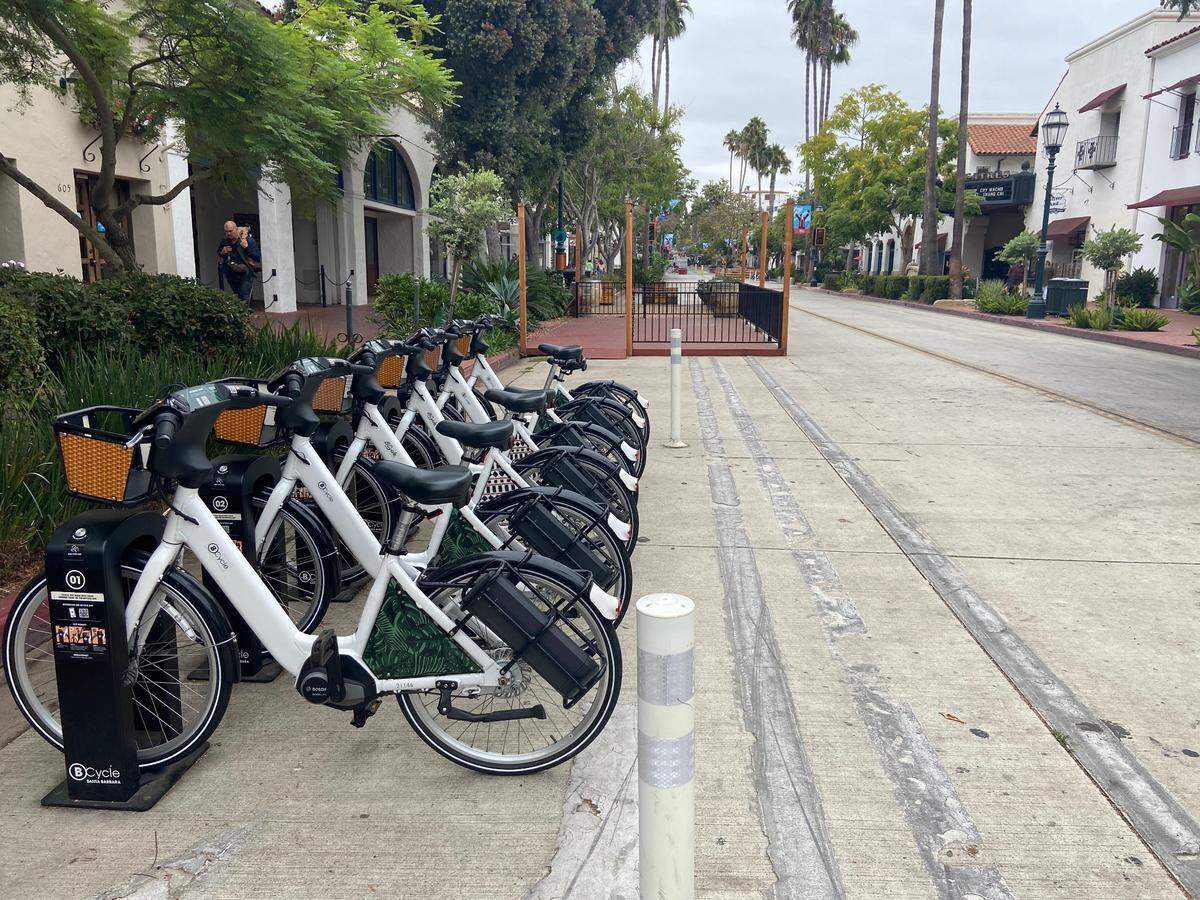
The Santa Barbara City Council voted Tuesday against an attempt to open six blocks of State Street to vehicles, and instead directed staff to pursue a plan that would include bikes, a transit service and pedestrians on the State Street promenade.
The council also agreed to a plan for vehicular drop-off service in front of The Granada Theatre.
The five-hour meeting featured more than an hour of public comment, both in person and virtual.
A majority of the council said the city should not go back in time and open the street to vehicles. City Councilwoman Kristen Sneddon led the efforts. She said the city should let the State Street Master Plan process play out and that there was no reason for the city to go back to the way it was before the COVID-19 pandemic.
“No one place stays the ‘it’ spot for all of eternity,” Sneddon said. “Right now, I think we are really creating a space that people want to come visit.”
Sneddon said she would like to see mini-micro transit on State Street, where a service carrying about four people could take people to various destinations.
The meeting was the latest in the high-stakes drama over the future of the State Street promenade and highlighted the clash between those who wants cars back and others who say the street is more alive without motor vehicles.
Tess Harris, the State Street Master Planner, said that in March 0f 2021, the amount of people who visited downtown was 200,000 more than the same month in 2020 before the pandemic and closure of State Street, citing Placer ai information from the Downtown Association.
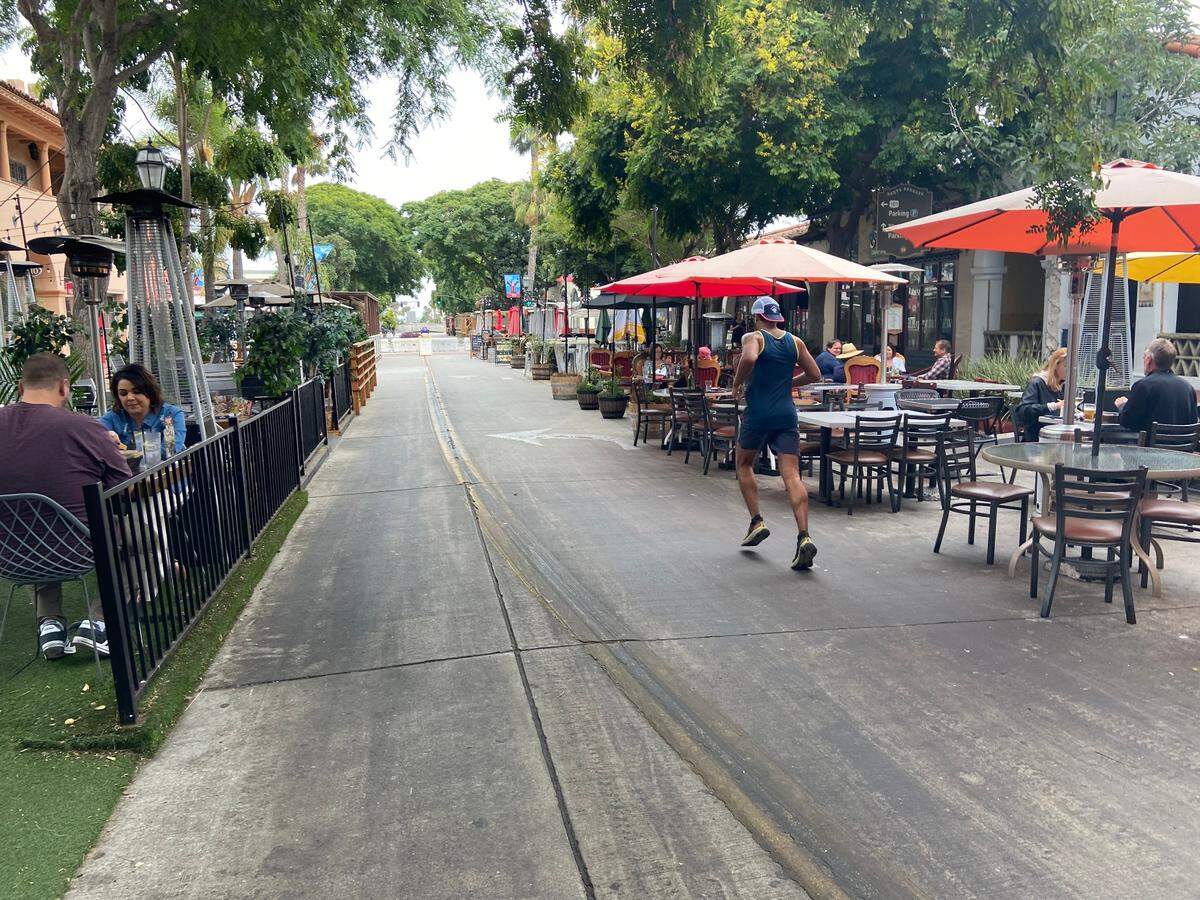
Councilman Eric Friedman made the motion to open State Street to vehicles on six blocks of the promenade and keep the 500 and 600 blocks closed to vehicles.
Friedman quoted Charles Dickens’ line from “The Tale of Two Cities,” “It was the best of times, it was the worst of times, it was the age of wisdom, it was the age of foolishness,” a literary reference to the French Revolution.
“We could extrapolate that to State Street,” Friedman said. “Depending on who you talk to, State Street has never been better. We have also heard it’s never been worse.”
Friedman said that during the past few months he has met with local residents, businesses, nonprofit organizations, and volunteers, and came to the conclusion that keeping eight blocks of State Street closed to vehicles is not sustainable.
“If we allow it to continue, there will be permanent ramifications on the long-term reliability and success of the promenade,” Friedman said. “It’s just too long.”
Some retailers and property owners have said that keeping the street closed only benefits restaurants.
Jim Knell, founder and chairman of SIMA Management Company, said there was a 40% vacancy rate on State Street and that retailers do not want to move into Santa Barbara if there is no vehicular traffic in the downtown.
“Nobody is coming to this town,” Knell said.
Knell said he is the largest retail landlord in downtown Santa Barbara with 400,000 square feet of retail tenants.
“Not one has increased sales from last year to this year,” Knell said.
Sneddon responded to Knell’s comments later in the meeting.
“I don’t understand how a majority stakeholder could say that nobody is coming and then not lower rents so that people will come and rent the space,” Sneddon said. “If it really is so much less desirable, then lower those rents and let us fill those spaces.”
Public speaker Lee Heller said the city should let the State Street Master Plan committee continue its work and make recommendations. Harris said that the committee would have recommendations sometime before April of 2024.
At that time, Heller said, the community can dive in and tackle all the options.
“This is not about cost, it is about investment and our long-term future and a re-envisioning of a vibrant community in the downtown core,” Heller said.
Friedman, Mayor Randy Rowse and Councilwoman Alejandra Gutierrez supported the effort to reopen the six blocks of State Street to vehicles, but they were out-voted by Sneddon, Councilmen Oscar Gutierrez and Mike Jordan, and Councilwoman Meagan Harmon.
“I don’t want to, nor do I think it is responsive to try to relitigate the existence of the promenade,” Harmon said. “I don’t think it serves the community to keep having these inflection point discussions where we argue open, or closed, or hybrid.”
Harmon said she supports the promenade.
“I don’t support cutting the master plan process off at the knees by reopening a majority of State Street to cars before that process is finished,” Harmon said.
Among those in favor of a hybrid scenario was architect Cass Ensberg. She said she would like to see a transit service for people who are mobility challenged.
Ensberg urged the council to reopen the street so that it can be shared by bicycles, accessible by trolleys, pedestrians and private automobiles.
“It makes sense to me to just allow all of it,” said Ensberg, who is focused on access for people who are mobility challenged.
In the end, the council directed staff to work on various pilot programs with bicycles, pedestrians and shuttle service. Those recommendations would need input from the Historic Landmarks Commission and the Access Advisory Committee.
The vote was 5-2, with Rowse and Friedman voting no.