‘That’s the weirdest chicken.’ Baby owl rescued after falling from its SLO County nest
Arroyo Grande resident Melissa Walker-Scott found a surprise when she opened her friend’s chicken pen on May 2.
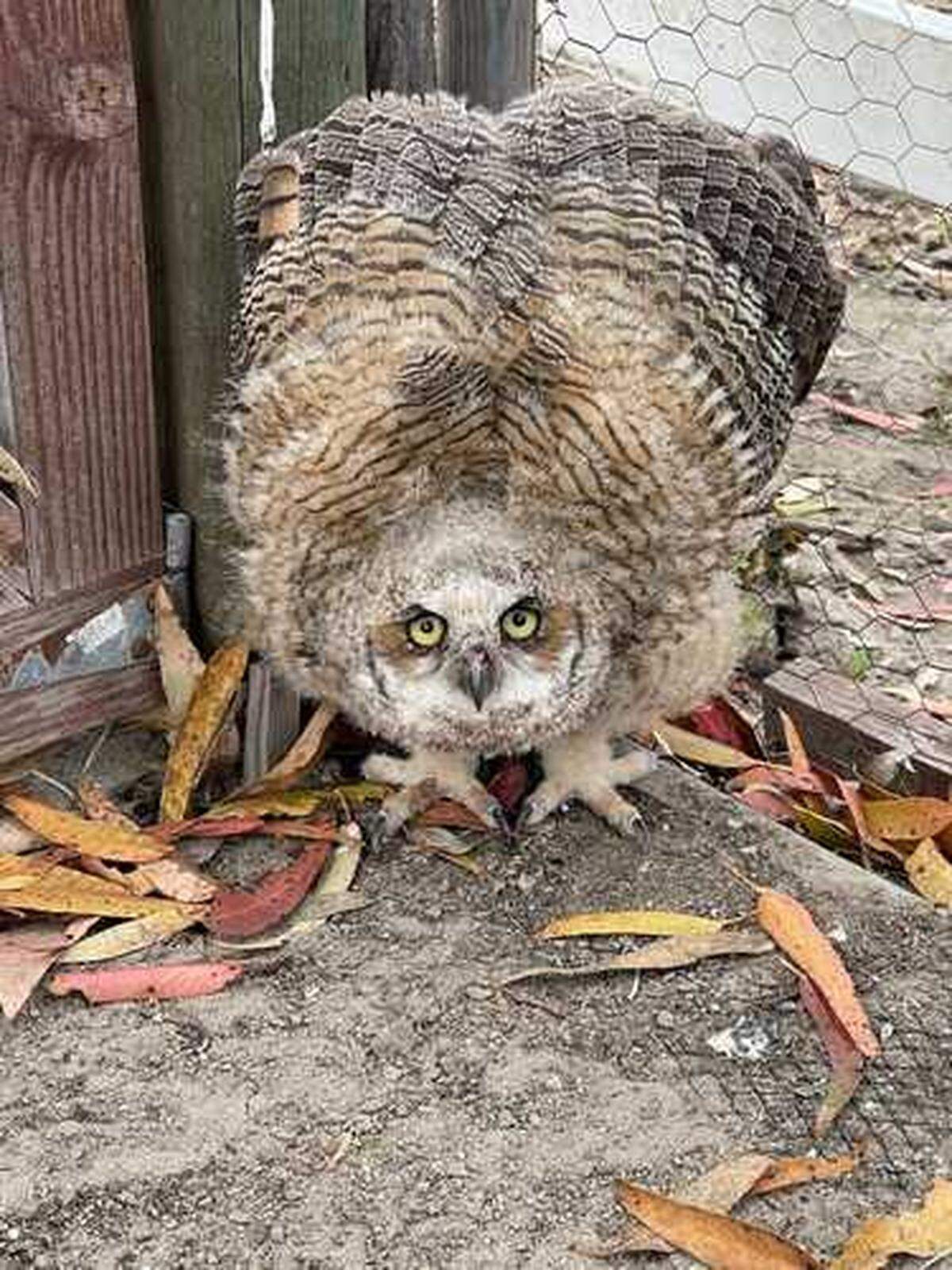
“It was just this big puff of gray, stripy feathers,” Walker-Scott said. “I walked in and I thought, ‘That’s the weirdest chicken.’”
Walker-Scott was taking care of the chickens and horses while her friend was out of town, she said. The pen is normally home to two chickens, Lavender and Kenny, so she didn’t expect to see a third bird.
When Walker-Scott attempted to touch the bird, it swerved around in a huff — revealing that it was actually an owl.
“It puffed up as big as it could get, and then I jumped back and yelled ‘Oh my god!’” Walker-Scott said with a laugh.
The baby owl must have fallen out of a nearby eucalyptus tree, she said, where owls have nested for the past few years.
The owl had some blood on its beak, so she called the Pacific Wildlife Center, a wildlife advocacy organization in San Luis Obispo County. The agency sent a representative out in 45 minutes to rescue the owl.
“He wrapped the owl up nicely” and placed it in a box to deliver to the Pacific Wildlife Center, where the bird could heal from its fall from the tree, Walker-Scott said.
When the owl arrived at the center, it had abrasions on its nostrils and blood on its left eye, according to Pacific Wildlife Center Executive Director Christine Johnson.
Otherwise, the bird was healthy and required very little rehabilitation, she said.
The center fed the 800-gram owl some Vitamin D, with a goal of re-nesting it as soon as possible.
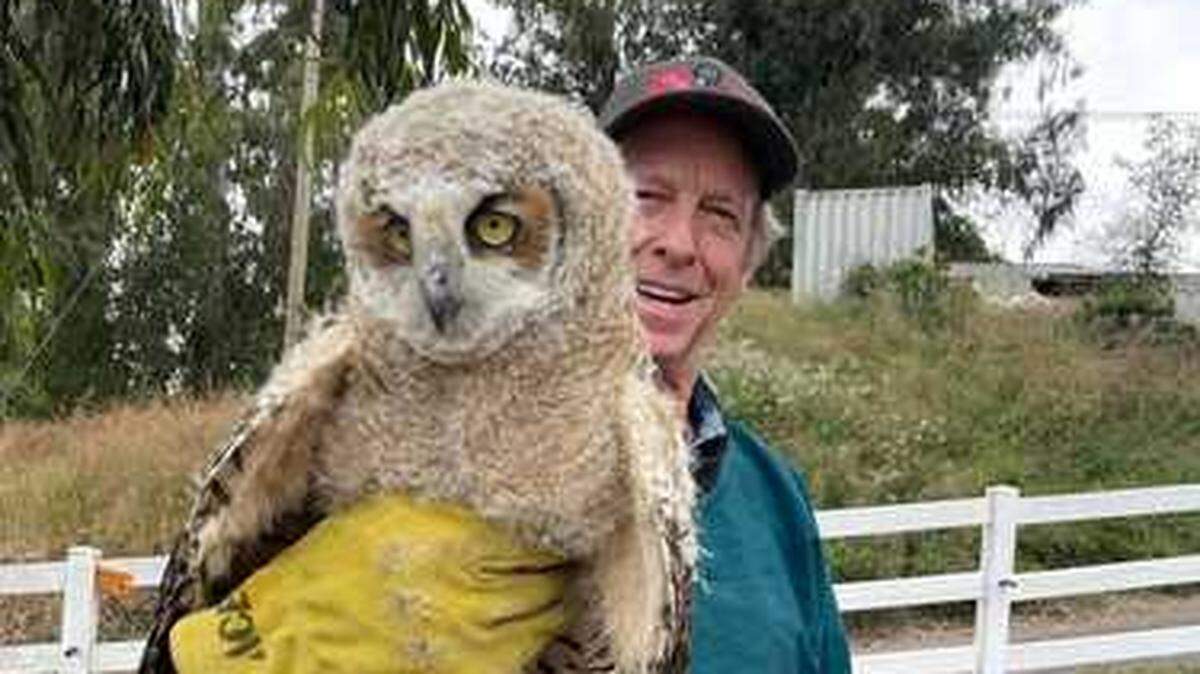
Two days later, Pacific Wildlife Center volunteer Bob Peak returned to the property to reunite the owl with its family.
The Great Horned Owl was a few weeks old, had lots of its feathers and was almost old enough to be able to fly, Peak said.
“They’re ornery,” Peak said of Great Horned Owls. “They’re very strong and they know it. They’re very confident.”
He said it’s common for baby Great Horned Owls to fall out of trees, because the parents steal nests from other birds which are “usually not in good shape,” Peak said.
“So they’re in trouble from the start,” Peak said.
When a nestling falls out of a tree, its parents continue to feed it, Peak said. Great Horned Owls are vicious predators, he said, so usually baby owls that land on the ground are safe — unless there are dogs or horses around.
“They really are the ultimate predator that flies as far as local goes,” Peak said of the owls. “They are brutal.”
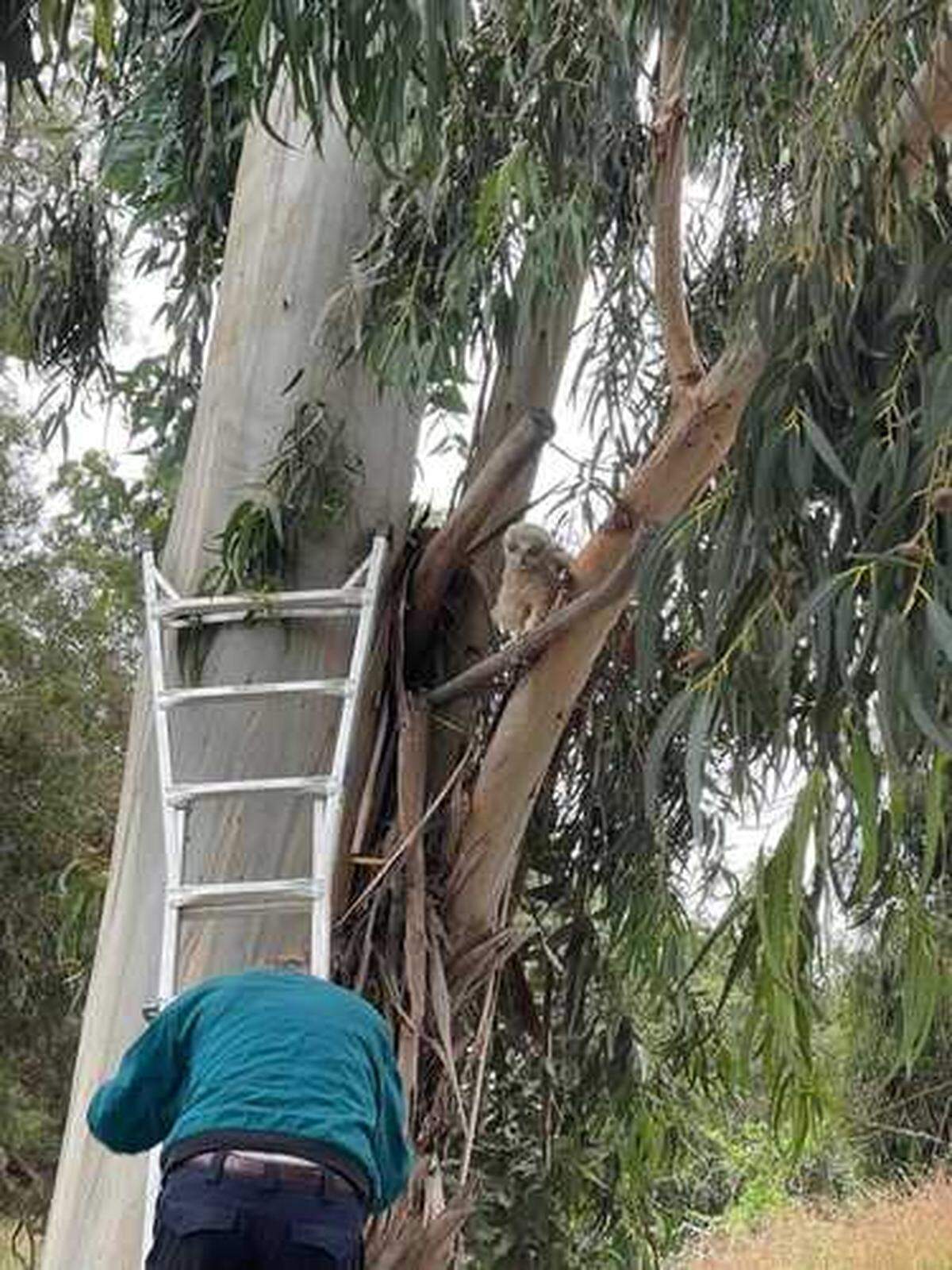
Peak brought the nestling back to the eucalyptus tree and placed it on a false branch, he said.
“He went up with this big, big ladder and brought a fake branch that he kind of jimmied in lower on the big eucalyptus tree, and then he put the baby on the branch,” Walker-Scott said.
Then, Peak played a Great Horned Owl distress call on a CD player to alert the parents that the nestling was back. About five minutes later, the parents started responding, Peak said.
“The parents — you could hear them calling back and forth,” Walker-Scott said.
For two to three days, the owl’s mother brought it food, and eventually the baby made its way back into the nest with its family, Walker-Scott said.
“He was so cute!” Walker-Scott said.
On Earth Day, the Pacific Wildlife Center kicked off their baby bird program in preparation for all the baby birds falling out of nests during the Spring and Summer who need the center’s assistance.
“Now is the time people are finding baby animals,” Johnson said.
This week, the center rescued numerous baby scrub jays, desert cotton tails, mallard ducks and brush rabbits, she said.
The center’s goal is to rehabilitate animals so they can return to the wild, Johnson said.
For example, volunteers will mimic bird sounds when they feed baby birds to mimic their feeding experience in the wild. This prepares them to accept food from their parents when they return to the nest, Johnson said.
“We’re trying to keep them in their wild environment as much as possible so they are more likely to succeed upon release,” Johnson said.
If folks find animals in distress in SLO County, they can call the Pacific Wildlife Center at 805-543-9453 any day of the week from 8 a.m. to 5 p.m. The center is also open until 7 p.m. through the summer, Johnson said.
“The quicker they can get an animal, especially a small vulnerable baby animal, to Pacific Wildlife care — that really does create a positive outcome for the animal,” Johnson said.